Theurgy – Theory and Practice by P.D. Newman

I have read Theurgy Theory & Practice – The Mysteries of the Ascent to the Divine – Homeric Epics, the Chaldaean Oracles, and Neoplatonic Ritual by P. D. Newman. The style of the book is scholarly – with plenty of quotes and references. In my humble opinion, this is a book best enjoyed by those with some prior knowledge about these matters. On a personal note, I have listened to the SHWEP (The Secret History of Western Esotericism Podcast) for a while now and thus recognised many of the authors and researchers quoted in this book. The author even refers to Earl Fontainelle (the host of said podcast). The author of the book also refers to many of the prominent Neoplatonic thinkers of Late Antiquity – some of which I have mentioned in previous book reviews. In addition to the frequent references to Neoplatonic philosophers, the author also gives the Iliad and Odyssey a central role in the book.
What is Theurgy?
The author defines theurgy early in the book:
‘Theourgia is a combination of the Greek words theos (divinity) and ergon (work), meaning “to work with deity” or, perhaps, “the work of deity.”’
P.D. Newman – Theurgy. Page 1.
He also shares this definition by Iamblichus – one of said prominent Neoplatonic thinkers of Late Antiquity:
‘Theurgy works through the divine love and providence of the gods who bestow their presence upon human beings through divine illumination.’
Iamblichus – De mysteriis.
I have also heard theurgy defined as ‘God-working’ – perhaps one could simply label it as a style of magic.
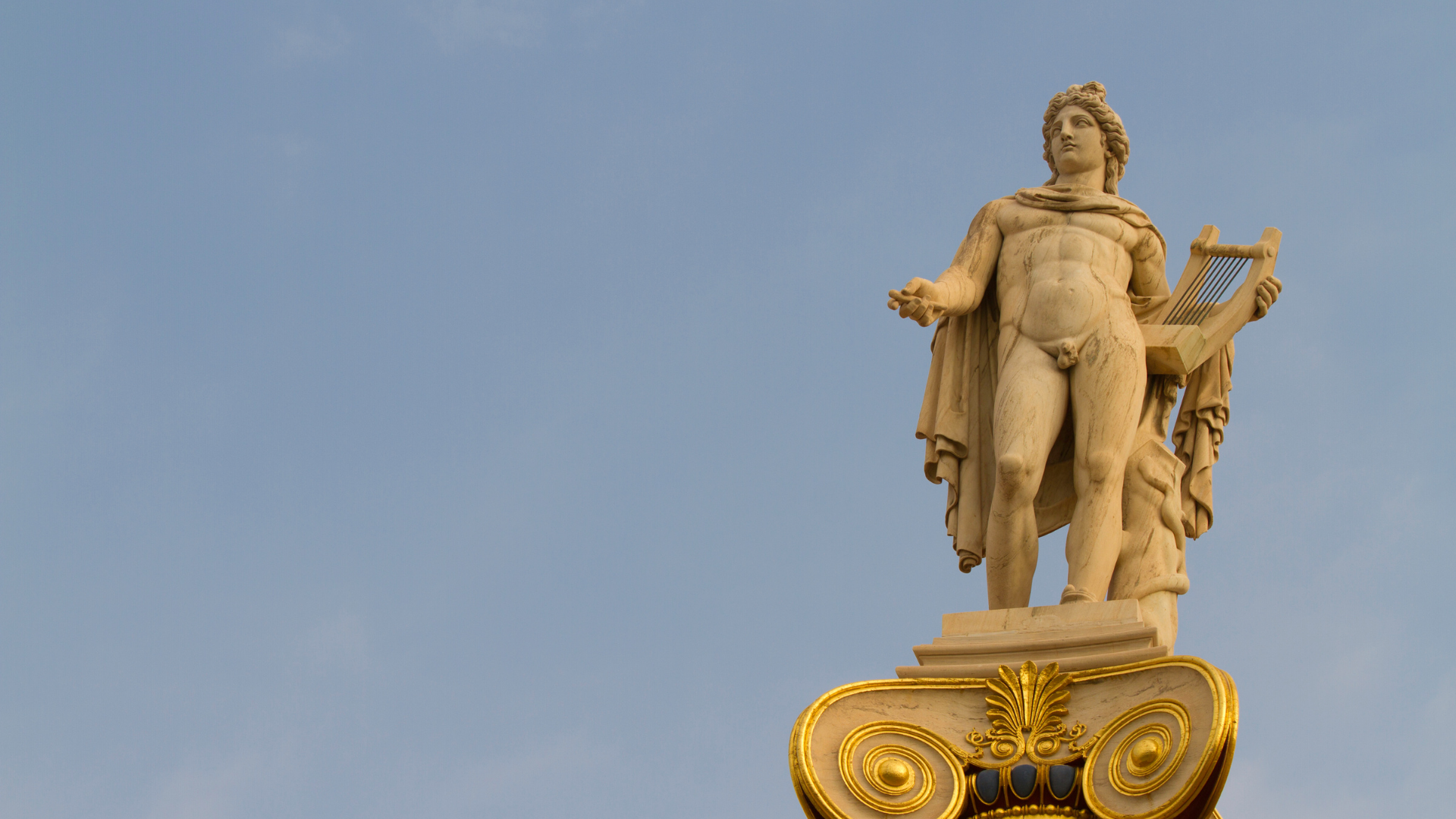
Soul and Psyche
A very interesting passage appears in the introduction, where the author states the following:
‘During the eighth and seventh centuries BCE, at the time of the composition of the Homeric epics, the ancient Greeks believed that the psyche was not the locus of the self and that the soul, after death, was merely a dim shade of the person who had died, not unlike and echo.’
P.D. Newman – Theurgy. Page 4.
The author goes on to note that the Ancient Greeks began to see the soul as something more during the seventh and sixth centuries BCE. According to one theory, this was due to a northern shamanic influence (perhaps from Thracians or Scythians), which caused the soul to become seen as the seat of one’s emotional and intellectual life. The author elaborates:
‘Succeeding death, the soul was then free to unite with To Hen (the One), to intercede for the living, or even to reincarnate in another physical form altogether – including “a boy and a girl and a bush and a bird and a fish” and so on, as one cunning Presocratic shaman phrased it.’
P.D. Newman – Theurgy. Page 4.
The author does not state that this was indeed a fact (i.e. that the heavier emphasis on the soul was due to a northern shamanic influence). He also mentions that Porphyry and Proclus (two major Neoplatonic philosophers) located the roots of theurgy in the archaic Homeric epics (so, before the proposed shamanic influence). I do not have any personal take on this matter, I just found this highly interesting. It is definitely a chapter I will return to.

Daimones and the Great Chain of Being
The author notes that, according to the Platonists, there is the Great Chain of Being, which is populated with a hierarchy of daimonic entities. These entities can serve as messengers between men and Gods. After the Christian take-over, some daimons became demons (evil) and some became angels (angelos means messenger in Late Greek). He also notes the following:
‘The theurgist may ascend through this daimonic, hierarchical seira (series) that is the “great chain of being” descending from the One to the many and finally contemplate “the divine Beauty itself in its one form” in the world of Platonic ideas.’
P.D. Newman – Theurgy. Page 55.
The One here is the Neoplatonic To Hen (God) mentioned in the previous quote. Interesting stuff!
Mystics and Schizos
In the chapter titled Platonic Allegories and Myths, the author discusses various types of madness (or divine inspiration). He notes that, according to Socrates, poetic madness is the province of the Muses. Telestikê* (mystical) madness is under the rule of Dionysus; prophetic madness is associated with Apollo, and erotic madness with Eros or Aphrodite. On the same page the author shares the following quote by the Scottish psychiatrist R. D. Laing:
‘Mystics and schizophrenics find themselves in the same ocean, but the mystics swim whereas the schizophrenics drown.’
R. D. Laing
I thought this was a fun passage since the term ‘based schizo’, which I am fond of using myself, is quite frequently used in enlightened circles these days. The author also likens the shaman to an gold medallist Olympian and the psychotic to a non-swimmer. I discuss a similar matter in Demigod Mentality – namely that when Odin’s inspiration hits you, you must be prepared to make use of that divine energy.
*Telestikê is also a term for a magical operation in which a statue is imbued with a soul. Ensouling statues was, notably, a practice among the Ancient Egyptians. Those who are interested in the spiritual traditions of Ancient Egypt can read my review of Jeremy Naydler‘s Temple of the Cosmos.

Chariot Enjoyer
Since we are on the topic of amusing memes, I thought it would be fun to share the following beautiful passage from the Katha Upanishad – translated by Max Müller (whom I quote in Demigod Mentality, by the way).
Know that the Atman is the rider of the chariot,
and the body is the chariot.
Know that the Buddhi is the charioteer,
and Manas is the reins.
The senses are called the horses,
the object of the senses are their paths.
Formed out of the union of the Atman, the senses
and the mind,
him they call the “enjoyer.”
For those who are not aware, an ‘Enjoyer’ or ‘Average Enjoyer’ is often juxtaposed against a ‘Fan‘ – where the Enjoyer is presented in a favourable light. This is why I often refer to my own esteemed audience as Enjoyers, Enthusiasts, or Appreciators. Men of culture will, of course, also be reminded of Plato’s chariot allegory.
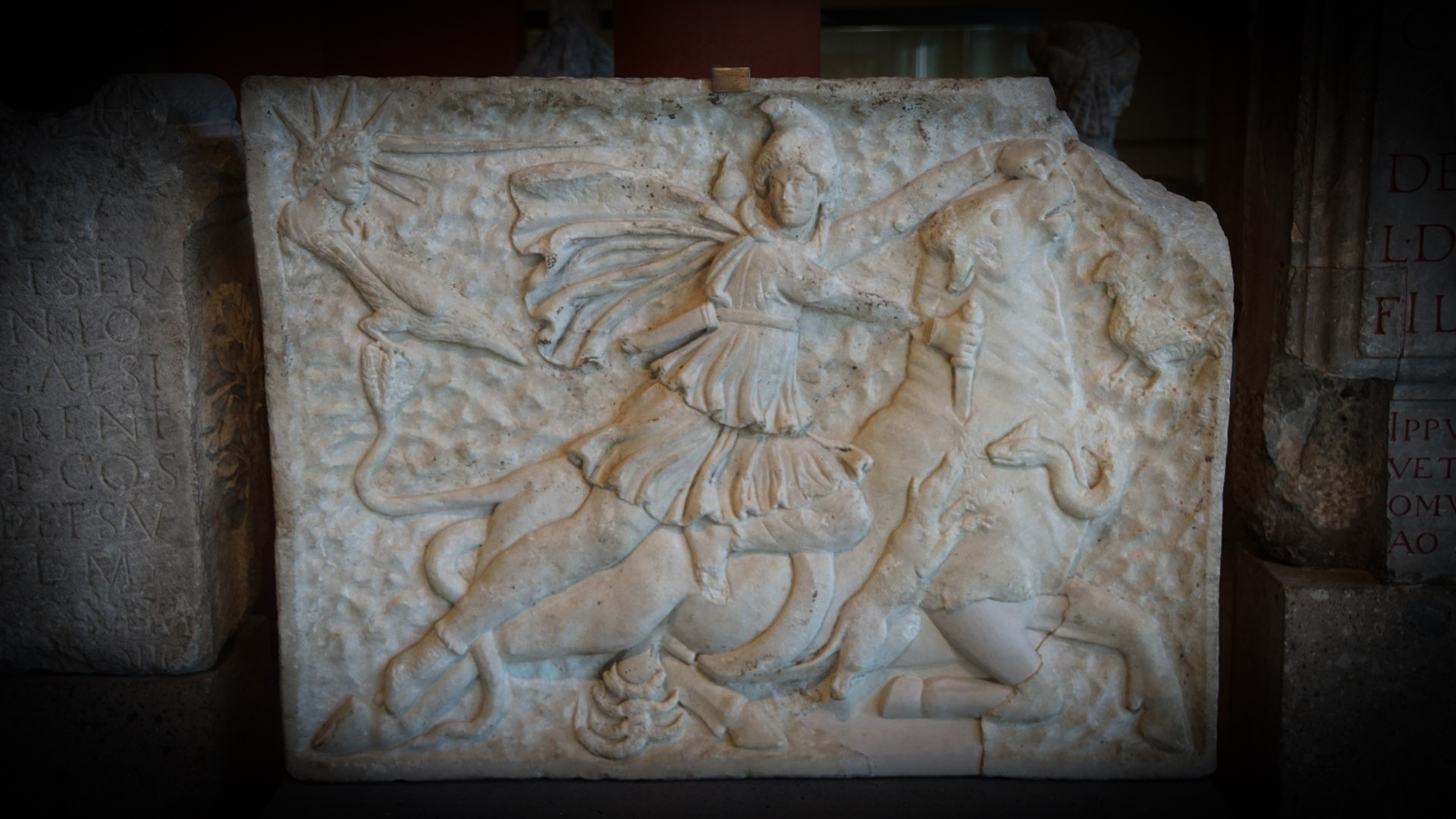
Mithraea and Astrological Structures
In the chapter titled The Odyssey and the Iliad, the author discusses the Mithraic mysteries – which we are all interested in. He notes that the Mithraea, the Mithraic subterranean temples, often represented the created cosmos. The author shares a quote by April D. DeConick:
‘In the Mithraeum of the Seven Spheres, the gates are specifically located at the Gemini-Cancer and the Sagittarius-[Capricorn] boundaries and identified with the summer and winter solstices. The identification of the gates with Cancer and Capricorn is also depicted on the Housesteads rockbirth, only in this case with the Cancer-Leo and the Capricorn-Aquarius boundaries.’
April D. DeConick
I am not yet astrologically knowledgeable enough to comment on this, but I am sharing this for the simple reason that this kind of information will be useful if or when Mithraea are built in the West over the coming decades.
Conclusion
The book has 166 pages and contains interesting insights. As already noted, I would not necessarily recommend this book to anyone unfamiliar with these topics. For those with an interest and some prior knowledge, however, I can definitely recommend it. I enjoyed reading it!



 The Golden One
You must be logged in to post a comment.