The Way of the Tarot by Alejandro Jodorowsky
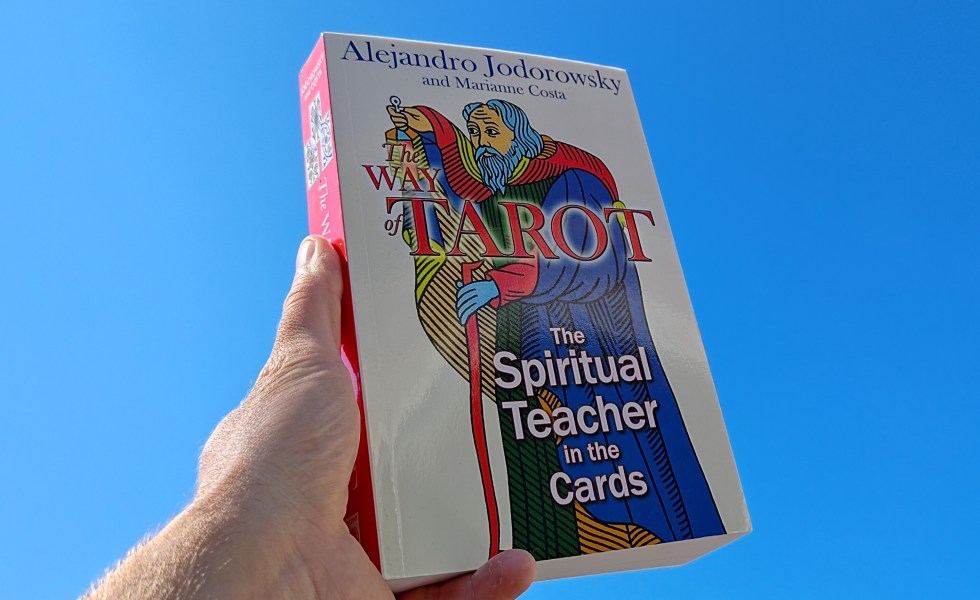
I have read The Way of the Tarot – The Spiritual Teacher in the Cards by Alejandro Jodorowsky and Marianne Costa. I read it per the recommendation of Paul Waggener in his excellent Tarot Unveiled.
Is the Tarot Legit or Just New-Age Nonsense?
A valiant companion of mine recently asked me whether the Tarot is spiritually based or just New-Age nonsense. I responded that it depends on how you approach it. A good comparison would be to Karate in America. “McDojos” are common, but there are also legitimate dojos which teach good martial techniques. I view the Tarot Arcana as containing psycho-magical teachings that can be used in a variety of ways in one’s quest for excellence. I discuss The Fool Arcanum in Demigod Mentality – it is my favourite card and has a profound meaning. I will write about the Tarot at length later on – I will also dedicate a podcast episode to the topic (soon).
My View of the Tarot
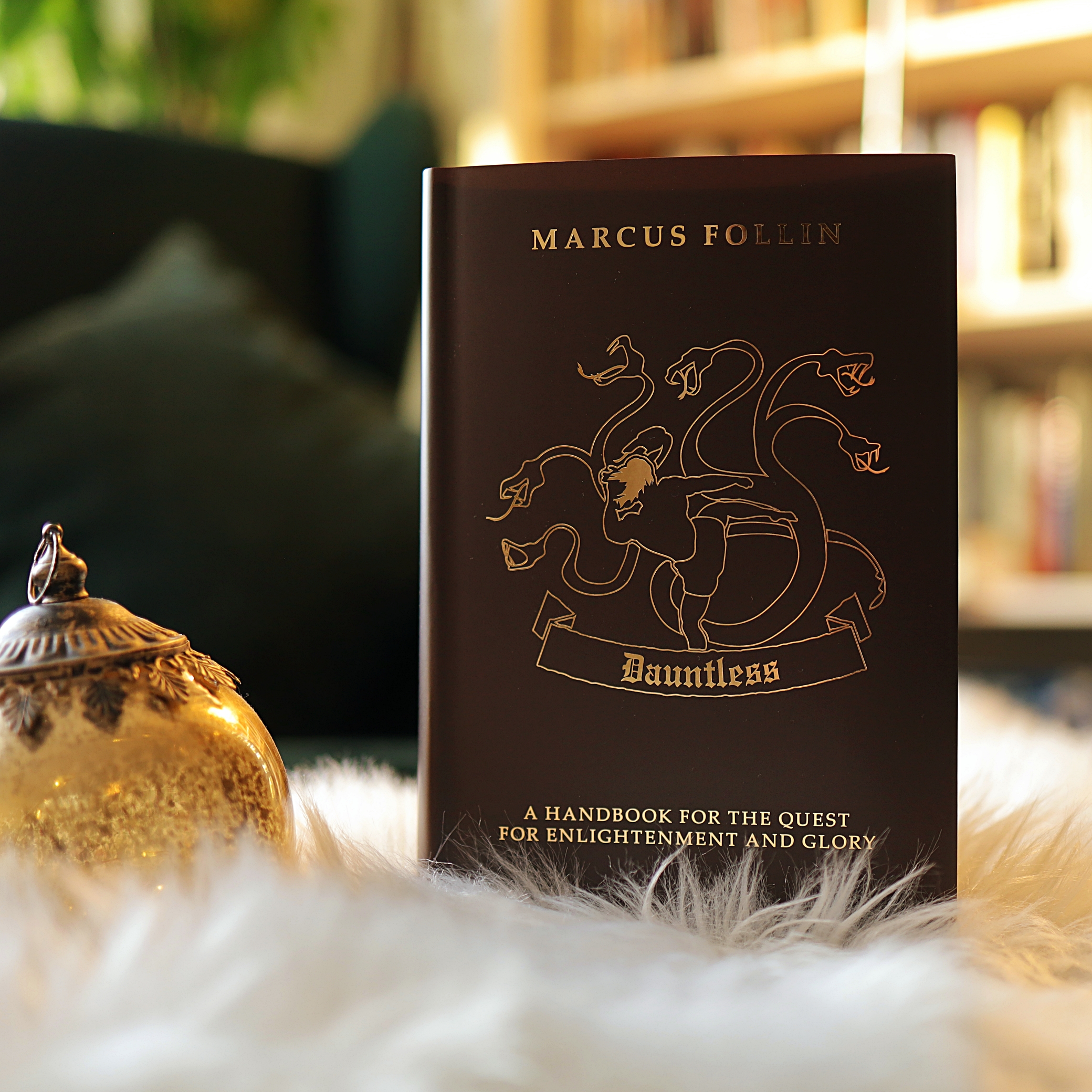
To summarise my own take on the Tarot in an as concise manner possible, we can use the Death Arcanum (card) as an example. What does it mean? It means that you should do a 24-hour fast. Death (in this scenario) is your friend that goes through your body, cleansing it (via autophagy). As I noted in Dauntless, The Black Death was followed by the Renaissance – life follows death. Therefore, the Death Arcanum is not something negative, but rather a herald of new growth!
Each Arcanum provides a teaching which you can apply in your life to optimise your journey forward. My interest lies (at the moment) in the 22 Major Arcana (there are also Minor Arcana), and it is on these 22 Arcana that I have meditated. Moreover, I have no interest in Tarot readings or using them as an instrument for divination – I create my own luck!

A Useful Insight
In the introduction, the author shares an insight which I found useful. Said insight is quite straightforward – namely that each Arcana can be seen as mirror and that one can become what is seen in them. To give a personal example, I wish to embody the stability of the Emperor (with good habits and a stable center).
The Marseilles Deck vs the Rider-Waite Deck
The author uses the Marseilles deck (as does Paul Waggener in his Tarot Unveiled). I prefer the Rider-Waite deck; my reason for this is simply that I prefer it, aesthetically speaking. I endeavour to surround myself with as much beauty as possible. Since meditating upon the Tarot is best done when imprinting the Arcana themselves in your mind, it feels better to imprint the more beautiful images of the Rider-Waite deck as opposed to the less beautiful ones from the Marseilles deck.
In the introduction, the author shares his own journey. He notes that he started to frequent a Parisian café where the surrealist artist André Breton (whom he admired) would meet with a group of fellow artists. Said artist did not have anything kind to say about the Rider-Waite deck – proclaiming that there is nothing profound in the deck and that the only valid deck is the Marseilles one.
I am not a fan of surrealism, to put it mildly – so therefore it is perhaps natural that I should have a radically different perspective than Breton when it comes to artistic preference of the Tarot.
On a similar note, in terms of his background and perspectives, the author is quite different from myself (from what I could gather from the biographical elements of the book, at least). With this in mind, it is natural that his interpretations of the Arcana would be different from mine

The Lover
In the chapter about the Major Arcana (which is, in my humble opinion, the most interesting part), the author shares what he believes the Arcana would say – for example, ‘And If The Lover Spoke’:
‘I am the sun of the Arcanum, the white sun: almost invisible but casting my light upon all the figures. I am this star: the joy of existing and the joy that the Other exists. I live in ecstacy. Everything fills me with happiness: nature, the entire universe, the existence of the Other in all its forms – this Other who is none other than me.’
Alejandro Jodorowsky – The Way of the Tarot. Page 160.
I found this quite beautiful (and useful). I got a bit of Sufi vibes from this passage as well. A mystical union with the World and Creation! On a related note, in the Rider-Waite deck this card is named The Lovers (i.e. plural) instead of the Lover as in the Marseilles deck.
Combining Cards
An interesting part in the book is the one concerning the combination of cards – this reminded me a bit of Bind-Runes. This is something I will meditate more upon. To share a combination that I came to think of: The Hanged Man (which can be interpreted as voluntary suffering) can be the base, added to this can be Death (resulting in that the voluntary suffering should be a fast). The Hanged Man with the addition of an Arcanum like the Chariot (conquest) could signify that a hard MMA-session is in order (or a similar endeavour). I will elaborate more on this later on.

Conclusion
The book has 535 pages. Some of the chapters (the one discussing numerology, for example) were not as interesting or relevant for me personally. For those who are unfamiliar with the Tarot, I would recommend starting with Stephen Flowers The Magian Tarok (review) in which the author discusses the origins of the Tarot and the Mithraic influence upon this magical system. Perhaps I will revisit parts of The Way of Tarot later on. For those who want a deep-dive and who will use the Marseilles deck, I can recommend the book.
Onwards!



 The Golden One
You must be logged in to post a comment.