The Knights Templar in the Golden Age of Spain by Juan García Atienza
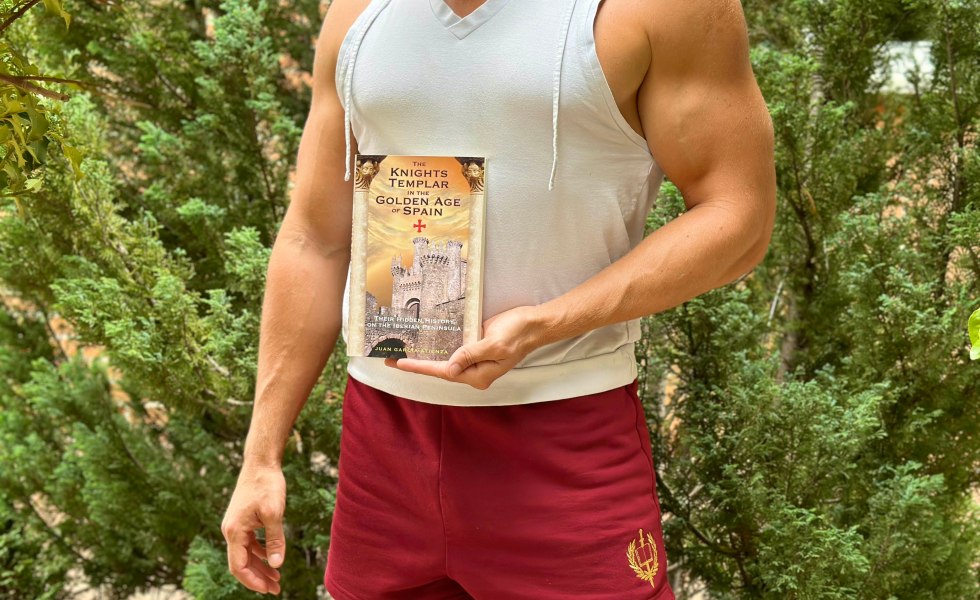
I have read The Knights Templar in the Golden Age of Spain – Their Hidden History on the Iberian Peninsula by Juan García Atienza. As the title of the book suggests, it details the history of the Templar Order in Spain (i.e. the various Spanish kingdoms of the Middle Ages) and Portugal. It can be described as a history book with an esoteric touch.
Disclaimer and Correction
To my great lament, I detected a glaring falsehood in the introduction of the book. The author erroneously claims that the Moors were as Spanish as the Spaniards after a few centuries. This is, needless to say, a politically loaded comment. It is unfortunately not all too uncommon to see this sort of submissive display (to the politically correct establishment – for lack of a better term). The rest of the book is good, and I did not get the sense that the author tried to impose his own views (aside from perhaps when discussing the esoteric aspect of the Order).
Another correction: The author states that Julius Evola was the ‘personal magician’ of Mussolini. This was not the case. It is true, however, that Evola and his companions tried to influence Mussolini to embrace Roman Paganism. They were unsuccessful – Mussolini chose an alliance with the Catholic Church.
As for the Reconquista and identity in mediaeval Spain, it was always a religio-racial war between European (Spanish) Christians and Arab and Berber Muslims. Pictured below: Santiago Matamoros.

Templar Synarchy & Synchretism
The esoteric aspect of the Templar Order is a central theme of the book. The author gives plenty of attention to what he calls the synarchic plan of the Templars. In a footnote he defines synarchic as a government made up by various princes (each one administering a section of the state). Syncretism refers to the practice of incorporating various religious teachings in one’s faith (Templars learning about the Divine from Muslim mystics would be an example of this, for example). The author says the following:
‘It is beyond all doubt that the Templar Order structured its theocratic ideology by studying and assuming unorthodox principles. These included those they extracted from Eastern Christian sects and from the traditional structures that had been repeatedly denounced by the Roman Church as abominations. The spiritual world conceived by the Templars was made up of the very practices and ideas that in many cases served their accusers toward the end of the Order’s existence. They had laid out a blueprint for a universal theocracy in which any unorthodox Christian sects would have a place, as would a substantial part of the religious ideologies defended by Jews and Muslims.’
Juan García Atienza– The Knights Templar in the Golden Age of Spain. Page 94.
That the Templars were spiritual seekers is uncontroversial and something that I am fairly confident in agreeing with. The latter part of the quote, however, is something that I must look into further. Orthodox in the quote above does not refer to Orthodox Christianity (i.e. the Orthodox Church), but rather to what was seen as acceptable in the eyes of the Catholic Church. Another quote on the same topic:
‘They had educated at least one monarch – James I, the Conqueror – according to their values and the image of the political plan they had conceived. With an eye to total control, they partially controlled the strategy that, in theory, would lead to the conquest of the Jerusalemite Axis Mundi, the nucleus of their great synarchic enterprise. They maintained officious but very solid but very solid relations with qualified representatives of the great Mediterranean religions, who came to consider the Templars the firmest speakers to a mutual understanding that constituted the basis for that union on which would be built the dream of a universal theocratic government.’
Juan García Atienza– The Knights Templar in the Golden Age of Spain. Page 192.
The author goes on to note that Cathars could find a place in this vision as well. We will return to the epic story of James the Conqueror later on.

Templars and Cathars
As Lynn Picknett and Clive Prince noted in their The Templar Revelation (review), the Templars gave refuge to the Cathars who flew the onslaught of the French crusaders (of the Albigensian Crusade). The author of this book also emphasises this fact. He notes that the Templars in Iberia did their best to accept and hide Cathars in their strongholds. Moreover, the author notes that Aragorn, Catalonia, and Navarre were almost drawn into war with France over the Cathar situation. Furthermore, he notes that Cathars joined the military efforts of James I in conquering the Balearic Islands (including Mallorca). Much more can be said about this topic – and we will indeed return to this later on! Astute Enjoyers of my content will know that I have a particular interest in both the Templars and the Cathars.
Templar Momentum
You will hear me quote this passage later on, but I will share it now as well since I found it inspiring:
‘For the next nine years, the offensive was unstoppable, as if the Templars were in a hurry to conquer territories before the Almohad machine began advancing like a steamroller. In 1146 the plaza, Santarém, Leiría, and all of the territory surrounding the rivers Mondego and Tajo had been reconquered. In 1149, with the collaboration of English Crusaders (perhaps Templars), Lisbon was conquered. In all of the conquered territories the Templar Order accumulated churches, convents, and castles. Portuguese Templar Gualdim Pais distinguished himself as the hero of these military actions, and barely after achieving victory in Portugal, he left for the Holy Land to receive the initiation reserved for the highest eschelons of the Order.’
Juan García Atienza– The Knights Templar in the Golden Age of Spain. Page 81.
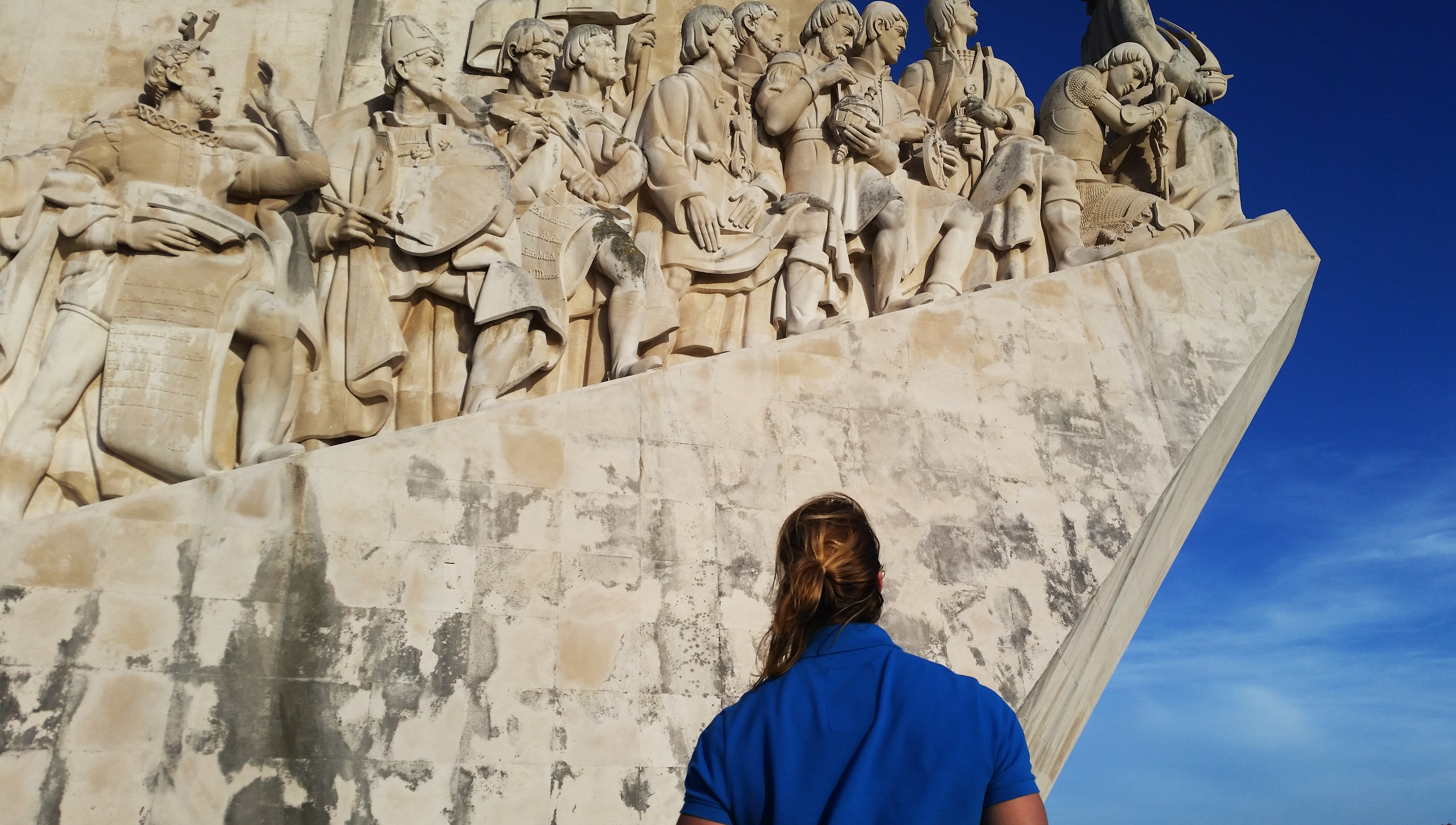
The Templar Order survived, in a way, in Portugal under the name of The Military Order of Christ. Pictured below: A Sensitive Young Man admiring a monument in Lisbon.
Conclusion
The book has 266 pages and contains plenty of valuable insights. Despite the aforementioned inaccurate statement in the introduction, I found it interesting and well worth reading. So, if you can see beyond that, I can recommend the book – especially since there are not so many books in English about mediaeval Spain. I will use the book as the main source for the next podcast episode (The Greatest Podcast comes out once a month – subscribe if you are not already!). Lastly, it must be noted that the book contains both an esoteric aspect (i.e. the theme of the Templar plan of synarchy) as well as purely historical one (i.e. describing events and developments in terms of realpolitik etc.).



 The Golden One
You must be logged in to post a comment.