Ernst Jünger – A Different European Destiny by Dominique Venner
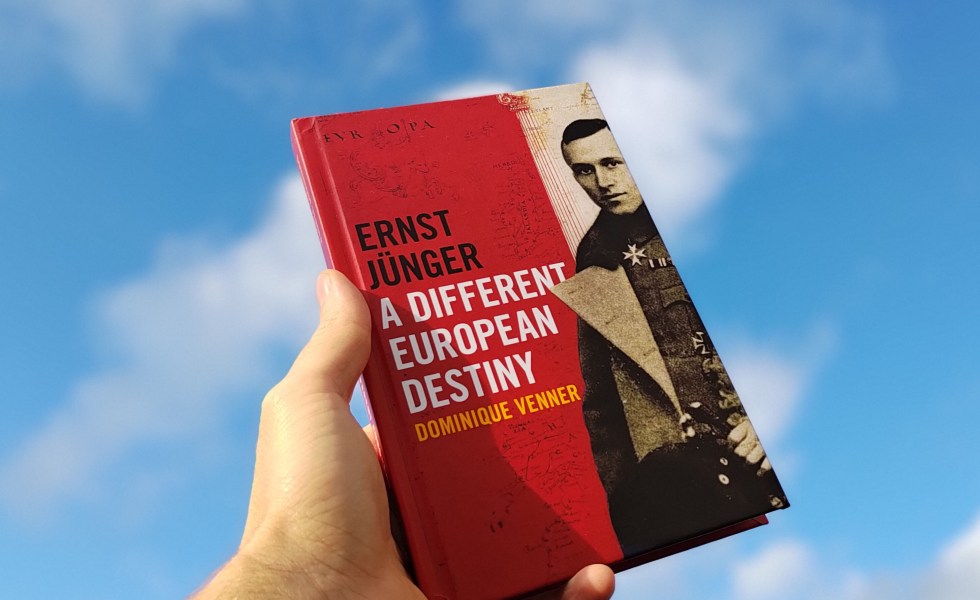
I have read Ernst Jünger – A Different European Destiny by Dominique Venner. As I mentioned upon seeing the announcement of the release of this book: a High-Thumos Chad writing about another High-Thumos Chad! The author, Dominique Venner, was a man cut of the same cloth as Jünger – men of action and contemplation, Cultured Thugs in the finest sense of the word.
Germany and France
Since the book is written by a Frenchman and is about a German, it is natural that the book contains some interesting observations regarding these two (formerly) titanic nations. Their destinies are intertwined – as I have observed before. Venner notes that Jünger was an admirer of French culture. He also notes the following:
‘And although in the 18th century, the French had an aversion to the Habsburgs, who were considered their traditional enemies, they were full of admiration for the King of Prussia, a German prince. The antagonism between the two peoples would only awaken after 1870, against a backdrop of French defeat and territorial conflict relating to the Alsace and Moselle regions.’
Dominique Venner – Ernst Jünger. Page 81.
In the same chapter, the author emphasises the fact that the destructive Franco-German rivalry truly began with Prussia’s defeat of France in 1871.
Pictured below: A Swedish Agent of European Civilisation full of admiration for both French and German culture. Location: Bayonne, France.

Germany and Russia
The author also shares an interesting insight regarding Germany’s relationship with Russia. The following passage appears under the title Northern Germany and Southern Germany:
‘In Germany, the borders that delineate people’s feelings towards Russia coincide with the very ancient, cultural and historical border of the Limes and the Main. It divides Germany in two: a predominantly Catholic Germany, that of the South-West, which was subjected to Roman and Catholic influence; and another, that of the North-East, which evaded it. The former is associated with the Austro-Hungarian monarchy and was often at odds with Russia, with the latter acting as the heir to the Prussian and Lutheran tradition and frequently seeking an alliance with Russia.’
Dominique Venner – Ernst Jünger. Page 57.
I will return to this fascinating subject in a coming podcast episode. An example of when Prussia allied with Russia was during the Partitions of Poland. Hostilities between Germany (in this context its North-Eastern part) and Russia can be found when studying the history of the Teutonic Order.

German Romanticism
In the chapter titled Weimar and the Conservative Revolution, the author shares the following insight:
‘A powerful intellectual and poetic current born at the end of the 18th century, German romanticism rebelled against the artificiality and rationalism of French Enlightenment. Following in Herder’s footsteps, it contrasted abstract universalism with the living and multifaceted reality of different cultures, in the context of which all peoples are bearers of their own original genius, of a soul that endures through time by adopting ever-changing forms and of which language is the expression.’
Dominique Venner – Ernst Jünger. Page 42.
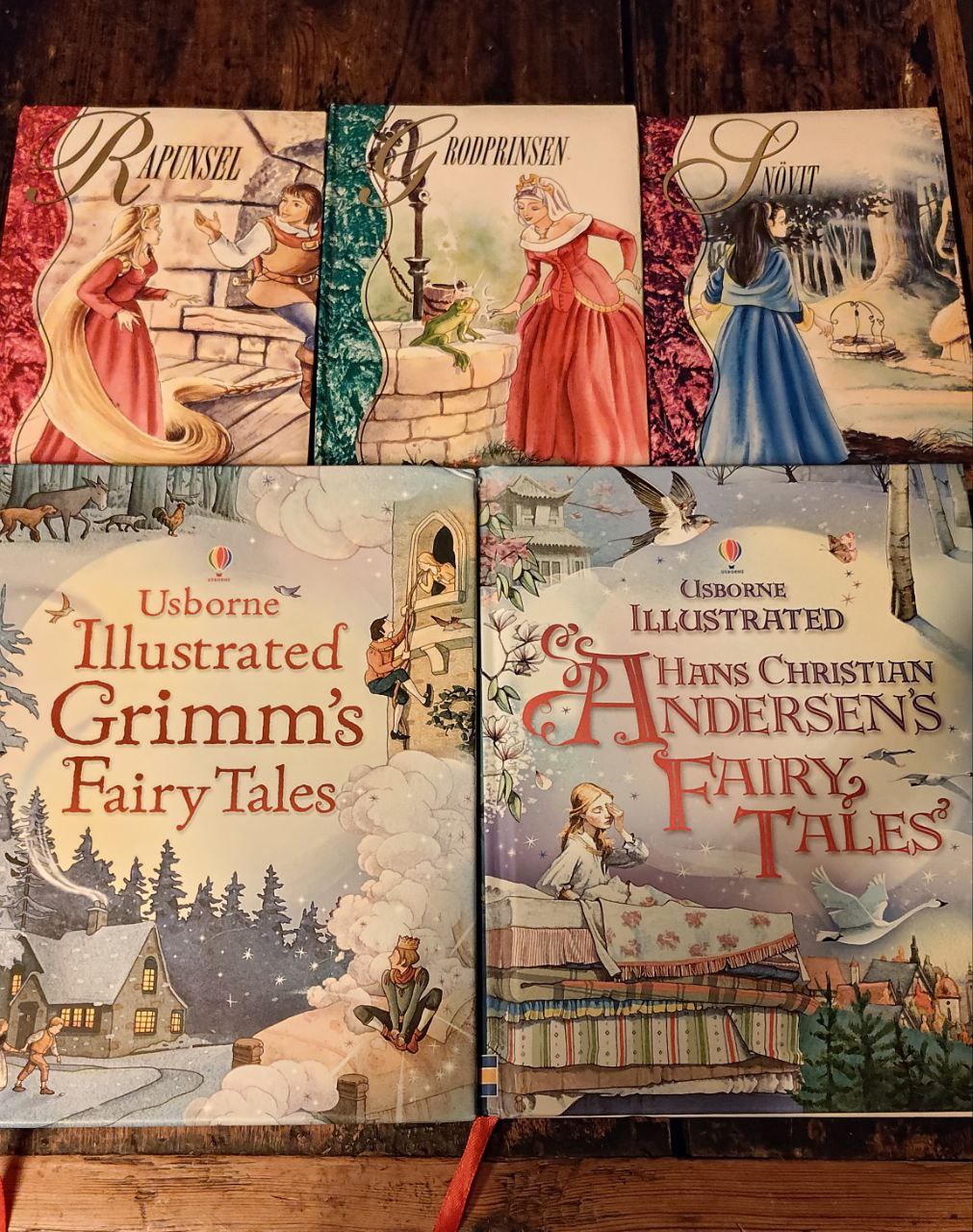
Well formulated! Sensitive Young Men must be familiar with German Romanticism. My to-read-list is quite long, but I will endeavour to read Die Leiden des jungen Werthers (The Sorrows of Young Werther) soon. Speaking of German Romanticism – the Brothers Grimm, to be precise – I recently shared that I read a few stories for my elder daughter (five years of age) every night (below are some of the books I read from):
A Sensitive Man of Culture
In the epilogue, the author shares the following beautiful description of Jünger:
‘Whether in times of war of periods of peace, it is his life that testifies to his having been an exemplary European. Ever wakeful within him was the immanent perception of a beautiful and dangerous world. A man of both action and contemplation, of high culture and great sensitivity, he managed, thanks to his unbroken fondness of France, to reconcile within himself the two brotherly and sometimes rival peoples born from the Carolingian world, a world that traced the visible outlines of the European body.’
Dominique Venner – Ernst Jünger. Page 195.
A strong bond between France and Germany is of utmost importance in order for Europe to reclaim its own destiny. I will elaborate more on this later on.
Conclusion
Ernst Jünger – A Different European Destiny has 212 pages and serves as a good introduction to the life and work of Ernst Jünger. I would recommend the book not only to those interested in the man himself or in European literature but also to those interested in the chaotic first half of the 20th century in Germany. As shown above, the book also contains plenty of historico-geopolitical insights.
Great stuff!




 The Golden One
You must be logged in to post a comment.