The Book of Primal Signs by Nigel Pennick
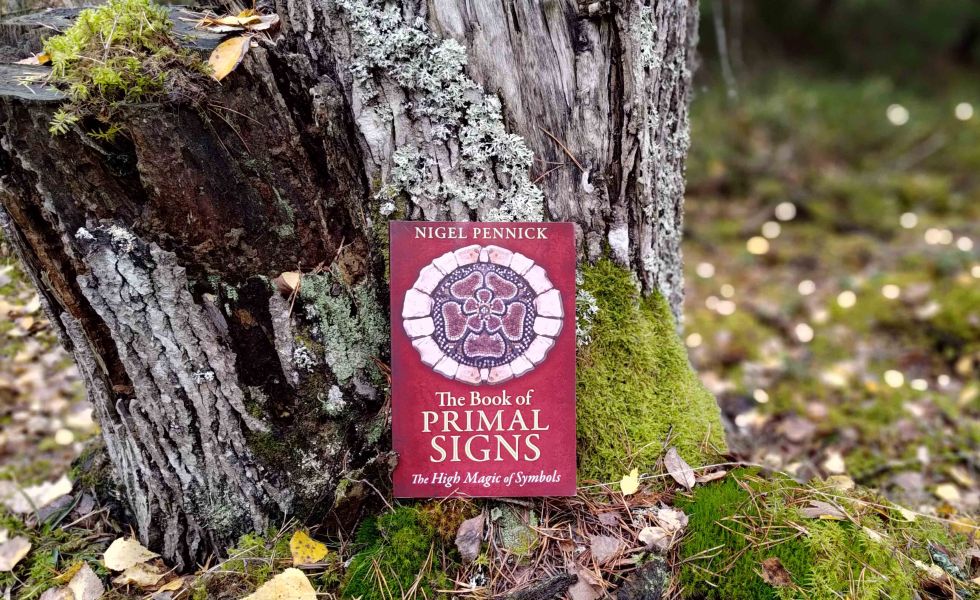
I have read The Book Primal Signs – The High Magic of Symbols by Nigel Pennick. In the book, the author presents and discusses various common (as well as some rarer) symbols – primarily spiritual ones. Below are a few insights from the book.
Orthodox Icons
In the chapter titled A Symbolic World, the author discussed the Abrahamic attitudes towards images and icons. He shares the following insight:
‘There was a fierce fight using violence over images in the Eastern Church, which went on for decades until it finally led to the reinstatement of image making and the development of the instantly recognizable Orthodox icon.’
Nigel Pennick – The Book of Primal Signs. Page 2.
As an appreciator of Orthodox icons, I am happy that the good faction won this fight! Pictured below: My modest collection of icons.

The Destruction of Meaningful Symbols
As any reasonable person should, the author takes issue with the destruction of unique and beautiful symbols.
‘Traditional ornament was denigrated during the twentieth century by futurist-inspired, machine-loving architectural theorists who claimed puritanically that only machine-made blank surfaces were morally proper and that the authoritarian brave new world of the future would be devoid of ornament and the decorative arts. Part of the underlying reason for this crusade against art was the mistaken belief that if one destroys all meaningful cultural references to local identity, then one will abolish human conflict by making all people the same.’
Nigel Pennick – The Book of Primal Signs. Page 7.
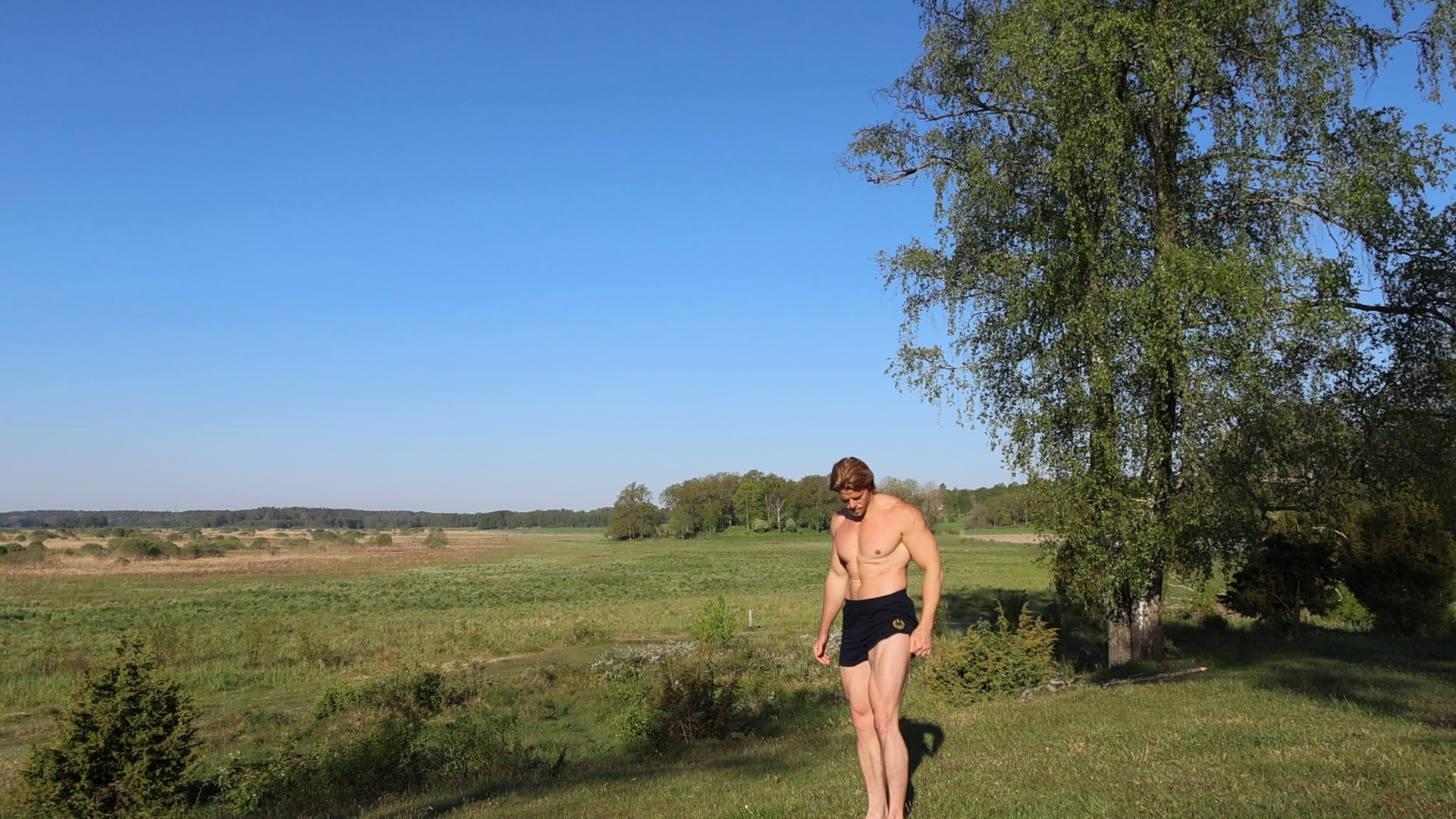
This is a good analysis. A less generous one would be to state that the impulse described above is simply the Leftist hatred of beauty. Beauty implies a hierarchy and Leftists hate hierarchy. I elaborate more about this important topic in Demigod Mentality. Pictured below: A Nordic Druid absorbing natural energies.
The Temperance Tarot Card
In the chapter titled The Crescent Moon, Star, and Comet, the author discusses the symbolism of the Tarot cards:
‘The star as a tarot card has the traditional imagery of a woman with vases in each hand, an imagine of one of the four cardinal virtues, Temperance, who pours water into wine, producing a synthesis that retains the best qualities of two opposites while eliminating their worst natures.’
Nigel Pennick – The Book of Primal Signs. Page 64.
Quite beautifully stated about the Temperance card – something to be meditated upon! I will return to the Tarot later on.

Cosmic Axis
In the chapter titled The Tree of Life, the author discusses symbolism surrounding trees.
‘As the cosmic axis, the tree is a significant element in shamanism, linking the world we live on with those above and below, allowing the shaman to travel between the worlds. Trees are, of course, the natural habitat of many kinds of living birds, but drawings and artifacts from shamanic cultures also frequently depict birds as a metaphor for the soul or externalized consciousness. Christian symbolism depicts the Holy Ghost, and aspect of God, as a dove.’
Nigel Pennick – The Book of Primal Signs. Page 84.
Speaking of which, I note the following about the Rune Eihwaz Demigod Mentality:
‘Eihwaz – The World Tree, the Axis Mundi. Eihwaz can be said to represent Yggdrasil or, more precisely, the vertical axis of Yggdrasil. The Rune can be seen as representing different levels of consciousness. Eihwaz penetrates through Asgard, Midgard, and Hel – heaven, middle-earth, and the underworld. Similarly, your own consciousness can also travel up and down along this axis.’
Conclusion
The Book Primal Signs is a valuable resource for those who want to understand the meaning of symbols and should be of interest for those interested in spiritual matters and folklore. The book has 200 pages.



 The Golden One
You must be logged in to post a comment.