Atlantis and the Cycles of Time by Joscelyn Godwin
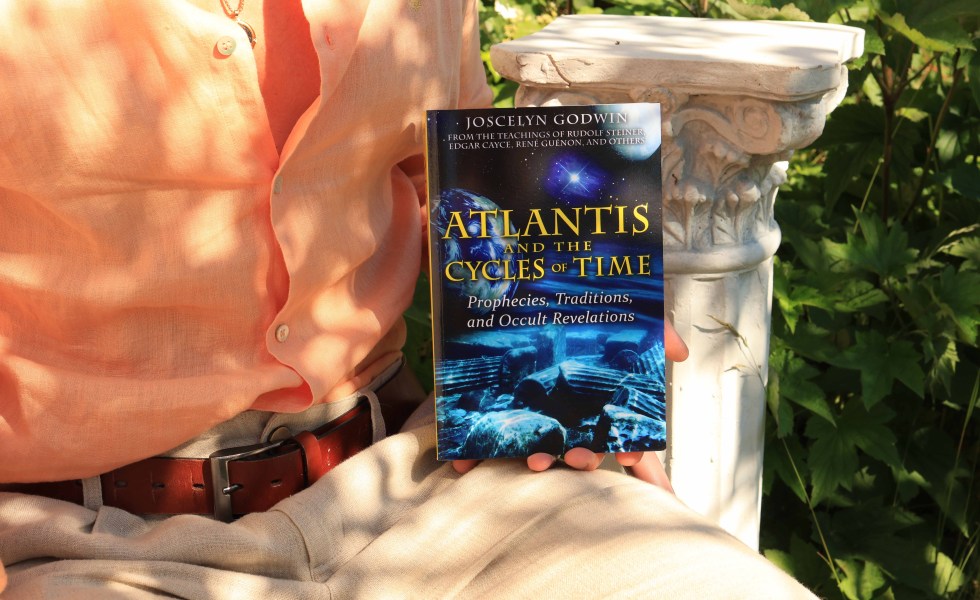
I have read Atlantis and the Cycles of Time – Prophecies, Traditions, and Occult Revelations by the eminent Joscelyn Godwin. In the book, the author presents various theories from “schizos” (i.e. authors who blend myth with their own fanciful yet evocative interpretations) as well as more reputable scholars regarding Atlantis and similar esoteric matters. The theories stem from the latter half of the 19th century and the early 20th century.
The book contains the following chapters:
- Atlantis and the Rationalists
- The French Esoteric Tradition
- H. P. Blavatsky and the Early Theosophists
- Later Theosophists
- Germanic Atlantology
- Two Traditionalists
- The Britons
- Some Independents
- Channeling in the New World
- Channeling in the New Age
- The Four Ages
- The Precession of the Equinoxes
The Oera Linda Book
In the chapter titled Germanic Atlantology, the author discusses the Oera Linda book – which some claim is a forgery and some claim is a legitimate source. I have yet to read it myself, so I will not pronounce judgement on it. Real or not, I found these passages (which appear in this book as well) from William Sandbach’s 1876 translation epic:
‘Before the bad time came our country was the most beautiful in the world. The sun rose higher, and there was seldom frost… The years were not counted, for one was as happy as another.
On one side we were bounded by Wralda’s Sea on which no one but us might or could sail; on the other side we were hedged in by the broad Twiskland, through which the Finda people dared not come on account of the thick forests and the wild beasts.
Eastward our boundary went to the extremity of the East Sea, and westward to the Mediterranean.’
First, good times, then came the bad times:
‘During the whole summer the sun had been hid behind the clouds, as if unwilling to look upon the earth. There was perpetual calm, and the damp mist hung like a wet sail over the houses and the marshes. The air was heavy and oppressive, and in men’s hearts was neither joy nor cheerfulness. In the midst of this stillness the earth began to tremble as if she was dying. The mountains opened to vomit forth fire and flames. Some sank into the bosom of the earth, and in other places mountains rose out of the plain. Aldland, called by the seafaring people, Atland, disappeared and the wild waves rose so high over hill and dale that everything was buried in the sea. Many people were swallowed up by the earth, and others who had escaped the fire perished in the water.’
Again, real or not, it speaks of a golden age before a great catastrophe – a theme that is found in many mythologies. Perhaps they speak of the Younger Dryas Period – as proposed by Graham Hancock (i.e. his theory of an advanced civilisation that was lost following a time of great cataclysm). Whichever might be the case, it is always interesting to analyse myth. And when doing so, it is good to focus on the overall narrative, and not on the details.

The Lord of Shambhala
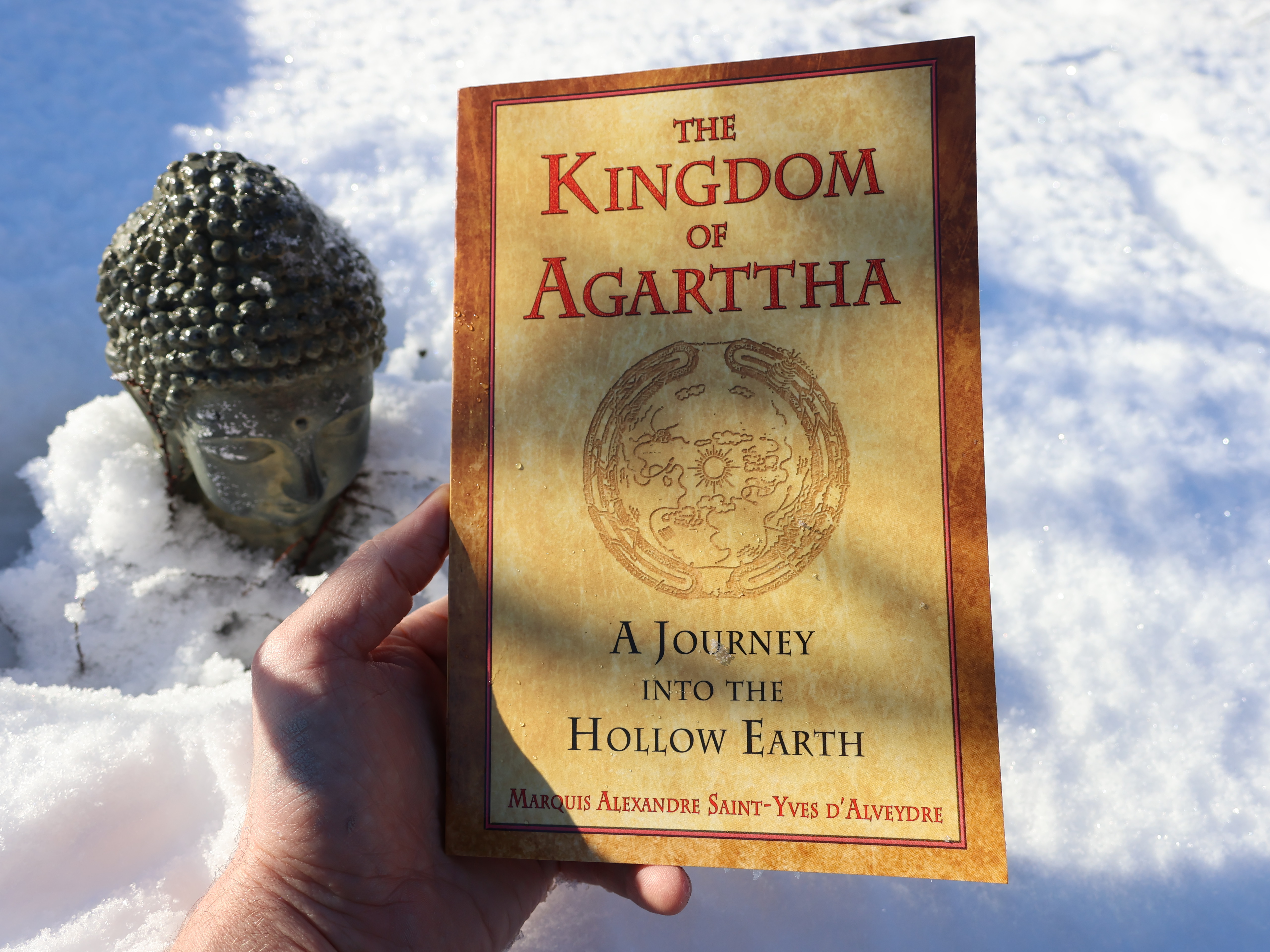
In the chapter titled Two Traditionalists, the author discusses the insights of René Guénon and our esteemed Julius Evola. Related to the teachings of Guénon, the author discusses various Theosophist views on esoteric matters. According to the Theosophist Alice Bailey, the Lord of the World resides in Shambhala – which, as the author notes, sounds similar to Guénon’s King of the World, who rules an initiatic center hidden somewhere in the Himalayan region. Guénon’s King of the World does not rule over Shambhala but over the underground kingdom Agartha. Although two different places, Shambhala and Agartha are connected and sometimes the names are used interchangeably – such is often the case with mythical locations.
What does any of this mean? Perhaps not much at all. Perhaps it is only the speculations of early 20th century occultists who searched for higher spiritual truths. Whichever the case might be, it sparks the imagination at least!
In the same chapter, the author discusses Evola’s Pagan Imperialism (that we have discussed elsewhere), which is a lot more tangible than many of the more esoteric books of the time (example below).
The Degeneration of the Atlanteans
A rather amusing theory regarding the downfall of the Atlantean civilisation appears in the book:
‘The main fault of the Atlanteans was that they were too philosophical and unworldly. When immigrants came from less evolved lands they became interested in the Atlanteans’ psychic powers and learned occult secrets. They conjured evil spirits from the lower astral and did terrible things. Black magic spread, and the people became debauched.’
Joscelyn Godwin – Atlantis and the Cycles of Time. Page 195.
The Kali Yuga and the Doors of Valhalla
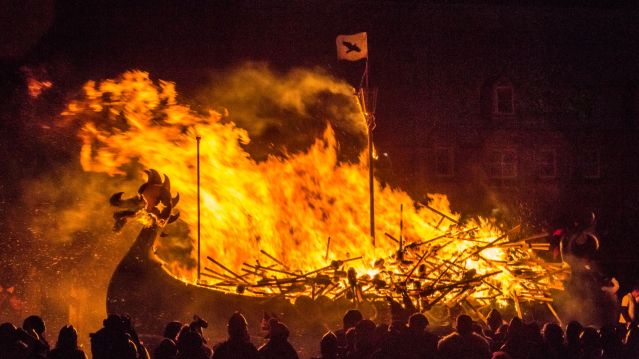
In the chapter titled The Four Ages, the author notes that the number of warriors that will issue forth during Ragnarök is the same as the number of years in the Kali Yuga – 432 000 years to be precise.
‘There Valgrind stands, the sacred gate,
The Poetic Edda
And behind are the holy doors;
Old is the gate, but few there are
Who can tell how it tightly locked.
Five hundred doors and forty there are,
I ween, in Valhall’s walls;
Eight hundred fighters through one door fare
When to war with the wolf they go.’
Quite an interesting coincidence. If it is indeed a coincidence.
Conclusion
The book is 357 pages long and the subject is quite niche, so it is perhaps not a book I would recommend more generally. But for those who are interested in schizo-theories and the esoteric tradition in the West over the last 150 years, I can recommend it. I enjoyed reading it.



 The Golden One
You must be logged in to post a comment.