The Doctrine of Awakening by Julius Evola
Posted on May 28, 2022

I have read The Doctrine of Awakening by Julius Evola. Reading this book was a natural step after reading The Yoga of Power (read my review of it here). Evola was, as you may know, a Traditionalist and, generally speaking, wrote from a Right-wing perspective. Evola took issue with the faulty (i.e. ‘hippy’-like) interpretations of Buddhism that permeated the West (one could say that they still do). In the book, Evola emphasises the Aryan (i.e. Indo-European) and aristocratic (i.e. Kshatriya caste) origin of Siddhartha Gautama, better known as Buddha – the Enlightened One. It should be noted that the book can be read as a refutation of the aforementioned faulty interpretations of Buddhism. Therefore, it is, in my humble opinion, a good book to read for anyone who seeks a genuine understanding of Buddhism. I am not yet knowledgeable enough in regard to Buddhism to comment further upon many of the topics presented in the book – I will reread it later on when I have acquainted myself with more Buddhist texts. Even without any greater prior knowledge of Buddhism, The Doctrine of Awakening is interesting and contains plenty of unique insights as well as many truly epic quotes (some of which are listed below).
The Physical Aspect of the Buddha
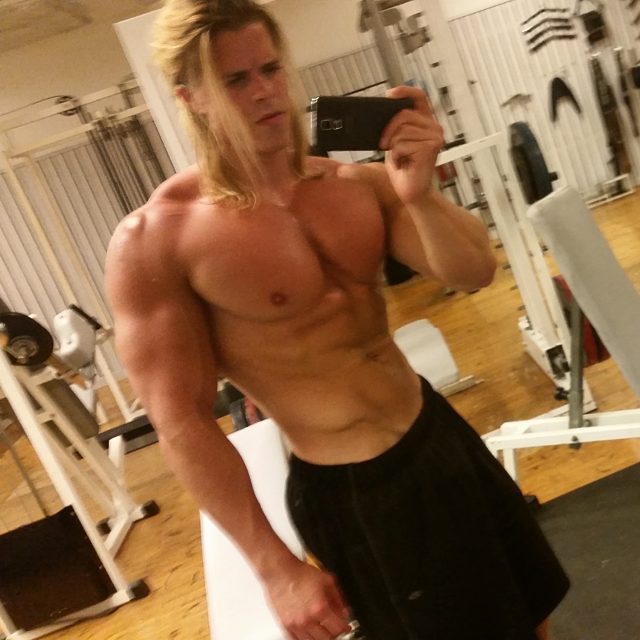
‘Thou hast a perfect body, thou art resplendent, well born, of noble aspect, thou hast a golden colour and white teeth, thou art strong. All the signs that thou art of noble birth are in thy form, all the marks of a superior man.’
– Sutta Nipāta, 3.1.19.
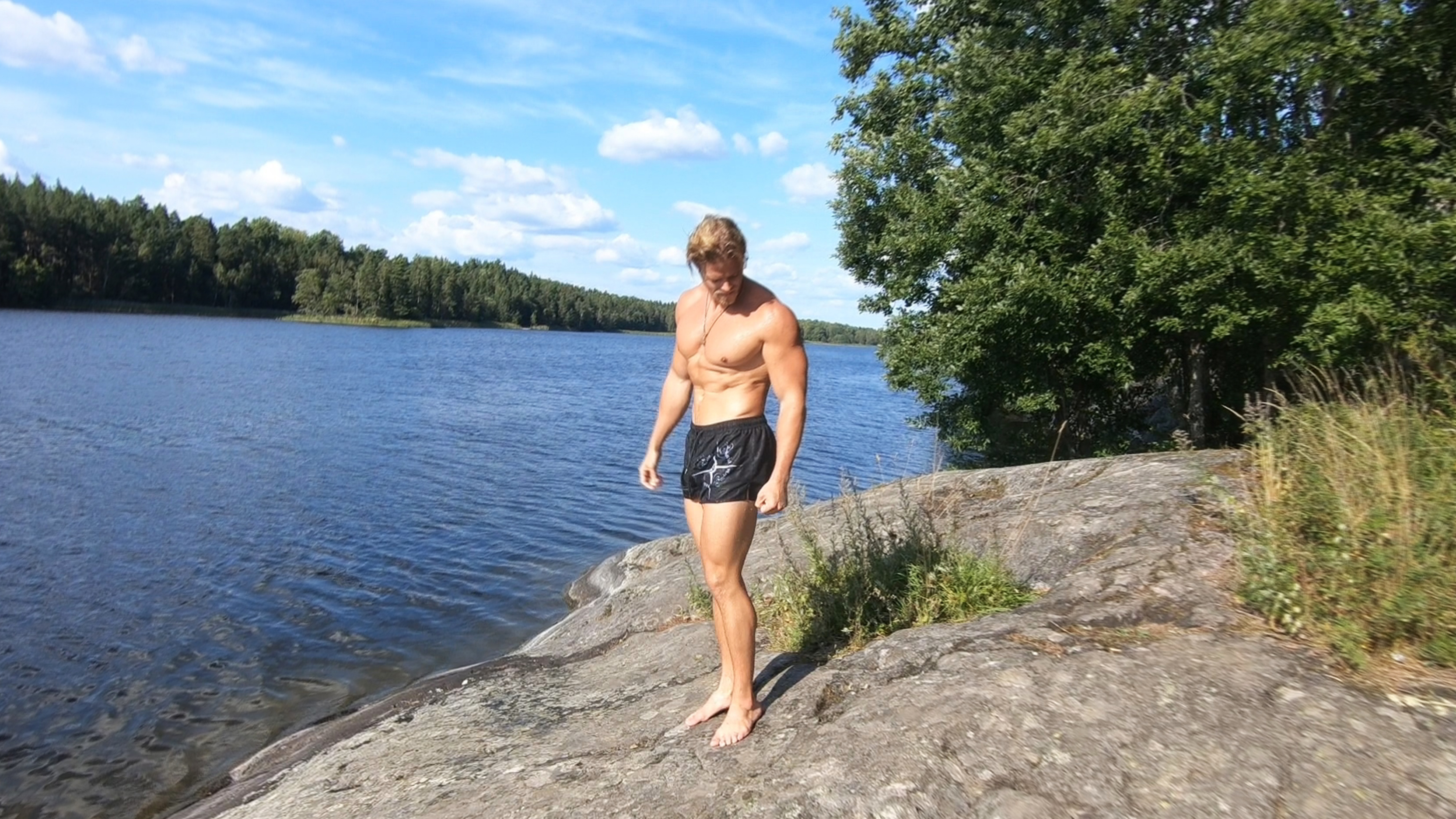
This supremely epic and inspiring quote appears in the book to describe how Buddha appeared to kings. This descriptions comes from one of the oldest Buddhist texts, and paints a picture quite dissimilar to the rather round Buddha often seen depicted (in statues for example). You, my dear reader, must now excuse my hubris as I accompany this heroic quote with the following picture:
The Aryan-ness of the Doctrine of Awakening
As mentioned above, an important point Evola returns to in several chapters of the book is the Aryan-ness (Indo-European-ness) of Hinduism and, by extension, Buddhism. In the chapter The Aryan-ness of the Doctrine of Awakening, he elaborates on why he emphasises the Indo-European origins of Buddhism – he wishes to confront those who view the doctrine as one of Asiatic exclusiveness, i.e. one foreign to the European spirit.
‘We have to remember that behind the various caprices of modern historical theories, and as a far more profound and primordial reality, there stands the unity of blood and spirit of the white races who created the greatest civilizations both of East and West, the Iranian and Hindu as well as the ancient Greek and Roman and the Germanic.’
Julius Evola – The Doctrine of Awakening. Page 14.
Here Evola refers to the Indo-Europeans. Evola uses the term Aryan; I use the term Indo-European to be more specific and to avoid confusion. I asked the knowledgeable Chad Pastoralist for a comment on the genetic aspect of the Indo-European legacy – he kindly wrote a highly interesting, in-depth answer which can be read at the end of this article. Evola’s quote continues:
‘Buddhism has the right to call itself Aryan both because it reflects in great measure the spirit of common origins and since it has preserved important parts of a heritage that, as we have already said, Western man has little by little forgotten, not only by reason of involved processes of intermarriage, but also since he himself – to a far greater extent than the Eastern Aryans – has come under foreign influences, particularly in the religious field.’
Julius Evola – The Doctrine of Awakening. Page 14.
In this second part of the quote, one can surmise that it is Christianity Evola is referring to. A debate regarding which is more in tune with the Indo-European spirit – Buddhism or Christianity – would indeed be interesting. I am not yet knowledgeable enough to give a conclusive answer – perhaps I will include a chapter on the topic in my next book. What we can say for now, however, is that, as Evola himself has pointed out in his The Mystery of the Grail (read my review of it here), Christianity was thoroughly Germanised once it came into contact with the Germanic tribes. Thus, it can be fair to say that the origins of Christianity are more foreign than the origins of Buddhism – but that, as time went on, Christianity became more European, whereas Buddhism became less Indo-European.

Aryan Attitudes to Lying
In the chapter titled Rightness, Evola notes that nothing among the Aryan peoples was as ignominious as falsehood. In an Aryo-Persian text it is even said that killing is not as serious as lying. On a personal note, I never lie. I lead a life in which I do not have to lie – not to others, not to myself. In fact, as a conscientious person, you cannot lie to yourself; which means that shame will be yours if you behave in a way that does not correspond to your vision of yourself – regardless if anyone else knows. Honour is all.
A Great Mental Image
In the chapter titled Determination of the Vocation, Evola quotes from a text named Majjhima. The following is said about the willpower of the ascetic:
‘The ascetic is one who has gained mastery over himself, who “has his heart in his power, and is not himself in the power of his heart.” He is the master of his thoughts. “Whatever thought he desires, that thought will he think, whatever thought he does not desire, that thought will he not think.” As a perfectly tamed elephant, led by his mahout, will go in any direction; as an expert charioteer, with a chariot ready on good ground at a crossroad and harnessed to a thoroughbred team, can guide the chariot where he wishes; or as a king or a prince with a chest full of clothes, may freely choose the garment that most pleases him for the morning, the afternoon, or the evening – so the ascetic can direct his mind and his being toward one state or another with perfect freedom.’
Julius Evola – The Doctrine of Awakening. Page 80.
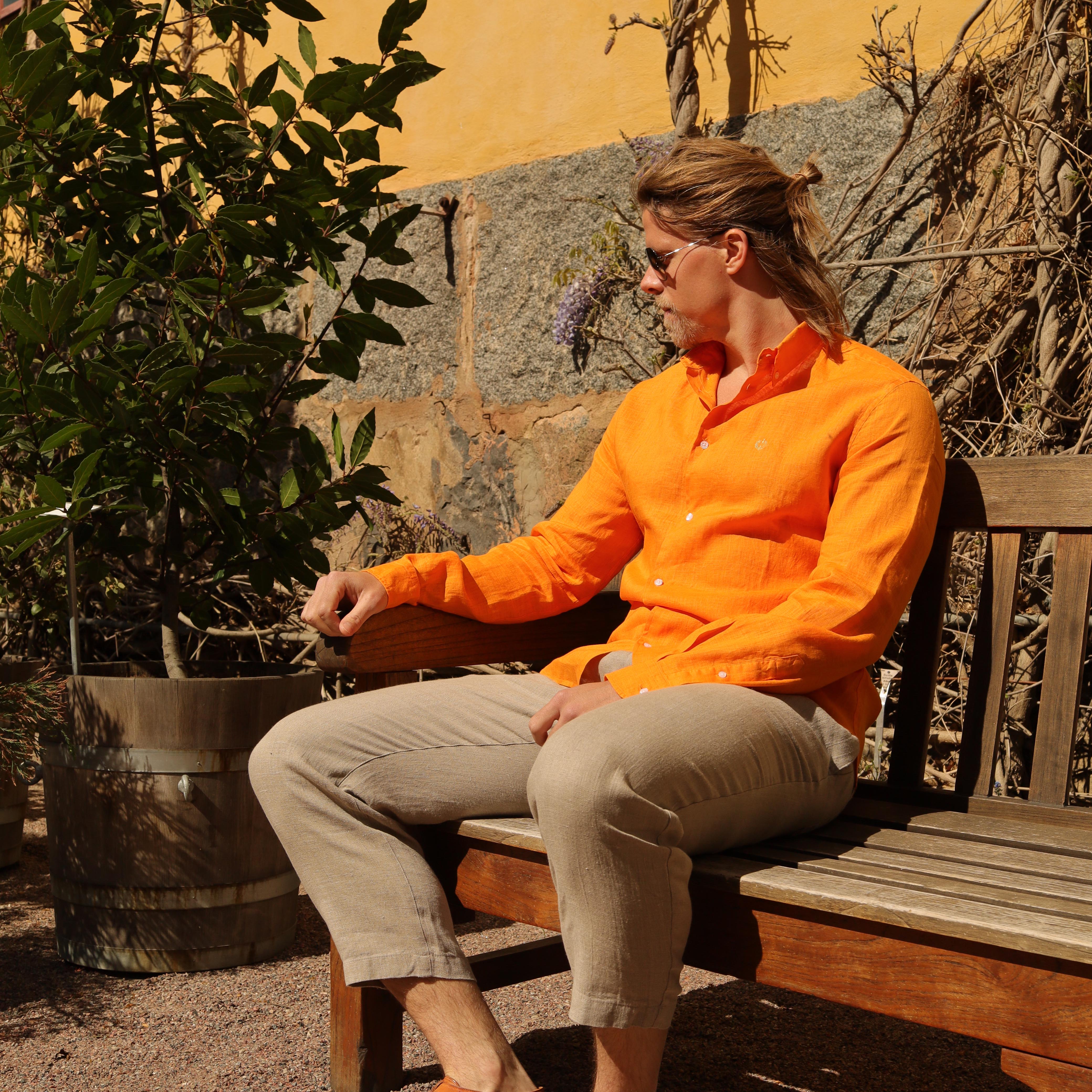
With training, it is possible to gain a greater mastery over one’s mind. This mastery is a power that will be useful for any endeavour. Having his heart in his power – instead of the heart having him in its power – can be translated into being in control of any urge or temptation that goes contrary to one’s goals. Pictured below: yours truly choosing the garment that pleases me the most, just as I endeavour to choose the thoughts that please me the most.

The Demon of Desire
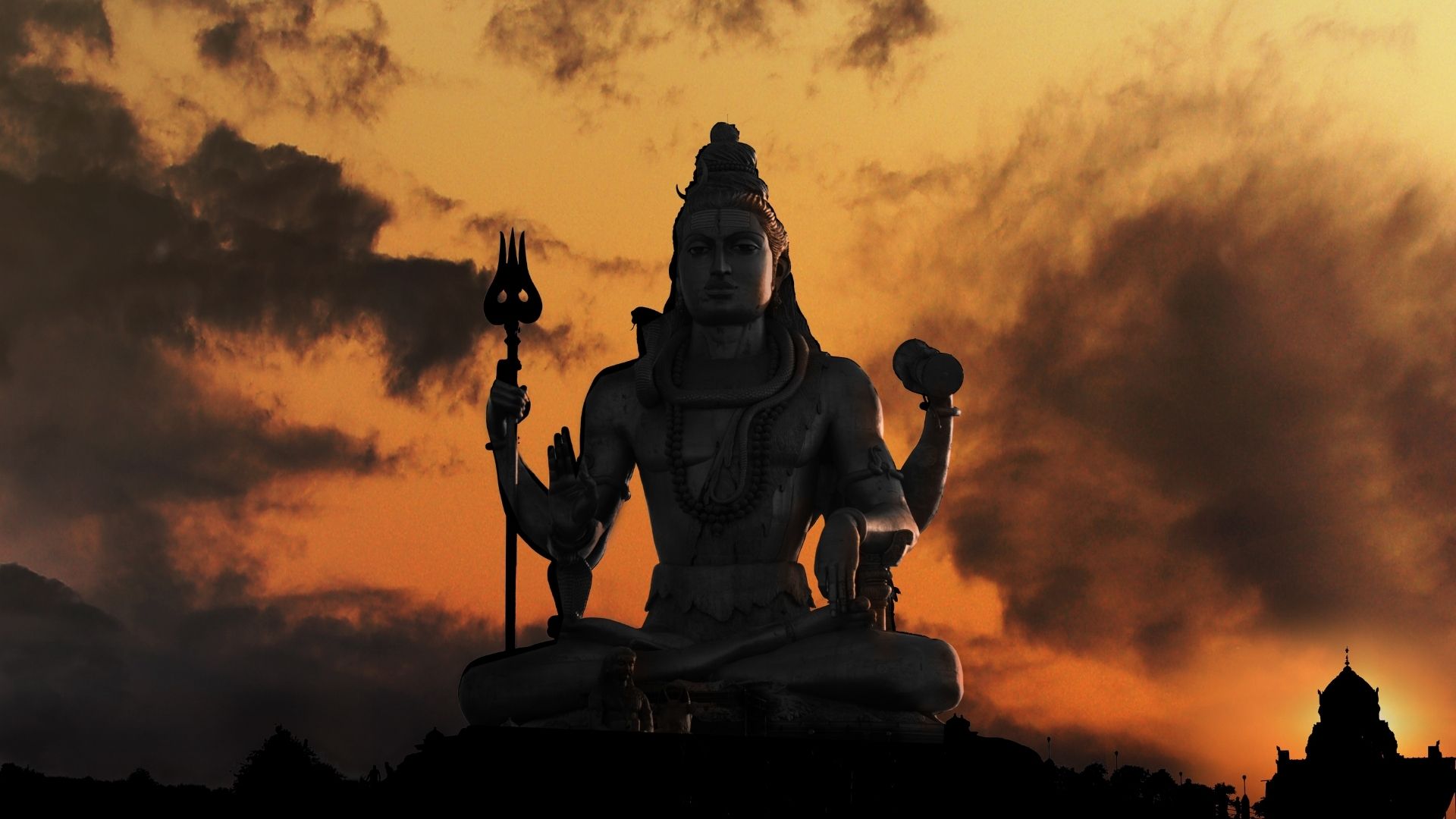
‘Hindus have the myth of Śiva, the great ascetic of the mountaintops, who with one glance of his frontal eye – the eye of knowledge – reduced Kama, the demon of desire, to ashes when he tried to disturb his mind.’
Julius Evola – The Doctrine of Awakening. Page 112.
For anyone struggling with desires, this image will be useful. Invoke the image of Shiva destroying Kama should you be in need of overcoming an urge – this can be a potent technique for anyone still addicted to pornography.
The Awakened One
In the chapter titled Signs of the Nonpareil, Evola again draws upon the Majjhima to supply us with an inspiring description:
‘The Awakened One is he who is detached from life and death and who knows the way up and the way down, he is “bold, not knowing hesitation, a sure leader, pure of passion, resplendent as the light of the sun, resplendent without arrogance, heroic”; he is the Knower “whom no mania dazzles, no trouble conquers, no victory tempts, no spot stains”; he is one “who asks no more, and who, as a man, has mastered the ascetic art”: he is the “great being, who lives strenuously, free from every bond, no longer slave to any servitude”; he is “the Valiant One, who watches over himself, constant in his step, ready to the call, who guards himself within and without, to nothing inclined, from nothing disinclined, the Sublime One whose spirit is powerful and impassible”; he is the “Awakened One whom no thirst burns, no smoke veils, no mist clouds: a spirit who honors sacrifice and who, like no other, towers in majesty.”’
Julius Evola – The Doctrine of Awakening. Page 210.
An ascended being of power completely in control of his own mind. Note: the pictures above and below are not of Buddha but of Shiva – they fitted the quotes aesthetically speaking!

Another epic quote that appears in the book is the following. The quote reminded me of another inspiring quote about Buddha and the prodigious cobra Muchalinda found in The Serpent Symbol in Tradition by Dr. Charles William Dailey (read my review here).
‘It is said that when Prince Siddhattha was sitting under the “tree of illumination,” resolved not to move until he had reached transcendental knowledge, he underwent an attack by the demoniacal forces of Māra, who was determined to move him from there, in the form of flames, whirlwinds, tempests, and fearful apparitions. But Prince Siddhattha remained unshakable and all these apparitions finally vanished.’
Julius Evola – The Doctrine of Awakening. Page 116.
Conclusion
At 239 pages, The Doctrine of Awakening is not a long book. However, since the topics are quite heavy and Evola’s works are usually quite dense, the book will require a bit more time than many other books of the same length. As stated previously, the book is best read when already having an understanding of Buddhism – there are easier introductions to the subject. That being said, reading about the topic from Evola’s perspective makes it much more interesting and certainly gave me new and valuable insights. I look forward to reading more about Buddhism in the coming time!
Appendix – Indo-European Genetics
The following explanation was given to me by The Chad Pastoralist. If you are interested in these matters, I highly recommend that you follow him on Telegram (https://t.me/thechadpastoralist).
Northern Europe
‘Northern Europeans on average are about 40-50% descended from the Yamnaya. The ‘Yamnaya-like’ or ‘steppe’ component of ancestry entered Northern and Central Europe via various Indo-European-speaking cultures such as the Corded Ware Culture and Bell Beaker Culture, which in itself was a Western branch of the Corded Ware Culture. Steppe ancestry entered Scandinavia via the Battleaxe Culture, which was a Northern branch of the Corded Ware Culture that had mingled with the Funnelbeaker Culture in Northern Europe. Modern English people receive around 47-49% of their ancestry from the steppe which was introduced via the Bell Beaker Culture around 4,300 years ago. Steppe ancestry reaches its peak in Britain at around 50% amongst the Irish and Scottish, and this number can also be found in Scandinavia.
Southern Europe
In Southern Europe it varies. In Iberia steppe ancestry is about 31-40%, but over 90% of the non-Indo-European lineages were replaced by the Beaker folk just like they were in Britain. This ultimately means that regardless of what percentage of steppe ancestry an Iberian male may carry, if they have the R1b Y-DNA haplogrpup, they descend directly from a Beaker warrior from thousands of years ago.
Scandinavia
In regards to Scandinavia, the Battleaxe Culture was an Indo-European-speaking culture that emerged as a Northern branch of the Corded Ware Culture. The Battleaxe Culture mingled with the Funnelbeaker Culture, which was an Early European Farmer culture rich in indigenous Western Hunter Gatherer ancestry. Due to a Founder Effect in Scandinavia, the I1 haplogroup, which is associated with the Western Hunter Gatherers theoretically speaking, had become the dominant Y-DNA haplogroup amongst that culture. Autosomally speaking, steppe ancestry outweighed WHG ancestry, and most Scandinavians today have a very high prevalence of steppe ancestry up to 50% and sometimes ever so slightly higher.
India
In India, steppe ancestry was brought into the area via the Sintashta Culture. The Sintashta was an Indo-European culture that had invented the spoked wheel specifically for chariot warfare, and they had the highest prevalence of blonde hair and blue eyes amongst several Indo-European groups. Most Indians today only inherit about 20% of their ancestry from the Sintashta, but some high-caste Indians carry haplogroups associated with a direct paternal Indo-European lineage.
Yamnaya
In regards to the Yamnaya themselves, they were on average 55% descended from Eastern Hunter Gatherers, 35% from the Caucus Hunter Gatherers and the other 10% was minor amounts of Western Hunter Gatherer and Early European Farmer ancestry. These numbers fluctuated throughout history which has resulted in the present-day genetic make-up of modern Europeans, with Northern Europeans receiving most of their ancestry from the Yamnaya via their descendants (such as the Corded Ware Culture and Bell Beaker Culture). Southern Europeans receive Indo-European ancestry to an extent, but importantly via the Y-DNA haplogroup like R1b which specifies a direct unbroken paternal lineage back to the Steppe herders.’
Horus Heresy Reading List
Posted on May 27, 2022 1 Comment
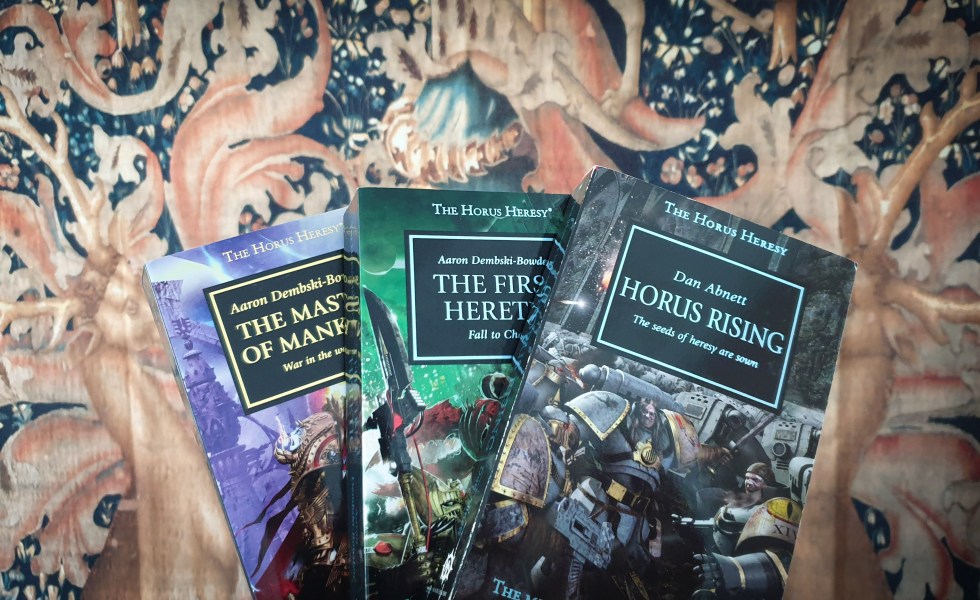
The Horus Heresy series contains 54 books. Below, I have listed the best (in my humble opinion) ones and the ones most central to the main storyline. I have read all 54 books and am currently reading the Siege of Terra series which concludes the Horus Heresy story.
- Horus Rising
- False Gods
- Galaxy in Flames
- The Flight of the Eisenstein
- Fulgrim
- Descent of Angels
- Legion
- Fallen Angels
- A Thousand Sons
- The First Heretic
- Prospero Burns
- The Outcast Dead
- Deliverance Lost
- Know No Fear
- The Primarchs
- Fear to Tread
- Angel Exterminatus
- Betrayer
- The Unremembered Empire
- Scars
- Vengeful Spirit
- The Path of Heaven
- The Silent War
- Angels of Caliban
- Praetorian of Dorn
- Corax
- The Master of Mankind
- The Crimson King
- Wolfsbane
- Slaves to Darkness

The supremely epic artwork above is made by Alex Cristi and represents The Golden One (yours truly) as the Primarch Fulgrim.
Revival of the Runes by Stephen E. Flowers
Posted on May 24, 2022
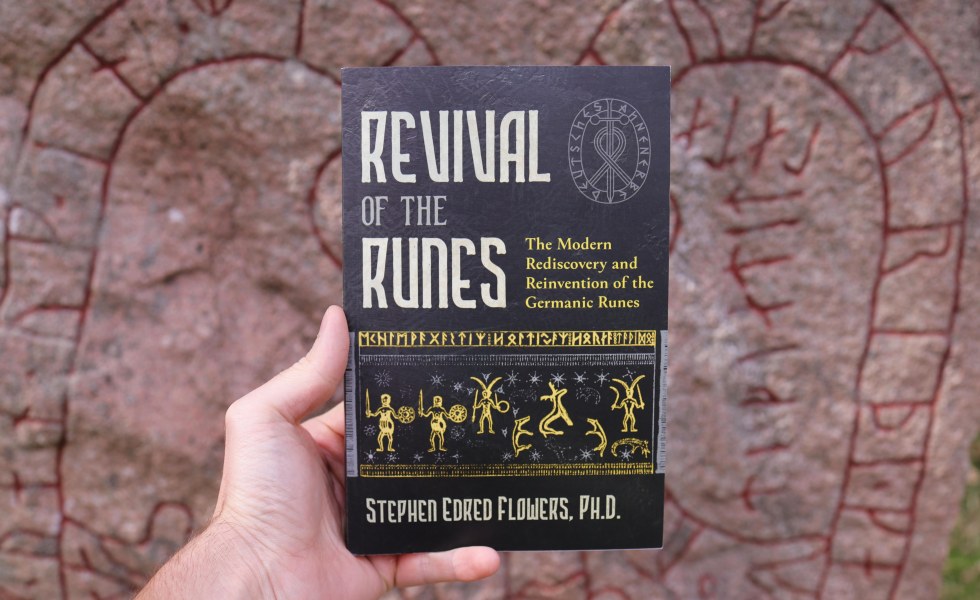
I have read Revival of the Runes by Stephen E. Flowers. Just as Icelandic Magic (review here) and Rune Might (review here) by the same author, it is highly insightful and interesting. I thought that the only reasonable course of action was to continue along the same path by reading more about the runes.
Stephen E. Flowers and Edred Thorsson
You may have noticed that Rune Might is authored by Edred Thorsson (Stephen E. Flowers’ pen name). Why does he write about the same topic under two different names? Simply put, it is to distinguish between his role as a scholar and as a magician. Stephen E. Flowers is the academic who presents certain topics in a more scholarly manner; Edred Thorsson presents them in a less restricted manner – allowing him some poetic license as well as some room to elaborate on certain magical practices as he sees them. On a personal note, I view this as a reasonable way to distinguish between the works. It must be noted that the style of the books is quite similar regardless of which name he uses.
Rune Might and Revival of the Runes
As you may have discerned from the information regarding the names above, Revival of the Runes focuses more on the runes from the perspective of a historian – Rune Might is more practically oriented. As I noted in my review of Rune Might, I appreciate practical instructions that I can implement, and experiment with, in my own meditations. That being said, I thoroughly enjoyed Revival of the Runes as well. The story of the runes is, to a large extent, also a story about the Germanic peoples. Moreover, in reading the book, I was introduced more thoroughly to certain Swedish scholars whose names I had previously only been familiar with in passing – such as Johan Bure (more on him further down).
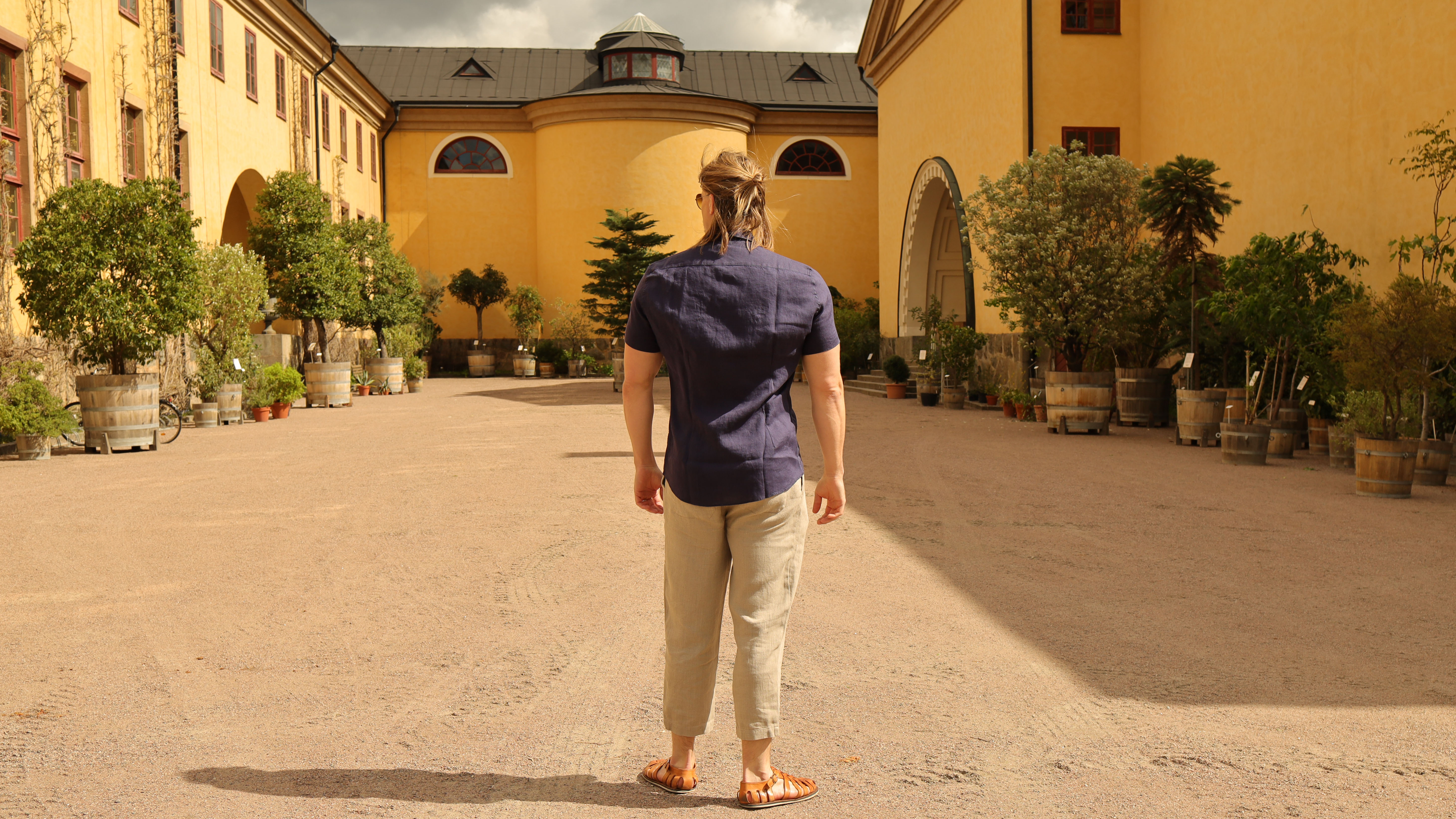
Pictured below: yours truly in Uppsala, a place of both spiritual and scholarly importance. Gamla Uppsala (Old Uppsala) was an important place for Pagan rituals, and Uppsala University (founded in 1477) has, as you may have surmised, always been an important place for all manner of studies and research.
The Shift From Elder to Younger Futhark
The Younger Futhark (of 16 runes – pictured below) was a shortened version of the Elder Futhark (24 runes) and was in use during the Viking Age (from about 800 to 1100 CE). The author notes that the motives behind the reform of the runic system – i.e. going from the Elder to the Younger Futhark – remain a matter of scholarly controversy. One theory is that the shift was done to shield the runes from the unworthy – on a practical level it was a way for runecarvers to preserve and promote their profession.
‘The newly reformed system also made runic texts more difficult to read, with single runes being made to stand for a variety of sounds. One might logically ask: Why was this obfuscation deemed necessary? Since the phenomenon did occur, and because it runs contrary to the normal and expected development of a writing system, we must assume that it was the result of a conscious plan. Here the simplest answer is probably the right one: The system was made more difficult so that it could not be casually learned by those outside the gild of runecarvers.’
Stephen E. Flowers – Revival of the Runes
The author also notes that the Norse dialects became more phonetically complex at the time, meaning that a reduction of the runes was not a result of a linguistical changes. On a related note, the Germanic languages (Swedish and English for example) were more similar (basically identical) during the Viking Age than they are today.

Gothic Blood
Just as in Rune Might, the concept of Gothicism is presented, and the author notes that the legendary status of the Goths could be harnessed for European nations to increase their prestige. This is reasonable since the Goths left a great legacy.
I will elaborate on this at length in my upcoming book, but what we can note for now is the following: the nations that were infused with Gothic blood (from the Migration Era), primarily Sweden, Italy, France, Spain, and Portugal, would have a certain drive to pursue greatness in a Faustian manner. However, certain nations that were not touched by the Gothic migration (England and the Netherlands to name two) still had the same Faustian spirit of conquest and exploration. This is, in my humble opinion, due to the fact that it was the Indo-European (i.e. Steppe DNA) blood in the Goths that facilitated this spirit. The same Indo-European blood was, of course, present in the Saxons as well (as well as the ancient Greeks and Romans, as we have noted in previous articles). Moreover, as stated by Survive the Jive, it should be noted that there is no genetic difference between a migration era Lombard, Goth, Angle, or Jute. Thus, one can conclude that the adventure-seeking, glory-driven European spirit comes from a more distant past – i.e. from the Indo-Europeans.
Since we are on the topic, it is good to point out that there are no ‘pure’ Indo-European populations. Generally speaking, Europeans can be said to have three components: Indo-European, Early European Farmer, and Hunter-Gatherer. In conclusion, it can be noted that the Indo-European spirit can manifest itself as long as a touch of the blood remains. Moreover, I must add that this is an esoteric take on the spirit, not a comment on pure biology.
In my meditations on my own being, the following thought presented itself: perhaps the Indo-European spirit within me is particularly potent due to epigenetic factors. In my case, it may be that a great consumption of dairy products throughout my life, in addition to other factors, has facilitated the Indo-European spirit to dominate.
Again, this is a topic I will return to later on.
Paracelsus
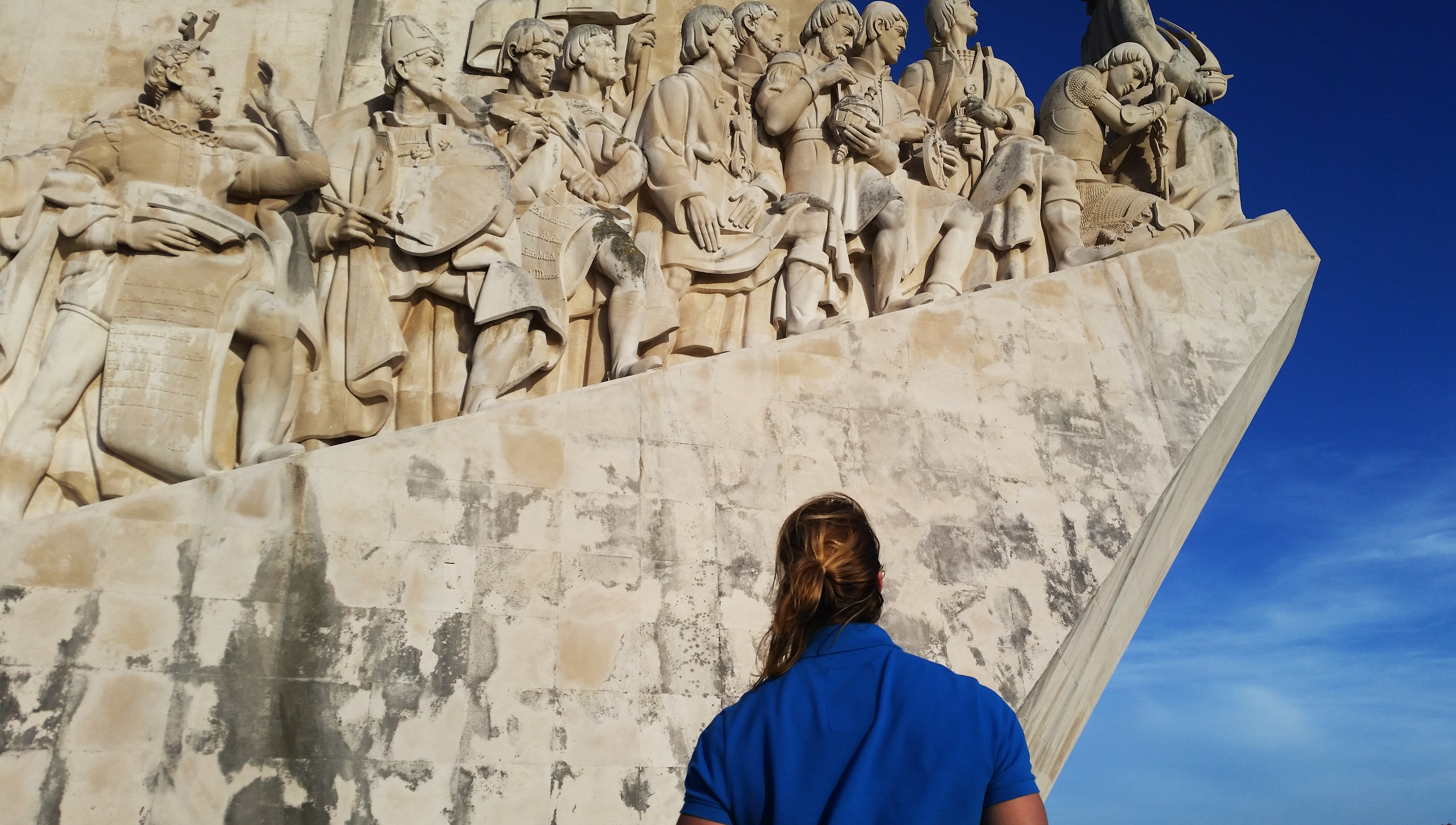
Theophratus Bombastus von Hohenheim (Paracelcus) appears in this book as well. He is introduced as one of the greatest intellectual heroes of the Northern Renaissance. We encountered him in relation to the arcane arts (in this case: magic, alchemy, and astrology) in our review of The Hermetic Tradition by Julius Evola (review here). Paracelsus was an inspiration for later Swedish mystics. In said Northern Renaissance, an interest for the runes was reignited. We will, as we continue on our esoteric path, most likely come across Paracelsus again.
The Swedish Mystic Johan Bure
In Rune Might, the author presents a number of German esoteric masters, primarily active during the early 20th century. In Revival of the Runes, the focus is on a number of Swedish men who were important to the survival and revival of the runes. Perhaps the most important one of these esoteric masters was Johan Bure, whose life is the main topic of the chapter titled From the Renaissance to the Baroque. In addition to his research on the runes, Bure was, to our great interest and admiration, a regular companion of Gustav II Adolf, also known as Gustav Adolf the Great. Gustav II Adolf was one of Sweden’s greatest kings and one of the most competent military leaders in history. Johan Bure instructed the king on matters of Swedish prehistory and esotericism up until the latter’s departure for Germany and the Thirty Years’ War. This royal patronage enabled Bure to pursue various esoteric paths:
‘This period was, of course, also rich with esoteric discoveries and explorations. Bure came under increasing attacks for his heretical ideas, but he was solidly supported by the royal house against any and all critics, the majority of whom were members of the Lutheran clergy.’
Stephen E. Flowers – Revival of the Runes
The author notes that Bure’s esoteric works largely remain unpublished today, being stored away in archives in Stockholm, Uppsala, and Lund. On a personal note, I was actually admitted to the archives in Uppsala when I wrote a paper on the Swedish import of colonial wares during the 1700s. I will endeavour to get better acquainted with Bure’s teachings in the coming time. Pictured below: Johan Bure (to the right) and his mighty patron (to the left).

Controversies Surrounding the Runes
In a chapter titled The Rise of Contemporary Scientific Runology and the Re-Emergence of the Rune-Gild: Phase VI: 1975 to Present, the author discusses the view of the runes in later years. He notes that two opposing views came to prominence:
‘It might be said that from the early 1980s forward, there developed two schools of esoteric runology: the Blumian and the Edredian. The motto of the Blumian school would be: “Do your own thing” or “If it feels good, it’s right.” On the other hand, the motto of the Edredian school would be: “Verified tradition activated by experience leads to inner truth.”
Stephen E. Flowers – Revival of the Runes
One could thus say that these disputes follow a similar pattern as today – where various ‘woke’ activists try to misconstrue the teachings of the ancients to suit their own political agenda. Survive the Jive made an interesting video on a similar matter which you can watch on Odysee: Good Walls for Bad Neighbours: The Meaning of Asgard’s Walls. On a personal note, I am more inclined to agree with the assessment of the Edrerian (as in Edred Thorsson) school – i.e. a healthy respect for the doctrines our ancestors.
Conclusion
Revival of the Runes is, just as Rune Might, a well-written and engaging book full of interesting insights. At 209 pages it is also not a big time-investment. For anyone interested in the runes, I can definitely recommend it. In closing, I will also add that I have grown fond of the writing style of Flowers and look forward to reading more books by him.
Rune Might by Edred Thorsson (Stephen E. Flowers)
Posted on May 18, 2022

I have read Rune Might by Edred Thorsson – which is the pen name of Stephen E. Flowers. I first encountered his writings a while back when reading Icelandic Magic (read my review of it here: Icelandic Magic by Stephen E. Flowers), which I found highly interesting. Therefore, I decided to continue along the same path by reading this book. Gaining more insights into the runes also comes at a good point since I am currently meditating upon the Elder Futhark (as discussed in this video: Esoteric Masters – Vital Elements Review).
Just as Icelandic Magic, Rune Might contains plenty of practical instructions, which is great. There is plenty of theory to be had, and I suppose that you, my dear reader, are more interested in the practical applications of magic. This is definitely true for me – I aim to increase my knowledge of esoteric matters in order to set a higher pace in my great quest.
The Elder Futhark
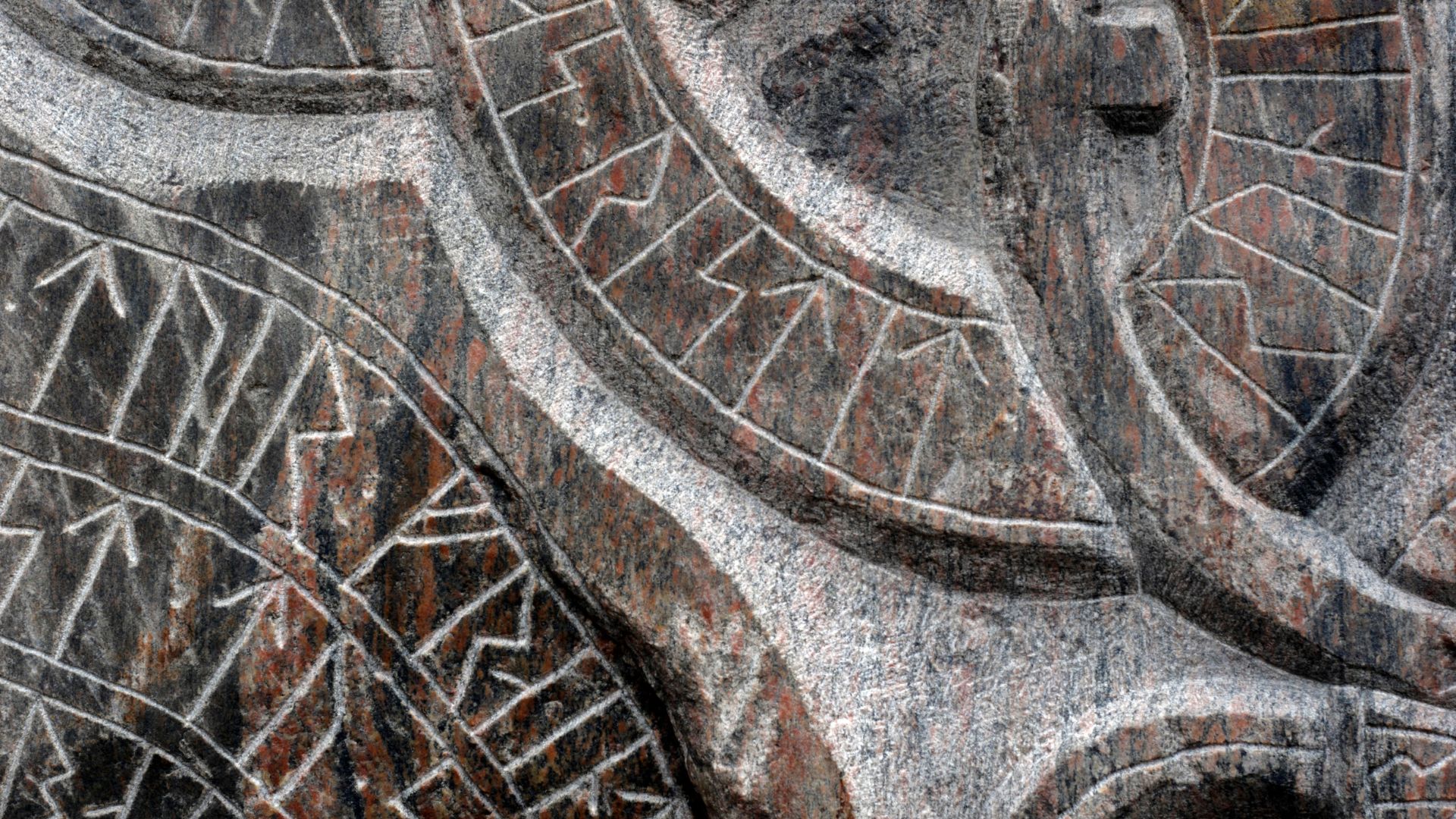
The author presents the traditional runic systems, which are the following: the Elder (Older) Futhark (pictured below), the Anglo-Frisian Futhorc, the Younger Futhark, and the Armanic Futhork. The name Futhark simply comes from the sounds of the first six runes in the rune row (of each system respectively), as presented below:
- Fehu (f)
- Uruz (u)
- Thurisaz (th)
- Ansuz (a)
- Raido (r)
- Kenaz (k)
The Frisian Futhorc (33 runes) and the Armanic Futhork (18 runes), although similar to the Elder Futhark, present some of the runes in a different way, in addition to not containing the same number of runes. The Younger Futhark (16 runes) is simply a shortened version of the Elder Futhark (24 runes) and came into use during the Viking Age (around 800-1100 CE). Much more can be said about this, but on a personal note, I will mention that it is the Elder Futhark that I am meditating upon (I will return to this topic once I have meditated upon all runes therein).

Gothicism
In the introduction, the author introduces the concept of Storgoticism – Megalogothicism (stor = grand in Swedish) which was a popular cultural movement during the zenith of Swedish power (mainly the 17th century). He erroneously states the following, however: ‘the esoteric doctrine that the Goths (wrongly assumed to be the same as Swedes) were the once and future master race.‘ I was surprised to find such an obvious fault in the work of an otherwise excellent scholar. The Goths did, in fact, originate in Sweden, more specifically from the region of Götaland. The sacred island of Gotland shares a similar name. Survive the Jive elaborates more on the origins of the Goths at the end of this video: JIVE TALK: Ancient DNA news: Greece and Italy.
It must be noted though, that during the Gothic migration down through Europe they absorbed the DNA (primarily maternal) from other tribes they encountered – in true Indo-European fashion! We will return to the topic of the Goths in coming reviews and Podcast episodes.

German Esoteric Masters
In the chapter titled The High Tide of Rune Magic, the author presents a cast of characters that were important to the runic renaissance that took place in Germany during the early 20th century. As I have noted before, it is always interesting to read about the lives of the men whose teachings live on. I found an inspiring passage about one them – namely, Rudolf von Sebottendorf, who ‘traveled in various dark corners of the world collecting arcane lore.‘ Just reading that sentence conjures up the life-affirming spirit that European man needs today. Reading that passage certainly increased my own motivation for pursuing my arcane studies!
The author also presents Arnold Krumm-Heller, one of the most unique rune-crafters of the runic resurgence. Krumm-Heller went to Latin America (Chile, Peru, and Mexico) on a secret military mission in 1894. In Mexico he began his studies of the occult. He would go on to have an adventure-filled career too long to cover here. I note this to emphasise the fact that the occult has attracted men of power (in case anyone believed it was reserved for low-thumos men). The book introduces several other interesting esoteric teachers – an important one of those was a man named Guido von List (whom we shall return to in coming reviews).
Rune Yoga
In chapter 7, the author introduces the concept of rune yoga, which I found interesting since I have, as you most likely know, practiced yoga (i.e. mobility exercises) and meditation for quite some time. A number of postures and exercises are presented (some of which I will endeavour to experiment with in the coming time) with accompanying sounds and purposes (esoteric purposes as opposed to the yoga used for mobility).
It is noted that the best results are attained when the practitioner does the postures on bare ground, with bare feet, and in open air. This ties in well with the concept of grounding – i.e. connecting with the earth’s energies by walking barefoot. One can debate the science of grounding, but what I can say for certain is that it does indeed feel great to walk around barefoot in a beautiful environment. It is also worth pointing out that one should not let science interfere with esoteric matters – I will elaborate on this at length at a later time.
In the same chapter, the author describes the orientation and structure of the postures as presented by the German esoteric masters. A northward orientation provides a greater magical will, for example. More instructions are given for each posture, and I thought that the following passage would be interesting to share:
‘These theories are virtually identical to those of Indian tantric cosmology, with which the Germanic cosmology ultimately shares a common Indo-European ancestry.’
Edred Thorsson – Rune Might
Various mantras connected to the rune-postures are also presented. For example: ‘Sing the rune-name KA and the formula KA-KE-KI-KO-KU while visualizing the influx of force from the solar and lunar coursing through the palms to the solar plexus and being grounded in the earth zone.’ I am unsure if I will try the mantra, but the visualisation sounds reasonable at least! I share this example as a way to illustrate roughly what these mantras entail.
Steads of Rune Might
Geomancy (earth magic) was a key component in the teachings of the German rune-magicians of the last century. Just as it is good to do the rune yoga in a certain way (as mentioned above), so does the place of the exercises matter. I am surrounded by these places of power – Steads of Rune Might – and, just as I noted above in terms of grounding, I can say for certain that some places have a special energy about them. This is a highly interesting topic that I will return to.

Conclusion
Rune Might by Edred Thorsson is a well-written and engaging book full of valuable insights. At 191 pages and with plenty of illustrations, it is not a big time-investment. I enjoyed Icelandic Magic greatly, and this book follows a similar style. For anyone interested in the esoteric side of the runes, I can definitely recommend it. My next review will be of Revival of the Runes by the same author (same topic but a different perspective).
Onwards and upwards!



 The Golden One
You must be logged in to post a comment.