Masters of Wisdom of Central Asia by Hasan Lufti Shushud
Posted on May 25, 2024

I have read Masters of Wisdom of Central Asia – Teachings from the Sufi Path of Liberation by Hasan Lufti Shushud. As the title of the book suggests, the author introduces Sufi mystics and spiritual teachers (most of whom were active during the Middle Ages) from Central Asia.
Fun Introduction
I found the following introduction amusing. Perhaps I will use a similar formulation at some stage in an attempt to portray myself as humble:
‘From the shortcomings of my unworthy pen I take refuge in the spiritual grace of the great saints, and so I offer this humble work to the perspicacious and high-minded reader.’
Hasan Lufti Shushud – Masters of Wisdom of Central Asia. Page 6.
Fasting
When introducing Baha’ al-Din Naqshband, the author says the following about his teachings:
‘He regarded ascetic practices and especially fasting as the basis of spiritual progress. He used to say: “Without the self-discipline of hunger, thirst, strenuous tasks, and ritual prayer, no one gains mystic insight and vision.”’
Hasan Lufti Shushud – Masters of Wisdom of Central Asia. Pages 59-60.
Fasting – good for soul, mind, and body! I have often talked about the physical benefits of fasting (i.e. autophagy) – later on, I will elaborate on the spiritual benefits.

Jesus in a Dream
One of the most prominent Sufi mystics, Khwaja Ahrar (1404–1490), was visited by Jesus in a dream:
‘I saw the Prophet Jesus in a dream. At that time I was just fifteen years old. The venerable Prophet was standing at the threshold of the tomb of Shaikh Abu Bakr Shashi. I fell at his blessed feet. He raised my head from the ground, saying: “Do not be dismayed, for it is fitting that I should undertake your training.” When I told this dream to certain others, they interpreted it to mean that I should become a physician.’
Khwaja Ahrar
He goes on to note that this interpretation did not satisfy him, and his own interpretation was that, since the venerable Jesus had been endowed with the power to bring the dead to life, the dream must have meant that he (Ahrar) would receive the ability revive the hearts of men.
A Beautiful Insight
The author shares the following beautiful insight from Ahrar:
‘For those who achieve this degree of insight, every atom in the universe will surely become a mirror, in which they will behold the everlasting beauty of the Divine Countenance.’
Khwaja Ahrar
He also notes that the venerable Khwaja Ahrar is buried in Samarkand. As Enjoyers of The Greatest Podcast will know, I have long wanted to visit Samarkand – so, if I get around to embark on that journey, I will surely visit Ahrar’s tomb!

Phoenix of the West
I present the following excerpt from a poem without further context. I just thought it sounded epic.
‘Love am I, my whereabouts in space and time unknown;
Khwaja Ahmad Samarqandi
Phoenix of the West am I, my mark and aim unknown. /…/
Although from every atom I shine forth like the sun,
The purpose of my shining forth still remains unknown.’
Aside from the beauty of the poetry itself, I found it interesting that the mystic used the term Phoenix of the West. Pictured below: One of my humble artistic endeavours.

Conclusion
Masters of Wisdom of Central Asia has 178 pages and is a good read for those interested in the topic. On a personal note, I would have preferred more focus on the teachings of the mystics, as opposed to listing many names and lineages (too many names to keep track of!). I would rather recommend Rumi’s Four Essential Practices – Ecstatic Body, Awakened Soul by Will Johnson (review) to start with for those unfamiliar with Sufi mysticism.
Rumi’s Four Essential Practices by Will Johnson
Posted on May 20, 2024
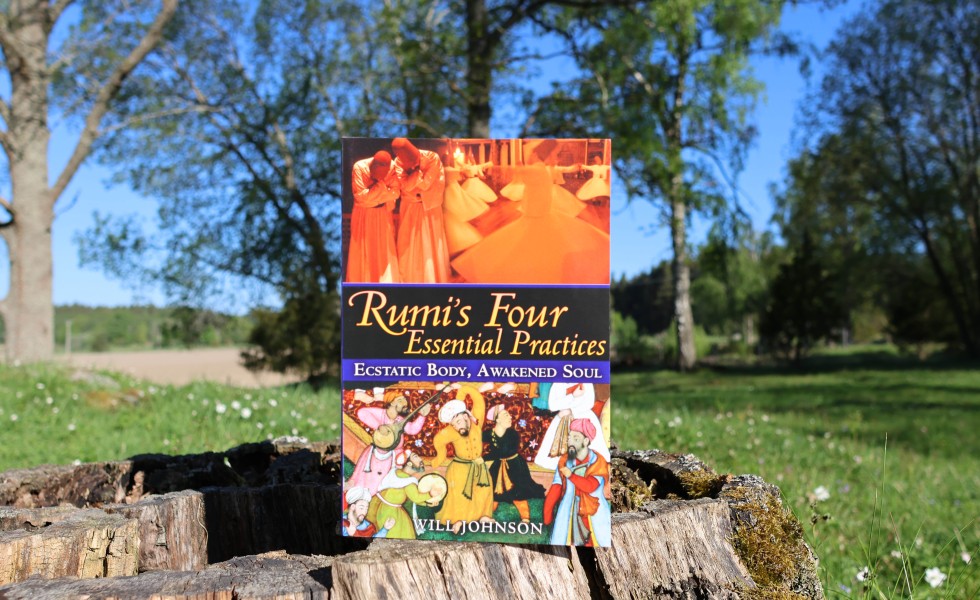
I have read Rumi’s Four Essential Practices – Ecstatic Body, Awakened Soul by Will Johnson. As the title of the book suggests, the author shares the teachings and poetry of the legendary Sufi mystic Rumi. The author introduces him thus:
‘Rumi doesn’t want you to remain calm and tranquil. He wants you to come alive, explode open, and become over-the-top drunk on the divine energies that live inside you.’
Will Johnson – Rumi’s Four Essential Practices. Page 4.
Good stuff! The four essential practices are: eating lightly, breathing deeply, moving freely, gazing raptly. In the introduction, the author notes that Rumi’s message is clear – that a change in psychology stems from a change in physiology. This, I wholeheartedly agree with. It is common to encounter religious teachings which do not place any particular emphasis on the body – I always approach those teachings with caution.
Eating Lightly – Fasting
The first practice, eating lightly – and fasting in particular – will be familiar to most of my readers. Fasting is great for a wide variety of reasons. I mainly do it to cleanse the body (via autophagy). If you have a hard time fasting, you can keep the following words that appear in the book in mind:
‘When you are fasting,
Rumi
You are the guest of God,
And are served the meal of Heaven.’
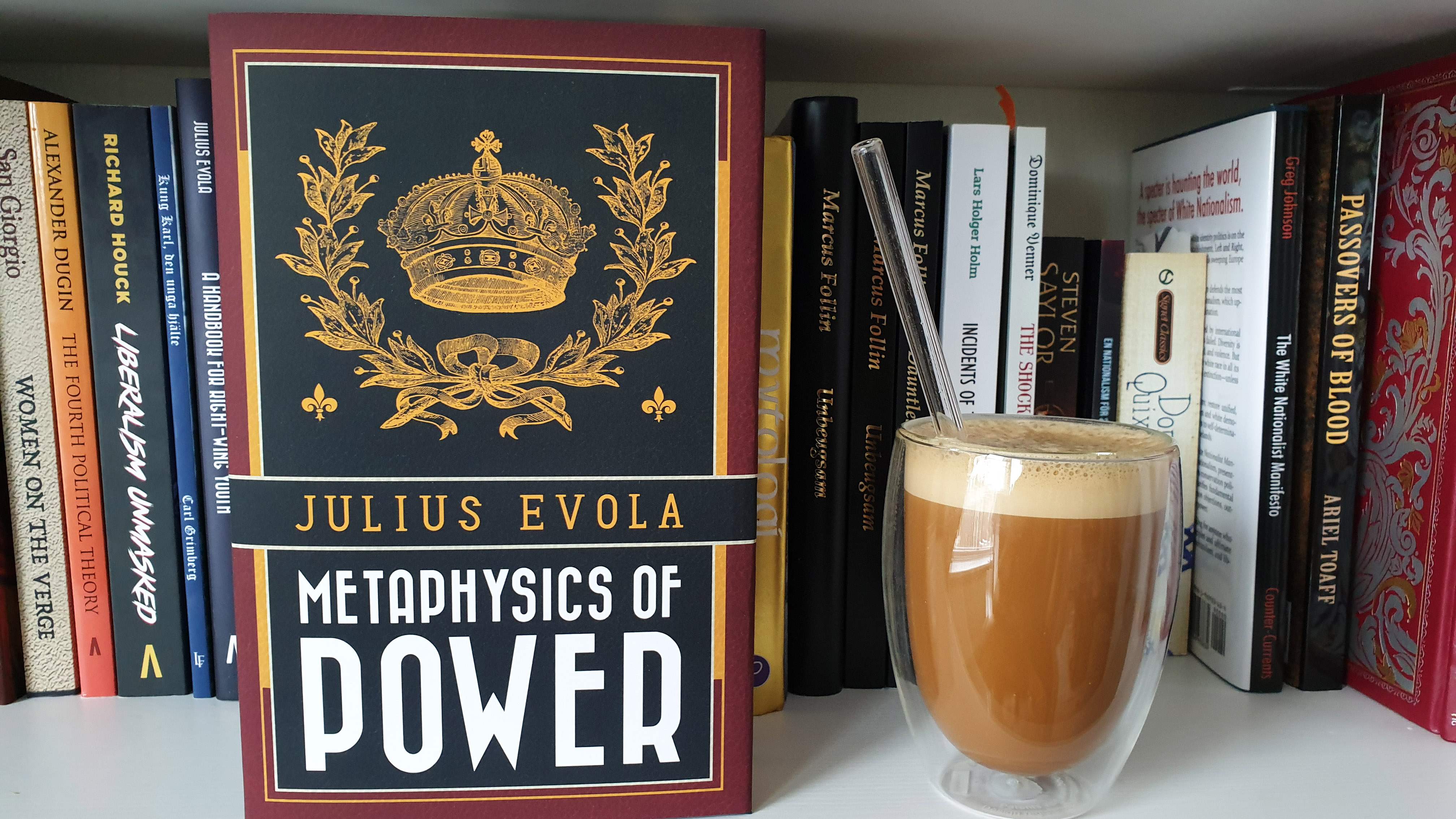
Speaking of which, I am fasting as as I compose this review. My standard 24-hour fast looks as follows: Butter + Coconut Coffee in the morning (like all mornings), then nothing to eat during the day. The next intake of calories is the same coffee the morning after. The recipe of the coffee looks like this: Golden Coffee Company gourmet coffee, one teaspoon of coconut oil, and half a teaspoon of butter (during winter I use a full teaspoon of butter). Pictured below: Said coffee.
Breathing Deeply
This will (most likely) also be familiar territory for most of my esteemed readers. There is a lot to be said about breathing. I found the following words insightful and useful – something to try during your next meditation!
‘As you breathe in, breathe into the felt awareness of your entire body. As you breathe out, feel your whole body exhaling.
As you breathe in, let yourself feel every single cell in your body.
As you breathe out, let yourself dissolve and merge into the outer world.
Feel your gratitude for being alive, for having life given to you so freely each and every moment in the air you breathe.Gratitude towards the world is the natural feeling state of someone in love.’
Rumi
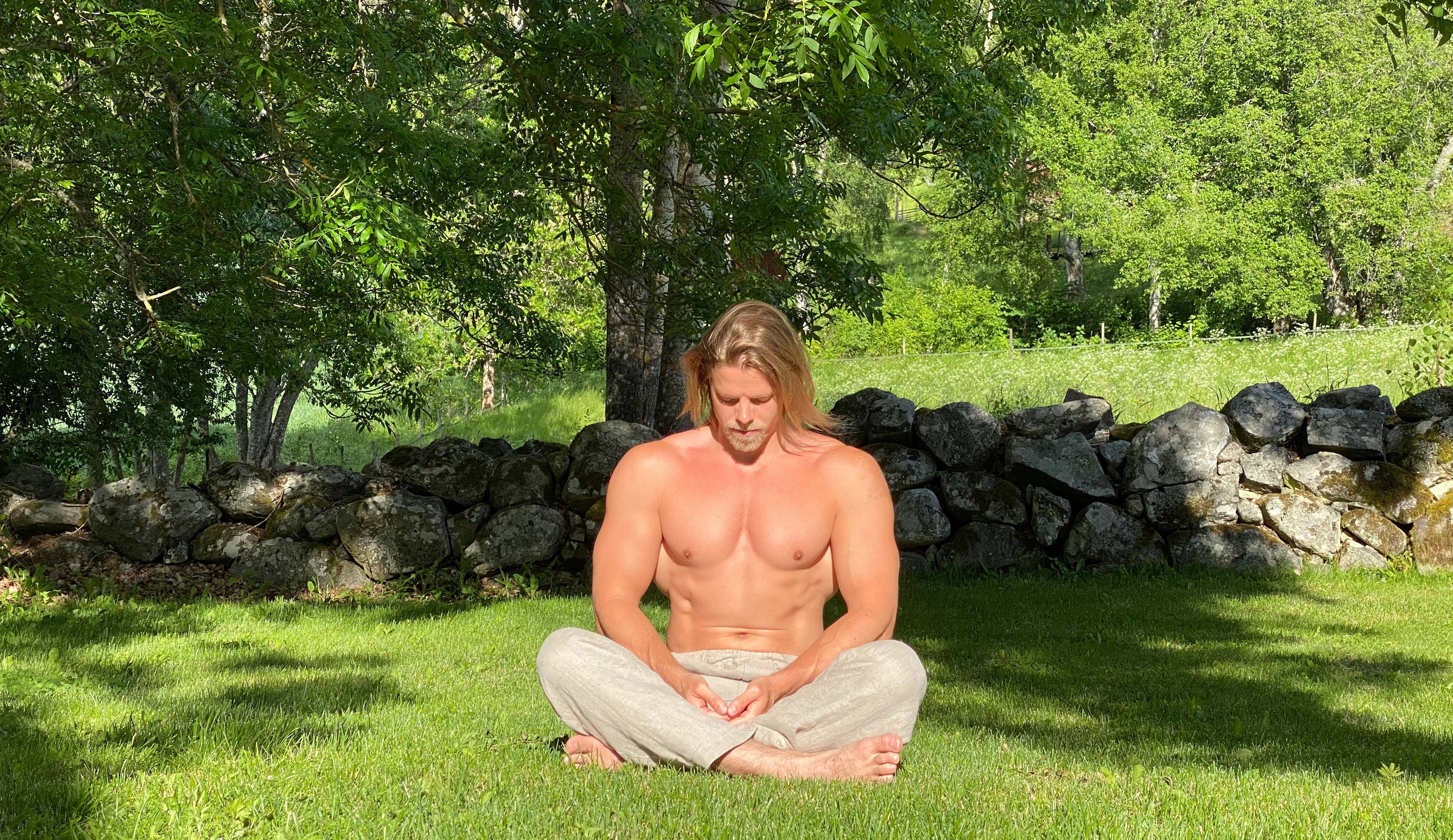
Pictured below: Yours Truly feeling gratitude towards the world.
Moving Freely and Gazing Raptly
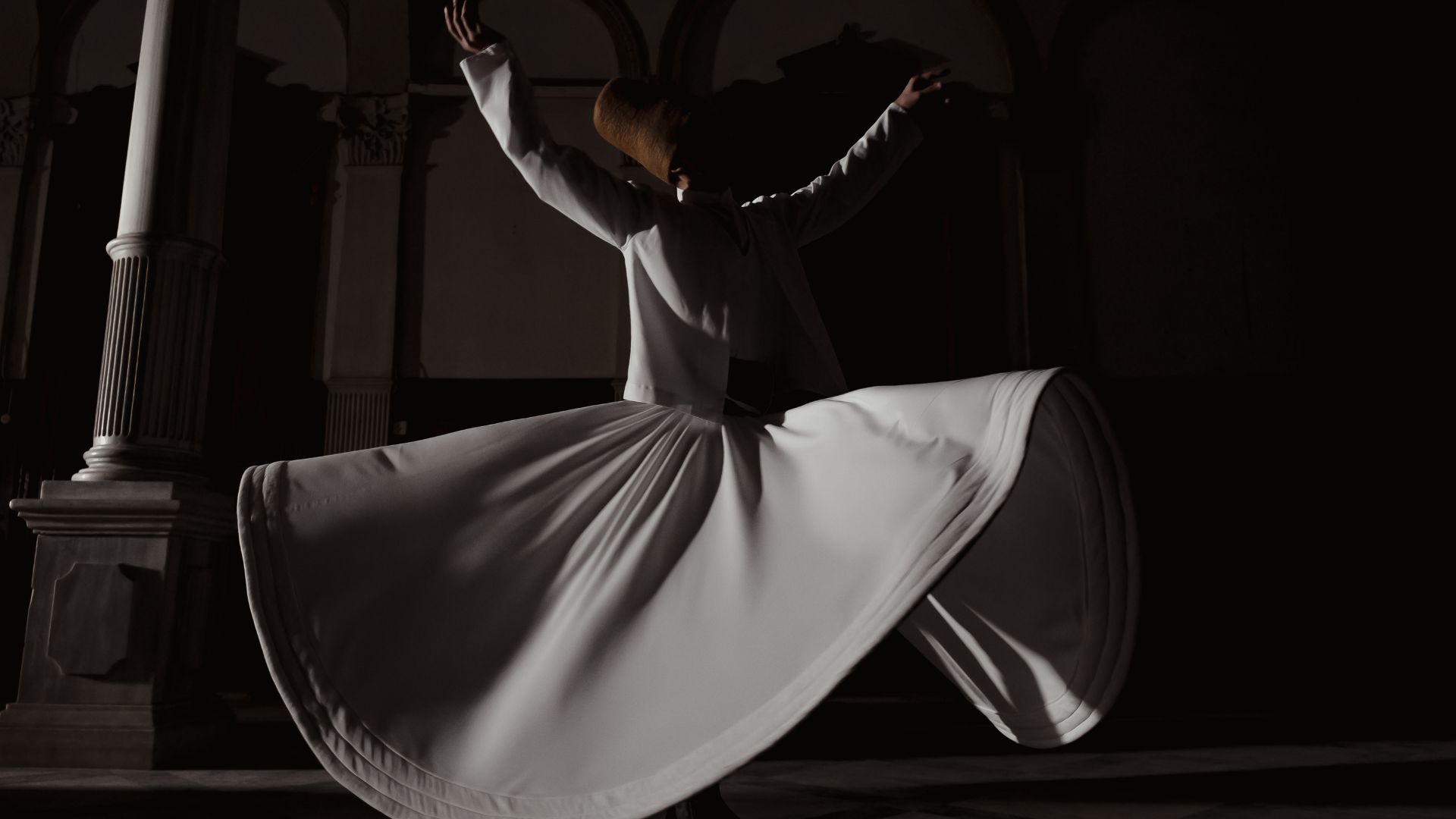
The teaching of moving freely can take its expression in the whirling dervish dance (the tradition originates with Rumi). In one poem, Rumi encourages the reader to learn to dance from the branches of the trees – i.e. just letting the divine energy take hold and go with the flow. Gazing raptly refers to a mystico-magical technique that can be explained as follows: Sit or lie comfortably with your friend, look into his/her eyes and relax (the gaze should not be focused but unfocused like when sun gazing). I have yet to try this technique so I cannot comment further on the matter, but perhaps I will try the technique at some stage.
Conclusion
The book has 153 pages and most of those contain quite little text (as they are made up of poems), so the book can be read quite quickly. The poetry is beautiful – appreciated reading for a Sensitive Poet such as myself! I would say this is a good introductory book to Rumi. I enjoyed reading it in the sun. Onwards!
Meditations on the Peaks by Julius Evola
Posted on May 16, 2024
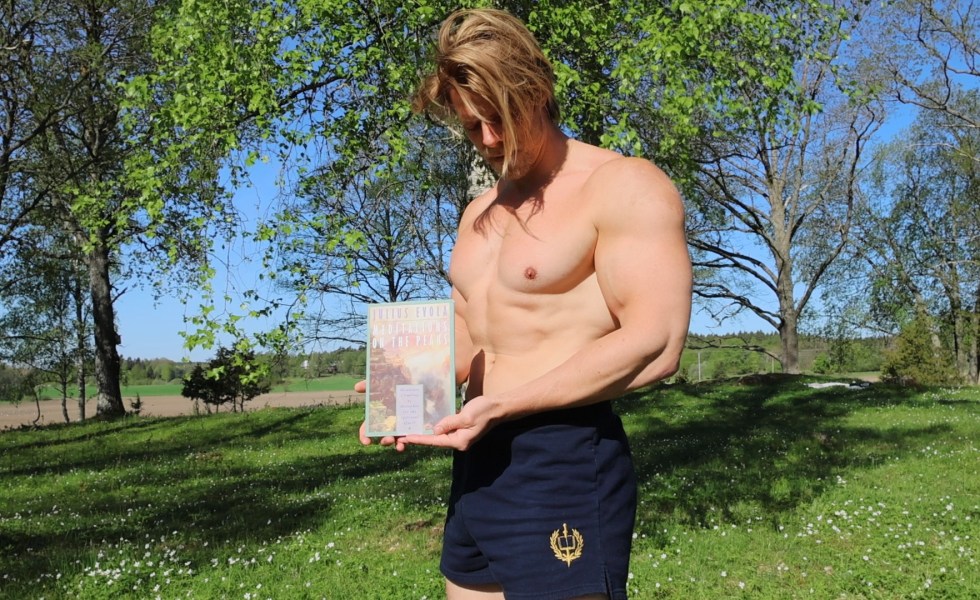
I have read Meditations on the Peaks by Julius Evola, and, as a result, I now have a great urge to mount an expedition to Kebnekaise (Sweden’s highest peak). Such an expedition typically only takes four days; even so, it is hard to do in my current situation. However, should an opportunity present itself and I find myself on the summit, I will, of course, get plenty of video and photo material. This leads us to the question – what would the good baron Evola think of my plans?
What Would Evola Say?
Perhaps he would have lambasted me for my need of a public, and perhaps he would have found my physique posting to be too theatrical:
‘While the “Mediterranean type” is characterized by the need for a public and by the inclination to behave in a theatrical manner, the experience of the mountain is one of the best antidotes against this Mediterranean component that may remain in our Italian souls. Those who really practice mountain climbing learn an opposite joy to that of the Mediterranean type, namely the joy of being alone, of being left to one’s self amid the changelessness of things, alone with one’s action and contemplation.’
Julius Evola – Meditations on the Peaks. Page 34.
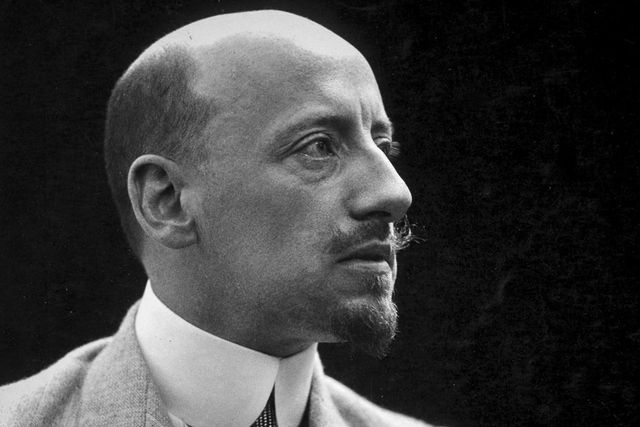
I must admit that I do like an audience! So perhaps the Mediterranean spirit comes to the fore in me sometimes. I do, of course, also enjoy time alone (perhaps more so, to be honest). Evola often contrasts the Mediterranean spirit with the Aryan-Roman one (greatly favouring the latter). In another book, he actually uses Gabriele D’Annunzio (pictured below) as an example of someone imbued with the Mediterranean spirit – on a personal note, I admire D’Annunzio greatly.
What Did Evola Say About Skiing?
I will quote Evola directly to clarify the matter. In the essay titled Ascending and Descending, he states the following:
‘In order to prevent misunderstandings, I must specify the level to which my thoughts apply. First of all, I would like to make it very clear that I have never had, nor will I ever have, anything against the practical value of skiing. I will gladly acknowledge everything that may be acquired from this sport in terms of health, bravery, physical and mental invigoration, and its refreshing effect upon our youth, whom the modern metropolitan life suffocates and oppresses.’
Julius Evola – Meditations on the Peaks. Page 43.
He goes on to note that he also practises skiing (in addition to being an avid mountaineer). Later in the same essay he offers his spiritual critique of skiing as a sport:
‘The fact is that in skiing, the modern spirit finds itself essentially at home; this modern spirit is intoxicated with speed, with constant change, with acceleration.’
Julius Evola – Meditations on the Peaks. Page 46.
A central theme of the book is the metaphysical aspect of mountain climbing, of reaching an inner experience via the climb. The climb itself, then, is a spiritual action – with plenty of references to be found in myth. As we have noted elsewhere, mountains have a sacred value. The key to understanding his view lies in the title of the essay itself – Ascending and Descending – where the ascent is the heroic path that contains the spiritual element. In my humble opinion, I definitely see a spiritual component in the descent as well – skiing downhill comes with real danger and requires a totality of focus. Something similar can be found in the Gym – especially when attempting a personal best in the Squat, there is also a real danger here (when higher weights are used). I will elaborate more on this in a video.

Aryan-Roman Community
As is often the case when reading Evola, I encountered a particularly beautiful passage which I will share:
‘Thus, this latter element, when compared to it, reminds us of the type of community that was one of the most characteristic elements of the ancient Aryan races and the Aryan-Roman people; this type of community had nothing to do with socialism. Its foundation was neither a collective entity nor individualism, but rather personality. Its law was action; in it there were relationships of real men, cemented by trust, loyalty and truthfulness, not to mention the shared dignity of belonging to the same race. Subordination did not humiliate people in this type of society, because of the precise vision of the whole and because and because of the vision shared by each individual.’
Julius Evola – Meditations on the Peaks. Page 35.
The last passage in the quote above is particularly insightful. I will discuss this at length in a coming podcast episode.

The Children of Destiny
I will also discuss the following beautiful passage in a coming podcast episode. The insight presented are related to some of the topics I have talked about as of late – especially Episode 44. The Lightning and the Sun.
‘A true imperial tradition is not forged through particular interests, through a narrow-minded hegemony, or through “sacred selfishness”; such a tradition is formed only when a heroic vocation awakens as an irresistible force from above and where it is animated by a will to keep on going, overcoming every material or rational obstacle. This, after all, is the secret of every type of conqueror. The great conquerors of the past have always perceived themselves as children of destiny, as the bearers of a force that had to manifest itself and before which everything else (starting from their own selves, preferences, pleasures, and tranquillity) had to be sacrificed.’
Julius Evola – Meditations on the Peaks. Page 84.
Conclusion
Meditations on the Peaks is, in my humble opinion, perhaps the easiest Evola book to read. Moreover, it is only 115 pages long, making it a good book to start with for those who want to get a feel for his style. Even though I do not always agree with all of Evola’s conclusions, I always find his writings invigorating and inspiring.
Mysteries of the Far North by Jacques Privat
Posted on May 14, 2024

I have read Mysteries of the Far North – The Secret History of the Vikings in Greenland and North America by Jacques Privat. The book is a scholarly work that presents various theories and research regarding the Scandinavian settlements of Greenland and Vinland. Despite its somewhat esoteric-sounding title, the book reads more like a history book and the author has done great work in finding source material (archaeological evidence, stories and myths, mediaeval manuscripts, etc.) to support his claims. The author not only discusses the history of the Norse in the region, but also introduces the cultures that lived alongside them (the Dorset culture and the later Thule culture).
The Dorset Culture and the Thule Culture
As mentioned, the author gives plenty of space in the book to the Inuit cultures of the region. The following quote serves as a good overview:
‘The Thule people displayed a perfect mastery of their environment, both on land and sea, which distinguishes them from the members of the Dorset culture. It is the Thule that displays the most traces of contact and influence with the Vikings. The current inhabitants of Greenland are their direct descendants.’
Jacques Privat – Mysteries of the Far North. Page 388.
It must be noted that the Norse were in Greenland before the Thule culture, thus making it reasonable that it belongs to Denmark today. Pictured below: An Inuit landmark (Inuksuk).

Arctic Luxury Goods
Gyrfalcons, ivory, leather hides, and furs were among the treasures that could be found in the Far North – making it a lucrative area for settlements. The author notes the following:
‘The falcon held an important place in medieval symbology, and the gyrfalcon was the most popular hunting bird for the nobility’s favorite amusement: falconry. The Hanseatic books tell us that the Lübeckois were taxed twelve Icelandic falcons a year. As early as 1240, the emperor Frederick II exported falcons to Italy thanks to his Lübeck merchants.’
Jacques Privat – Mysteries of the Far North. Page 337.
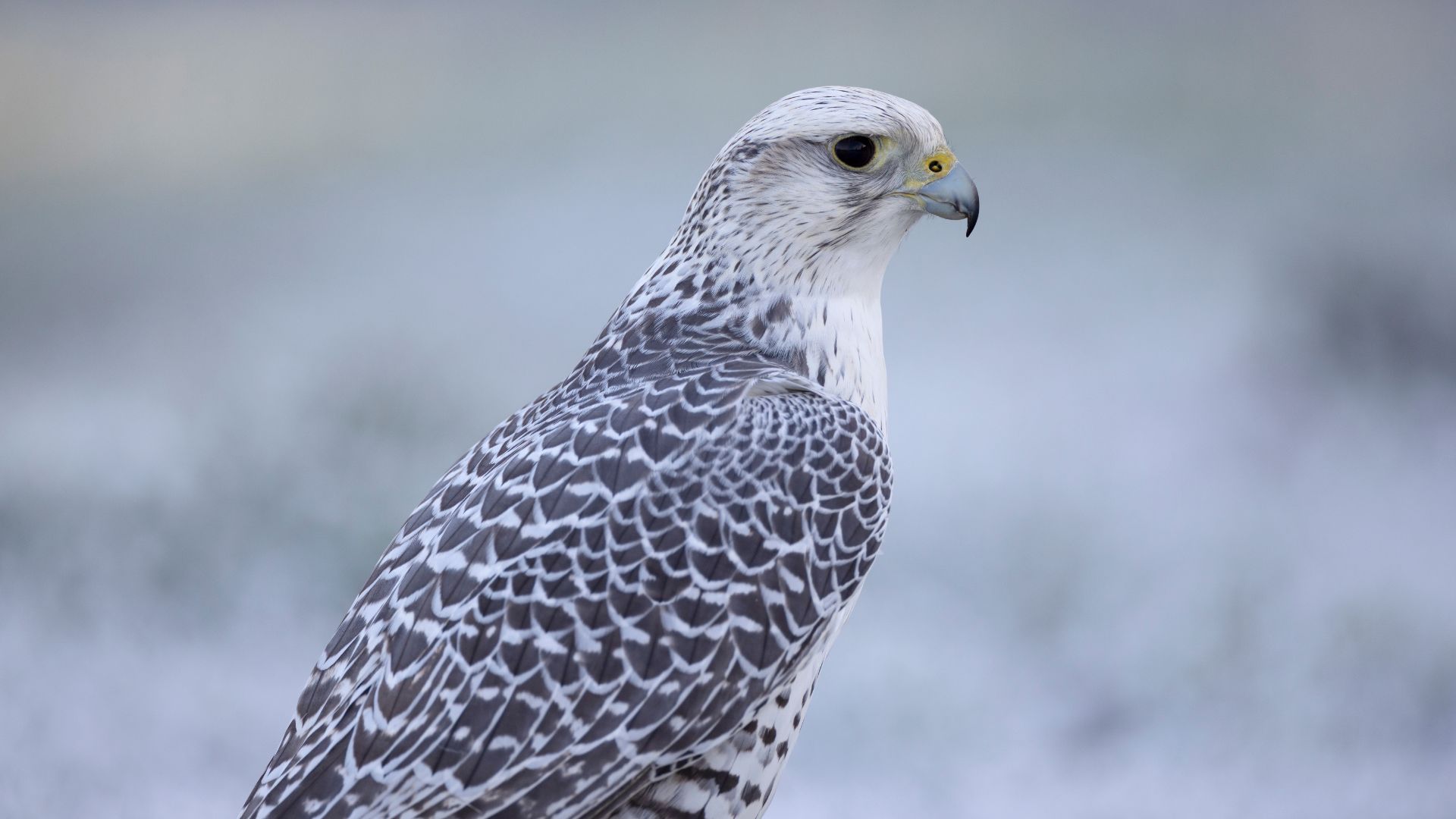
According to some theories, the ivory from walruses became less valuable during the late Middle Ages due to an increase of (elephant) ivory from Africa (some use this as one of the reasons explaining the later disappearance of the Greenland settlements). Pictured below: an aesthetically pleasing gyrfalcon.
Inuit-Viking War and Trade
The author emphasises the peaceful (trade) relations between the two communities. Although he notes that there were incidents of violence between the Inuits and Vikings, he does not subscribe to the theory that postulates an Inuit extermination of the Viking population. I am inclined to agree with this; I find it highly unlikely that the Inuits would be able to overcome the Norse in an all-out war. Moreover, the Inuits probably valued the Norse as trading partners more than they saw them as a threat (this is just my speculation). Instead, he points to the deteriorating relationship between the Catholic Church and the Nordic powers and their Greenland subjects as a potential cause for the disappearance of the Norse presence in Greenland.

Pagan-Christian Syncretism
The author shares the following quote from Adam of Bremen (a German chronicler active during the 11th century) regarding the religious attitudes of the Norse population of Greenland:
‘The folk of this country call themselves partly Christian, although they have no faith, confession, or baptism. They can even be Christians and still invoke Thor and Odin.’
Adam of Bremen – Gesta Hammaburgensis
As I have noted elsewhere (on many occasions), the Middle Ages (especially in the Norse world) could be described as a period of Pagan-Christian Syncretism – where White Christ (Vite Krist) was seen as an additional God in the pantheon.
The Danish King & the Borgia Pope
The author highlights the deteriorating relationship between the Nordic powers (Sweden, Denmark, Norway) and the Papacy during the late Middle Ages. This actually began before the Reformation – in 1481, King Christian I of Denmark stripped power from the Church via various legal reforms – to the great consternation of the Pope. Gustav Vasa of Sweden also cast off the yoke of the Catholic Church (in the early 1500s). In both of these cases it is prudent to point to realpolitikal reasons (i.e. that the Church had plenty of resources and land that the State needed) rather than theological reasons (those came later). On a personal note, I prefer Catholicism to Protestantism since the former is closer to Paganism and more beautiful. However, I fully understand and admire the course of action taken by Gustav of Sweden, Kristian of Denmark, and Henry VIII of England (I will elaborate on this later). The author notes the following:
‘The relationship between the Borgia pope and the Danish crown were certainly not looking rosy.’
Jacques Privat – Mysteries of the Far North. Page 383.
He continues by stating that the Pope gave the Catholic Portuguese carte blanche in the Far North – implying that Portuguese raiders may have tormented the Greenlanders. On a personal note, I am unsure if raids by Portuguese were the primary reason for the disappearance of the settlements in Greenland (but perhaps I am biased since I admire the Portuguese of the Age of Exploration and would not want them to be the perpetrators). The author, however, states it thus:
‘The trail of Rome settling a score therefore finds extensive reinforcements with the “Greenland question” forming only a part of the serious liability opposing the Danish crown and Rome. I think it is the most logical and well-founded explanation for the tragic fate of the Nordic colonies of Greenland and America.’
Jacques Privat – Mysteries of the Far North. Page 383.
Danish-Portuguese Friendship
In other parts of the book, the author elaborates on the good relations between the Danish and the Portuguese. Joint expeditions between the two nations occurred – a Dane named Lolland partook in the heroic capture of Alcazar, and another Dane (named Vallart) was named commander of an expedition to the African coast in 1448.
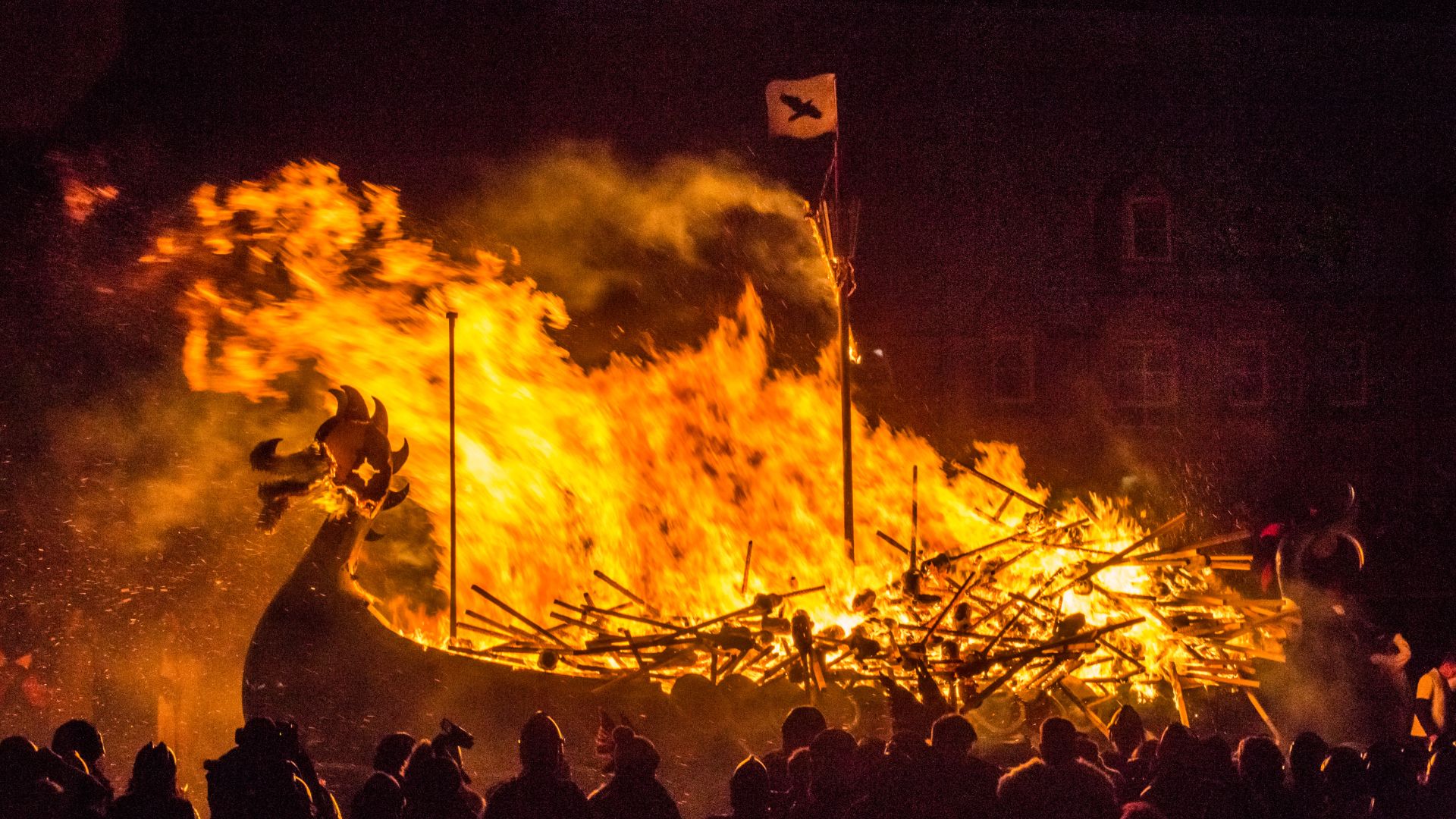
How Long Did the Settlements Last?
The author notes the following regarding this question:
‘The length of time Scandinavians were living in Greenland and Canada needs to be revised upward. At the beginning of the century, it was common to consider the first decades of the sixteenth century as the cut-off date (based on Scandinavian source materials). We can see that an additional half century is not unreasonable if we follow the Portuguese source material.’
Jacques Privat – Mysteries of the Far North. Page 379.
There are various theories as to why the settlements were abandoned; pirate raids, climate change (colder weather), fewer commercial opportunities – and, as the author of this book proposes, punitive expeditions promoted by the Papacy. I am inclined to believe that the worsening of the weather was a major contributing factor – but I must meditate more on the matter before saying more.
Conclusion
The book has 390 pages and contains plenty of valuable and interesting insights (many more than shared here). I can definitely recommend it for those interested in the topic!



 The Golden One
You must be logged in to post a comment.