Germanic Theology: Volume I by Tristan Powers
Posted on May 9, 2024

I have had the pleasure of reading Germanic Theology Volume I: Poetic Edda – The Lays of the Gods by Tristan Powers. The book is, contrary to its title, not about Germanic theology per se, but would be better described as a commentary on the Poetic Edda. Astute Enjoyers of my content will remember that I reviewed the Imperium Press edition of the Poetic Edda (translation by Henry Adams Bellows) a while back. Powers’ commentary is excellent and insightful. So, if you plan on reading the Poetic Edda, Germanic Theology is a good companion!
Sexual Morality
In several places, the author correctly emphasises the strict sexual morality of the Vikings. The faulty notion that the pre-Christian Germanic peoples were anything but virtuous comes from two sources: Christians and modern liberals (I use the term liberal in the broad sense). The Christians had an incentive in portraying the old Gods and their worshippers as immoral, thereby presenting the introduction of a new faith as something that brought with it an increase in societal virtue. The modern liberal perspective is one that seeks to juxtapose the attractive Vikings against the repressive Christians – in the sense that they wish to portray pre-Christian sexual attitudes as “tolerant” and Christian ones as “intolerant”.
‘It must be noted that our ancestors did not permit the open seduction of women and considered such a thing to be illegal and subject to immediate physical violence – up to death – in order to avenge the attempt or intent to do so, such was their concern and care for the chastity of their wives, sisters, and daughters.’
Tristan Powers – Germanic Theology. Page 65.
Moreover, the author notes that Ergi – behaviour unbefitting of a man – was seen as a religious crime. The Vikings were anything by “tolerant” in the modern sense of the word. As I noted in Podcast Episode 45. Viking Worldview, honour was central and paramount for our ancestors.
Our Lady Freya
Freya, perhaps more than any Pagan deity (with the possible exception of Odin), has been the target of malicious attacks – both in the past and today. The author perfectly states the following:
‘Secondly we may note that, in a strictly sociological sense, it would be usual or illogical to find that a people such as the Germanic should consider their primary female divinity to be unchaste and representative of all baseness they despised and outlawed amongst their own wives and daughters.’
Tristan Powers – Germanic Theology. Page 281.
The author goes on to note that any notion that the Goddess Freya would be unchaste must be seen as lies and slander. With this, I wholeheartedly agree. It makes perfect sense for rivals and enemies to portray an important Goddess in a negative light, and it makes absolutely zero sense that her worshippers would believe this about her.

Gothic Order
On the same topic of sexual morality, the author shares an insightful quote from the 5th century priest Salvian of Marseilles:
‘Wherever the Goths become masters we see no longer any disorders among the old inhabitants. Our manners are reformed under the dominion of the Vandals. Behold and incredible event! Barbarians have, by the severity of their discipline, rendered chaste the Romans themselves; and the Goths have purified those places which the others have defiled by their debaucheries. A cruel warlike nation, but worthy to be admired for their continence.’
As I have noted elsewhere, the Goths have often been misrepresented as destroyers. In fact, they – and the other Germanic tribes of the Migration Era – created a new Europe out of the greatly degenerated remains of the Roman Empire. Enthusiasts of The Greatest Podcast will recall that I discussed Theodoric the Great and the Ostrogothic Kingdom in Episode 30. The Gothic Heirs of Rome.
Magically Gifted Norse Queens
In the chapter commenting on Hávamál, the author notes that the wives of Norse kings would (stereotypically) be sorceresses or wise in magical foresight and healing – thus bolstering the rule and skills of their lordly husbands. As anyone interested in spiritual matters will know, certain women do indeed possess powers of foresight and intuition. Pre-Christian Europeans had a place for women in their religious practices. In fact, this did not completely end with the introduction of Christianity. During the Catholic period (i.e. the period of Pagan-Christian Syncretism) women could still find ways to express this divine connection – notable examples are Hildegard of Bingen, Joan of Arc, and Bridget of Sweden. It must be noted that this was in spite of the Christianity of the time – after all, Joan of Arc was burnt at the stake!
Pictured below: A Sensitive Poet seeking the mystic insights of Heliga Birgitta (Saint Bridget of Sweden).

Rígsþula, Odin, Heimdall
In the chapter commenting on Rígsþula, the author notes that white linen was considered suitable wear for kings and jarls. I fully endorse this statement! Rígsþula is the myth in which Rig – who is Heimdall according to some sources and Odin according to some – visits three families and creates the three castes (mirrored in Vedic tradition): Thrall (black/dark), Karl (red/ruddy), Jarl (white/fair). The author notes that he is more inclined to agree with the theory that posits Odin as Rig and makes a compelling case for this. On a personal note, I must meditate further upon it to give a conclusive statement, but for now I can say that I, too, view it as reasonable to believe that Rig is Odin.
Pictured below: An Aspiring Enlightened Despot contemplating the nature of Rig whilst wearing the finest linen.

Conclusion
As already noted, I can definitely recommend Germanic Theology for those who have or will read the Poetic Edda. I would recommend it even if you do not intend to read the poems themselves, as the book contains plenty of valuable insights. Good stuff!
Nietzsche’s Coming God by Abir Taha
Posted on February 28, 2024

I have had the pleasure of reading Nietzsche’s Coming God – Or the Redemption of the Divine by Abir Taha. Below are some interesting insights found in the book.
Nietzsche & Nihilism
In the introduction, the author deals with one of the most common misconceptions about Nietzsche. Namely, the false belief that he was a proponent of nihilism. Rather, Nietzsche saw nihilism as but a transitory phase on the way to the creation of the Übermensch (the Overman or Superman).
The Death of God
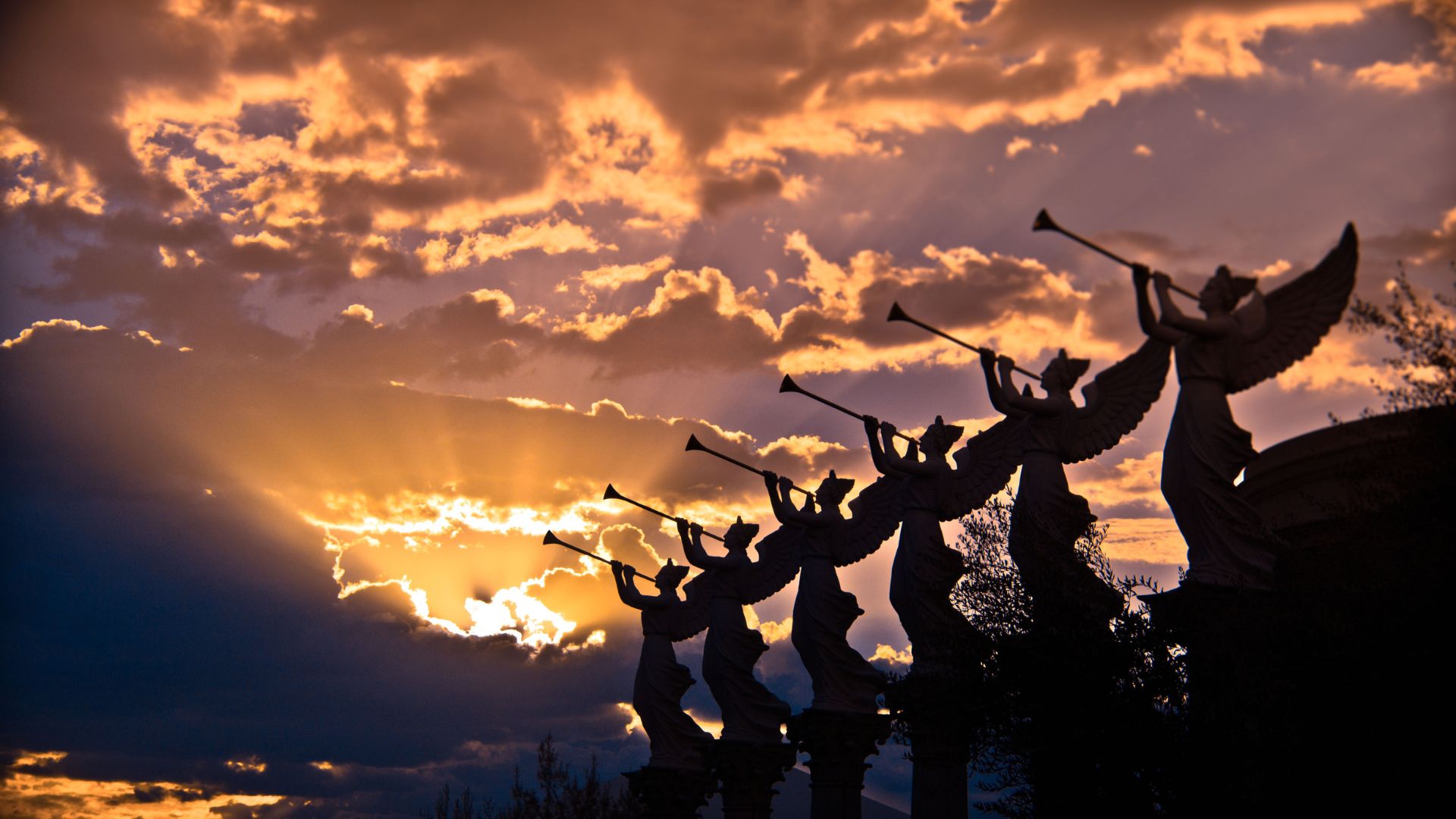
Another common misconception about Nietzsche is that he was an atheist. The author notes the following:
‘Nietzsche considered that the death of God was not an end but merely the death of a god, the god of “monotono-theism,” as he liked to describe it/…/
Abir Taha – Nietzsche’s Coming God. Page 9.
I argue that, in the final analysis, Nietzsche’s spiritual atheism was merely a prelude to a spiritual rebirth, to the advent of the Superman as the incarnation of the new mode of divinity.
Thus, the death of God for Nietzsche is only a “moment” in evolution and in history, and not a fatal end, given that it is only the death of a god, not the divine.’
Thus, one could say that Nietzsche heralded the death of Yahweh – i.e. the Christian God – as opposed to the death of what Pagans mean by God. It was, as stated in the quote above, not the death of the divine. The emphasis in the quote is on “a” god. In a later passage the author says that Nietzsche’s refusal to believe in a transcendental God in no way denies that God does exist (God being immanent and accessible to man through inner mystical experience). She concludes that it is reasonable to call Nietzsche a Pagan – not an atheist.

Immanent God of Paganism
The author discusses the Immanent God of Paganism (i.e. the belief that God is here and now and in everything) and the Transcendent Christian God (i.e. God in Heaven, in a realm beyond this life). Reading this reminded me of a passage in Temple of the Cosmos by Jeremy Naydler – as I noted in my review of that book, the Egyptians never worshipped idols and idolatry was not an issue. The reason for this is that the concept of an idol was unconceivable for the Egyptian mind – the physical and metaphysical did not have the clear distinction as they would come to have in later centuries. The concept of an idol was introduced by the Israelites.
On a related note, I made a video titled How Connected to God Are You? on a similar matter a while back.

Christ vs Paul
According to Nietzsche, Jesus taught that God can be found within. The author shares the following insight:
‘Thus, Nietzsche believed that Christianity, which represents the degeneration of the vital values and virtues of Hindus and Greeks, was unworthy of its founder Jesus, whom he perceived as a free spirit preaching the mystical doctrine of the “Kingdom of Heaven in us.” Indeed, Nietzsche saw in Jesus a rebel against the Pharisees, against the Jewish priests’ dogmatic and narrow spirit, those same priests who, through Paul, have deformed Christ’s life-affirming doctrine which was destined for free and higher spirits.”
Abir Taha – Nietzsche’s Coming God. Page 16.
She goes on to note that Nietzsche blames Paul for distorting the original teaching of Jesus into a rigid, ritualistic, superstitious, and transcendental dogma. To summarise, Nietzsche approved of the mystical and life-affirming message of Jesus (i.e. that God can be found within us – here and now) and disapproved of Paul’s transformation of the message (i.e. making God transcendent – not available here and now, but in the after-life).
‘It was the Church’s distortion of Christ’s original message (in order to enslave the masses by imposing the “virtues” of submission and humility on them) which, by transforming this inner state of mind and experience into a “Kingdom of God in Heaven,” heralded the break between Christianity and Christ’s original teaching.’
Abir Taha – Nietzsche’s Coming God. Page 18.
On a personal note, I know too little about Christ and Paul to comment on it. I am sure there are knowledgeable Christians who have a different view of the matter than Nietzsche. I will seek further understanding regarding this.
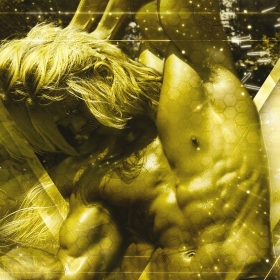
Pictured below: Nietzsche’s Blond Beast. On a similar note, I made a video titled Nietzsche and the Gym: The Path to the Overman a while back.

My Disagreement With Nietzsche
The author notes that for Nietzsche, good is everything that proceeds from (and increases) power. What is bad, in his view, is what is weak. According to this morality, an action acquires its value by whether or not it increases power (and hence to spiritual progress and the self-overcoming of man) as opposed to whether the action is intrinsically good or evil.
I will return to this topic at a later time, as it deserves and requires greater elaboration. What I can say for now is that I do not necessarily agree with Nietzsche regarding this take on morality. Perhaps the child sacrifice of the Carthaginians lent them power? Thus rendering their action ‘good’ and not evil. I would say that their action was indeed evil – and that the Romans (bearers of the Aryan light and morality) were right in destroying Carthage utterly.
Nietzsche’s Zarathustra & the Historical Zarathustra
Since I recently reviewed Original Magic Magic Stephen Flowers, I thought it would be relevant to note that Nietzsche ‘corrected’ the duality of the historical Zarathustra. The new Zarathustra (i.e. Nietzsche’s Zarathustra) is the prophet of a new religion which transcends morality (as power is beyond morality). So, for the sake of clarity, it can be good to make the distinction between the historical Zarathustra (Zoroaster) and Nietzsche’s prophet.
Conclusion
Nietzsche’s Coming God has 103 pages, but every page is full of valuable knowledge. I thoroughly enjoyed it; I would even say that it is the best book I have read in quite a while. The author explains Nietzsche’s views in a good way. Upon reading her book, I felt an urge to re-read some of the Nietzsche books I have in my library. Great stuff. Onwards!
Fortuna – The Sacred and Profane Faces of Luck by Nigel Pennick
Posted on February 21, 2024

I have read Fortuna – The Sacred and Profane Faces of Luck by Nigel Pennick. Last year, I made a video about another book by Pennick, namely The Pagan Book of Days (which I liked) – therefore, I decided to read Fortuna as well. On a personal note, I have never gambled and I do not endorse gambling. I have, however, been an Enjoyer of Warhammer for a long time – all Warhammer games (pictured below = Warhammer Underworlds) are played with dice, and thus contain an element of luck. However, the luck aspect is actually surprisingly small – the better tactician is (almost) always the winner.
The Goddess Fortuna
The Roman Goddess Fortuna presides, as will most likely be known to my esteemed readers, over fate and fortune. In Swedish she is called Fru Fortuna – fru means wife or lady; so, similar to the English name of Lady Luck. The author notes that Fortuna was consulted in oracular shrines at Praeneste and Antium. He also notes that the great emperor Trajan (98–117 CE) dedicated a major temple to each aspect of the Goddess and that offerings were made on the first of January to ensure good fortune for the coming year. Perhaps this is a tradition that we must bring back. Pictured below: Fortuna Distributing Her Largesse by Cornelis de Baellieur.

Fortuna and Gambling
The author notes that Fortuna (often by the name of Lady Luck – a name that emerged during the twentieth century) appears in the American magical tradition in preparations used by gamblers – in the hopes that she might help them in games of chance. The author shares the following example of a ritual to Fortuna:
‘One New Orleans practice is to burn a specially prepared Lady Luck vigil candle during the waxing of the moon, praying for what one wishes and reciting the 23rd plasm (usually associated with funerals).’
Nigel Pennick – Fortuna. Page 25.
Napoleon and the Oracle
Although the book centres around luck and gambling, the author also elaborates on divination and oracles. He notes that a certain oracle – the Praenestine Oracle – had a vogue in France during the early 1800s. And, according to legend, one Charles Le Clerc used this oracle to attain prophecies for Napoleon:
Napoleon: What is the aspect of the seasons and what political changes are likely to take place?
Kirchenhoffer, quoted in Deacon 1977, 15–16.
Oracle: A conqueror of noble mind and mighty power shall spring from low condition; he will break the chains of the oppressed and give liberty to the nations.
Sounds quite Napoleonic indeed!
Conclusion
Fortuna has 120 pages and contains some interesting insights for those who are interested in the history of gambling. The author details some of the various bans and religious attitudes towards gambling over the centuries.
Theurgy – Theory and Practice by P.D. Newman
Posted on February 17, 2024

I have read Theurgy Theory & Practice – The Mysteries of the Ascent to the Divine – Homeric Epics, the Chaldaean Oracles, and Neoplatonic Ritual by P. D. Newman. The style of the book is scholarly – with plenty of quotes and references. In my humble opinion, this is a book best enjoyed by those with some prior knowledge about these matters. On a personal note, I have listened to the SHWEP (The Secret History of Western Esotericism Podcast) for a while now and thus recognised many of the authors and researchers quoted in this book. The author even refers to Earl Fontainelle (the host of said podcast). The author of the book also refers to many of the prominent Neoplatonic thinkers of Late Antiquity – some of which I have mentioned in previous book reviews. In addition to the frequent references to Neoplatonic philosophers, the author also gives the Iliad and Odyssey a central role in the book.
What is Theurgy?
The author defines theurgy early in the book:
‘Theourgia is a combination of the Greek words theos (divinity) and ergon (work), meaning “to work with deity” or, perhaps, “the work of deity.”’
P.D. Newman – Theurgy. Page 1.
He also shares this definition by Iamblichus – one of said prominent Neoplatonic thinkers of Late Antiquity:
‘Theurgy works through the divine love and providence of the gods who bestow their presence upon human beings through divine illumination.’
Iamblichus – De mysteriis.
I have also heard theurgy defined as ‘God-working’ – perhaps one could simply label it as a style of magic.
Soul and Psyche
A very interesting passage appears in the introduction, where the author states the following:
‘During the eighth and seventh centuries BCE, at the time of the composition of the Homeric epics, the ancient Greeks believed that the psyche was not the locus of the self and that the soul, after death, was merely a dim shade of the person who had died, not unlike and echo.’
P.D. Newman – Theurgy. Page 4.
The author goes on to note that the Ancient Greeks began to see the soul as something more during the seventh and sixth centuries BCE. According to one theory, this was due to a northern shamanic influence (perhaps from Thracians or Scythians), which caused the soul to become seen as the seat of one’s emotional and intellectual life. The author elaborates:
‘Succeeding death, the soul was then free to unite with To Hen (the One), to intercede for the living, or even to reincarnate in another physical form altogether – including “a boy and a girl and a bush and a bird and a fish” and so on, as one cunning Presocratic shaman phrased it.’
P.D. Newman – Theurgy. Page 4.
The author does not state that this was indeed a fact (i.e. that the heavier emphasis on the soul was due to a northern shamanic influence). He also mentions that Porphyry and Proclus (two major Neoplatonic philosophers) located the roots of theurgy in the archaic Homeric epics (so, before the proposed shamanic influence). I do not have any personal take on this matter, I just found this highly interesting. It is definitely a chapter I will return to.

Daimones and the Great Chain of Being
The author notes that, according to the Platonists, there is the Great Chain of Being, which is populated with a hierarchy of daimonic entities. These entities can serve as messengers between men and Gods. After the Christian take-over, some daimons became demons (evil) and some became angels (angelos means messenger in Late Greek). He also notes the following:
‘The theurgist may ascend through this daimonic, hierarchical seira (series) that is the “great chain of being” descending from the One to the many and finally contemplate “the divine Beauty itself in its one form” in the world of Platonic ideas.’
P.D. Newman – Theurgy. Page 55.
The One here is the Neoplatonic To Hen (God) mentioned in the previous quote. Interesting stuff!
Mystics and Schizos
In the chapter titled Platonic Allegories and Myths, the author discusses various types of madness (or divine inspiration). He notes that, according to Socrates, poetic madness is the province of the Muses. Telestikê* (mystical) madness is under the rule of Dionysus; prophetic madness is associated with Apollo, and erotic madness with Eros or Aphrodite. On the same page the author shares the following quote by the Scottish psychiatrist R. D. Laing:
‘Mystics and schizophrenics find themselves in the same ocean, but the mystics swim whereas the schizophrenics drown.’
R. D. Laing
I thought this was a fun passage since the term ‘based schizo’, which I am fond of using myself, is quite frequently used in enlightened circles these days. The author also likens the shaman to an gold medallist Olympian and the psychotic to a non-swimmer. I discuss a similar matter in Demigod Mentality – namely that when Odin’s inspiration hits you, you must be prepared to make use of that divine energy.
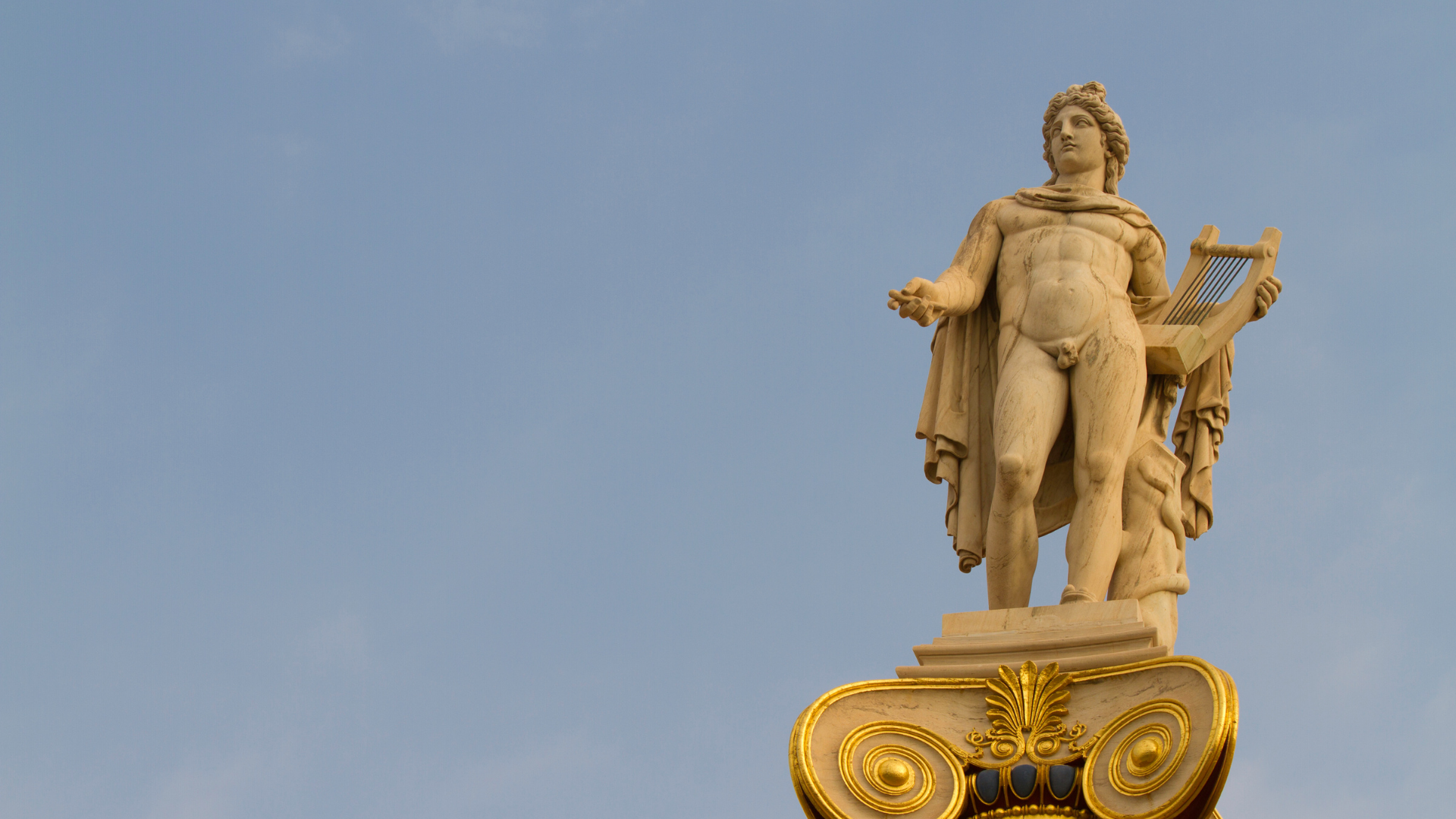
*Telestikê is also a term for a magical operation in which a statue is imbued with a soul. Ensouling statues was, notably, a practice among the Ancient Egyptians. Those who are interested in the spiritual traditions of Ancient Egypt can read my review of Jeremy Naydler‘s Temple of the Cosmos.

Chariot Enjoyer
Since we are on the topic of amusing memes, I thought it would be fun to share the following beautiful passage from the Katha Upanishad – translated by Max Müller (whom I quote in Demigod Mentality, by the way).
Know that the Atman is the rider of the chariot,
and the body is the chariot.
Know that the Buddhi is the charioteer,
and Manas is the reins.
The senses are called the horses,
the object of the senses are their paths.
Formed out of the union of the Atman, the senses
and the mind,
him they call the “enjoyer.”
For those who are not aware, an ‘Enjoyer’ or ‘Average Enjoyer’ is often juxtaposed against a ‘Fan‘ – where the Enjoyer is presented in a favourable light. This is why I often refer to my own esteemed audience as Enjoyers, Enthusiasts, or Appreciators. Men of culture will, of course, also be reminded of Plato’s chariot allegory.
Mithraea and Astrological Structures
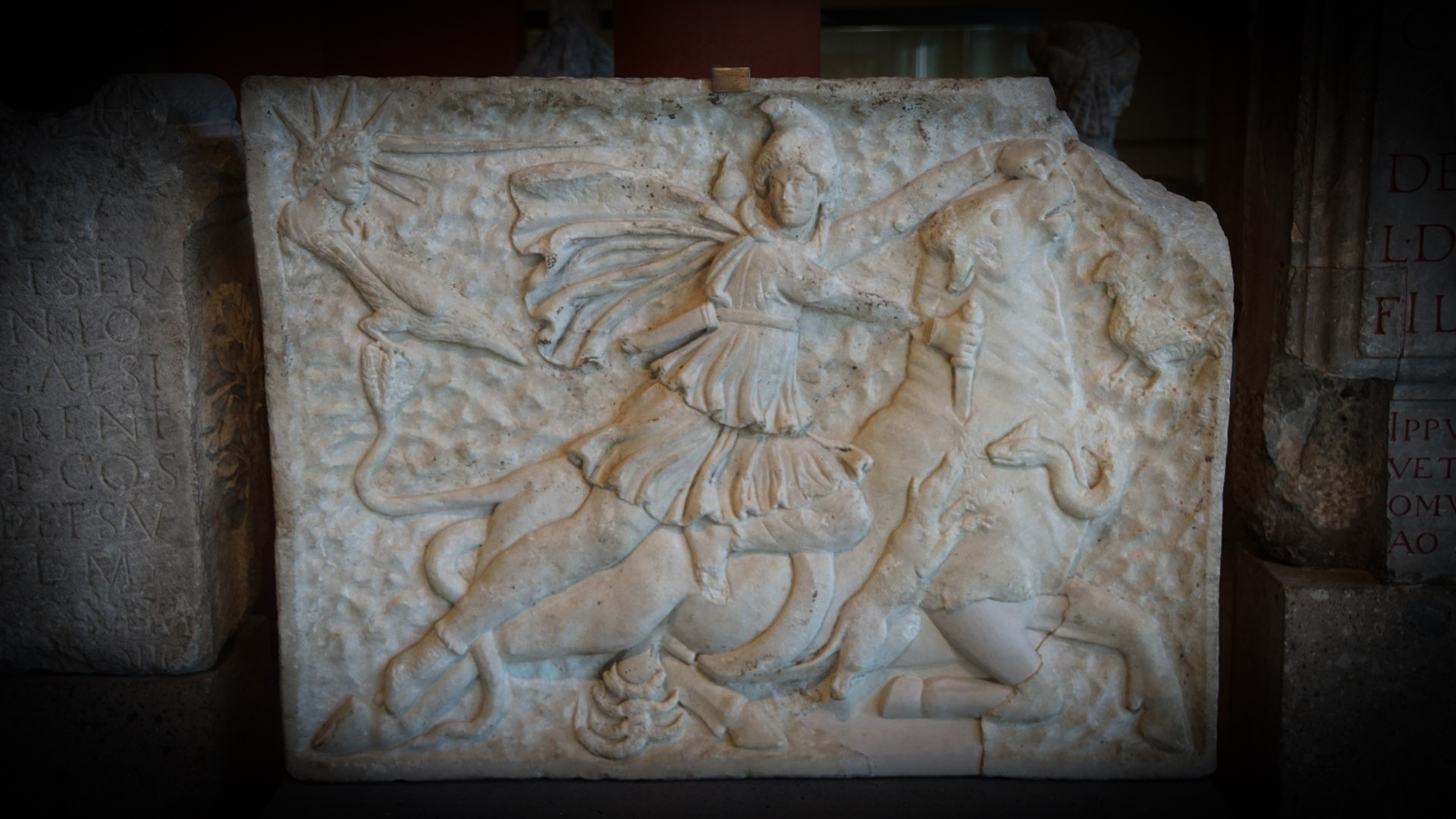
In the chapter titled The Odyssey and the Iliad, the author discusses the Mithraic mysteries – which we are all interested in. He notes that the Mithraea, the Mithraic subterranean temples, often represented the created cosmos. The author shares a quote by April D. DeConick:
‘In the Mithraeum of the Seven Spheres, the gates are specifically located at the Gemini-Cancer and the Sagittarius-[Capricorn] boundaries and identified with the summer and winter solstices. The identification of the gates with Cancer and Capricorn is also depicted on the Housesteads rockbirth, only in this case with the Cancer-Leo and the Capricorn-Aquarius boundaries.’
April D. DeConick
I am not yet astrologically knowledgeable enough to comment on this, but I am sharing this for the simple reason that this kind of information will be useful if or when Mithraea are built in the West over the coming decades.
Conclusion
The book has 166 pages and contains interesting insights. As already noted, I would not necessarily recommend this book to anyone unfamiliar with these topics. For those with an interest and some prior knowledge, however, I can definitely recommend it. I enjoyed reading it!




 The Golden One
You must be logged in to post a comment.