The Pagan Book of the Dead by Claude Lecouteux
Posted on November 1, 2023
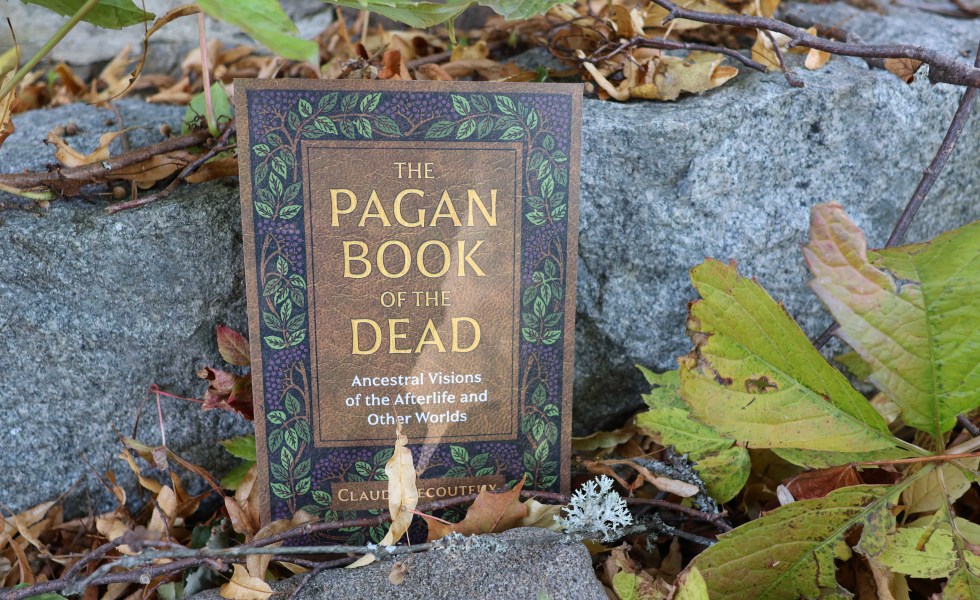
Since I enjoyed the other books by Claude Lecouteux that I have reviewed, I thought it would be interesting to read his The Pagan Book of the Dead – and it is indeed an interesting book. Contrary to what the title might suggest, the book does not only concern Pagan views of the afterlife – the author also draws upon stories and testimonies from the (nominally) Christian times.
European Conception of Angels
Astute enjoyers of my content will know that I often point to angels as a good example of how Christianity was greatly altered to fit the European psyche. This is why we know angels as beautiful and good. The author refers to a text titled Revelation of Moses, in which Moses left his body and travelled through the seven heavens.
‘He saw hell and the men there “tortured by the angels of destruction.” Some were hung up by their eyelids, others by their ears, hands, tongue, sexual organs, or feet, or covered in black worms.’
Claude Lecouteux – The Pagan Book of the Dead. Page 33.
Quite the contrast against said beautiful and good angels!
A Guide in the Afterlife
In the chapter titled Hell, Purgatory, and Paradise, the author shares the following insightful passage:
‘Common to all of the accounts, from antiquity to the Middle Ages, is the presence of a guide accompanying the traveler who has made his way into the beyond: the Yazatas for the Persians, the Uthras for the Mandaeans, Virgil for Dante, and a saint or an angel in the visions. Every time, the guide protects the soul from attacks by demons who want to carry it off.’
Claude Lecouteux – The Pagan Book of the Dead. Page 64.
I always find these perennial themes highly compelling and interesting.
Angels, Demons, and an Irish Saint
The author shares the following epic story from Vita Sancti Fursei (Life of Saint Fursey), written by an anonymous author around 656, in regard to the soul being guided and protected:
‘Falling ill and enveloped in darkness, he gave his last sigh and saw himself picked up by two angels with a third preceding them, armed with a shield and a sword to protect the visionary from attacks by demons. His spirit then rejoined his body because they could not take him with them until he had completed an action. Fursey took communion, and the next day his feet grew cold again, and he fell into a deep sleep on his bed. It is understood that the angels expected him to receive communion. In the course of his journey throughout the beyond, he met two bishops who gave him instructions and advice. During his return trip to earth, Fursey was burned on the jaw and shoulder by demons. When his soul rejoined his body, he saw his chest open.’
Claude Lecouteux – The Pagan Book of the Dead. Page 54.
The author goes on to note that this last detail is missing from an account titled The Golden Legend, but that it says something similar – ‘the devil struck Forsey so hard that after he returned to life, the mark from those blows remained forever.’ And moreover that ‘In a surprising manner, what the soul had suffered had manifested in the flesh.’ This is not the first account of a resurrection – the most famous one is the resurrection of Jesus. I cannot comment further upon these matters for now, but we will revisit the subject as I become wiser and attain more insights.
Virgil and Dante’s Inferno
The author notes that Virgil’s Aeneid served as inspiration for Dante’s Inferno – which in turn was the inspiration for the iconic artwork Chart of Hell by Sandro Botticelli (pictured below). The book is full of examples on how the Pagan conception of the afterlife influenced later Christian views of the afterlife.

Icelandic Syncretism
Readers of my book reviews will be familiar with Icelandic Magic by Stephen E. Flowers (review), in that book the author describes the syncretism that characterised mediaeval Iceland. In The Pagan Book of the Dead, the author notes that mixing Pagan and Christian elements was common in Icelandic literature. He shares an Icelandic poem – Sólarljóð (Song of the Sun) – written around 1200 (so a good bit after the introduction of Christianity). In the poem, the Norns appear. The Norns are the weavers of fate in Germanic tradition.
In a chapter titled The Otherworld in Medieval Scandinavian Literature, the author discusses the works of both Iceland‘s Snorri Sturlasson (1179–1241) and Denmark‘s Saxo Grammaticus (1150–1220). The latter will be familiar to astute listeners of The Greatest Podcast. Here is a short excerpt regarding Saxo from a recent episode: https://www.instagram.com/p/CyDO8AGqUlC/. The author notes that the afterlife in both Snorri‘s and Saxo‘s accounts are syncretic in their nature (i.e. the Pagan view survived into the nominally Christian era).
On a personal note, I must admit that I do indeed appreciate a bit of religious syncretism! That said, the main Gods and Goddesses in my pantheon are Germanic ones – Odin, Balder, and Freya, primarily.

A Celtic Story With an Indian Counterpart
Many of my readers are (I can only suppose) interested in comparative mythology. Perhaps I will discuss the myth at hand at a later stage, but what I can share now (for those who want to read up on it) is the following:
‘Philippe Walter has demonstrated the Celtic origin of the lay of Yonec, whose parallel can be found in the story of Conaire, the legendary king of Tara. But he cites another story taken from the collection of Somadeva, written between 1063 and 1081, in which the supernatural being corresponding to Muldumarec is a rakshasa, an ogre of Indian mythology. The similarities between this story and Yonec are too numerous for them not to represent a shared fragment of our Indo-European heritage.’
Claude Lecouteux – The Pagan Book of the Dead. Page 95.
Said Indo-European heritage can be traced to the Corded Ware Culture – which I discussed briefly in my review of Adrian Goldsworthy’s Rome and Persia (review).
Celtic Afterlife and Dogs
On another note regarding comparative mythology, I thought to share the following valuable insight by the author:
‘The sea voyages of Conn and his son thus illustrate that the otherworld for the Celts was composed of islands. Among the recurring themes we have apples, crystal, and ice. One detail is striking: the names Coinchenn, Coinchend, and coincuilind are all derived from cú (genitive form: con), meaning “dog” (cf. Ancient Greek κύων). This gives me license to venture the hypothesis that we are seeing a vestige of totemism here, although this is not the only possible interpretation, as we shall see.’
Claude Lecouteux – The Pagan Book of the Dead. Pages 140-141.
Men of culture will perhaps think of Cú Chulainn when reading this passage – indeed, his name is usually translated to ‘Culann’s hound.’ What is interesting about dogs in relation to the afterlife is that we see the great dogs Garmr in Germanic myth and Cerberus in Greek myth. For more information about dogs and wolves in Indo-European religion, see my review of Kris Kershaw‘s The One-eyed God and the (Indo)-Germanic Männerbünde.

Conclusion
The Pagan Book of the Dead is 250 pages and contains a wealth of information about the view of the afterlife – both in Pagan and Christian times. I can definitely recommend the book for anyone interested in these matters.
The First Alchemists by Tobias Churton
Posted on October 23, 2023

I have read The First Alchemists – The Spiritual & Practical Origins of the Noble and Holy Art by Tobias Churton. A while back, I read and reviewed The Hermetic Tradition by Julius Evola. I got intrigued by the subject and thus thought this book would make for good further reading. As the title of the book suggests, the author discusses the first alchemists – and the time and place of their origin story is Egypt during the first centuries AD.
What Did the Early Alchemists Do?
Evola’s book The Hermetic Tradition focuses on the spiritual aspect of alchemy – the purification of oneself (i.e. one’s soul or spirit). And it is true that there was a spiritual component involved in the early days of alchemy as well – however, it was also a very practical art. Simply put, many of the processes and techniques had to do with making beautiful things – making dye for clothes, refining stones, or making glass (to name but a few applications). The word alchemy is often associated with the quest to transform base materials into gold. Successful alchemical operations did indeed generate gold – but in the form of wealth and money. The author shares the following valuable insight:
‘Alchemists were not lunatics. As we have seen, much of the misunderstanding may have come from a lack of knowledge of what the first alchemists were actually doing, leading to their work being fundamentally misinterpreted centuries later. What they were doing was applied science capable of repeated demonstration under controlled conditions. To say that their science was rudimentary is like accusing Wilbur and Orville Wright of not having fashioned Concorde in 1903.’
Tobias Churton – The First Alchemists. Pages 176-177.
Thus, to respond to the question of what the early alchemists were actually doing, one could say that they engaged in the manufacture and refinement of precious items in late antique Egypt – and, for some, the manufacturing process had a spiritual aspect. An interesting note is that Emperor Diocletian (infamous among Christians for his persecutions) ordered the destruction of chemical books as he believed that the profits obtained from the alchemical art could fund rebelliousness in Egypt. So, again, the early alchemists created wealth by their methods, albeit not in the way (i.e. turning base materials into gold) legend has it.

Zosimos – The Father of Religious Alchemy
Central to the story of early alchemy is a Graeco-Egyptian mystic named Zosimos. The author introduces him thus:
‘Zosimos is perhaps the best known early devotee of the spiritual vision of the philosophical tractates attributed to Hermes Trismegistus and known generally as the Corpus Hermeticum. Zosimos understands them intimately; his thought is wedded to them, and he sees them as inseparable from his chemical practice. As Hermetic studies pioneer A. J. Festugiére noted, Zosimos was “father of religious alchemy,” the first alchemist to portray alchemy in terms of salvation, as a technique of dual purpose: purifying metals and purifying human souls.”
Tobias Churton – The First Alchemists. Page 91.
Hermes Trismegistus, a name that may be familiar to many of my esteemed readers, was the result of Graeco-Egyptian syncretism (combing Hermes with Thoth). The saying (and teaching) ‘As above, so below’ is attributed to this mythical individual. The author continues the passage and says the following about Zosimos‘s views on the divine and its connection to the alchemical process:
‘For Zosimos, the universe is a tangible mirror image of incorporeal being, the image coalescing, even coagulating on the physical plane. It was, he believed, fashioned by and sustained by two emanations of the unknowable Father: two “sons” of God: the cosmic fashioner (demiurge) and the holy spirit-mind (Logos and nous). In the chemical process, Zosimos felt privileged to see – once mind (nous) was purified – revelation of God’s creative and redemptive processes. For Zosimos, alchemy is divine analogy, and more than that, it is a means both to initiate and prefigure divine redemption and ultimate salvation through sacrifice, purification, and ascent to the One.’
Tobias Churton – The First Alchemists. Page 91.
The author goes on to note that according to some scholars, Zosimos’s conception of alchemy was a form of theurgy (i.e. God-working). For more information about theurgy, see my review of The Practical Art of Divine Magic by Patrick Dunn. The One in the quote above refers to the Neoplatonic One (i.e. God). Speaking of Neoplatonism, Zosimos and Iamblichus (one of the most famous Neoplatonists) were contemporaries. Iamblichus’s views of theurgy can be found in his De Mysteriis. The author also notes that despite the proximity to magic/theurgy, Zosimos was adamant that the pure art (i.e. alchemy) is not magic and requires no ritual impedimenta – only a pure intention to practice with propriety:
‘For Zosimos, the art relies solely on natural processes. Only the earth/body-bound involve magical practices and supplication of daimons. Zosimos’s alchemy is a natural, divine path to God, in which pious practitioners are called to identify with all elements and transformations, so as to experience harmonious union, or “gold”: the most divine dye that raises soul and is the soul raised to its goal. The “metal” (body) must be willing to suffer the process.’
Tobias Churton – The First Alchemists. Pages 91-92.
The Stockholm Papyrus
I was excited to learn that there is a papyrus named the Stockholm Papyrus – which can be found at Kungliga Biblioteket (the Royal Library) in Stockholm. We have a Greek gentleman named Ioannias Anastasiou (1765–1860) to thank for this. The author notes that the Kingdoms of Sweden and Norway (Svensk-norska unionen – the Swedish-Norwegian Union) appointed Anastasiou as their consul general in Egypt in 1828. Anastasiou, a man of culture as well as a hero, also helped free hundreds of Greek rebels from slavery – who ended up in captivity following the Ottoman attack on the Peloponnese (1824–1828).

The papyrus itself (pictured above) contains 111 recipes that concern dyeing, colouring gemstones, and making copper appear like gold (amongst other things). Seven of the recipes are for making greatly valued purple dyes. The Stockholm Papyrus can be viewed in digital format here. Pictured below, an aspiring Enlightened Despot who appreciates purple clothing!

Syncretism in Late Antique Egypt
The author notes that late antique Egypt was a place of remarkable religious syncretism. The culture was a Graeco-Egyptian one with a dose of Roman realism and home to metaphysical speculations galore:
‘The spiritual-physical universe in which late antique alchemists in Egypt operated was already a syncretic amalgam of Egyptian divine immanentism competing with Jewish spirituality, Platonist idealism, Stoic pneumaticism, pre-Socratic nous speculation, gnosis (Christian and otherwise), Aristotelian praise for logical mathematics, Euclidean physics, and a hierarchical, crystalline, and spherical cosmology that would find definitive, mathematical form in Claudius Ptolemy’s works amid the fervid atmosphere of second-century Alexandria.’
Tobias Churton – The First Alchemists. Page 200.

Conclusion
The First Alchemists has 276 pages and details the early days of alchemy well. The book is full of interesting insights – I enjoyed reading it and can definitely recommend it to others interested in the subject. The book may be a bit specific and technical for those who are unfamiliar with the topic.
Onwards and upwards!
Rome and Persia – The Seven Hundred Year Rivalry by Adrian Goldsworthy
Posted on October 16, 2023
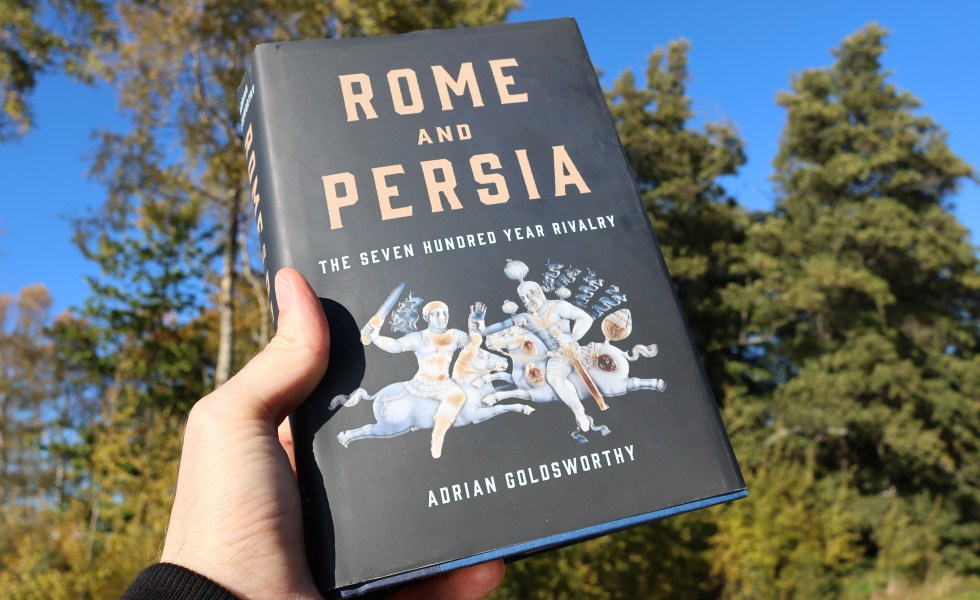
I have had the pleasure of reading Rome and Persia – The Seven Hundred Year Rivalry by British historian Adrian Goldsworthy. As the title suggests, the author details the relationship – the many wars but also the mutual respect and sometimes cooperation – between these two great empires.
A Reservation and a Correction
Although the book is otherwise excellent, I must mention two passages that unfortunately detract from the experience of reading the book. In the introduction the author states the following: ‘In an ugly form, the claim that Germans were different from other Europeans because they had thrown off the Roman yoke…‘. This sentence struck me as rather absurd – in my humble opinion it is fully natural to be proud of the fact that most of Germania was not conquered by the almighty legions. Later on the same page, the author uses the word ‘N*zi,’ which is a word that should never be used by a serious scholar.
Later on in the introduction, the author states that ‘Greeks and Romans were equally disparaging about all other outsiders…’ – this is simply not true. The Roman historian Tacitus famously extolled the virtues of the Germanic tribes – juxtaposing said virtues against the decadence of the Romans. This is in rather sharp contrast to how they viewed most other peoples (especially those to the east) that they encountered. Funnily enough, the author mentions the following in later chapter: ‘These were Gauls, with perhaps some Germans, and were highly thought of…’ This was in the context of the composition of a Roman army before a campaign.
I am unsure why the author (who is clearly a highly knowledgeable scholar) felt the need to include these passages in the introduction – perhaps pressure from an increasingly ‘woke’ academia? Either way, I would sincerely wish the introduction could be altered for future editions. I must admit that I got quite annoyed by this, but decided to continue reading anyway – which I am glad I did.
The Corded Ware Culture
Although the author does not discuss this, I thought it would be reasonable to mention the great Corded Ware Culture. The Corded Ware Culture came about as a result of the invasion of Steppe Pastoralists (sometimes known as Indo-Europeans or Aryans) from today’s Ukraine into Central Europe. There, they met (or conquered, rather) the Early European Farmers – and from this union the Corded Ware Culture was born. To somewhat simplify matters, the Corded Ware Culture gave rise to the Germanic, Latin (i.e. Roman), Celtic, and Slavic peoples of Europe. Not only that, but the origins of the Iranian (Persian) and Vedic cultures can also be traced to the Corded Ware Culture. For more information, see the following video by Survive the Jive: Aryan Invasion of India: Myth or Reality?
Moreover, when observing the picture below, it becomes apparent why an entity such as myself, carved out of Swedish granite, would find an appreciation for and, to a certain extent, affinity with ancient Iran and India.
Dark green = genetical closeness. Thanks to Waters of Memory (active with that username on Telegram, X, and Instagram) for the picture.

The Persian Dynasties
There were three great Persian dynasties of antiquity. First and foremost, the Achaemenids – the rivals of the Greeks that would ultimately perish under the onslaught of Alexander the Great. The second dynasty, the Parthian one – the Arsacids – emerged when the Seleucid Empire disintegrated. From a Roman perspective, the Parthians are perhaps most famous for their victory over Crassus at the Battle of Carrhae in 53 BC. The Parthians were succeeded by the Sasanians in AD 224, who would rule up until the Arab conquests of the seventh century. The latter two dynasties are (alongside the Romans) the focus of the book.
Shapur – King of Aryans
One of the great kings of the Sasanian dynasty was Shapur I. The author shares the following epic passage that was found on a monument:
‘I am the Mazda-worshipping divine Shapur, King of Kings of Aryans and non Aryans, of the race of the gods, son of the Mazda-worshipping divine Ardashir, King of Kings of the Aryans, of the race of the gods, grandson of King Papak, I am the Lord of the Aryan nation.’
Adrian Goldsworthy – Rome and Persia. Page 247.
I found this particularly interesting – as well as poetically beautiful. Pictured below: Roman Emperor Valerian submits to Shapur I.

How Did the Romans Counter the Parthians?
The very word Parthian conjures up an image of a horse archer (at least it does for me, having grown up with Rome: Total War), so it was interesting to read about how the Romans countered these forces. The author highlights three aspects of the strategy of a general named Ventidius. The first was to only fight on ground of his own choosing. And, moreover:
‘Secondly, the Romans did not employ a static defence but counter-attacked with their legionaries and other troops and were able to move to hand-to-hand combat and win. Thirdly, Ventidius supported his legionaries with large numbers of light infantrymen armed with missile weapons. His slingers are singled out for their effectiveness, and it is claimed that they outranged the Parthians’ horse-archers.’
Adrian Goldsworthy – Rome and Persia. Page 116.
Seleucus I and Chandragupta
Although the conquests of Alexander (and the wars of his successors) belong to the era of the Graeco-Persian rivalry, the author introduces the geopolitical situation in the region after the conquest. He notes the following regarding the Seleucid Empire:
‘Territory in India was lost early on, in part through a deal between Seleucus I and Chandragupta, the charismatic creator of an empire in central and northern India. The Seleucids withdrew voluntarily from the lands around the Indus and in return were supplied with war elephants to employ in the funeral games.’
Adrian Goldsworthy – Rome and Persia. Page 49.
The funeral games is a reference to the Wars of the Diadochi (fought between Alexander’s successors). I have had a certain liking for and interest in the Seleucids ever since playing the aforementioned Rome: Total War when I was 14. On a related note, I read Valerio Massimo Manfredi’s trilogy about Alexander during this time as well (a trilogy I remember with fondness). Being one of Alexander’s generals, Seleucus has a prominent role in the trilogy.
Jesus – A God Among Many
As I have noted elsewhere, the polytheistic Romans (and indeed Europeans in general) were quite open to adding other Gods into their existing pantheon. On this note, I found the following passage interesting:
‘In a polytheistic culture, it is more than likely that many people revered the Christian God while continuing to follow older cults as well. One source claims that Severus Alexander added a statue of Jesus to the collection of deities especially important to him.’
Adrian Goldsworthy – Rome and Persia. Page 306.
Severus Alexander was emperor from 222 until 235.
My Own View of Jesus
Although this is not necessarily relevant to the book review per se, I thought to clarify my position on Jesus for good measure (as I have done on numerous occasions before). I always show respect for Jesus – as he has been an important individual for many of my ancestors. He is, moreover, still an important individual to some supporters and friends of mine – although the overwhelming majority are Pagans, as I am myself.

Mithra and Mithras
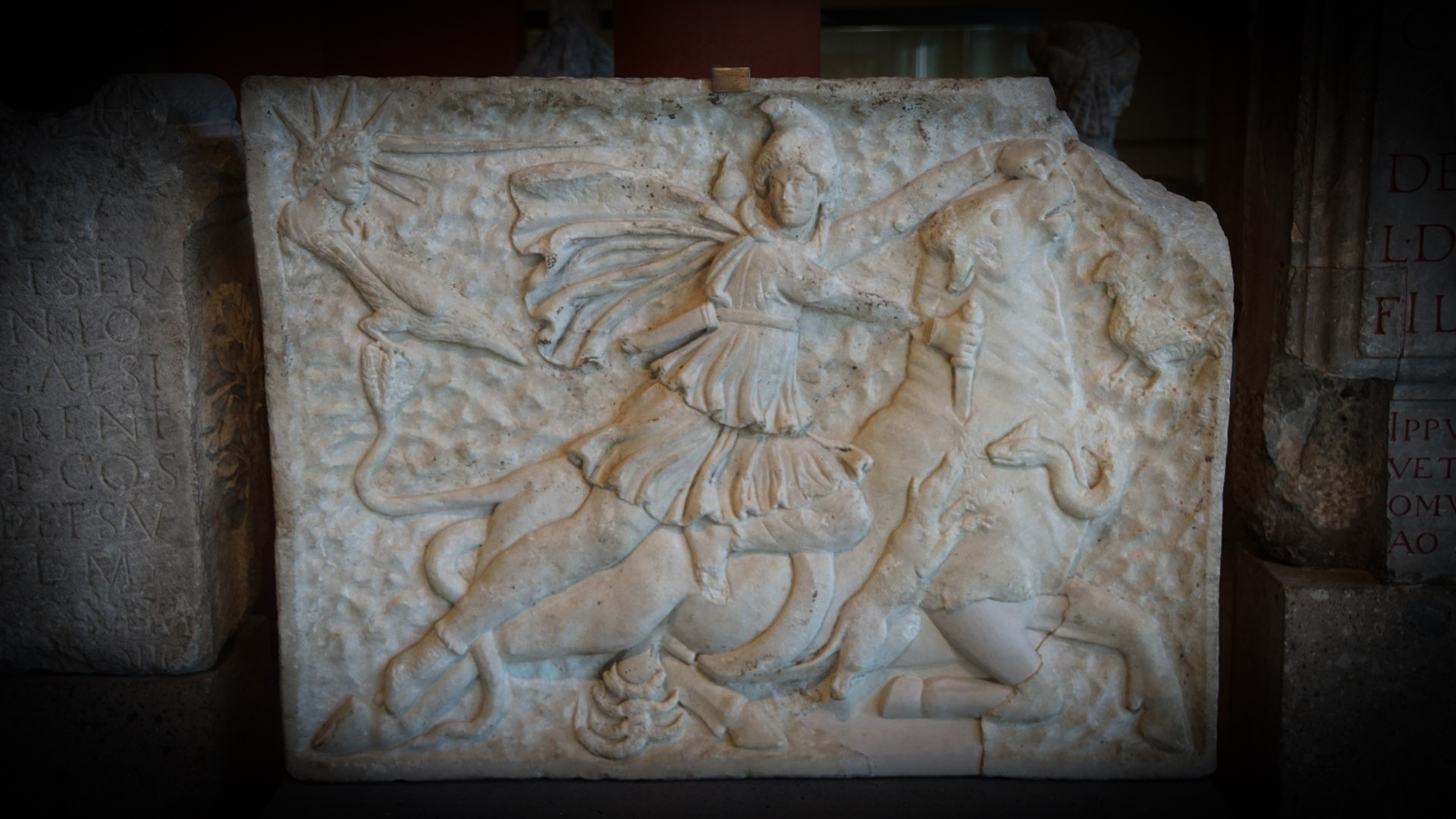
Enjoyers of my content will be familiar with Mithras. Just as some accepted Jesus into their pantheon, so were there many (primarily soldiers) who embraced Mithras. The author shares the following in regard to the cult:
‘In the Roman empire, the cult of Mithras built up a significant following, devotees attracted by its secret rituals, initiating them over time to higher grades within the order. Mithra was an Iranian god of great antiquity, within the Zoroastrian pantheon and much revered by many Parthians, especially among the nobility. The Roman cult drew inspiration from this tradition, since the distant and exotic has a natural appeal for many people, so the god was depicted in eastern dress and temples built to resemble caves to invoke old stories about the god. Yet the details were garbled, probably beyond recognition for traditional worshippers of Mithra, and everything tailored to suit the tastes of the Greco-Roman world. Plenty of the followers of Mithras were equestrians, including army officers, and there were never the slightest suggestion that their cult made them anything other than patriotic Romans. Similarly, reverence for the Greek tradition did not make subjects of the Arsacids automatically disloyal.’
Adrian Goldsworthy – Rome and Persia. Page 196.
Enthusiasts of the Mithras cult will perhaps be interested in The Mysteries of Mithras by Payam Nabarz that I reviewed a while back (review). To clarify – Mithras is the Roman God and Mithra is the Iranian God. I will discuss Mithras at length in a podcast episode (I have a few episodes planned before that, however).
Cicero’s Military Exploits
Cicero is best known as a statesman and a lawyer. Admirers of him will perhaps be happy to learn that he also acquired military success:
‘Cicero launched an offensive against the communities of Mount Amanus, who were fiercely independent and prone to raiding. This was partly to exercise his troops and partly to give a display of Roman strength to the mountain tribes and allies in the wider area. The orator and highly reluctant governor, let alone soldier, did well enough to hope for a triumph.’
Adrian Goldsworthy – Rome and Persia. Pages 102-103.
My admiration for the man did indeed increase upon reading about his participation in the war against the Parthians – especially since Cicero (as the author hints at in the quote above) was not a great enjoyer (by Roman standards, at any rate) of military matters, thus making his exploits even more laudable.

The Two Eyes of the World
One of the most interesting insights in the book (and there are plenty of them) is the one that illustrates how the Romans and Persians viewed each other (at times):
‘A sixth-century source claims that Narses I sent a trusted advisor to Galerius around 299. This man compared the Roman and Persian empires to two lamps; like eyes, ‘each one should be adorned by the brightness of the other’, rather than seeking to destroy. The imagery may be genuine, for near the end of the sixth century a king of kings sent a letter to the emperor stating that it was the divine plan that ‘the whole world should be illuminated… by two eyes, namely by the most powerful kingdom of the Romans and by the most prudent sceptre of the Persian state’, who between them held down the wild tribes and guided and regulated mankind.’
Adrian Goldsworthy – Rome and Persia. Page 330.
Quite a beautiful display of mutual respect!
Conclusion
At 494 pages, Rome and Persia explains the relationship between the Romans and Persians in a fully satisfactory manner. It contains plenty of valuable insights – in fact, the next episode of The Greatest Podcast will be dedicated to this topic and will have this book as its main reference.
I can definitely recommend the book – with the caveat that the introduction is not of the same quality as the rest of the book. In fact, I would even encourage the author to replace the introduction with a chapter about the shared origins of Rome and Persia – and perhaps a discussion about the commonalities between their religions.
Pax by Tom Holland
Posted on September 13, 2023

I have read Pax – War and Peace in Rome’s Golden Age by Tom Holland. I have always had a keen interest in Roman history – as I am sure all men of culture have. I could label either Roman or Mediaeval history as my first love in this regard. Thus, I said it would be my pleasure when the publisher asked if I wanted to review the book.
As the title of the book suggests, it details the Roman world of Rome’s golden age (i.e. when Roman power was at its zenith) – from the tumultuous Year of the Four Emperors (AD 69) to the reign of Hadrian (AD 117 to 138). The book is very well written and presents the principal events and wars of the era in a clear and gripping way.
The book contains the following chapters:
I. The Sad and Infernal Gods
II. Four Emperors
III. A World at War
IV. Sleeping Giants
V. The Universal Spider
VI. The Best of Emperors
VII. I Build This Garden for Us
Transgender Queen!?
In Chapter I, the author gives much attention to two individuals – Queen Poppaea and a eunuch also named Poppaea. The author mentions that:
‘And it was to Greece, as it so happened, that the boy transformed into Poppaea, only a few months after the operation that had made him a woman, had been taken by Nero. Borne in a litter appropriate to an empress, the new Poppaea had toured a succession of the festivals for which Greek cities were famed.’
Tom Holland – Pax. Page 52.
Later in the chapter, the author refers to the eunuch as a maimed parody:
‘Otho, by seizing the maimed parody of his former wife, had known full well what he was doing. Poppaea served as a totem. To own her was to signal a readiness to play the role not merely of a Caesar, but of a Nero.’
Tom Holland – Pax. Page 72.
A generous interpretation of why the author would say that ‘the operation that had made him a woman‘ is that it could be a poetic way to say that they attempted to make a eunuch as feminine as possible. Another way to explain it is that the author lives and works in the United Kingdom – and thus has to contend with a notoriously repressive regime. Just as one would expect an author in the Eastern Bloc during the Soviet times to formulate himself in a certain way, so can one suppose that the author does something similar here.
Perhaps I am reading too much into it, and whatever the reason the author had for formulating himself thus, it should not discourage anyone from reading an otherwise excellent book.
BBC Rewriting History
In the preface of the book, the author notes the following:
‘BBC, in a recent film made for children about Hadrian’s arrival in Britain, amended chronology so as to portray the governor of the province at the time as African.’
Tom Holland – Pax. Page 4.
A less polite, but perhaps more accurate, way to state it would simply be to say that the BBC, a propaganda organ, falsifies history. Either way, my respect to the author for calling our their falsehoods.
A Passion for Honour
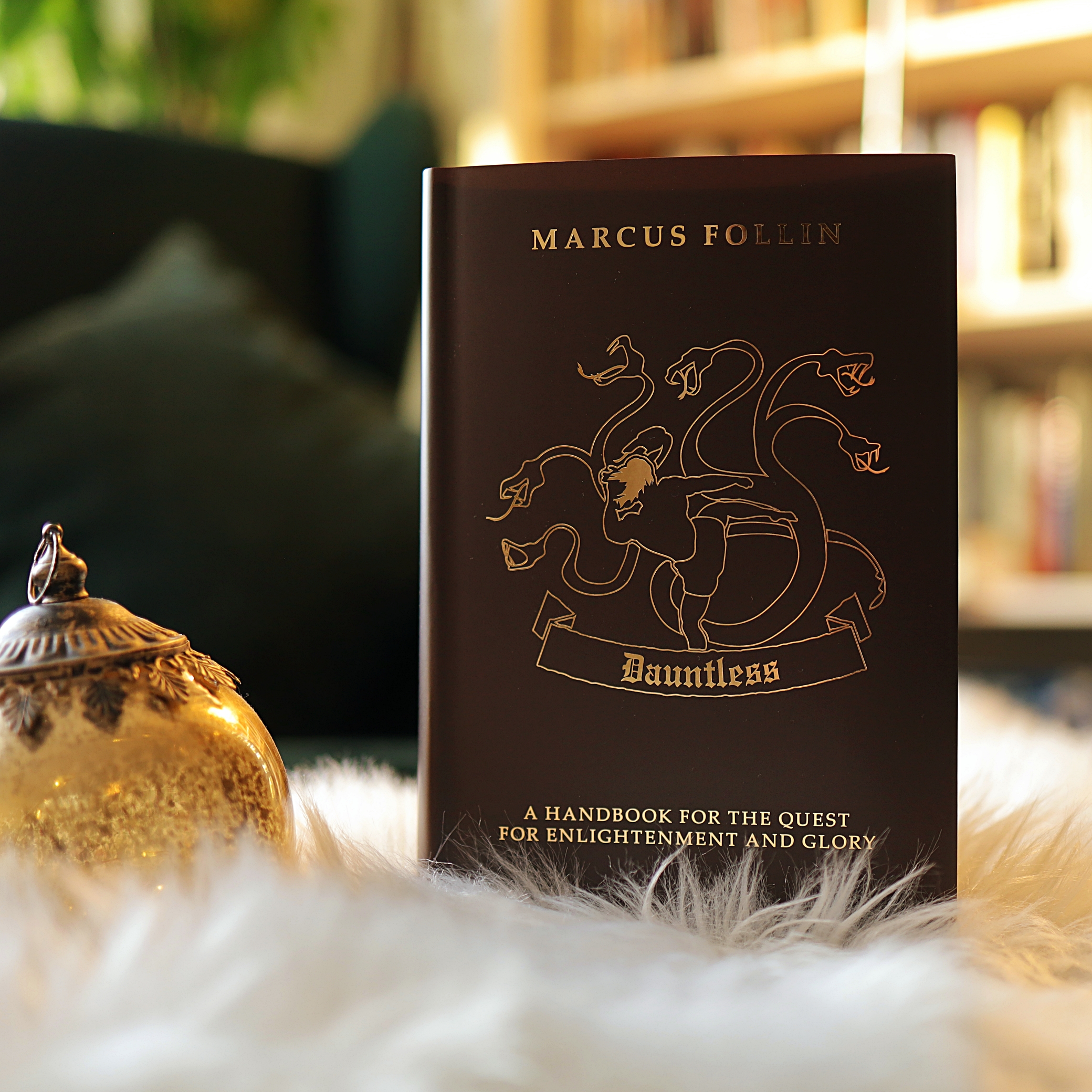
The author gives plenty of attention to the legions – which is good, considering their central role in Roman history. He elaborates on the rivalry between the various legions and the passion for honour that the Roman military traditions inspired. As I noted in Dauntless (2021) – competition breeds excellence. I also use the example of the Roman legions in my upcoming Demigod Mentality (September 2023) to exemplify how rivalries can serve as a catalyst for greatness. To understand the prowess of the legions one needs to understand the importance of the esprit de corps.
Rome vs Judaea
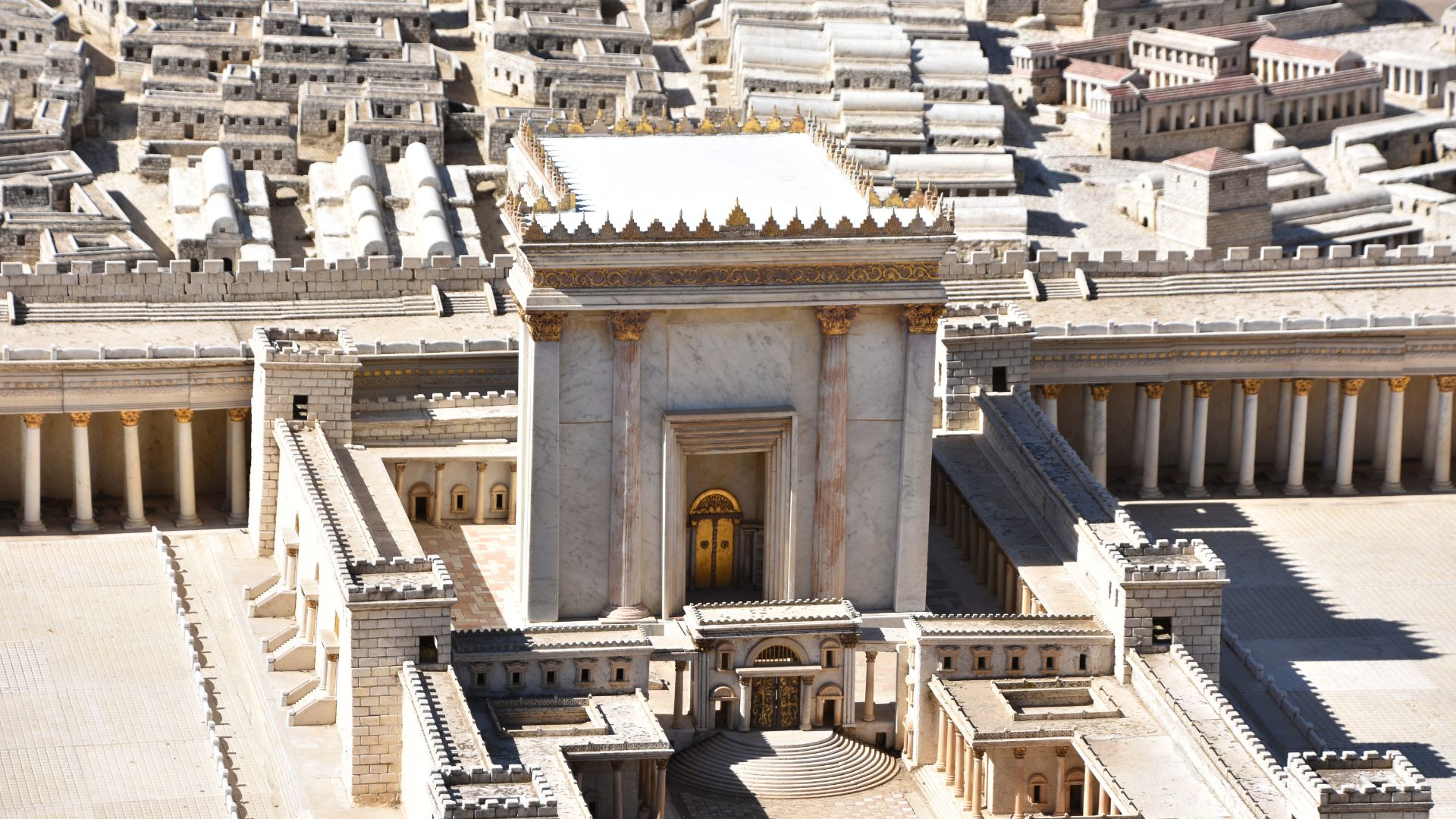
One of the most significant conflicts during the Golden Age of Rome was the one in Judaea. The conflict was not a single war, but rather a continuous conflict involving different factions – the two main ones being the Romans and the non-Hellenised Judaeans (i.e. the Judaeans who did not want to assimilate into the Graeco-Roman world). This conflict was not restricted to Judaea – for example, the Judaean population in Cyrene rose up in a full-blown uprising, and Alexandria saw running battles in the streets between Greeks and Judaeans.
The author shares the following valuable insight:
‘Much that makes what today we call ‘Judaism’ distinctive – the role played by rabbis, synagogues, the Talmud – constitutes less a preservation of what had existed before the wars against the Romans than an adaptation to its loss.’
Tom Holland – Pax. Page 12.
Understanding the conflict between Rome and Judaea is of paramount importance for understanding Nietzsche’s teaching on master and slave morality – and much of world history for that matter.

Beautiful Quote on Trajan
Astute enjoyers of my book reviews know that I always appreciate inspiring quotes. Here is a description of Trajan, often described as the best of emperors:
‘Imperator Caesar Nerva Trajanus Augustus. Tall, broad-shouldered and weather-beaten after the many months he had spent under canvas, he exuded a quality of virtus, of manliness, such as a Roman from the most primitive days of the city.’
Tom Holland – Pax. Page 309.
Conclusion
The book is 399 pages and strikes a good balance between being concise and containing a satisfactory amount of detail. The author has released books about the previous eras of Roman history as well – perhaps I shall read them later! I enjoyed the book and can recommend it to the enjoyer of history.



 The Golden One
You must be logged in to post a comment.