The Path of Cinnabar by Julius Evola
Posted on August 21, 2022
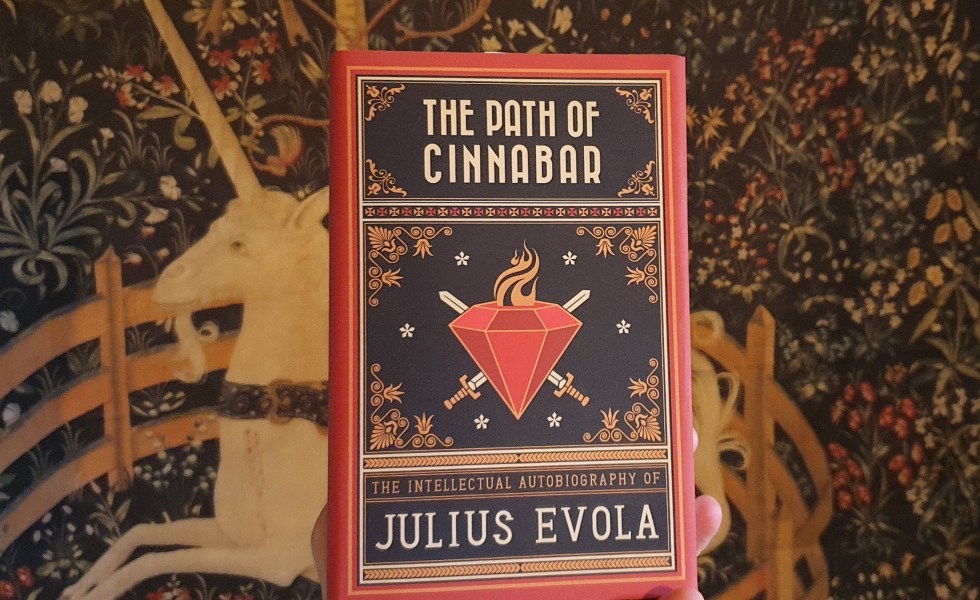
I have read The Path of Cinnabar by Julius Evola, which is his autobiography. In the book, he discusses some of his ideas and the events surrounding the publications of his books. He lived during tumultuous times, to say the least, and even if the book does not contain overly many personal stories, it is still interesting from that perspective. Most of the thoughts presented in the book will be familiar to those who have read his other works. I have discussed these books and thoughts in other reviews – which can be found here: Book Reviews.
Evola’s Background
Evola shares precious few notes regarding his personal life; the book follows his intellectual and spiritual journey and the corresponding works. However, he shares the following interesting insight:
‘As for my character, it is chiefly defined by two dispositions. The first is an impulse towards transcendence, which manifested itself from my early youth./…/ A spontaneous detachment from what is merely human, from what is generally regarded as normal.’
Julius Evola – The Path of Cinnabar. Page 6.
‘The second significant trait of my character might be described, in Hindu terms, as my kshatriya bent. In India, the word kshatriya was used to describe the human type inclined to action and performance: the ‘warrior’ type, as opposed to the religious, priestly and contemplative type of the brahma.’
Julius Evola – The Path of Cinnabar. Page 7.
As I noted in my review of Men Among the Ruins, Evola served as an artillery officer during World War 1, and applied to join the war effort on the Eastern Front during World War 2, but since he was not a member of the Fascist Party those wishes did not come to pass. As we have noted in several of the previous reviews, a reoccurring point in Evola’s thought is the distinction between the kshatriya and the brahman.
In the introduction, Evola also mentions that Nietzsche served as an inspiration with regard to his anti-Christian sentiments. He also notes that he grew up Catholic but always felt an ‘utter indifference’ for Christianity.
Another thing to note about Evola’s personality is that he ‘made a point of not receiving any degrees’ since he could not stand to be called Doctor or Professor (he would still be called thus later on though). This was due to his anti-bourgeois sentiments.

Evola’s Dadaist Phase
Evola had, and this may be surprising to some, a Dadaist phase. Dadaist ‘art’ is anything but beautiful and should, in my view, not be called art. I asked my friend Tom (Survive the Jive) how it was that Evola, at any stage of his life, would find an appreciation of degenerate art. Tom answered me thus: ‘Because he hated bourgeois sensibilities and Dada was a deliberate affront to them.’ This makes perfect sense when taking his world view into account.
‘What attracted me to Dadaism was its radicalism: Dadaism was not merely conceived as a new avant-garde artistic tendency; rather, it stood for an outlook on life which expressed a tendency towards total liberation, conjoined with the upsetting of all logic, ethic and aesthetic categories, in the most paradoxical and baffling ways.’
Julius Evola – The Path of Cinnabar. Page 19.
Evola would eventually move past this state, however:
‘The movement I had joined out of my high esteem for Tristan Tzara was destined to accomplish few of the things I had sought to find within it. While Dadaism certainly embodied the extreme, unsurpassed limit of all avant-garde artistic currents, it never consumed itself in the fire of a ‘leap of boundaries’ beyond all art forms and similar forms of expression. Dadaism was soon followed by Surrealism, which, in my opinion, gave proof of its regressive character.’
Julius Evola – The Path of Cinnabar. Page 22.
Evola’s Book Recommendations
The book contains an appendix in which a few interviews are included. In a question regarding his books, Evola responds with the following:
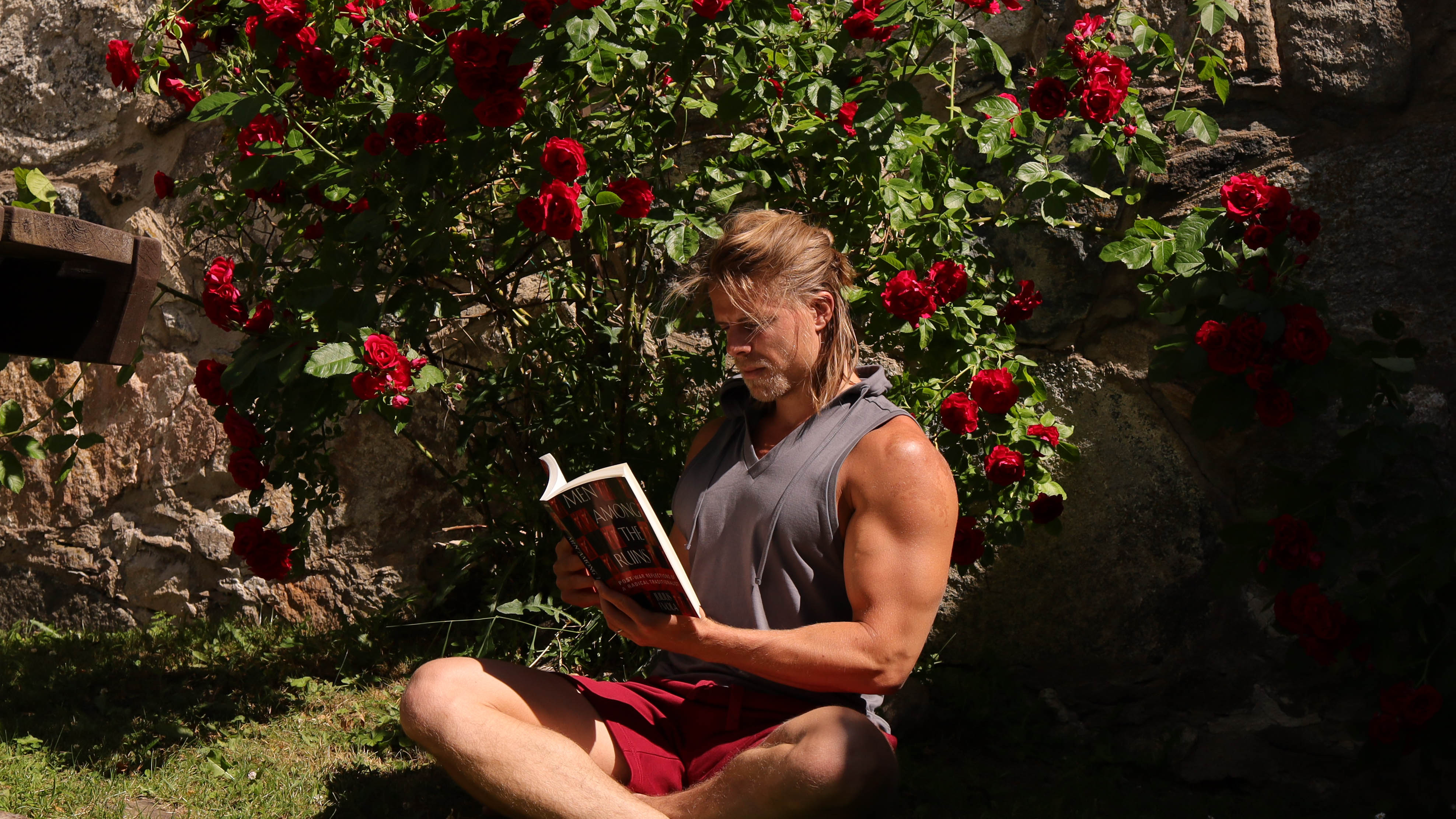
‘Young people chiefly interested in my work for political reasons should stick to Revolt Against the Modern World, as it provides both a general overview of the world of Tradition and the modern world, and gives the reader an idea of a ‘metaphysics of history’ in contrast to mainstream historiography. One might also turn to The Mystery of the Grail and Men Among the Ruins.’
Julius Evola – The Path of Cinnabar. Page 257.
This was quite interesting to note since I gave the same top three recommendations in my review of Revolt Against the Modern World. I talk more about where to start with Evola in the following video: Starting With Julius Evola.
Conclusion
I would recommend The Path of Cinnabar to those who have read a good number of Evola books. I found it interesting to get to know more about the context in which the books were written. However, may the spirit of Evola forgive me for saying so, the chapter titled The Speculative Period of Magical Idealism is quite uninteresting in my humble opinion – the subsequent chapters are much more interesting, so if you decide to read it, do not be disheartened by that chapter. Evola’s philosophical writings are not nearly as interesting as his other writings (esoteric, historical, societal etc.).
Thank you for reading this book review; it will actually be the last one for a while. I will now focus all of my writing on my upcoming book – which will be out sometime next year. Onwards and upwards!
Recognitions by Julius Evola
Posted on August 15, 2022 1 Comment

I have read Recognitions – Studies on Men and Problems From the Perspective of the Right by Julius Evola. The book contains a collection of essays that Evola wrote towards the end of his life. As the subtitle suggests, many of the essays discuss other thinkers and authors. The essays are, moreover, quite diverse in terms of topics. They are also, in my humble opinion, quite varying in terms of how interesting and insightful they are. As I might have mentioned before, the esoteric and historical observations of Evola are more interesting than his philosophical ones. Regarding the edition, I must give credit to John Bruce Leonard, the translator, for the amount of informative footnotes that help the reader understand the context of certain references (i.e. to persons and books, etc.).
The Fifth Estate – The Forces of Chaos
In an interesting essay titled The Advent of the “Fifth Estate”, Evola discusses the Four Estates and, interestingly, also a Fifth Estate. The Four Estates are, as may be familiar to some, the following:
- The First Estate = spiritual and sacral authority.
- The Second Estate = the warrior aristocracy.
- The Third Estate = the bourgeoise.
- The Fourth Estate = the working masses.
The French Revolution can be classified as a revolution of the Third Estate. The Bolshevik Revolution can be classified as a revolution of the Fourth Estate. What, then, might the Fifth Estate be? Evola explains it thus:
‘The four-part descent in level of civilization and of social organizations is a reality; likewise is the emergence, upon the point of reaching the final step, of the nether forces, the forces of chaos, which in a certain sense cannot be said to belong to the properly human world, and which can perhaps best be comprehended by the formula of the advent of the Fifth Estate.’
Julius Evola – Recognitions. Page 30.

Evola on Christianity and Catholicism
In the essay titled Quo Vadis, Ecclesia?, Evola discusses the future of the Catholic Church as well as Christianity in general. In the essay he takes issue with the growing ‘progressivism’ of the Church after the Second World War. As is known, the Church has become increasingly Left-wing over the last few decades (even more so now than during Evola’s life). Evola writes about Christianity in many other books (as we have seen in our previous reviews). Below are some quotes that can serve to illustrate his relationship with Christianity and Catholicism quite well:
‘From the sociological point of view original Christianity was effectively socialism avant la lettre; with respect to the classical world and civilization it represents an egalitarian revolutionary ferment. It leveraged itself upon the mood and the needs of the masses, of the plebs, of the disinherited and of the traditionless members of the Empire; its “good news” was that of the inversion of all established values.’
Julius Evola – Recognitions. Page 112.
We have encountered Evola’s critique of Christianity as a doctrine for the Lower before. The quote continues:
‘This background of Christianity and its origins was more or less limited and rectified with the formation of Catholicism – thanks, in grand part, to a “Roman” influence. This overcoming was manifested also in the hierarchical structure of the Church; historically it had its apogee in the Medieval Period, but its orientation did not fail in the period of the Counter-reformation – not, finally in that which was called “the alliance of the throne with the alter,” Catholicism’s consecration of legitimate authority from the heights, according to the rigorous doctrine of Joseph de Maistre and Doneso Cortes, and with the Church’s explicit condemnation of liberalism, democracy, and socialism – and lately, in our century, in the period of modernism. But now this entire valid superstructure of Catholicism seems to crumble and to bring the emergence precisely of the promiscuous, anti-hierarchical, “social” and anti-aristocratic substrate of Christianity.’
Julius Evola – Recognitions. Page 112, 113.
In The Path of Cinnabar (which will be the subject of a coming review), Evola discusses the topic further:
‘And while I recognised Catholicism as a positive religion, I also personally witnessed the disgraceful effects of its dissolution into emotional, sentimental and moralistic forms in the context of modern bourgeois society, which is marked by Catholicism’s lack of interest in emphasising true holiness and transcendence, symbols, rites and sacraments.’
Julius Evola – The Path of Cinnabar. Page 9.
In another passage in The Path of Cinnabar, Evola notes the following in regard to the influence René Guénon had on his views on Catholicism. The book Evola refers to below is The Mask and Face of Contemporary Spiritualism.
‘What was new in this book was my willingness to acknowledge the ‘traditional’ side of Catholicism. Nevertheless, I could not avoid expressing certain reservations. Firstly, I maintained that Catholicism ought to be distinguished from primitive Catholicism, and that the latter is to be held in lesser esteem.’
Julius Evola – The Path of Cinnabar. Page 130.
As the quote above shows, Evola had a healthy appreciation for Catholicism – i.e. Christianity that underwent a thorough Romanisation and Germanisation (as we have discussed in previous reviews). Below is another quote that illustrates Evola’s view of Catholicism – which can best be summarised as good but not good enough.
‘Whoever is traditional by being Catholic, is not traditional but halfway.’
Julius Evola – Recognitions. Page 120.

Evola on Contrarians
In the essay titled Biological Youth and Political Youth, Evola states the following in regard to contrarians:
‘Many feel the need to agitate in order to feel their individuality, their own importance; they must counterpoise themselves at all costs to something or to someone.’
Julius Evola – Recognitions. Page 45.
I thought this quote would be good to share considering the amount of contrarians that are drawn to dissident politics in the current year as well. It seems that for some, being in opposition to anyone is more important that promoting a good message. As I have mentioned before, I am not a contrarian; I am merely, by necessity, forced to be a political opponent to the regime – as is the duty of every self-respecting European man.
The Colour Red
In the chapter titled The Inversion of Symbols, Evola (correctly) laments the subversion of the colour red, which, regrettably, has become associated with Communism. As we have noted in previous books by Evola, the colour red has traditionally been associated with both regality and action – as opposed to the white of priestly contemplation. The colour purple has always been associated with royalty and has, fortunately, not been contaminated by any associations of the Left-wing. On a personal note, I like the colour red and deem it appropriate to take back this sacred colour. Many Legio Gloria garments are in Burgundy red.

Conclusion
Recognitions is 311 pages long and is written in Evola’s typical fashion. As mentioned above, the essays vary in terms of how interesting they are – in my humble opinion, the essays dealing with history and spirituality are much more interesting than the ones dealing with the philosophy of others. Overall, the book is insightful and I can recommend it for appreciators of Evola. I would probably recommend reading Metaphysics of Power or The Bow and the Club before Recognitions – both of those titles follow a similar structure (being collections of essays).
Lastly, I discuss Evola’s teachings in Podcast Episode 24. Julius Evola for those who are interested in his views and my perspective upon them.
Human, All Too Human by Friedrich Nietzsche
Posted on August 9, 2022
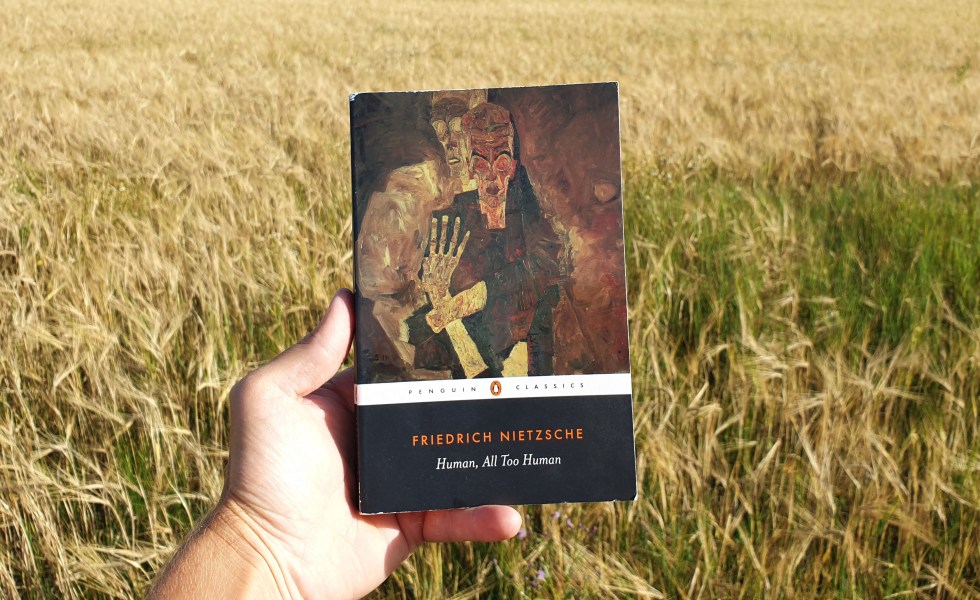
At long last, I decided to read Nietzsche’s Human, All Too Human. I bought the title in a bookshop in Galway a lifetime ago (nine years!), since then it has patiently waited for me to partake of its wisdom.
First Impressions
Since this is the only Nietzsche book I have read thus far, I will content myself with sharing my first impressions. I will elaborate more generally on his teachings later on when I have read a few more of his works. Perhaps Human, All Too Human was not the best starting point for Nietzsche’s teachings, but it had to serve as my starting point nonetheless.
To summarise my first impressions, I must regrettably say that I did not find it all too inspiring or insightful. Perhaps I have been spoiled by reading so many interesting works by Evola and Flowers (and, recently, Eliade).
The book is quite dense (in the sense that it takes a lot of concentration to digest what he writes). This is true for many of Evola’s works as well. Yukio Mishima’s Sun and Steel (review) also presents the same challenge. The difference, however, is that reading Evola makes me want to create an esoteric knightly order of European gentlemen. When I read Sun and Steel, I wanted to train in the sun. Human, All Too Human did not evoke any similar high-thumos sensations.
The book consists of 638 maxims (some shorter, some longer), which mainly concern human behaviour. The observations are quite cynical and not overly profound.
Nietzsche, Christianity, and Metaphysics
Nietzsche’s anti-Christian sentiments are well known. He is not only anti-Christian, however; he is also anti religion and presents metaphysics in the same way one imagines a smug atheist would. In my humble opinion, we need more metaphysics, not less. Nietzsche was, of course, a product of his own time and upbringing. His father was a Lutheran pastor – it is interesting how many anti-Christian individuals come from religious households. In regard to metaphysics, he states the following (such a world = the metaphysical world):
‘No matter how well proven the existence of such a world might be, it would still hold true that the knowledge of it would be the most inconsequential of all knowledge, even more inconsequential than the knowledge of the chemical analysis of water must be to the boatman facing a storm.’
Friedrich Nietzsche – Human, All Too Human. Page 147.
The sentiment above is not one that is congruent with the mentality of one who seeks to ‘conquer the world through his power’ – a reference to a quote that Evola shares from Tantrattva 1:27 in his The Yoga of Power (review). Instead of this unheroic view of metaphysics, it is better to fully embrace the spiritual paths of our Indo-European ancestors – which Stephen E. Flowers shares with us in his works – in The Nine Doors of Midgard (review), for example.
View of Christianity
Nietzsche shares the following sentiment about Christianity in the chapter titled Religious Life:
‘Christianity wants to destroy, shatter, stun, intoxicate: there is only one thing it does not want: moderation, and for this reason, it is in its deepest meaning barbaric, Asiatic, ignoble, un-Greek.’
Friedrich Nietzsche – Human, All Too Human. Page 85.
We will encounter a more profound critique of Christianity in other works by Nietzsche (some trusted friends have recommended a few titles to me) – this critique is especially interesting as it pertains to his teachings on Slave Morality and Master Morality. He critiques Christianity in other maxims as well; none of the maxims provide a deeper analysis, however.
Art and Religion
In maxim 150 (page 105), Nietzsche states that ‘Art raises its head where religions decline.‘ This is clearly not the case. One simply has to look at the great cathedrals to see how faith can inspire beauty. Great art comes from passion, not reason. One can also turn the gaze to India to behold the beauty that profound metaphysics can generate. One could even argue that a lack of solid metaphysical underpinnings in a society gives rise to soulless architecture (i.e. modern architecture).

Luther, the Emperor, and the Pope
Since we have encountered the conflict between the Holy Roman Emperor and the Pope before in Evola’s works, I thought it would be a good idea to share the following interesting insight by Nietzsche:
‘The fact that Luther survived at the time, and that his protest gathered strength, lay in the coincidence of an extraordinary political configuration: the Emperor protected him in order to use his innovation to apply pressure against the Pope, and likewise the Pope secretly favoured him, in order to use the imperial Protestant princes as a counterweight against the Emperor.’
Friedrich Nietzsche – Human, All Too Human. Page 147.
Discussions about Luther are always interesting since the repercussions of his work had such an impact on the trajectory of European civilisation. I have elaborated on Luther before, but to briefly summarise: I regret the division the Protestant Reformation caused, but he was also correct and courageous for confronting the corruption of the Catholic Church. In that sense, he was a brave man that I can admire.

Homer and Panhellenism
In maxim 262 (page 161), Nietzsche notes the following regarding the great Homer:
‘Even now, the greatest fact about Greek culture is that Homer became Panhellenic so soon. All the spiritual and human freedom the Greeks attained goes back to this fact. But at the same time it was also the actual doom of Greek culture, for, by centralizing, Homer made shallow and dissolved the more serious instincts of independence.’
Friedrich Nietzsche – Human, All Too Human. Page 161.
In my humble opinion, it was great that Homer’s work became Panhellenic. Panhellenic sentiments allowed Greece to stave of the Persians. The influence of Homer also fuelled Alexander’s quest for godhood, glory, and conquest. I also welcome the influence Homer has had (and continues to have) on European civilisation.

Can I Recommend the Book?
At 267 dense pages, Human, All Too Human is not a light read (especially since many passages may require re-reading) nor is it particularly interesting. As mentioned above, Evola is not light reading either, but his teachings are interesting and inspiring enough to make the reading worth it. In a recent video, I mentioned that Evola’s Ride the Tiger is perhaps his most uninteresting book (and definitely not one to start with), and I do not judge Evola solely based on that book. Therefore, I will not judge Nietzsche solely on this book either.
Moreover, since I have now read one book by Mircae Eliade and one book by Friedrich Nietzsche, a brief comparison is in order – Eliade’s The Myth of the Eternal Return (review) at 162 pages contains a great many more interesting insights than Human, All Too Human does at 267 pages.
I would not recommend Human, All Too Human unless you are a Nietzsche connoisseur – especially considering the number of interesting books that I have read and reviewed as of late.
The Mysteries of the Goths by Edred Thorsson
Posted on August 7, 2022

I have read The Mystery of the Goths by Edred (Thorsson) – Stephen E. Flowers. As is the case with his other books that I have reviewed, it is well-written and full of interesting insights.
Visigoths and Ostrogoths
The author notes that the names Visigoths and Ostrogoths do not actually refer to West Goths and East Goths respectively, but rather that the Visigoths are ‘the good and noble Goths’ and the Ostrogoths are ‘the Goths Glorified by the Rising Sun.’ As is evident by the title of the book, the Goths are the main topic of the book, but the author also elaborates on certain other Germanic tribes and their relationship with the Goths.

Arian Christianity and the Goths
The author elaborates on the Gothic conversion to Arian Christian. Arian in this sense should not be confused with Aryan (Indo-European); it refers to Arius of Alexandria (AD 256–336). In essence, Arian Christianity views Jesus as subordinate to God. This view would lose to the prevailing Christian view of Jesus as a part of the trinity. Early Church history is full of fascinating theological disputes and heresies – they really took infighting to the next level!
The Arianism of the Goths would lead them into conflict with the Catholic Church. Related to this, the author mentions something interesting, namely that the Visigothic legacy in Spain is honoured, as can be seen when looking at Spanish men’s names: Alfonso, Rodrigo, Fernando (among others). In France, however, the Gothic heritage is not honoured in the same way. This is because the Franks (backed by the Catholic Church) defeated the Goths, and thereby gained control over what would become France. The conflict between Paris (the Frankish north) and the south of France would continue during the Middle Ages – as is detailed by Otto Rahn in his Crusade Against the Grail. I talk more about this conflict in Podcast Episode 9. The Pinnacle of Civilisation –France and will return to it in coming episodes as well.
The pre-Christian spirituality of the Goths was very similar to that of other Germanic peoples, and, more generally, to other Indo-Europeans. The author elaborates more on the topic in the excellent book The Nine Doors of Midgard (review).

Attila the Hun – The Germanic Name Attila
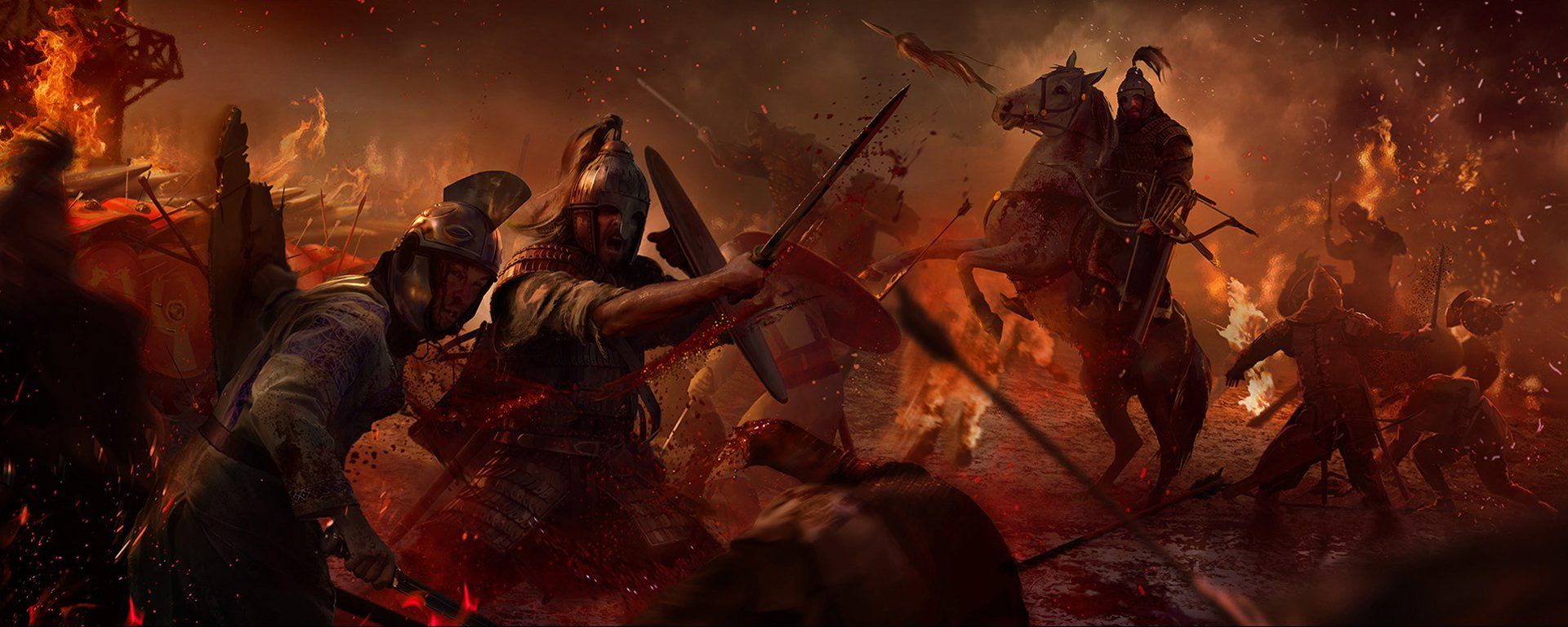
The story of the Gothic people is interlinked with that of the Huns – their allies and enemies. Interestingly, the author notes that the name Attila is of Germanic origin:
‘The degree to which the Hyns were open to foreign influence is reflected in their personal names. A study of these names by Prof. Otto Maenchen-Helfen (pp. 385-442) shows that a surprising percentage of them are of Germanic and Iranian origin, although, of course, their own native Turkic names predominate. Among the Germanic names are Attila. This is a specifically Gothic name. Atta is a familiar form of “father,” as we see the Gothic translation of the “Lord’s Prayer” begins with the phrase Atta unsar – “our daddy.” To this stem has been added a diminutive suffix, –ila. Att-ila means literally “little father.”
Edred – The Mysteries of the Goths. Page 21.
This knowledge sheds some light on the relationship between the Huns and their Germanic neighbours. A simplistic narrative is that the Huns were an all-dominating force that drove all others before them. A more nuanced perspective is to view the Huns as the primary force of the region, but still a force that needed to cooperate and ally with its neighbours. A thorough discussion regarding the relationship between the Huns and the Goths is, of course, beyond the scope of this article, and we are bound to return to it at a later point.
The Greek Origins of the Kabbalah
The author mentions that the Hebrew Kabbalah has its roots in Greek esotericism.
‘By the time the Goths encountered the Greek world in the 2nd century, the Greeks had already developed an elaborate and sophisticated numerological philosophy and esotericism. This was pioneered at the earliest stages by philosophers such as Pythagoras, who lived around 500 BCE. This Greek form of esotericism was absorbed by the Hebrews and became a mainstay of their esoteric tradition known as the kabbalah, “tradition.”’
Edred – The Mysteries of the Goths. Page 82.
This can be worth keeping in mind when studying Western esotericism in general. Moreover, this is especially important when discussing Christianity’s role in shaping European civilisation – much (perhaps even most) of Christianity is based upon Pagan traditions. A good example to illustrate this is how angels are portrayed: a European angel is beautiful and good; a Biblical angel looks like a nightmarish horror.
The Hidden Treasures of the Goths
In a chapter titled The Hidden Treasures of the Goths, the author discusses various famous Gothic treasures. Among those is the treasure of Alaric, which he acquired upon occupied Rome.
‘Alaric’s sacking of Rome was not a particularly violent act. The Visigoths simply took possession of the city and in an orderly fashion excised the Roman treasury.’
Edred – The Mysteries of the Goths. Page 93.
Describing the sack of Rome as such makes perfect sense when viewing the event from an ethnographic perspective. An orderly acquisition of wealth is, it must be noted, more in tune with the Germanic spirit than mindless pillaging.
Where did the treasure end up? Archaeologists have noted a large influx of gold into Scandinavia during the 400s (an influx which does not appear to be correlated to an increase in mining). Therefore, it can be surmised that the gold came from the Visigothic reserves. It makes sense that the Goths on the continent would send part of their treasure back to their kinsmen in Sweden.
Pictured below: not a Visigothic treasure, but the Sword and Shield of Carl Gustaf Wrangel. The sword and shield were taken as spoils of war by Wrangel from Voivode Jan Zamoiskij following the Battle of Warsaw in 1656. The set was, according to some sources, initially a gift from the Ottoman Sultan Murad III to Stephen Báthory – King of Poland and Grand Duke of Lithuania, Prince of Transylvania. I thought the picture and story fitted this article!

Conclusion
At 128 pages, The Mystery of the Goths is concise yet full of interesting insights. I, for one, would welcome a new edition with more pages – the topic definitely deserves it. That being said, I can definitely recommend the book for anyone interested in the Goths (I cannot imagine anyone who is not).
Onwards and upwards!




 The Golden One
You must be logged in to post a comment.