The Practical Art of Divine Magic by Patrick Dunn
Posted on June 19, 2022
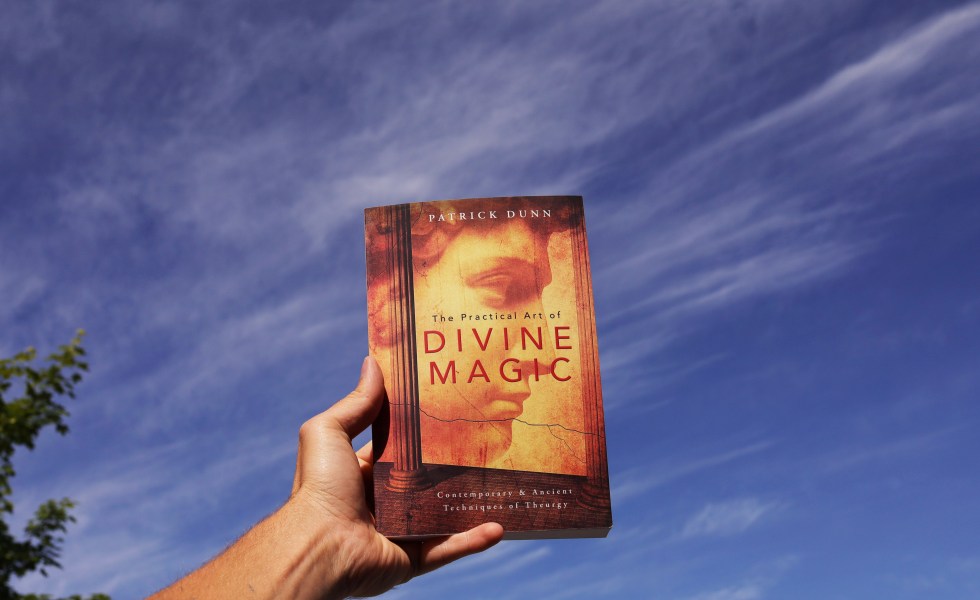
I have read The Practical Art of Divine Magic by Patrick Dunn per the recommendation of a trusted friend. It turned out to be a solid recommendation. The author discusses various, sometimes complicated, concepts and explains them in a very accessible way – making the book a good introduction to the metaphysics of antiquity. Since we have encountered Neoplatonic teachings in so many other books, reading this book was a natural next step. The book also contains some meditation techniques, as well as (like the title of the book suggests) practical instructions for worship of the Gods – in the author’s case, the Graeco-Roman Gods.
Neoplatonism and Theurgy
Neoplatonism is a term to denote the philosophers during Late Antiquity – the later years of the Roman Empire – who derived their metaphysical views from Plato (hence the name). A spiritual goal of the Neoplatonists was henosis – a sense of unity with the divine. Thus, they can be said to have belonged to the Right-Hand Path of magic that we encountered in our review of Lords of the Left-Hand Path by Stephen E. Flowers.
Theurgy basically means ‘god-working’ and is the practice of magic that looks upwards with the aim of unifying the human mind with the divine. One’s will is sent upward. An interesting quote shows the Platonic influence on Christianity.
‘The rise of Christianity did not kill theurgy; in fact, in many ways it invigorated it. Theurgic practices adapted well to the theology of Christianity and were sometimes incorporated wholesale. The gods became angels, the One became God, and the logos became Jesus. When the gospel of John begins “In the beginning was the Word, and the Word was with God, and the Word was God,” the Greek for “word” is logos. We could do a Neoplatonic translation of this just as easily, without having to modify the original Koine text at all: “In the beginning was the rational basis of the universe, and the rational basis of the universe was with the One, and it was also the One.”’
Patrick Dunn – The Practical Art of Divine Magic. Page 5.
The author also notes that later Christian Neoplatonists such as John Dee and Henry Agrippa (whom we have encountered before) among others contributed with their philosophies to the practice of magic.
Plotinus on Statues
The author shares an insightful quote by Plotinus, a chief proponent of Neoplatonism:
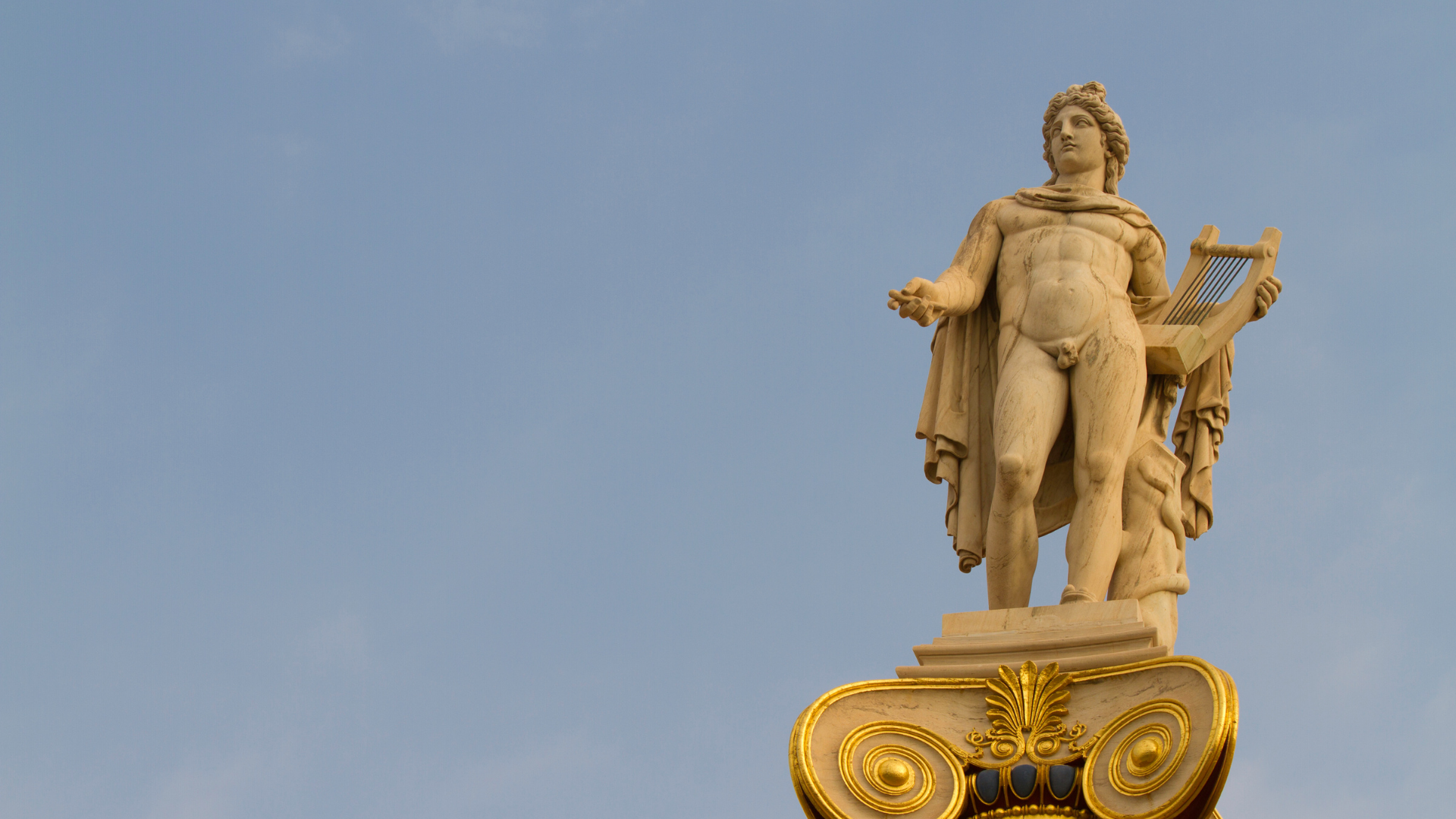
‘IV. 3, 11. The olden sages, in seeking to procure the presence of the Gods by erecting temples and statues, seem to me to have possessed deep insight into the nature of the universe: They felt the All-Soul to be a Principle ever at our call; it is but fitly preparing a place in which some phase of it may be received, and a thing is always fit to receive the operation of the Soul when it is brought to the condition of a mirror, apt to catch the image.’
Plotinus – The Ethical Treatises, being the Treatises of the First Ennead
The author notes that a statue is a site of contemplation of the One, through the intermediaries of the Gods. This is a good insight and a reasonable view of holy sites. We encountered another interesting view of statues in The Agni and The Ecstasy by Steven J. Rosen (read our review here). Pictured below, yours truly in San Ildefonso, Spain – a sacred place with beautiful statues galore!

Aristotle, Plato, and the Soul
I am not yet wise enough to give a definitive statement on the nature of the soul (one day I will!), but I thought the following passage would be interesting and relevant to share:
‘That the soul is a single thing, indivisible, comes from Aristotle, and this notion was a new one. Aristotle defined the soul as that first cause of thing, its purpose of being. The soul of a clock is to tell time. The soul of a dog is to be a dog. But the soul, for Aristotle, was merely the cause of the body; without the body, there was no soul, or need for one. Aristotle was responding to Platonism, which argues that not only is there a soul, it is the intermediary between the human consciousness and the world of Ideas, or Nous.’
Patrick Dunn – The Practical Art of Divine Magic. Page 30.
The author goes on to describe Plato’s tripartite division of the soul: the driver (the rational part), and the two horses (Eros and Thymos) – which I elaborated on briefly in a video (Lose Fat With Plato – Mental Technique to Resist Cravings).
Corpus Hermeticum
The Corpus Hermeticum that we encountered in our review of Evola’s The Hermetic Tradition (review here) is referenced in this book as well. Just as the teachings of the Neoplatonists are reoccurring in spiritual books, so is the wisdom of the Corpus Hermeticum. The quote below concerns astrology – a topic we will return to in coming book-reviews (or videos or Podcast episodes).
‘Each of us at birth, when we receive a soul, are taken under the wings of the daimones who are assigned that sign of birth, who govern each of the stars… So they, plunging into the two parts of the soul through the body, twist each to their particular energy; but the rational portion of the soul stands, unruled by the daimones, ready to welcome the divine.’
Corpus Hermeticum XVI: 15. Translation by Patrick Dunn.
We will encounter and elaborate on daimones again, but what we can say for now is that the daimon (which is not evil but not always benevolent) should not be confused with the (evil) demon of Christianity.
The Olympic Games
In a passage concerning festivals, the author describes the Olympic Games in the following beautiful manner:
‘The games themselves were a tribute to Zeus, showcasing the most perfect and beautiful achievements capable of the human body. But not only physical achievement was displayed: artistic and poetic talent also had their competitions. The festival was an offering of human beauty to the gods.’
Patrick Dunn – The Practical Art of Divine Magic. Page 115.
Keeping this in mind, one could argue that seeking physical perfection is an act of piety. Moreover, although the following quote is not from the book that is the subject of this review, it is highly fitting to include nonetheless:
‘/…/ Polynikes’ supreme physical beauty. In every aspect of his person, face as well as physique, the Knight was formed as flawlessly as a god. Naked in the Gymnasion, even alongside scores of youths and warriors blessed in comeliness and elevated by their training to the peak of condition, Polynikes stood out, without equal, surpassing all others in symmetry of form and faultlessness of physical structure. Clothed in white robes for the Assembly, he shone like Adonis. And armed for war, with the bronze of his shield burnished, his scarlet cloak across his shoulders and the horsehair-crested helmet of a Knight pushed back upon his brow, he shone forth, peerless as Achilles.’
Steven Pressfield – Gates of Fire

Conclusion
At 314 pages and written in an easily digested manner (as opposed to some other esoteric books one might encounter), The Practical Art of Divine Magic can be read within a reasonable time-frame. The book contains several more interesting insights in addition to the ones presented above. As stated in the introduction, it was a good recommendation by a trusted friend that I can now recommend to others.
Onwards and upwards!
Lords of the Left-Hand Path by Stephen E. Flowers
Posted on June 8, 2022
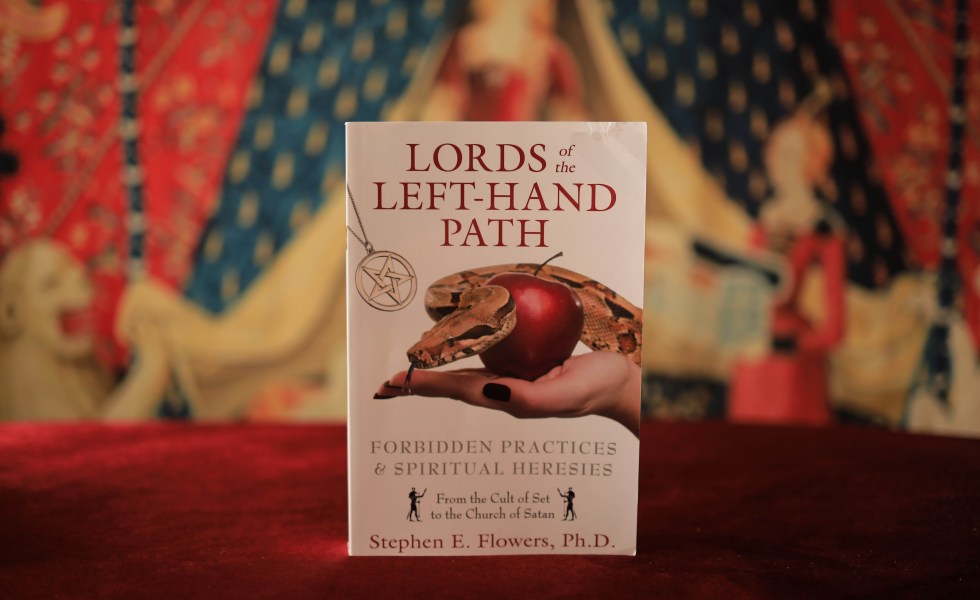
I have read Lords of the Left-Hand Path by Stephen E. Flowers. I have previously reviewed three other works by Flowers: Icelandic Magic (review here), Rune Might (review here), and Revival of the Runes (review here). Lords of the Left-Hand Path is, just as the aforementioned books, well-written and insightful. In fact, it is one of the most interesting books I have read as of late – and I have read quite a few books over the last year (not all of which have been subject to book reviews). Thus, I can, without further ado, recommend the book to anyone interested in esoteric matters.
The author details various religious movements from antiquity up until our own time. Although the focus is on the Left-Hand Path and Black Magic (more on these terms further down), the book also highlights other interesting aspects of cults and heresies over the centuries.
Christianity and the Crusades
As stated above, the book is highly interesting and insightful, and in recommending it, I must also point out the following: my main (and perhaps only) issue with the book is the author’s sometimes overly hostile view of Christianity. I am not a Christian myself and certainly have my issues with Christian doctrine (as detailed in Dauntless). However, I deem it necessary to refute the following point: ‘Besides the Crusades, which sent tens of thousands of Christians to their horrible and useless deaths, the church had committed a number of other acts that corroded its previously unquestioned position of spiritual authority.’
This is congruent with an outdated analysis of the Crusades as a religiously inspired war of zealotry against another faith. In actuality, the Crusades were a (late) military response to continuous aggression from the Muslim south. A more recent example is the French conquest of territories in North Africa – it was undertaken to put an end to the transgressions of the Barbary Corsairs who had plagued the shores of Western Europe for centuries (bringing European slaves to African slave-markets). In regard to the Crusades, one can also note that the lands that were conquered by the Muslims had previously been under Roman rule – both Pagan and Christian. Similarly, in Persia the Indo-European religious tradition was replaced by Islam.
In mentioning this, I do not wish to promote a Neo-Conservative Counter-Jihadist narrative – I merely wish to point out that the Crusades were a response to aggression. Therefore, the Europeans who died in the Crusades did not do so ‘uselessly’ – just as the European men who fought against Communism during the last century did not do so uselessly.

Satanism
A large part of the bok concerns Satanism, more specifically Anton LaVey (founder of the Church of Satan) and Michael Aquino (who started out as a Satanist before becoming a Setian). Prior to reading this book, I knew next to nothing about Satanism, and I still know too little to give a definitive statement. Once I start bringing on guests on my channel (either on YouTube/Odysee or in a podcast format), I will interview Styxhexenhammer666 about it for more insights.
At a quick glance, Satanism seems to be a somewhat vulgar response to certain manifestations of American Christianity – I can imagine that Satanism had a certain allure for someone coming from an overbearingly religious household. It is also worth to point out that Sweden has also had its fair share of strange Christian sects. On a personal note, I have grown up in an atheist environment with aspects of Nordic and Greek myth as well as some minor aspects of Christianity. This has led me to have a rather positive view of Christianity – at least in comparison to other Pagans (such as Flowers, as mentioned above). I have elaborated on this at length before, primarily in the Greatest Podcast.
The author notes that Ayn Rand’s Libertarian books were recommended on the Church of Satan reading list in the early 1970s. This is hardly surprising, given the individualistic nature of Satanism. Libertarianism is often a stage that one outgrows – which is evident by the number of former Libertarians who have progressed further along their ideological journeys and thus ended up on the Right. As for Satanism, it could be fair to say that it held a certain level of attraction for different kinds of people – some were drawn to the anti-social aspects, some were drawn to whatever was opposed to a Christianity that they wanted to escape, and for some it seemed that Satanism was a way to explore metaphysics and the esoteric. Michael Aquino, for example, was more interested in the spiritual aspect of the endeavour – disappointed in the ‘showman-y’ direction of the Church of Satan, he broke away from it to found his own Temple of Set (you can hear more about it in an interview with him here).
Lastly, I must point out that Satanism is not something I endorse. In the current year of 2022, being a Satanist is a very safe way to feel rebellious. In fact, it is a lot more rebellious, in the sense that you will take heat from the powers-that-be, to be a Christian. Moreover, the individualistic and Libertarian nature of Satanism is completely outdated in our time. Satanism has never had any appeal for me, and I view it as an expression of modern American culture.

Aleister Crowley – The Great Beast
The author introduces Aleister Crowley, one of the most influential occultists of the last century. We encountered Aleister Crowley in our review of Introduction to Magic: Volume II & III, in which Evola states that Crowley was an accomplished spiritual master – who was ‘extraordinarily qualified’ to follow the Left-Hand Path. Flowers, on the contrary, notes that Crowley was in fact a practitioner of the Right-Hand Path. A large part of the chapter titled The Occult Revival is dedicated to Crowley. We will return to his life and teachings at length in later reviews (or a Podcast episode). Below is Crowley’s definition of magic:
‘Magick is the Science and Art of causing Change to occur in conformity with Will.’
Aleister Crowley
The Right-Hand Path and the Left-Hand Path
As the title of the book suggests, the central theme is to present various religious and spiritual movements and individuals who have embarked upon the Left-Hand Path of magic. A good definition of the Right-Hand Path (white magic in the context below) and the Left-Hand Path (black magic in the context below) is the following:
‘In a precise sense, the distinction between white and black magic is simply that white magic is a psychological methodology for the promotion of union with the universe and pursuing aims in harmony with those of the universe, while black magic is such a methodology for the exercise of independence from the universe and pursuing self-oriented aims. Structurally, white magic has much in common with religion as defined above, while black magic is more purely magical in and of itself. This is why magic as a category of behaviour is often condemned by orthodox religious systems.’
Stephen E. Flowers – Lords of the Left-Hand Path. Page 10.

The Tantric Paths
In The Yoga of Power by Julius Evola (read my review of it here), the concept of the Left-Hand Path is elaborated on in the chapter titled Pashu, Vira, and Divya: The Path of the Left Hand. The following quote illustrates it quite well:
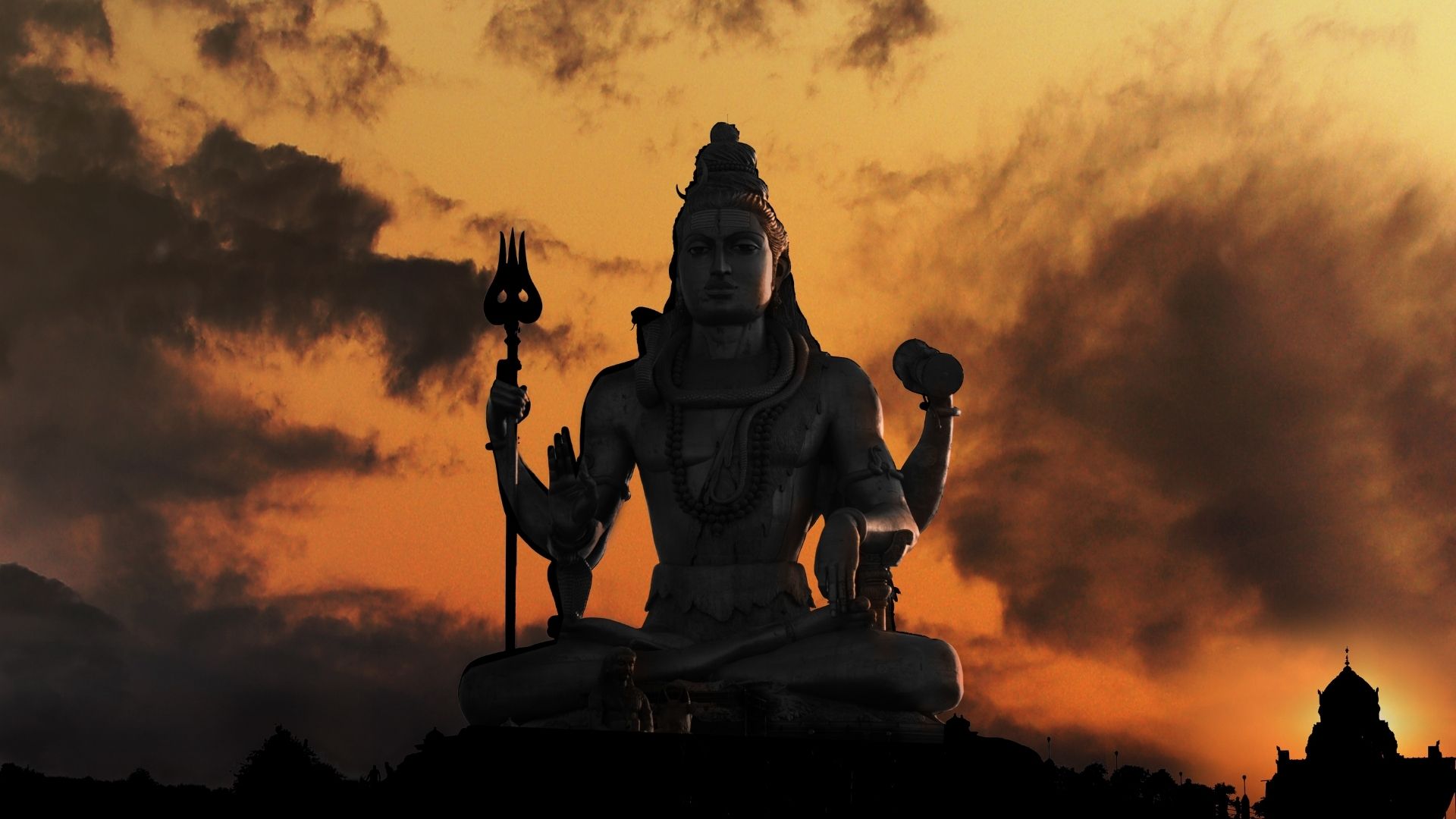
‘There is a significant difference between the two Tantric paths, that of the right hand and that of the left hand (which are both under Shivas’s aegis). In the former, the adept always experiences “someone above him,” even at the highest level of realization. In the latter, “he becomes the ultimate Sovereign” (cakravartin = world ruler).
Julius Evola – The Yoga of Power
The quote above is not included in my review of Evola’s book, but I thought to add it here since it is relevant to the topic at hand. I re-read the chapter mentioned above after reading Lords of the Left-Hand Path. It is good to re-read books or parts of books when you can approach the writings with a new perspective.
Indo-European Cosmology & Neoplatonism
In the chapter titled The Roots of the Western Tradition, the author discusses the roles of Pythagoras and Plato in regard to the Left-Hand Path, which gives weight to the subsequent chapters, given the importance of both gentlemen in Western esotericism (and philosophy in general). Moreover, the following quote found in the same chapter presents Indo-European metaphysics in a good way:
‘Whether we see it in India or Ireland, in Rome or Greece, the Indo-European cosmology – its understanding of the world-order – hinges of the theory that this world is a material reflection of another, more real one (for example, the realm of gods and goddesses), beyond which looms a yet more real world of abstract principles. In Ancient Greek terms, this is expressed in the intrinsic dichotomy between physis (nature) and psychê (soul).’
Stephen E. Flowers – Lords of the Left-Hand Path. Page 62.
In a chapter titled The First Millennium, the author presents Neoplatonism and its chief proponent, Plotinus. He notes that Neoplatonism, with its roots in Platonic idealism, was a decisive influence on all schools of mysticism, such as the Judaic Kabbalah, Islamic Sufism, and various Christian traditions. This becomes apparent when reading esoteric literature due to how often references to the Neoplatonists are made.
Conclusion
At 441 pages, the book is a bit thicker than some of the other ones we have reviewed, but it is well worth the time investment. As already stated, I can highly recommend this book for anyone interested in these matters. I look forward to reading more books by Flowers!
The Doctrine of Awakening by Julius Evola
Posted on May 28, 2022

I have read The Doctrine of Awakening by Julius Evola. Reading this book was a natural step after reading The Yoga of Power (read my review of it here). Evola was, as you may know, a Traditionalist and, generally speaking, wrote from a Right-wing perspective. Evola took issue with the faulty (i.e. ‘hippy’-like) interpretations of Buddhism that permeated the West (one could say that they still do). In the book, Evola emphasises the Aryan (i.e. Indo-European) and aristocratic (i.e. Kshatriya caste) origin of Siddhartha Gautama, better known as Buddha – the Enlightened One. It should be noted that the book can be read as a refutation of the aforementioned faulty interpretations of Buddhism. Therefore, it is, in my humble opinion, a good book to read for anyone who seeks a genuine understanding of Buddhism. I am not yet knowledgeable enough in regard to Buddhism to comment further upon many of the topics presented in the book – I will reread it later on when I have acquainted myself with more Buddhist texts. Even without any greater prior knowledge of Buddhism, The Doctrine of Awakening is interesting and contains plenty of unique insights as well as many truly epic quotes (some of which are listed below).
The Physical Aspect of the Buddha
‘Thou hast a perfect body, thou art resplendent, well born, of noble aspect, thou hast a golden colour and white teeth, thou art strong. All the signs that thou art of noble birth are in thy form, all the marks of a superior man.’
– Sutta Nipāta, 3.1.19.
This supremely epic and inspiring quote appears in the book to describe how Buddha appeared to kings. This descriptions comes from one of the oldest Buddhist texts, and paints a picture quite dissimilar to the rather round Buddha often seen depicted (in statues for example). You, my dear reader, must now excuse my hubris as I accompany this heroic quote with the following picture:

The Aryan-ness of the Doctrine of Awakening
As mentioned above, an important point Evola returns to in several chapters of the book is the Aryan-ness (Indo-European-ness) of Hinduism and, by extension, Buddhism. In the chapter The Aryan-ness of the Doctrine of Awakening, he elaborates on why he emphasises the Indo-European origins of Buddhism – he wishes to confront those who view the doctrine as one of Asiatic exclusiveness, i.e. one foreign to the European spirit.
‘We have to remember that behind the various caprices of modern historical theories, and as a far more profound and primordial reality, there stands the unity of blood and spirit of the white races who created the greatest civilizations both of East and West, the Iranian and Hindu as well as the ancient Greek and Roman and the Germanic.’
Julius Evola – The Doctrine of Awakening. Page 14.
Here Evola refers to the Indo-Europeans. Evola uses the term Aryan; I use the term Indo-European to be more specific and to avoid confusion. I asked the knowledgeable Chad Pastoralist for a comment on the genetic aspect of the Indo-European legacy – he kindly wrote a highly interesting, in-depth answer which can be read at the end of this article. Evola’s quote continues:
‘Buddhism has the right to call itself Aryan both because it reflects in great measure the spirit of common origins and since it has preserved important parts of a heritage that, as we have already said, Western man has little by little forgotten, not only by reason of involved processes of intermarriage, but also since he himself – to a far greater extent than the Eastern Aryans – has come under foreign influences, particularly in the religious field.’
Julius Evola – The Doctrine of Awakening. Page 14.
In this second part of the quote, one can surmise that it is Christianity Evola is referring to. A debate regarding which is more in tune with the Indo-European spirit – Buddhism or Christianity – would indeed be interesting. I am not yet knowledgeable enough to give a conclusive answer – perhaps I will include a chapter on the topic in my next book. What we can say for now, however, is that, as Evola himself has pointed out in his The Mystery of the Grail (read my review of it here), Christianity was thoroughly Germanised once it came into contact with the Germanic tribes. Thus, it can be fair to say that the origins of Christianity are more foreign than the origins of Buddhism – but that, as time went on, Christianity became more European, whereas Buddhism became less Indo-European.

Aryan Attitudes to Lying
In the chapter titled Rightness, Evola notes that nothing among the Aryan peoples was as ignominious as falsehood. In an Aryo-Persian text it is even said that killing is not as serious as lying. On a personal note, I never lie. I lead a life in which I do not have to lie – not to others, not to myself. In fact, as a conscientious person, you cannot lie to yourself; which means that shame will be yours if you behave in a way that does not correspond to your vision of yourself – regardless if anyone else knows. Honour is all.
A Great Mental Image
In the chapter titled Determination of the Vocation, Evola quotes from a text named Majjhima. The following is said about the willpower of the ascetic:
‘The ascetic is one who has gained mastery over himself, who “has his heart in his power, and is not himself in the power of his heart.” He is the master of his thoughts. “Whatever thought he desires, that thought will he think, whatever thought he does not desire, that thought will he not think.” As a perfectly tamed elephant, led by his mahout, will go in any direction; as an expert charioteer, with a chariot ready on good ground at a crossroad and harnessed to a thoroughbred team, can guide the chariot where he wishes; or as a king or a prince with a chest full of clothes, may freely choose the garment that most pleases him for the morning, the afternoon, or the evening – so the ascetic can direct his mind and his being toward one state or another with perfect freedom.’
Julius Evola – The Doctrine of Awakening. Page 80.
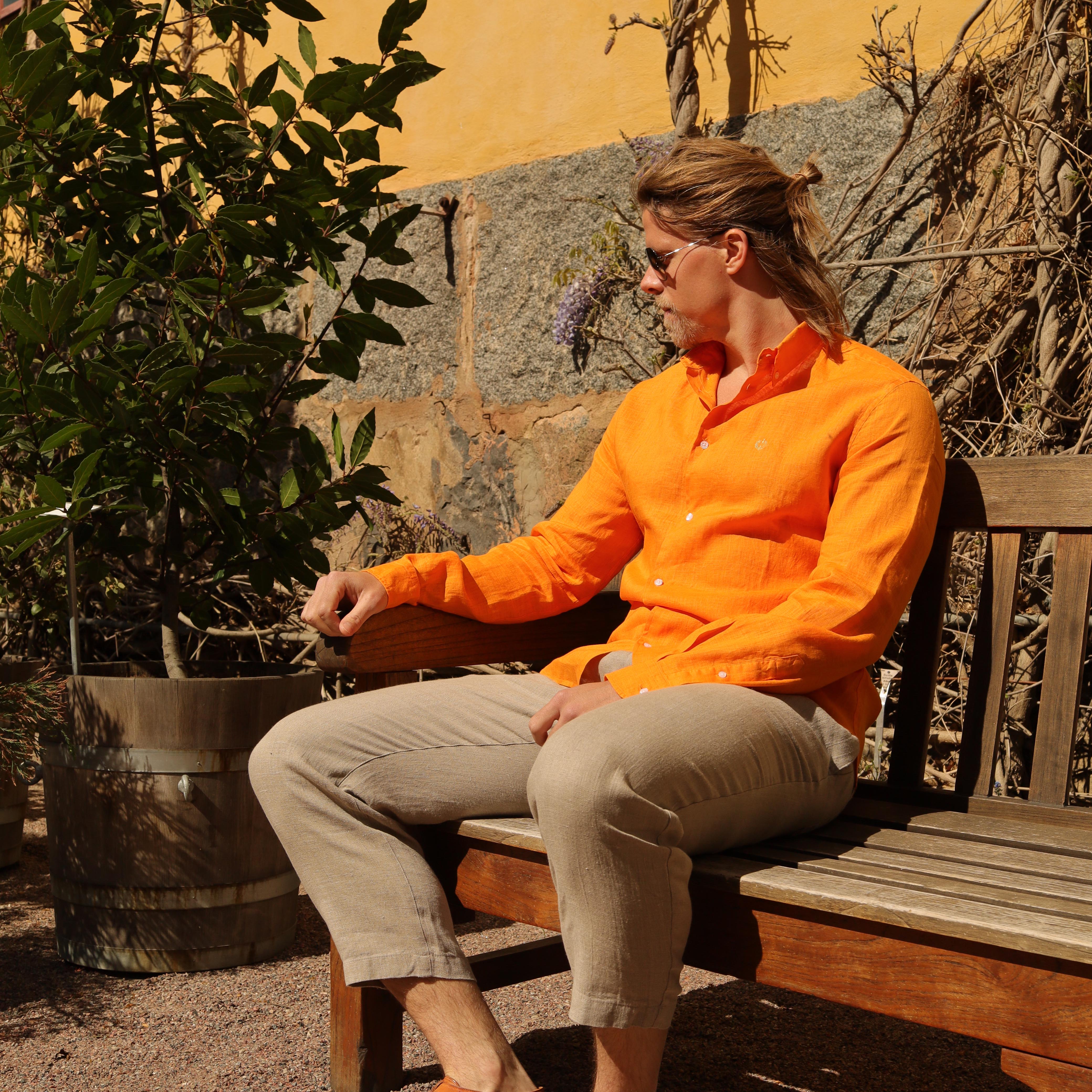
With training, it is possible to gain a greater mastery over one’s mind. This mastery is a power that will be useful for any endeavour. Having his heart in his power – instead of the heart having him in its power – can be translated into being in control of any urge or temptation that goes contrary to one’s goals. Pictured below: yours truly choosing the garment that pleases me the most, just as I endeavour to choose the thoughts that please me the most.

The Demon of Desire
‘Hindus have the myth of Śiva, the great ascetic of the mountaintops, who with one glance of his frontal eye – the eye of knowledge – reduced Kama, the demon of desire, to ashes when he tried to disturb his mind.’
Julius Evola – The Doctrine of Awakening. Page 112.
For anyone struggling with desires, this image will be useful. Invoke the image of Shiva destroying Kama should you be in need of overcoming an urge – this can be a potent technique for anyone still addicted to pornography.
The Awakened One
In the chapter titled Signs of the Nonpareil, Evola again draws upon the Majjhima to supply us with an inspiring description:
‘The Awakened One is he who is detached from life and death and who knows the way up and the way down, he is “bold, not knowing hesitation, a sure leader, pure of passion, resplendent as the light of the sun, resplendent without arrogance, heroic”; he is the Knower “whom no mania dazzles, no trouble conquers, no victory tempts, no spot stains”; he is one “who asks no more, and who, as a man, has mastered the ascetic art”: he is the “great being, who lives strenuously, free from every bond, no longer slave to any servitude”; he is “the Valiant One, who watches over himself, constant in his step, ready to the call, who guards himself within and without, to nothing inclined, from nothing disinclined, the Sublime One whose spirit is powerful and impassible”; he is the “Awakened One whom no thirst burns, no smoke veils, no mist clouds: a spirit who honors sacrifice and who, like no other, towers in majesty.”’
Julius Evola – The Doctrine of Awakening. Page 210.
An ascended being of power completely in control of his own mind. Note: the pictures above and below are not of Buddha but of Shiva – they fitted the quotes aesthetically speaking!

Another epic quote that appears in the book is the following. The quote reminded me of another inspiring quote about Buddha and the prodigious cobra Muchalinda found in The Serpent Symbol in Tradition by Dr. Charles William Dailey (read my review here).
‘It is said that when Prince Siddhattha was sitting under the “tree of illumination,” resolved not to move until he had reached transcendental knowledge, he underwent an attack by the demoniacal forces of Māra, who was determined to move him from there, in the form of flames, whirlwinds, tempests, and fearful apparitions. But Prince Siddhattha remained unshakable and all these apparitions finally vanished.’
Julius Evola – The Doctrine of Awakening. Page 116.
Conclusion
At 239 pages, The Doctrine of Awakening is not a long book. However, since the topics are quite heavy and Evola’s works are usually quite dense, the book will require a bit more time than many other books of the same length. As stated previously, the book is best read when already having an understanding of Buddhism – there are easier introductions to the subject. That being said, reading about the topic from Evola’s perspective makes it much more interesting and certainly gave me new and valuable insights. I look forward to reading more about Buddhism in the coming time!
Appendix – Indo-European Genetics
The following explanation was given to me by The Chad Pastoralist. If you are interested in these matters, I highly recommend that you follow him on Telegram (https://t.me/thechadpastoralist).
Northern Europe
‘Northern Europeans on average are about 40-50% descended from the Yamnaya. The ‘Yamnaya-like’ or ‘steppe’ component of ancestry entered Northern and Central Europe via various Indo-European-speaking cultures such as the Corded Ware Culture and Bell Beaker Culture, which in itself was a Western branch of the Corded Ware Culture. Steppe ancestry entered Scandinavia via the Battleaxe Culture, which was a Northern branch of the Corded Ware Culture that had mingled with the Funnelbeaker Culture in Northern Europe. Modern English people receive around 47-49% of their ancestry from the steppe which was introduced via the Bell Beaker Culture around 4,300 years ago. Steppe ancestry reaches its peak in Britain at around 50% amongst the Irish and Scottish, and this number can also be found in Scandinavia.
Southern Europe
In Southern Europe it varies. In Iberia steppe ancestry is about 31-40%, but over 90% of the non-Indo-European lineages were replaced by the Beaker folk just like they were in Britain. This ultimately means that regardless of what percentage of steppe ancestry an Iberian male may carry, if they have the R1b Y-DNA haplogrpup, they descend directly from a Beaker warrior from thousands of years ago.
Scandinavia
In regards to Scandinavia, the Battleaxe Culture was an Indo-European-speaking culture that emerged as a Northern branch of the Corded Ware Culture. The Battleaxe Culture mingled with the Funnelbeaker Culture, which was an Early European Farmer culture rich in indigenous Western Hunter Gatherer ancestry. Due to a Founder Effect in Scandinavia, the I1 haplogroup, which is associated with the Western Hunter Gatherers theoretically speaking, had become the dominant Y-DNA haplogroup amongst that culture. Autosomally speaking, steppe ancestry outweighed WHG ancestry, and most Scandinavians today have a very high prevalence of steppe ancestry up to 50% and sometimes ever so slightly higher.
India
In India, steppe ancestry was brought into the area via the Sintashta Culture. The Sintashta was an Indo-European culture that had invented the spoked wheel specifically for chariot warfare, and they had the highest prevalence of blonde hair and blue eyes amongst several Indo-European groups. Most Indians today only inherit about 20% of their ancestry from the Sintashta, but some high-caste Indians carry haplogroups associated with a direct paternal Indo-European lineage.
Yamnaya
In regards to the Yamnaya themselves, they were on average 55% descended from Eastern Hunter Gatherers, 35% from the Caucus Hunter Gatherers and the other 10% was minor amounts of Western Hunter Gatherer and Early European Farmer ancestry. These numbers fluctuated throughout history which has resulted in the present-day genetic make-up of modern Europeans, with Northern Europeans receiving most of their ancestry from the Yamnaya via their descendants (such as the Corded Ware Culture and Bell Beaker Culture). Southern Europeans receive Indo-European ancestry to an extent, but importantly via the Y-DNA haplogroup like R1b which specifies a direct unbroken paternal lineage back to the Steppe herders.’
Horus Heresy Reading List
Posted on May 27, 2022 1 Comment
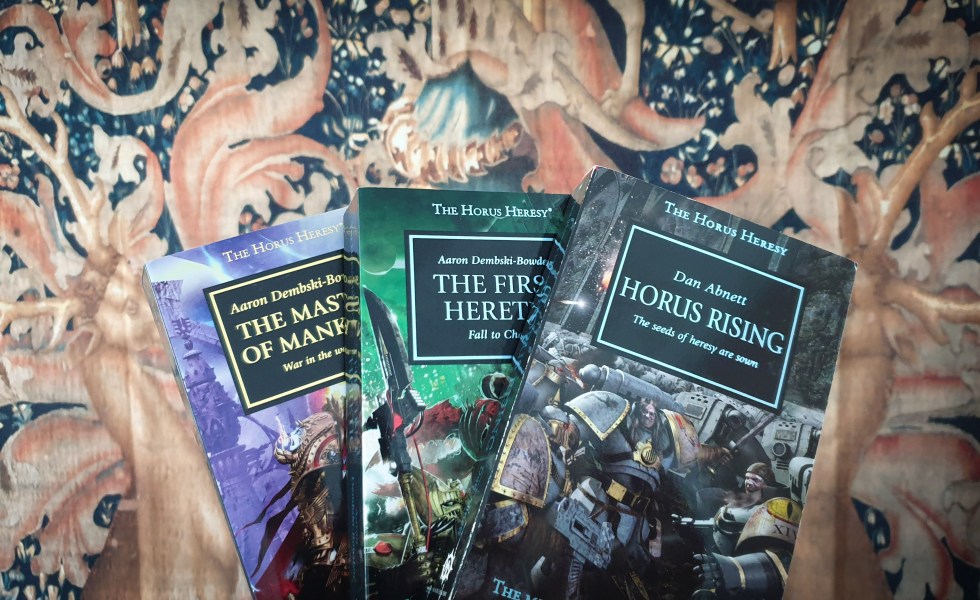
The Horus Heresy series contains 54 books. Below, I have listed the best (in my humble opinion) ones and the ones most central to the main storyline. I have read all 54 books and am currently reading the Siege of Terra series which concludes the Horus Heresy story.
- Horus Rising
- False Gods
- Galaxy in Flames
- The Flight of the Eisenstein
- Fulgrim
- Descent of Angels
- Legion
- Fallen Angels
- A Thousand Sons
- The First Heretic
- Prospero Burns
- The Outcast Dead
- Deliverance Lost
- Know No Fear
- The Primarchs
- Fear to Tread
- Angel Exterminatus
- Betrayer
- The Unremembered Empire
- Scars
- Vengeful Spirit
- The Path of Heaven
- The Silent War
- Angels of Caliban
- Praetorian of Dorn
- Corax
- The Master of Mankind
- The Crimson King
- Wolfsbane
- Slaves to Darkness

The supremely epic artwork above is made by Alex Cristi and represents The Golden One (yours truly) as the Primarch Fulgrim.



 The Golden One
You must be logged in to post a comment.