
Free Trade, Libertarianism, David Ricardo, Protectionism. The Glorious Pill Stance
Posted on April 2, 2016

When discussing National Capitalism it is also important to elaborate on what stance should be adapted in terms of foreign trade. For the classic Liberal, who adheres to the teachings of Adam Smith and David Ricardo, Protectionism is a hindrance to prosperity. However it is prudent to point out that those gentlemen were products of their times (as every thinker is) and thus presented their arguments in accord with contemporary circumstances. For the Nationalist, even one inclined to agree with some of the merits of free trade and open markets, it is outright madness to not have a native agriculture (to use the most obvious example). That companies outsource to nations where they can pay lower wages can be understood, even though it is not optimal for the Western worker. What must be combated at all cost, however, are dangers posed to the nation’s native agriculture. There might just be the case that another nation can produce cheaper food products than what is available in the native market. The classic Liberal would invoke the voice of David Ricardo and recite his theory of Comparative Advantage and claim that it makes perfect economic sense to let each nation focus on what it does best and import the things that another nation does better. This makes sense indeed.
Alas the Nationalist has the well-being of his own nation and people first and foremost on the agenda. A nation without a healthy agriculture is tantamount to a nation without an army. It is simply a matter of essentials. We have discussed the virtues of supporting your local communities and eating as much locally produced foods as possible. Now we must also approach this from a political viewpoint. In the case of an unstable world, which the world always comes to sooner or later, it is of paramount importance to be able to feed your own population. This will be impossible if the native market has collapsed due to the state’s inability to properly protect its agriculture from aggressive foreign competition. The protection methods can vary from subsidies to your own agriculture to tariffs on foreign imports. Whichever method ensures the prosperity and continuation of the native production must be the measure taken.
We do not suggest complete autarchy in terms of food products. Indeed there are plenty of produce that for geographical reasons need to be imported. To give a basic example; oranges are not native to Scandinavia and cultivating oranges is not integral to Scandinavian self-sufficiency. This goes for many a product. The general guide-line in terms of protecting the native agricultural industry is; if it can be produced by the native farmers, their production should be protected. However, if the product does not exist in the native market; there can be great benefits of having a prosperous foreign trade.
A truly Nationalist state will furthermore not allow itself to be coerced into trade agreements which will cause harm to its people or nature. This is easier said than done, of course, since the threat of foreign intervention will always be presence should a nation be to unruly in the international arena. However, the state must not be gulled into accepting false promises by voracious international elements at the expense of its native population.
Patrick Pearse Quote: “We have not lost…”
Posted on March 26, 2016

“We seem to have lost. We have not lost. To refuse to fight would have been to lose. We have kept faith with the past, and handed down a tradition to the future.”
– When condemned to death following the Easter Rising 1916.
Aristotle on Usury
Posted on March 21, 2016
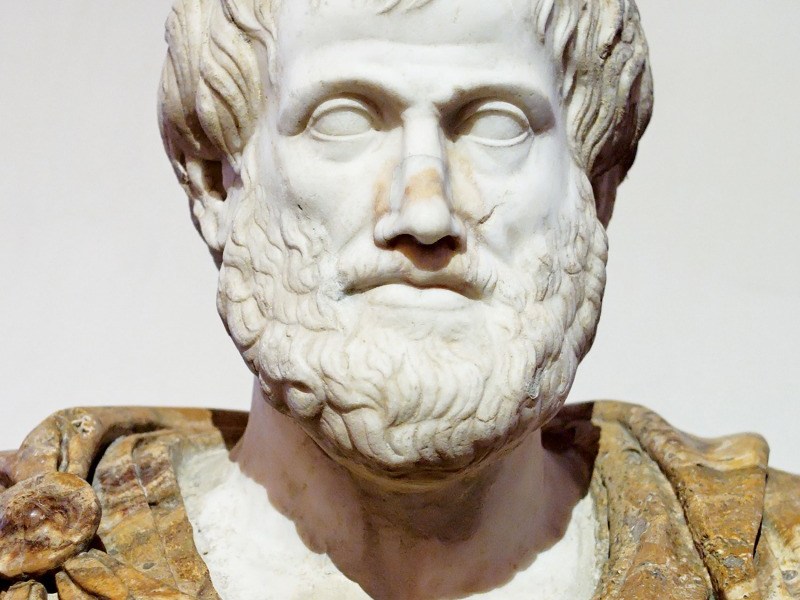
“The most hated sort, and with the greatest reason, is usury, which makes a gain out of money itself, and not from the natural object of it. For money was intended to be used in exchange, but not to increase at interest. And this term interest, which means the birth of money from money, is applied to the breeding of money because the offspring resembles the parent. Wherefore of an modes of getting wealth this is the most unnatural.”
-Aristotle
Hierarchy. Cultural Marxism vs Traditionalism
Posted on March 20, 2016

Understanding hierarchy and why it is a good thing is of paramount importance when rejecting the faulty world view of Cultural Marxism. Cultural Marxism dictates that hierarchy is a means of unjust oppression, where each group lower in hierarchy must revolt against the group above. A prime example of this view is that women must revolt against men; seeing as the man in the family is the head of the household. As we have discussed previously; equality is a lie, and a dangerous lie at that. The notion that equality is a means of prosperity and happiness is also a dangerous lie. A good example to illustrate the point of forcing equality upon a people or nation one need not look further than to the various Communist experiments of the last century.
Understanding and rejecting Cultural Marxism also means understanding that hierarchy is nothing detrimental or wrong. Hierarchy is, on the contrary, something natural and just. Ask yourself this; is it not natural that a father has the authority over the children, or that a mother has the authority over the children? Wherein lies the benefit or justice in letting children run rampant? Children need a benevolent and guiding hand from the parent, believing that this authority is somehow wrong is indeed a dangerous concept. Feminism, which is another hydra head of Cultural Marxism, dictates the men are the oppressors and women the oppressed, and view this as a static relationship. What they fail to realise, in their narrow and lacking understanding of the world, is that nothing is static, relationships and hierarchy are dynamic. Yes, in a healthy and natural family the man should have the role of leader. However, each man is once a boy and the mother is above her sons in this hierarchy, which means that women do indeed hold influential positions. It is as unnatural for children to revolt against the supposedly oppressive mother as it is for the woman to revolt against the supposedly oppressive man. There is nothing to revolt against; rejecting these natural hierarchies will only lead to chaos.
The single most important aspect of understanding hierarchy is indeed that it is neither static nor detrimental. Furthermore it is of paramount importance to realise that there is absolutely nothing wrong with being lower in hierarchy than someone of great worth. The army is a great example of this; being led by a valiant commander is to be seen as an honour and a learning opportunity. To put this in practical terms, in any given organisation you will start at the bottom, the ones on top will (hopefully) have a large degree of experience which makes them qualified to have more responsibility. One day these qualifications and responsibilities can be bestowed upon you, if you work hard enough. To summarise this in a single sentence we can adhere to the wisdom of the Hellenic statesman Solon (638-558 BC): “Learn to obey before you command”.
The father holds the natural authority over the son. The son in turn will one day become a father and will hold the natural authority over his own son. The commander holds the authority over the soldier. That soldier may one day become a commander himself and hold the authority over soldiers in turn.
Understanding that hierarchy is something natural and beneficial will be fundamental in combating the reigning Cultural Marxist paradigm. Understanding that the health of the family unit is of paramount importance to the nation is fundamental in working towards the saving of Imperium Evropa.
https://www.instagram.com/p/BDHJOVAjO1H/
https://www.instagram.com/p/BDEFeZqjO3Y/?taken-by=thegloriouslion
https://www.instagram.com/p/BDL9ZWHDO3Q/?taken-by=thegloriouslion





 The Golden One
You must be logged in to post a comment.