Original Magic by Stephen E. Flowers
Posted on February 5, 2024

I have, yet again, had a pleasure of reading a book by Stephen E. Flowers. As the title suggests, this book deals with the religio-magical views of the ancient Persians.
Why the Interest in Iranian Magic?
I answered this question in my review of Adrian Goldsworthy’s Rome and Persia – The Seven Hundred Year Rivalry and will share the answer here as well:
The Corded Ware Culture came about as a result of the invasion of Steppe Pastoralists (sometimes known as Indo-Europeans or Aryans) from today’s Ukraine into Central Europe. There, they met (or conquered, rather) the Early European Farmers – and from this union, the Corded Ware Culture was born. To somewhat simplify matters, the Corded Ware Culture gave rise to the Germanic, Latin (i.e. Roman), Celtic, and Slavic peoples of Europe. Not only that, but the origins of the Iranian (Persian) and Vedic cultures can also be traced to the Corded Ware Culture. For more information, see the following video by Survive the Jive: Aryan Invasion of India: Myth or Reality?
Moreover, when observing the picture below, it becomes apparent why an entity such as myself, carved out of Swedish granite, would find an appreciation for and, to a certain extent, affinity with ancient Iran and India. Thus, when I read about Iranian or Vedic tradition, I gain deeper insights into our own heroic past.

Dark green = genetical closeness. Thanks to Waters of Memory (active with that username on Telegram, X, and Instagram) for the picture.
Definition of Magic
The term magic is a constant source of confusion, thus the author defines magic early on in the book in the following way:
‘Magic: We use this term in its original sense of the arts and sciences of the Magians, or magavans, of ancient Iran. These arts and sciences give the practitioner access to the realm of causation and form a bridge between menog (the celestial world) and getig (terrestrial existence). For the individual, the ultimate aim of magic is happiness (Av. ushta). But on a greater level, magic should contribute to the hastening of the Frashokereti, or “Making Wonderful” – this is the time when all created things will fulfill their ultimate purpose and attain a state of permanent happy order.’
Stephen E. Flowers – Original Magic. Page 3.
He goes on to note that a sorcerer (as opposed to a magician) is someone solely interested in bringing about changes in the environment for his own convenience and who is only concerned with gaining temporal power and pleasure. In my humble opinion, these aims are not necessarily contradictory – at least not the pursuit of power; after all, you need to attain power to be able to enact positive change. Historically speaking, magic often denotes the religious practices of one’s own, whereas sorcery often denotes the practices of one’s enemies. Christians often prefer the term ritual as opposed to magic.

Persian Influence on Judaism and Christianity
Since I often talk about Pagan influences on Christianity – in The Germanization of Early Medieval Christianity by James C. Russel, for example (review) – I thought it was interesting to read about the Persian influence on Judaism.
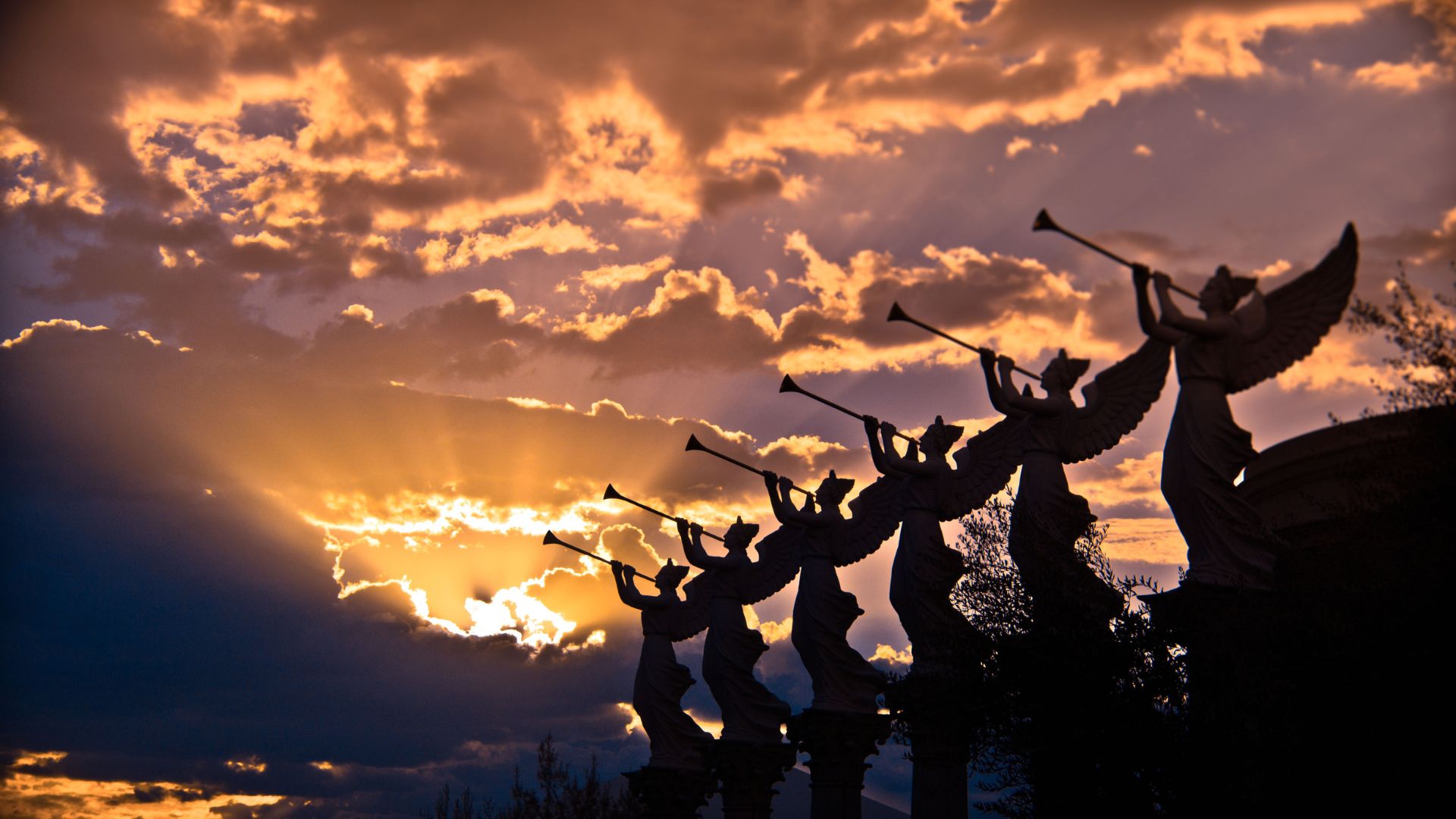
‘However, a number of key concepts that would exert enormous importance on Jewish magical lore were clearly introduced by Persians. Among these concepts were a systematic angelology and demonology; myths of a coming savior-ruler (messiah), the judgement of the dead, the bodily resurrection of the dead, and even the philosophical basis of a true monotheism. The Hebrew myth of Genesis also owes much to Iranian symbolism: first man and woman, destructive influence of the serpent, and the presence of a cosmic tree.’
Stephen E. Flowers – Original Magic. Page 14.
From the passage above, we can surmise that the Persian influence was quite significant. In a later chapter the author discusses the Persian origins of angels. Germanic Pagans do, of course, know the cosmic tree as Yggdrasil.
Ahuras and Daevas
I thought the following note on terminology was interesting:
‘In general the gods are called ahuras (lords). The Avestan word ahura is cognate to Sanskrit asura, which was later demonized in India. These terms are also related to the Germanic word ansuz, “a god.” Another old name for an archaic god was daeva, which the Iranians demonized but the Indians retained as a positive term for the divinities (devi). The awareness of this archaic level of Iranian myth gives depth and richness to our understanding of the philosophical level of the Magian tradition. It also makes it clear that Zarathustra’s reform was more a reinterpretation of the tradition rather than an overthrow of it.’
Stephen E. Flowers – Original Magic. Page 23.
This points to the shared origin of the traditions. It also shows how traditions can diverge and develop into distinct religions.

Zarathustra and Ahura Mazda
The author says the following of Zarathustra, also known as Zoroaster, the founder of Zoroastrianism. This reminded me of the Neoplatonic view of The One.
‘Zarathustra, who had been a trained professional priest, radically reformed the pantheon of the ancient Iranians. Through his insight he was able to see the philosophical basis of the gods and goddesses of the Indo-European pantheon. The main insight of his vision was that the only true and absolute godhead is Ahura Mazda – Lord Wisdom, or “pure focused consciousness.” This is an entity, which is pure light, unity, and goodness, beyond other forms of duality. This being is devoid of any anthropomorphic character, and the name itself suggests androgyny, ahura is masculine, while mazda is feminine.’
Original Magic. Page 26.
The author notes that Zoroastrianism became less radically monotheistic in its later stages. Interesting stuff!
Conclusion
As most of my esteemed readers probably know, I am an avid enjoyer of Flowers’ work – thus it will come as no surprise that I recommend Original Magic – The Rituals and Initiations of the Persian Magi as well. In addition to many interesting insights, the book contains a twelve-month curriculum for those who wish to go deeper (similar to what you can do with the Runes). I am currently meditating on the Tarot (which I will post about later), but I might return to this book later on in order to get further acquainted with the Persian esoteric tradition. The book has 171 pages. Moreover, it also got a warm recommendation from Payam Nabarz, author of The Mysteries of Mithras (review), and for those interested in Mithras, both books are recommended. Good stuff!
The Templar Revelation by Lynn Picknett & Clive Prince
Posted on January 24, 2024

Disclaimer
I am a Pagan and have no dog in the fight of intra-Christian theological disputes. I am merely presenting some interesting passages from the book in question. Some food for thought, if you will! Moreover, presenting the thoughts of the book does not necessarily mean that I endorse them.
Dan Brown’s The Da Vinci Code
The Templar Revelation was an influence for Dan Brown in writing his most famous work The Da Vinci Code. The book caused quite the stir when it was released. A main part of plot in that book is that Mary Magdalene (carrying the child of Jesus) fled to Europe and that this sacred bloodline has existed since then – this is also the hypothesis laid forth by Michael Baigent, Richard Leigh, and Henry Lincoln in The Holy Blood and the Holy Grail (which I have yet to read). I read The Da Vinci Code when I was 17 and greatly enjoyed it. The religious nuances were beyond me at the time (having grown up in Atheist Sweden, I did not have any references in this regard), but the sense of mystery appealed to me. I have read a few more books by Dan Brown – Inferno, with the philosophical theme of overpopulation, was quite intriguing. Origin was not particularly compelling – I got very Liberal vibes from reading it.

Was Jesus a Magician of the Egyptian Religion?
Perhaps the most contentious claim of The Templar Revelation is that Jesus was not of the contemporary Jewish religion (although ethnically Jewish), but rather a worshipper of Osiris and Isis – i.e. of the ancient Egyptian religion. The authors propose the theory that Jesus and Mary Magdalene were initiates of this tradition – and, moreover, that they engaged in sacred sex rituals. They make a compelling case for this, although I am certain that many a knowledgeable Christian would find arguments galore in counter to this.

Pagan Influences on Christianity
A central theme of the book is Pagan influences on Christianity:
‘The shared birthdate of 25th of December is not the only similarity between the Jesus story and that of the pagan gods. Osiris, for example – consort of Isis – died at the hands of the wicked on a Friday and was magically ‘resurrected’ after being in the Underworld for three days. And Dionysus’ mysteries were celebrated by ingesting the god through a magical meal of bread and wine, symbolizing his body and blood.’
Lynn Picknett & Clive Prince – The Templar Revelation. Page 302.
The authors note the following regarding the teachings of Jesus taking hold in the Roman Empire:
‘This explains, they say, ideas such as Jesus’ deification: he had to become known as the Son of God – literally God incarnate – to appeal to the romanized world, which was used to the idea that its rulers and heroes became gods.’
Lynn Picknett & Clive Prince – The Templar Revelation. Page 312.
This reminds us about a passage in The Germanization of Early Medieval Christianity by James C. Russel (review):
‘Both Greek and Roman influences contributed toward some degree of an Indo-Europeanization of Christianity, not by actively seeking to do so, but as the passive result of the rapid expansion of Christianity to include people in whom the traditional world-accepting Indo-European world-view remained alive and meaningful.
This prior Indo-Europeanization of Christianity may have eased its acceptance within a Germanic society which retained the traditional Indo-European world-view long after it was supplanted in the classical world.’
James C. Russel – The Germanization of Early Medieval Christianity. Page 133.
A good example of deification is that of the Roman Emperors (deified upon death).
Isis and the Virgin Birth
In discussing the similarities between the Egyptian religion and Christianity, the authors share the following insightful passage:
‘And, traditionally, Isis was shown standing on a crescent moon, or with stars in her hair or around her head: so is Mary the Virgin. But the most strikingly similar image is that of the mother and child. Christians may believe that statues of Mary and the baby Jesus represent an exclusively Christian iconography, but in fact the whole concept of the Madonna and child was already firmly present in the cult of Isis. Isis, too, was worshipped as a holy virgin. But although she was also the mother of Horus, this presented no problem to the minds of her millions of followers. For whereas modern Christians are expected to accept the Virgin birth as an article of faith and an actual historical event, the followers of Isis (Isians) and other pagans faced no such intellectual dilemma.’
Lynn Picknett & Clive Prince – The Templar Revelation. Page 99.
On the same page the authors note that the Gods were understood as living archetypes – not historical characters. In the same chapter the authors also note that the worship of most major Goddesses emphasised their femininity by dividing it into three main aspects – each representing a woman’s lifecycle: the Virgin, the Mother, the Crone. Thus, Isis was worshipped as a Virgin and a Mother – but not as a Virgin Mother.
On a personal note, I do not believe in the Virgin Birth of Jesus – I am sorry Peter and Wiktor 😉
Black Madonnas
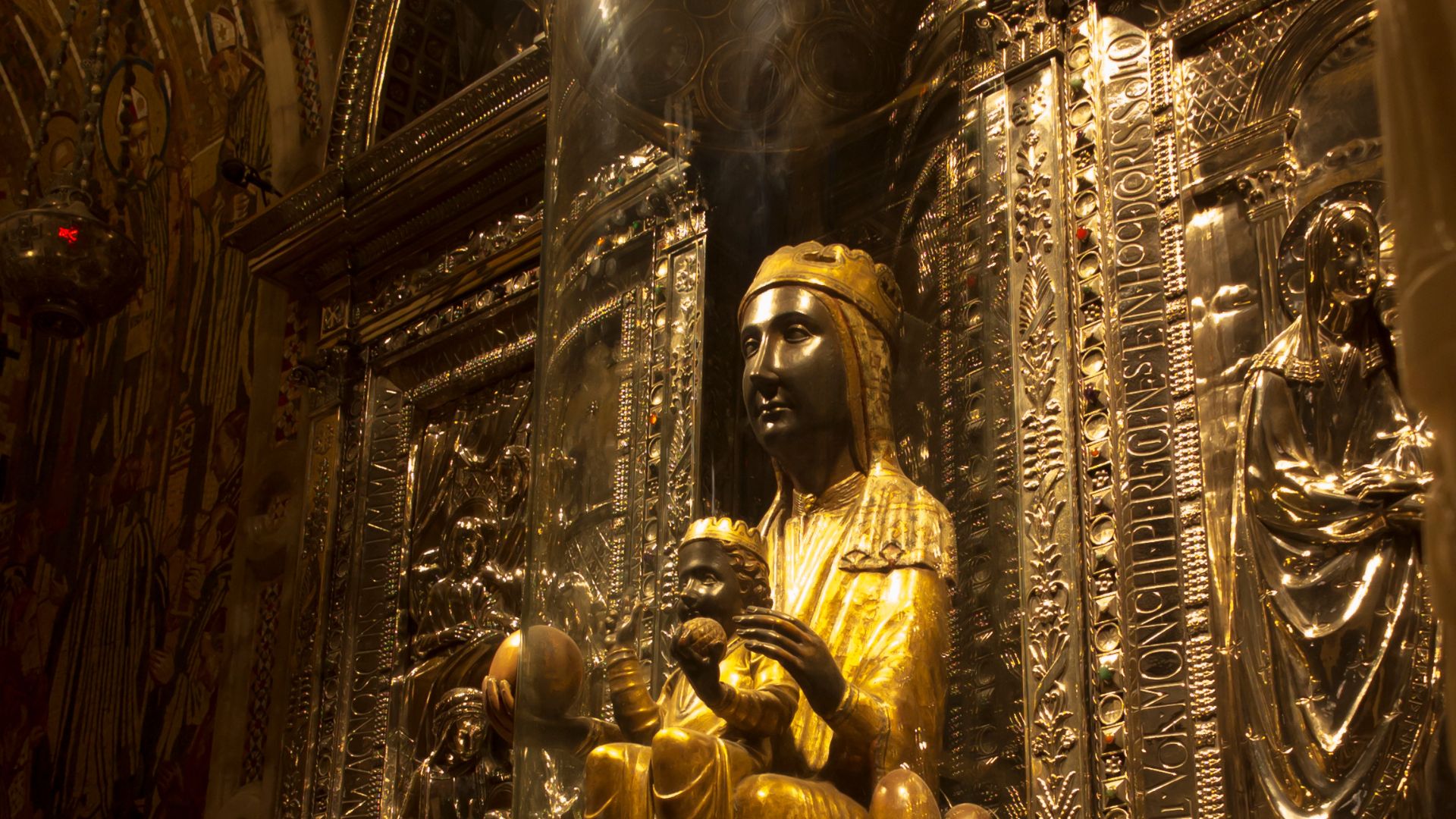
A hypothesis presented in the book is that the Black Madonnas found in Europe (primarily southern France) are a sign of the survival of Goddess worship. The Goddess (in some cases Isis) was venerated as Mary (Mother of Christ) once Christianity became the dominant religion. Although the authors do not discuss this, it must be noted that the blackness of the Madonnas does not refer to skin colour or ethnicity – rather, the esoterico-magical meaning of black is, in this case, the earth (Mother Earth, fertile earth, fertility). Earth is, as will be known to enthusiasts of Elemental Magic, a feminine element (together with Water – Fire and Air are masculine elements).
Pictured below: Statue of Our Lady of Montserrat (Black Madonna).
Templars and Cathars
As I note in Demigod Mentality, Julius Evola juxtaposed the Templars – bearers of a martial Hyperborean esoteric tradition – against the Cathars, in whom he saw a return to a true Christianity (in his view passive and feminine). The authors of The Templar Revelation approach the two (Templars and Cathars) in a different fashion. Interestingly, they note that the Templars did not take part in the Albigensian Crusade (the crusade against the Cathars) and that they even gave refuge to Cathars fleeing the onslaught of crusaders. Their hypothesis is that the Templars were guardians of a heretical tradition of Christianity – which led to their destruction in 1307. As enjoyers of my work will be familiar with, my own analysis is more rooted in realpolitik – the Templars were mighty and rich, and the French king had no interest in having a powerful entity in his kingdom not directly beholden to himself. In regard to the Albigensian Crusade, a straightforward realpolitikal analysis is that the French king wanted to bring the (culturally quite different) south of France under firmer control.
Perhaps the Templars were, in fact, ‘guilty’ of the charges of heresy levelled against them. Perhaps there was indeed a greater spiritual dimension to their destruction. I must meditate upon the matter further.
In the chapter titled The Templar Legacy, the authors share the following beautiful and inspiring story:
‘In Germany there was a wonderfully hilarious scene. Hugo of Gumbach, Templar Master of Germany, made a dramatic entrance into the council convened by the Archbishop of Metz. Arrayed in full armour and accompanied by twenty hand-picked and battle-hardened knights, he proclaimed that the Pope was evil and should be deposed, that the Order was innocent – and, by the way, his men were willing to undergo trial by combat against the assembled company… After a stunned silence the whole business was abruptly dropped and the knights lived to assert their innocence another day.’
Lynn Picknett & Clive Prince – The Templar Revelation. Page 163.

Conclusion
In my humble opinion, you can read this book and gain new perspectives and insights without necessarily accepting all claims presented therein. I found it worthwhile to read and can recommend it to those who are interested in these matters. The book is 532 pages long and is rigorously footnoted (i.e. plenty of references). A lot more can be said about the book; perhaps we will return to the topic later on!
The Pagan Book of the Dead by Claude Lecouteux
Posted on November 1, 2023
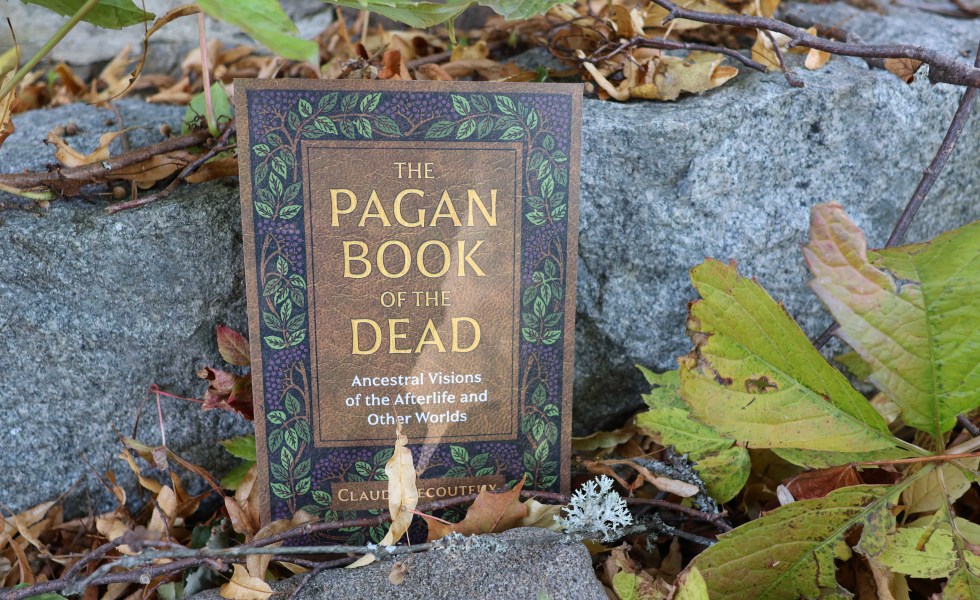
Since I enjoyed the other books by Claude Lecouteux that I have reviewed, I thought it would be interesting to read his The Pagan Book of the Dead – and it is indeed an interesting book. Contrary to what the title might suggest, the book does not only concern Pagan views of the afterlife – the author also draws upon stories and testimonies from the (nominally) Christian times.
European Conception of Angels
Astute enjoyers of my content will know that I often point to angels as a good example of how Christianity was greatly altered to fit the European psyche. This is why we know angels as beautiful and good. The author refers to a text titled Revelation of Moses, in which Moses left his body and travelled through the seven heavens.
‘He saw hell and the men there “tortured by the angels of destruction.” Some were hung up by their eyelids, others by their ears, hands, tongue, sexual organs, or feet, or covered in black worms.’
Claude Lecouteux – The Pagan Book of the Dead. Page 33.
Quite the contrast against said beautiful and good angels!
A Guide in the Afterlife
In the chapter titled Hell, Purgatory, and Paradise, the author shares the following insightful passage:
‘Common to all of the accounts, from antiquity to the Middle Ages, is the presence of a guide accompanying the traveler who has made his way into the beyond: the Yazatas for the Persians, the Uthras for the Mandaeans, Virgil for Dante, and a saint or an angel in the visions. Every time, the guide protects the soul from attacks by demons who want to carry it off.’
Claude Lecouteux – The Pagan Book of the Dead. Page 64.
I always find these perennial themes highly compelling and interesting.
Angels, Demons, and an Irish Saint
The author shares the following epic story from Vita Sancti Fursei (Life of Saint Fursey), written by an anonymous author around 656, in regard to the soul being guided and protected:
‘Falling ill and enveloped in darkness, he gave his last sigh and saw himself picked up by two angels with a third preceding them, armed with a shield and a sword to protect the visionary from attacks by demons. His spirit then rejoined his body because they could not take him with them until he had completed an action. Fursey took communion, and the next day his feet grew cold again, and he fell into a deep sleep on his bed. It is understood that the angels expected him to receive communion. In the course of his journey throughout the beyond, he met two bishops who gave him instructions and advice. During his return trip to earth, Fursey was burned on the jaw and shoulder by demons. When his soul rejoined his body, he saw his chest open.’
Claude Lecouteux – The Pagan Book of the Dead. Page 54.
The author goes on to note that this last detail is missing from an account titled The Golden Legend, but that it says something similar – ‘the devil struck Forsey so hard that after he returned to life, the mark from those blows remained forever.’ And moreover that ‘In a surprising manner, what the soul had suffered had manifested in the flesh.’ This is not the first account of a resurrection – the most famous one is the resurrection of Jesus. I cannot comment further upon these matters for now, but we will revisit the subject as I become wiser and attain more insights.
Virgil and Dante’s Inferno
The author notes that Virgil’s Aeneid served as inspiration for Dante’s Inferno – which in turn was the inspiration for the iconic artwork Chart of Hell by Sandro Botticelli (pictured below). The book is full of examples on how the Pagan conception of the afterlife influenced later Christian views of the afterlife.

Icelandic Syncretism
Readers of my book reviews will be familiar with Icelandic Magic by Stephen E. Flowers (review), in that book the author describes the syncretism that characterised mediaeval Iceland. In The Pagan Book of the Dead, the author notes that mixing Pagan and Christian elements was common in Icelandic literature. He shares an Icelandic poem – Sólarljóð (Song of the Sun) – written around 1200 (so a good bit after the introduction of Christianity). In the poem, the Norns appear. The Norns are the weavers of fate in Germanic tradition.
In a chapter titled The Otherworld in Medieval Scandinavian Literature, the author discusses the works of both Iceland‘s Snorri Sturlasson (1179–1241) and Denmark‘s Saxo Grammaticus (1150–1220). The latter will be familiar to astute listeners of The Greatest Podcast. Here is a short excerpt regarding Saxo from a recent episode: https://www.instagram.com/p/CyDO8AGqUlC/. The author notes that the afterlife in both Snorri‘s and Saxo‘s accounts are syncretic in their nature (i.e. the Pagan view survived into the nominally Christian era).
On a personal note, I must admit that I do indeed appreciate a bit of religious syncretism! That said, the main Gods and Goddesses in my pantheon are Germanic ones – Odin, Balder, and Freya, primarily.

A Celtic Story With an Indian Counterpart
Many of my readers are (I can only suppose) interested in comparative mythology. Perhaps I will discuss the myth at hand at a later stage, but what I can share now (for those who want to read up on it) is the following:
‘Philippe Walter has demonstrated the Celtic origin of the lay of Yonec, whose parallel can be found in the story of Conaire, the legendary king of Tara. But he cites another story taken from the collection of Somadeva, written between 1063 and 1081, in which the supernatural being corresponding to Muldumarec is a rakshasa, an ogre of Indian mythology. The similarities between this story and Yonec are too numerous for them not to represent a shared fragment of our Indo-European heritage.’
Claude Lecouteux – The Pagan Book of the Dead. Page 95.
Said Indo-European heritage can be traced to the Corded Ware Culture – which I discussed briefly in my review of Adrian Goldsworthy’s Rome and Persia (review).
Celtic Afterlife and Dogs
On another note regarding comparative mythology, I thought to share the following valuable insight by the author:
‘The sea voyages of Conn and his son thus illustrate that the otherworld for the Celts was composed of islands. Among the recurring themes we have apples, crystal, and ice. One detail is striking: the names Coinchenn, Coinchend, and coincuilind are all derived from cú (genitive form: con), meaning “dog” (cf. Ancient Greek κύων). This gives me license to venture the hypothesis that we are seeing a vestige of totemism here, although this is not the only possible interpretation, as we shall see.’
Claude Lecouteux – The Pagan Book of the Dead. Pages 140-141.
Men of culture will perhaps think of Cú Chulainn when reading this passage – indeed, his name is usually translated to ‘Culann’s hound.’ What is interesting about dogs in relation to the afterlife is that we see the great dogs Garmr in Germanic myth and Cerberus in Greek myth. For more information about dogs and wolves in Indo-European religion, see my review of Kris Kershaw‘s The One-eyed God and the (Indo)-Germanic Männerbünde.

Conclusion
The Pagan Book of the Dead is 250 pages and contains a wealth of information about the view of the afterlife – both in Pagan and Christian times. I can definitely recommend the book for anyone interested in these matters.
The First Alchemists by Tobias Churton
Posted on October 23, 2023

I have read The First Alchemists – The Spiritual & Practical Origins of the Noble and Holy Art by Tobias Churton. A while back, I read and reviewed The Hermetic Tradition by Julius Evola. I got intrigued by the subject and thus thought this book would make for good further reading. As the title of the book suggests, the author discusses the first alchemists – and the time and place of their origin story is Egypt during the first centuries AD.
What Did the Early Alchemists Do?
Evola’s book The Hermetic Tradition focuses on the spiritual aspect of alchemy – the purification of oneself (i.e. one’s soul or spirit). And it is true that there was a spiritual component involved in the early days of alchemy as well – however, it was also a very practical art. Simply put, many of the processes and techniques had to do with making beautiful things – making dye for clothes, refining stones, or making glass (to name but a few applications). The word alchemy is often associated with the quest to transform base materials into gold. Successful alchemical operations did indeed generate gold – but in the form of wealth and money. The author shares the following valuable insight:
‘Alchemists were not lunatics. As we have seen, much of the misunderstanding may have come from a lack of knowledge of what the first alchemists were actually doing, leading to their work being fundamentally misinterpreted centuries later. What they were doing was applied science capable of repeated demonstration under controlled conditions. To say that their science was rudimentary is like accusing Wilbur and Orville Wright of not having fashioned Concorde in 1903.’
Tobias Churton – The First Alchemists. Pages 176-177.
Thus, to respond to the question of what the early alchemists were actually doing, one could say that they engaged in the manufacture and refinement of precious items in late antique Egypt – and, for some, the manufacturing process had a spiritual aspect. An interesting note is that Emperor Diocletian (infamous among Christians for his persecutions) ordered the destruction of chemical books as he believed that the profits obtained from the alchemical art could fund rebelliousness in Egypt. So, again, the early alchemists created wealth by their methods, albeit not in the way (i.e. turning base materials into gold) legend has it.

Zosimos – The Father of Religious Alchemy
Central to the story of early alchemy is a Graeco-Egyptian mystic named Zosimos. The author introduces him thus:
‘Zosimos is perhaps the best known early devotee of the spiritual vision of the philosophical tractates attributed to Hermes Trismegistus and known generally as the Corpus Hermeticum. Zosimos understands them intimately; his thought is wedded to them, and he sees them as inseparable from his chemical practice. As Hermetic studies pioneer A. J. Festugiére noted, Zosimos was “father of religious alchemy,” the first alchemist to portray alchemy in terms of salvation, as a technique of dual purpose: purifying metals and purifying human souls.”
Tobias Churton – The First Alchemists. Page 91.
Hermes Trismegistus, a name that may be familiar to many of my esteemed readers, was the result of Graeco-Egyptian syncretism (combing Hermes with Thoth). The saying (and teaching) ‘As above, so below’ is attributed to this mythical individual. The author continues the passage and says the following about Zosimos‘s views on the divine and its connection to the alchemical process:
‘For Zosimos, the universe is a tangible mirror image of incorporeal being, the image coalescing, even coagulating on the physical plane. It was, he believed, fashioned by and sustained by two emanations of the unknowable Father: two “sons” of God: the cosmic fashioner (demiurge) and the holy spirit-mind (Logos and nous). In the chemical process, Zosimos felt privileged to see – once mind (nous) was purified – revelation of God’s creative and redemptive processes. For Zosimos, alchemy is divine analogy, and more than that, it is a means both to initiate and prefigure divine redemption and ultimate salvation through sacrifice, purification, and ascent to the One.’
Tobias Churton – The First Alchemists. Page 91.
The author goes on to note that according to some scholars, Zosimos’s conception of alchemy was a form of theurgy (i.e. God-working). For more information about theurgy, see my review of The Practical Art of Divine Magic by Patrick Dunn. The One in the quote above refers to the Neoplatonic One (i.e. God). Speaking of Neoplatonism, Zosimos and Iamblichus (one of the most famous Neoplatonists) were contemporaries. Iamblichus’s views of theurgy can be found in his De Mysteriis. The author also notes that despite the proximity to magic/theurgy, Zosimos was adamant that the pure art (i.e. alchemy) is not magic and requires no ritual impedimenta – only a pure intention to practice with propriety:
‘For Zosimos, the art relies solely on natural processes. Only the earth/body-bound involve magical practices and supplication of daimons. Zosimos’s alchemy is a natural, divine path to God, in which pious practitioners are called to identify with all elements and transformations, so as to experience harmonious union, or “gold”: the most divine dye that raises soul and is the soul raised to its goal. The “metal” (body) must be willing to suffer the process.’
Tobias Churton – The First Alchemists. Pages 91-92.
The Stockholm Papyrus
I was excited to learn that there is a papyrus named the Stockholm Papyrus – which can be found at Kungliga Biblioteket (the Royal Library) in Stockholm. We have a Greek gentleman named Ioannias Anastasiou (1765–1860) to thank for this. The author notes that the Kingdoms of Sweden and Norway (Svensk-norska unionen – the Swedish-Norwegian Union) appointed Anastasiou as their consul general in Egypt in 1828. Anastasiou, a man of culture as well as a hero, also helped free hundreds of Greek rebels from slavery – who ended up in captivity following the Ottoman attack on the Peloponnese (1824–1828).

The papyrus itself (pictured above) contains 111 recipes that concern dyeing, colouring gemstones, and making copper appear like gold (amongst other things). Seven of the recipes are for making greatly valued purple dyes. The Stockholm Papyrus can be viewed in digital format here. Pictured below, an aspiring Enlightened Despot who appreciates purple clothing!

Syncretism in Late Antique Egypt
The author notes that late antique Egypt was a place of remarkable religious syncretism. The culture was a Graeco-Egyptian one with a dose of Roman realism and home to metaphysical speculations galore:
‘The spiritual-physical universe in which late antique alchemists in Egypt operated was already a syncretic amalgam of Egyptian divine immanentism competing with Jewish spirituality, Platonist idealism, Stoic pneumaticism, pre-Socratic nous speculation, gnosis (Christian and otherwise), Aristotelian praise for logical mathematics, Euclidean physics, and a hierarchical, crystalline, and spherical cosmology that would find definitive, mathematical form in Claudius Ptolemy’s works amid the fervid atmosphere of second-century Alexandria.’
Tobias Churton – The First Alchemists. Page 200.

Conclusion
The First Alchemists has 276 pages and details the early days of alchemy well. The book is full of interesting insights – I enjoyed reading it and can definitely recommend it to others interested in the subject. The book may be a bit specific and technical for those who are unfamiliar with the topic.
Onwards and upwards!



 The Golden One
You must be logged in to post a comment.