Hyperborean Linen Trousers – Health Advice – Bogomils – France – Podcast
Posted on May 8, 2021

I posted the following for this week’s Fizeek Friday over at Gab. I mentioned the term BogomilMAXXing in the latest Podcast episode as well as in my latest video on Odysee (which can be seen here).
BogomilMAXX for regime change
Summer is incoming and many of us are aiming to get shredded. In order to get shredded, you can BogomilMAXX, which simply means to start fasting and to limit your intake of refined sugar.
- Intermittent fasting. Easy to incorporate into your life. Simply limit your intake of food to 12:00-20:00 (or an eating window of similar length). I have a black coffee in the morning (gourmet coffee – Kongo Mörkrost).
- Limit your intake of refined sugar. Easier said than done, but whenever you feel the urge to consume sugary things, just imagine the disproving gaze of a benevolent Bogomil priest.
I say refined sugar, because there is a great difference (health-wise) between things containing refined sugar and foods that have naturally occurring sugar (fruits, milk etc.).
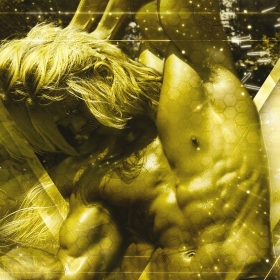
Pictured (the header picture in this article): current form, about two weeks into the summer cut. I have implemented the changes above. Although, due to a lack of Bogomil priests nearby, I have still consumed some pastries and chocolates (alongside my afternoon/PWO coffee).
Additional note: What does -MAXXing mean? It simply means to do something a lot. EggMAXXing = eating plenty of eggs. SunMAXXing = being out a lot in the sun. Why do I use such terminology when I otherwise try to perfect my language? Because it is fun, and memes are powerful.
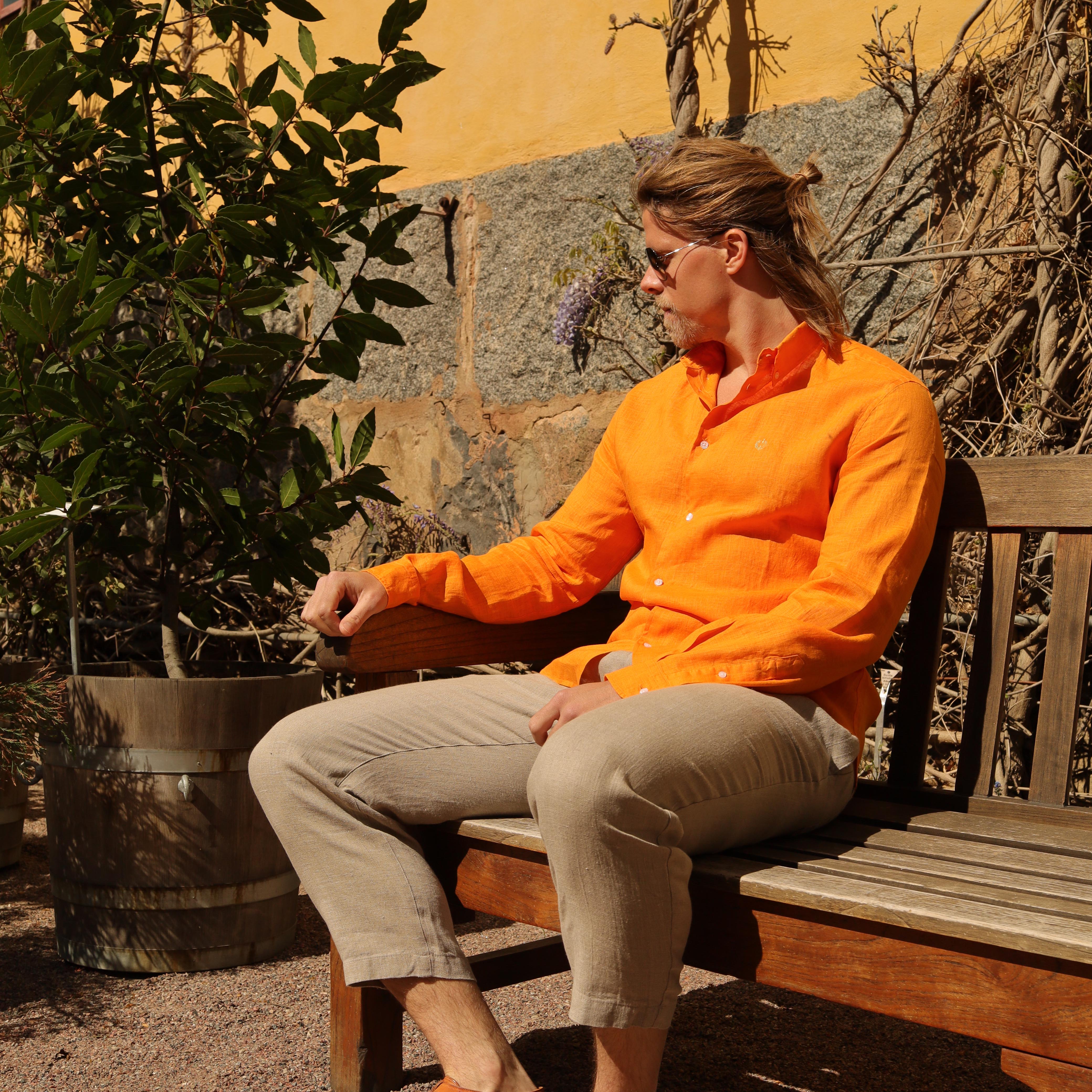
Hyperborean Man Summer – Linen Trousers
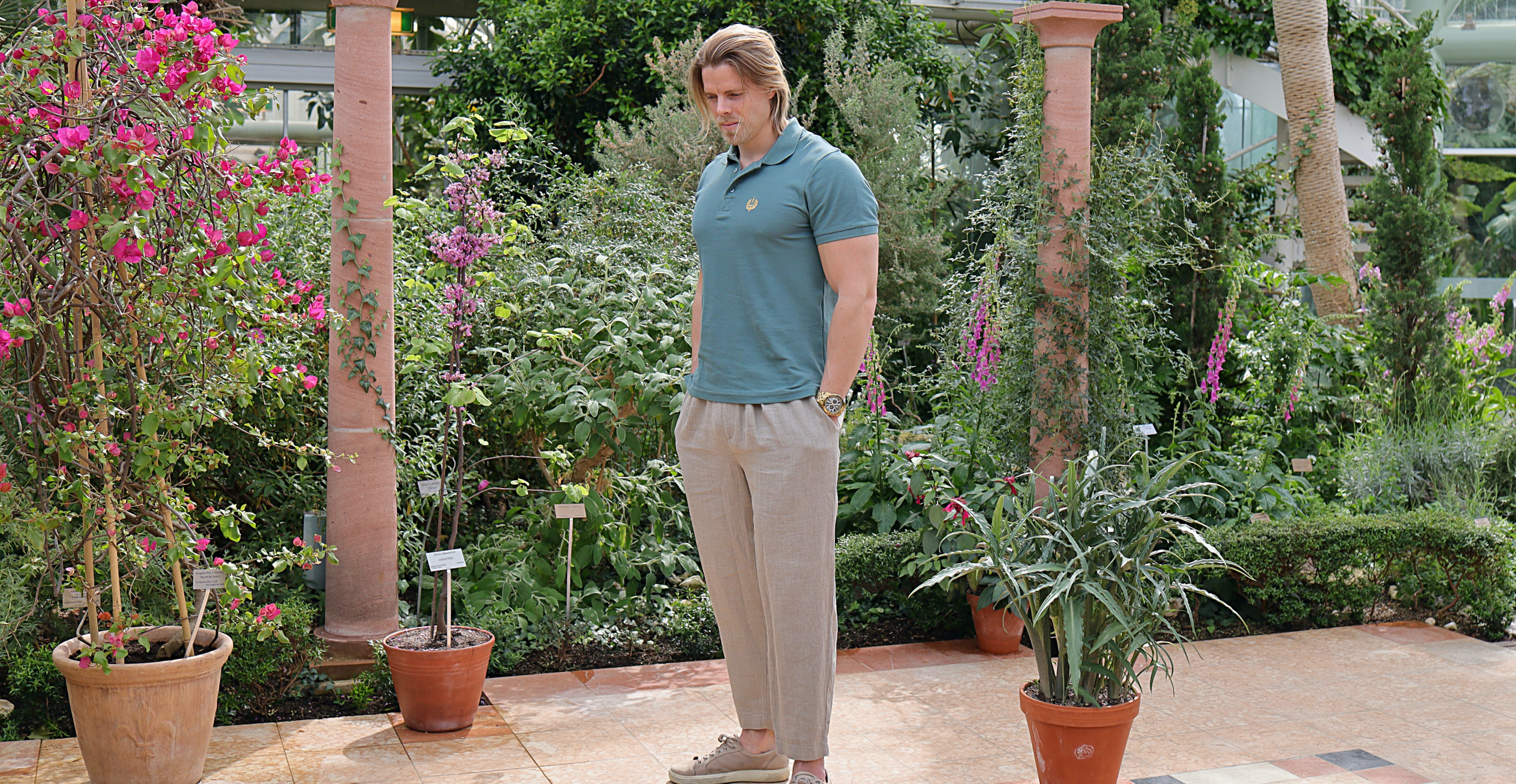
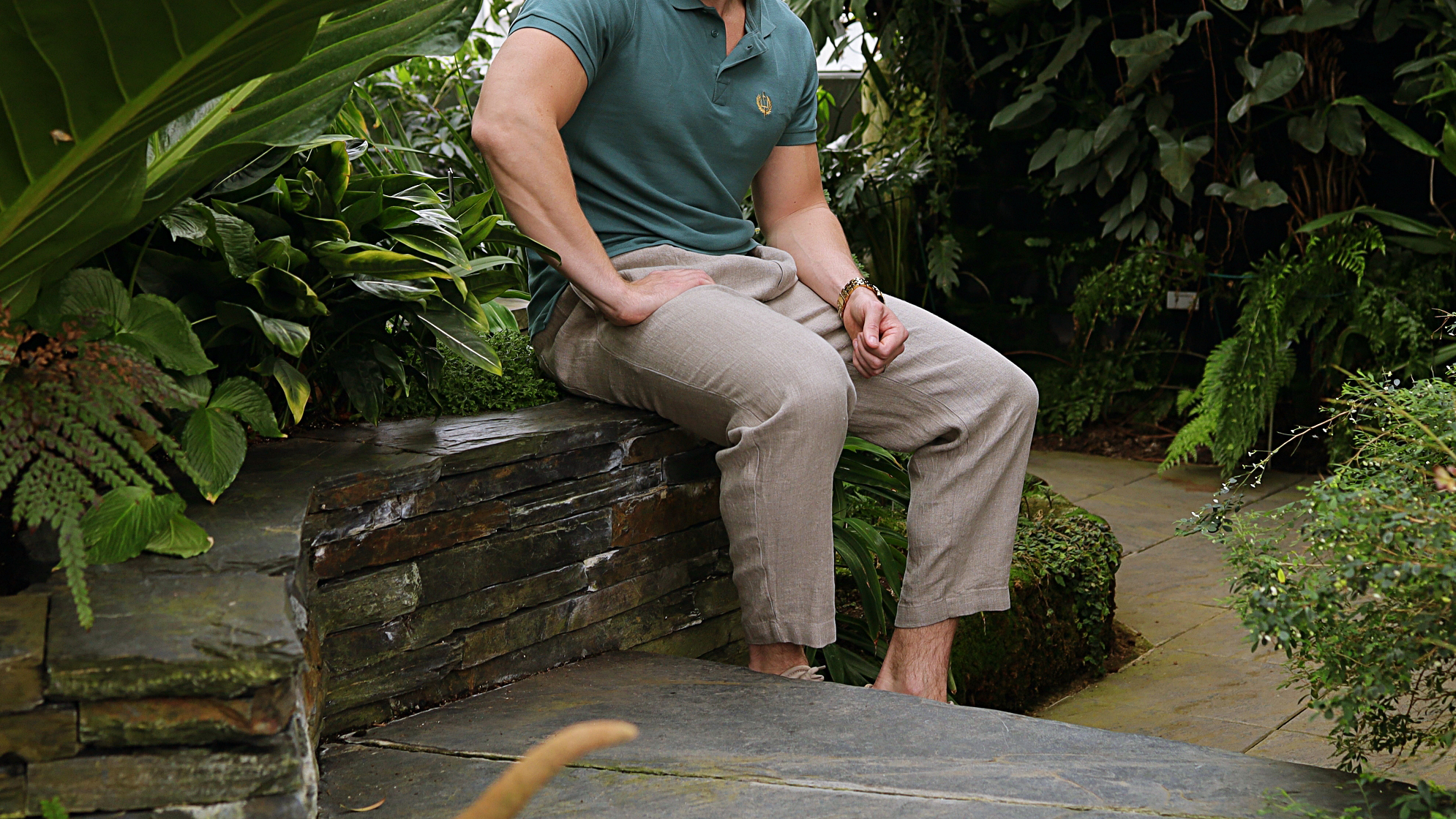
I am extremely happy to announce the Hyperborean Man Summer – Linen Trousers. As I have said before, the success of previous releases has allowed us to take the clothing to the next level. With more resources to develop new products, we aim for the heavens. More linen, more wool, more organic cotton, more stylish clothes.
A pair of aesthetically pleasing and supremely comfortable linen trousers. Perfect for warm summer days, either basking in the sun at a café or when out exploring and looking for the lost civilisation of Atlantis.
Linen has been a beloved fabric in Europe since time immemorial. During the Middle Ages, the Hanseatic League traded linen from Lithuania. We aim to continue this fine tradition.
The garment is made out of 100% linen and is made in Lithuania. Available here: LegioGloria.com
France – The Pinnacle of Civilisation

In my latest Podcast episode (Episode 9. The Pinnacle of Civilisation – France), I mentioned that I might have been wrong in naming Sweden as the Pinnacle of Civilisation. It is true that Sweden, as a society, reached a high point last century, and has a long and glorious history. However, when viewing the matter from a deeper historical perspective, it is more reasonable to give that title to France.
One could argue that the title should fall to Germany, Spain or Great Britain (among others). All three are indeed worthy contenders. That being said, France has, arguably, been the most admired country of all. How do you determine admiration? True admiration can be found in who you want to emulate. As Bronze Age Pervert correctly pointed out in a recent Caribbean Rhythms episode, Paris has always been the capital that other nations sought to model their own cities after. Alas, today Paris is rather used as a warning example. So, the title of Pinnacle of Civilisation should be viewed in a historical context.
If you haven’t already listened to Podcast Episode 9, I might point out that the entire episode is not about the historical grandeur of France, but more so about Cathars and Christian sects. You can read more about the Cathars here (Lucifer’s Court) and here (Crusade Against the Grail).
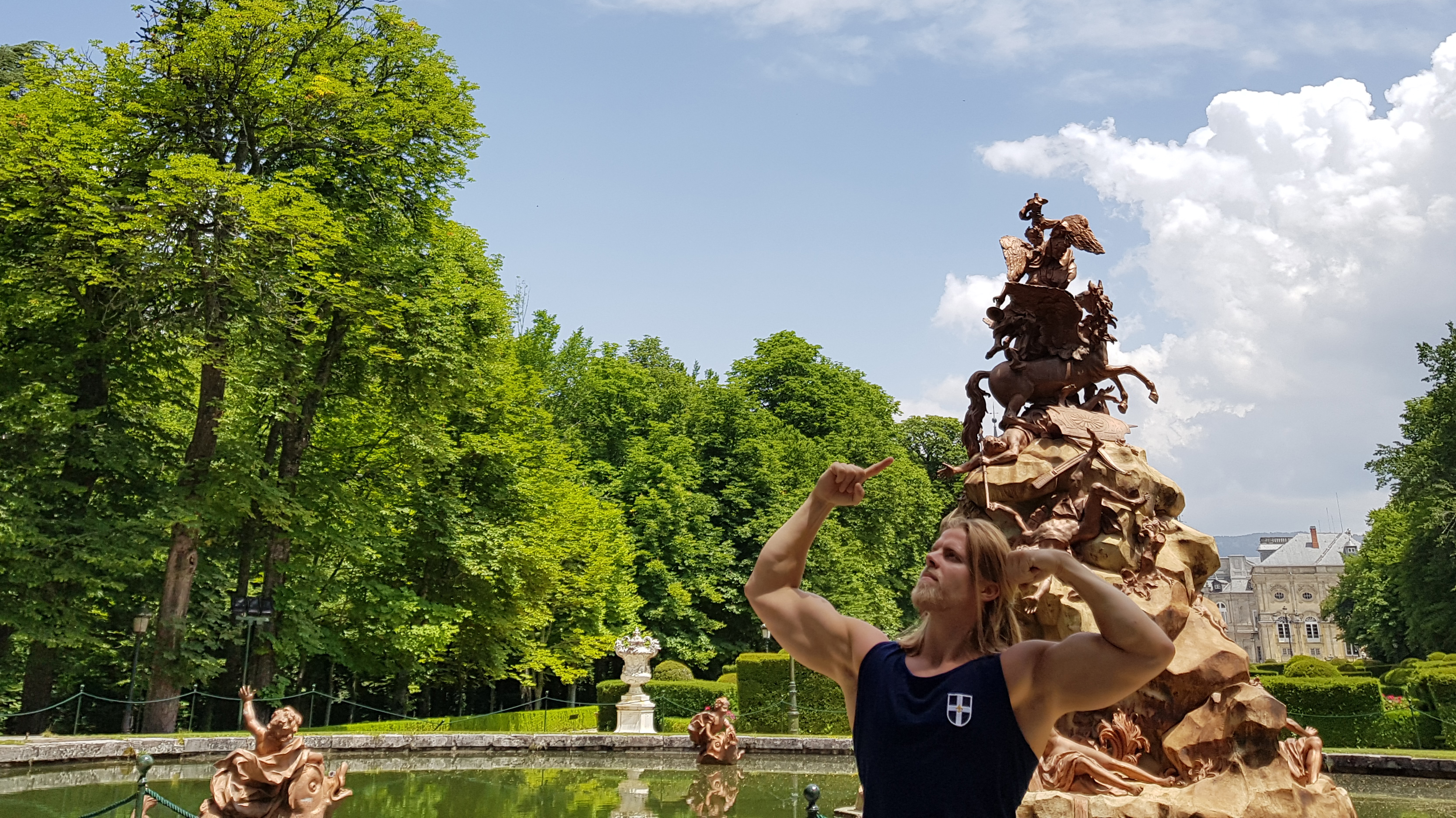
On a personal level, I am a great admirer of Imperial Spain (the same is true for Great Britain and Germany). If you want to give your mind a high and healthy dose of European aesthetics, there are plenty of places around Madrid to visit. One such place, which I have visited twice (2018 and 2019), is San Ildefonso. Along with a beautiful palace and garden, it contains plenty of statues of Greek gods.
I made two videos featuring Spanish aesthetics (follow the links to watch on Odysee):
The Golden One in Iberia – Admiration of Epic Statues and Training in Nature
Neo-Visigothic Calisthenics and Iberian Exploration Session of Helios
Moreover, it is important for me to point out that my love for Sweden is not lessened in anyway by my admiration of other nations. On the contrary, I express admiration for other because of a high sense of self-esteem, both on a personal and national level. Certain people venerate others because they feel bad about themselves, and they denigrate themselves. Not so here!
Lastly, I might add that the 19th and 20th century focus the nation is quite outdated in our current predicament. Thus, it is more reasonable to talk in terms of bioculture and civilisation (as I elaborated on in Podcast Episode 7. Europa).
Crusade Against the Grail by Otto Rahn
Posted on May 2, 2021 1 Comment

I have read Crusade Against the Grail by Otto Rahn. It was first published in 1933 as Kreuzzug gegen den Gral. Since I already read Rahn’s second book, Lucifer’s Court (review here, I recommend you to read that first), I thought it was reasonable to read his first book as well.
Just as I noted in my review of Lucifer’s Court, Crusade Against the Grail should not necessarily be read as a historically accurate description of the cultures and events of Southern France during the Middle Ages. That being said, the book is beautifully written. Even translated into English and read almost a century after its release, it still evokes appealing images of the sun-drenched Occitan country-side.
An interesting fact is the following: after releasing Crusade Against the Grail, Rahn was offered 1000 Reichsmark per month by Heinrich Himmler to write a sequel. This is interesting because of the way Rahn portrays the Cathars. Rahn juxtaposes the Occitan (Cathar) religious tolerance against the intolerance and brutality of the Catholic Church. As noted in my previous article, Rahn eventually grew disillusioned by what he saw as an increased intolerance in Germany. It is clear that he greatly valued the tolerant attitudes of the Cathars.
The God Amor
In my review of Lucifer’s Court, and in a recent Fizeek Friday post, I included an inspiring quote describing a god. That god appears in a passage here as well:
An elegant and strong knight approached on horseback. Blond hair fell on his bronzed face, and his clear eyes glistened. The smile of his mouth revealed mother-of-pearl teeth. […]
“Piere Vidal,” said the knight, “you should know that I am Amor, and my Lady is called Grace. Her lady-in-waiting and my servant are Modesty and Loyalty.”
In Lucifer’s Court, this god is Lucifer himself, and Loyalty is his paladin. Since having a paladin named Loyalty is more epic than having a servant, I will keep the Lucifer’s Court version in mind. Peire Vidal was a renowned Occitan troubadour and poet.
A Golden Renaissance
In the Translator’s Foreword chapter of the book, Christopher Jones points out that Rahn yearned for a golden renaissance of traditional values based on the unity of France and Germany under neo-Cathar beliefs. I, Marcus, also yearn for a golden renaissance and a closer unity between France and Germany. And, as I discussed in Podcast Episode 7. Europa, a closer unity between all European countries. In contrast to Rahn, however, I am not a proponent of Catharism.
The Pure Ones
The Cathar Pure Ones promised to dedicate themselves to God and His Gospel, never to lie, never to take an oath, never to have any contact with a woman, never to kill an animal, never to eat any meat, and to feed themselves only with fruits. In fact, during the twelfth and thirteenth centuries any Christian that abstained from meat was suspected of Cathar heresy.
Even if Rahn succeeds in presenting the Cathars in a favourable light, it becomes clear that their teachings are not to be recommended.
- For optimal health and happiness, eating meat is good. Meat is a superfood.
- Being intimate with your wife is good. That being said, it is recommended to practice semen retention (more on that in a coming article, video or podcast).
- Although fruits are delicious and are beneficial to eat prior to prayers in the Temple of Iron, your diet should be centred around meats, eggs and dairy. Fruits can be seen as a complement to your diet.
Moreover, the Cathars viewed the celestial Minne as the original love, and that it had nothing to do with the Earthly love that procreates human beings. Another aspect of Cathar belief was the longing for the next life, and the view of this world as Hell. Both of these attitudes go against the original European Pagan life-affirming attitude to intimacy and the world.
The Pathway of the Pure Ones
The Pathway of the Pure Ones starts out from Olmés, borders Montségur, and passes over the summit of the Tabor. Finally, it reaches the caves of Sabarthés, the last home of the Cathars. Once there, so far from the world, they meditated upon the supreme Minne in a trance-like state.
That sounds like an excellent travel destination for any esoterically minded modern knight. Minne (not to be confused with the Scandinavian word for memory) is another word for the notion of Medieval courtly love. Minne, like chivalry, was a large part of the troubadour culture.
The Crusade Against the Cathars
It must be stated that the crusades against the Cathars were, in no uncertain terms, a horrific affair, as was the persecution of the Cathars. There is a satisfying passage in the book, where Rahn retells the story of how a group of Occitan knights ambushed and killed a group of inquisitors.
The title of the book itself, The Crusade Against the Grail, refers to the grail as a sacred symbol of the Cathars. Rahn also believed that the Cathars hid the grail in the mountains of Southern France during the crusade. He believed that he could find the grail by using Wolfram von Eschenbach’s Parzival as a guide, just as German archaeologist Heinrich Schliemann had located ancient Troy using the Iliad. Rahn’s search for the grail is a main theme of Lucifer’s Court.
On a somewhat related note, when reading about the brutality of the Albigensian Crusade (Cathar Crusade), it becomes easier to understand that the Bosnian Bogomils (another Christian heresy) were inclined to convert to Islam to gain the protection of the powerful Ottomans against the Catholic Church. That being said, today’s Bosnia would be better served by renouncing Islam in favour of another religion. It is the only way they can be closer to their European neighbours (I will talk more about Bosnia in a coming Podcast episode).

In conclusion, I do not necessarily recommend the book, but, just as I mentioned above, I wanted to read both of Rahn’s books.
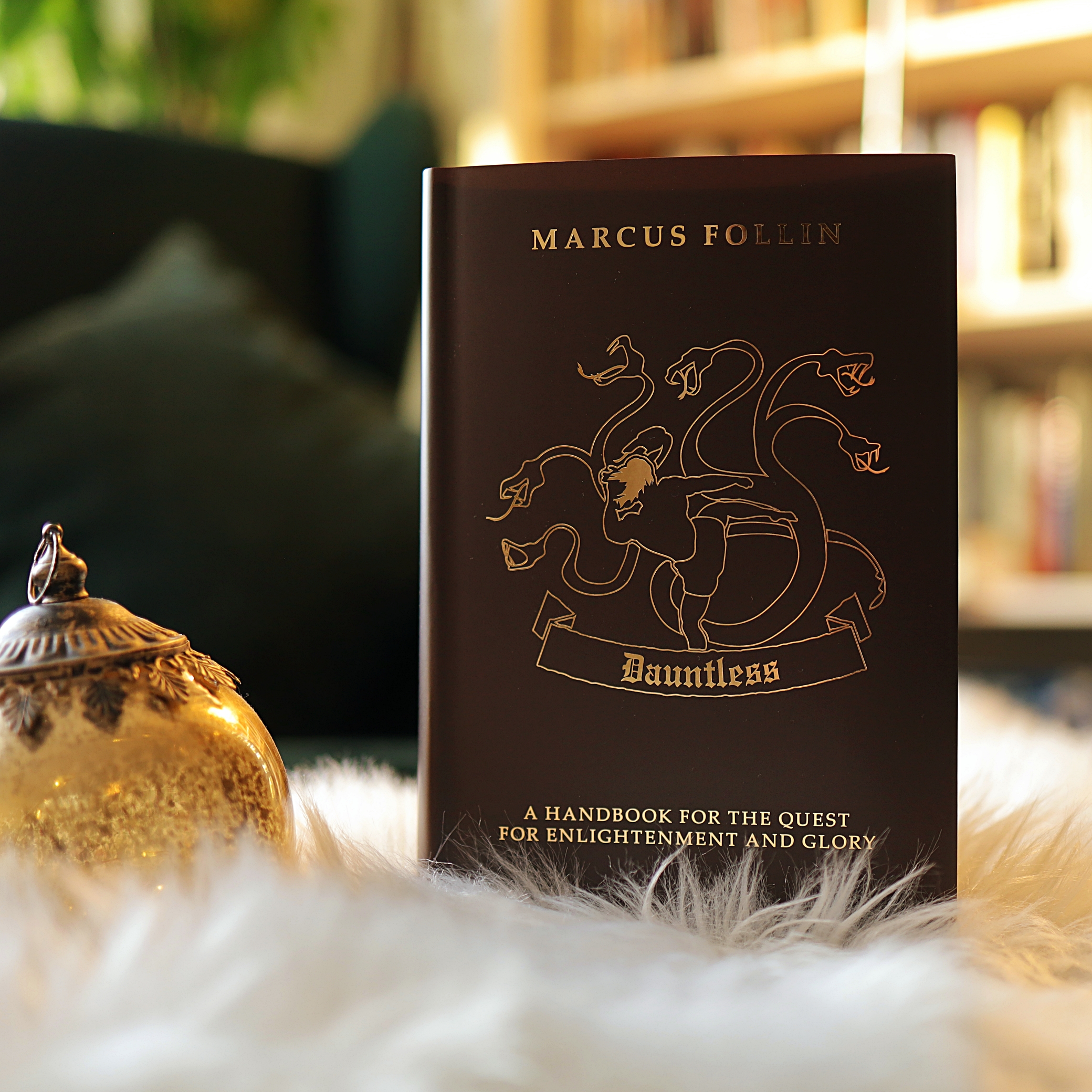
Header picture: the book alongside a cup of gourmet coffee and some dark chocolate (with sea salt). Golden Coffee Company gourmet coffee is available for European customers here, and for Swedish customers here. Picture above: yours truly in San Ildefonso, Spain.
Fizeek Friday Wisdom – No Access to Gym
Posted on April 30, 2021

Originally posted to Gab for Fizeek Friday: original post.
BEHOLD!
I do not post physique from the Temple of Iron, but from another form of training. This is the wisdom of the week:
What to do if you can’t access the gym? And what do you do when you have suboptimal conditions for a gym session (i.e. bad sleep, bad diet etc.)?
- If you, for whatever reason, have decided to not pray in the Temple of Iron, you can always go for a nice forest walk. Pictured: me checking in from such a walk, chewing on four mastic gums, listening to a podcast (in this case Caribbean Rhythms).
- Either you train something lighter, doing complementary bodybuilding exercises, or you go for a walk.
If you know you can’t perform well enough, it is better to save that session for when you are adequately prepared. Say you are following The Primordial Beast’s Hypertrophy Plan, which I wrote for the Physique Manufactorum a while back, or Smolov JR for the benchpress, you simply need to have a good night’s sleep behind you. You also need to have eaten well before, otherwise you will most likely not be able to finish the session. Should you be able to finish the session even when having slept and eaten poorly, you need to increase the weights for your coming sessions.
Conclusion
Remember; to put on mass (as a natural), you need to get stronger in the main compound movements. Progression over a long period of time is the key. If you can’t perform well enough a certain day; postpone the session.
Aux Armes garment for +10 in Thumos and Motivation. Organic cotton, made in Poland: https://legiogloria.com/
Redeeming Lucifer – Book Review
Posted on April 22, 2021

I have read Redeeming Lucifer by Swedish historian and author Lennart Svensson. The title caught my attention, especially since I was intrigued by Otto Rahn’s Lucifers Court, which I made a book review on (available here). Redeeming Lucifer is a fictional work with plenty of esoteric and spiritual themes. Without giving too much away, the main plot is that the protagonist must find and redeem Lucifer (by meeting him and praying for him) in order to bring harmony to the world.
I enjoyed the book. It is well written, immersive, and, as mentioned above, contains interesting esoteric themes. The protagonist of the book, Carl Griffensteen, is a Finland Swede (finlandssvensk in Swedish), and an officer in the Russian army during the Romanian campaign of 1917. During the campaign, he is visited by an angel named Pelagion who invites him to a holy quest in The Land. The Land is a parallel, spiritual world that is a projection of one’s own mind. He is joined in The Land by a trusted companion named Ivan.
In order to reach Lucifer to redeem him (and to make him renounce his vicious ways), Carl needs to muster an army of Light to defeat the army of Darkness that stands in his way. To achieve victory, Carl and Ivan must recruit both historical and mythological heroes. The army of Darkness consists of infamous villains, also both taken from history and myth.
Among the villains of the Dark side we find, among others: Mordred (who killed King Arthur), Ganelon (He is based upon the historical archbishop Wenilo who betrayed King Charles the Bald in 858), Benedict Arnold (a betrayer of the Americans during the American Revolution), and Didrik Slagheck (a villainous Danish bishop involved in the Stockholm Bloodbath, which is an event I will cover in a coming Odysee video).
Among the heroes of the Light side we find, among others: Tannhäuser (a mythologized medieval German Minnesänger and poet. I will write more about ‘Minne‘ in my next article on Otto Rahn’s studies), Odysseus (who needs little introduction for any true cultured thug), Aenas (a mythological Trojan hero and ancestor to Romulus and Remus),
Having historical and mythical characters appear in the book in this way is a great example on how to make a fictional book educational. Definitely a nice touch!
Whenever I read a book, I am always on the lookout for epic quotes to share. I found a quite memorable passage that I thought would be appropriate to share:
How should one act?
Do what feels right.
How does one counter feelings of helplessness?
Man is helpless only if he sees himself as helpless.
Where is this all leading?
There is only here and now.
What can we do without?
Our sense of inferiority.
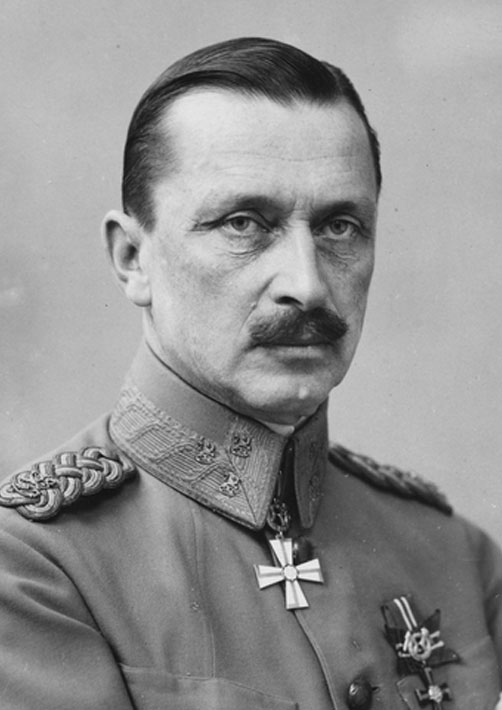
Another legendary hero that appears in the book is Carl Gustaf Mannerheim. Mannerheim is, arguably, Finland’s greatest man of all time. He actually started his career in the Russian army. He fought in the Russo-Japanese War 1904-1905 and would later lead the Whites in the Finnish Civil War against the Reds (Communists). He would also lead Finland against the Soviets during the Second World War.
Interesting to note is that Mannerheim participated in the Great Game (read my review of Peter Hopkirk’s The Great Game here). He was asked by General Staff of Tsar Nicholas II to undertake a journey through Turkestan to Beijing as a secret intelligence officer disguised as an ethnographer (as was often the case for Russian and British officers). The purpose of the journey was to investigate potential invasion routes into western China.
Perhaps Mannerheim is a suitable topic for a coming Podcast episode (his story is certainly too long to cover here).
Speaking of the Podcast, I have many episodes planned. One of them is about affirmations and the importance of visualising things. I mention this here since a major theme of the book is the relationship between the interior (mind) and the exterior (the outer world). An interesting and important topic indeed.
Lastly, I might add that I have read another book from the author: Ett Rike Utan Like, which is a book about the history of Sweden. It is in Swedish and a book I can also recommend.
In conclusion, Redeeming Lucifer is a good book that I can recommend. At around 200 pages it is easy to read through, in case you have many books on your to-read-list (which I always have).



 The Golden One
You must be logged in to post a comment.