Conquerors – How Portugal Forged the First Global Empire
Posted on July 23, 2021
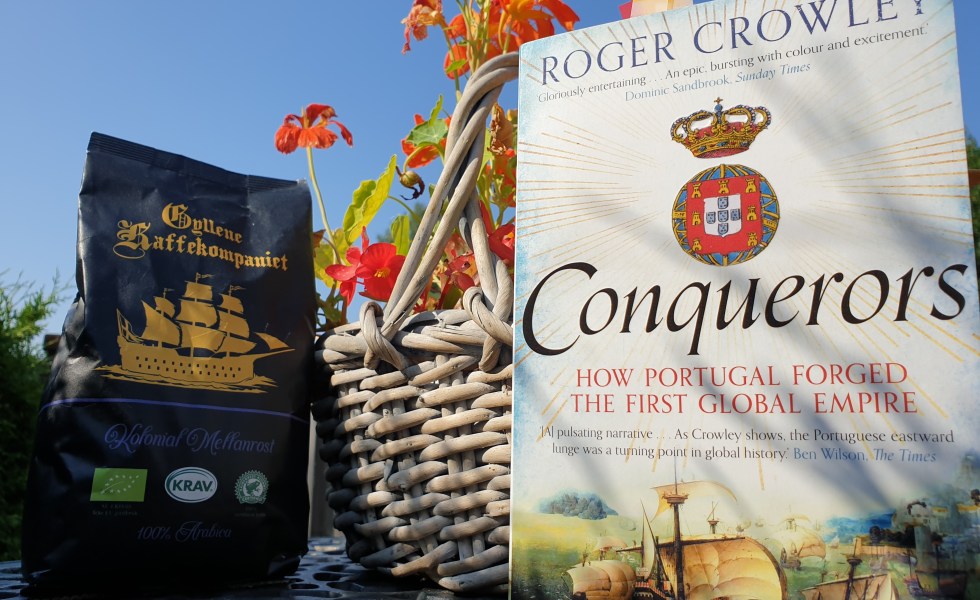
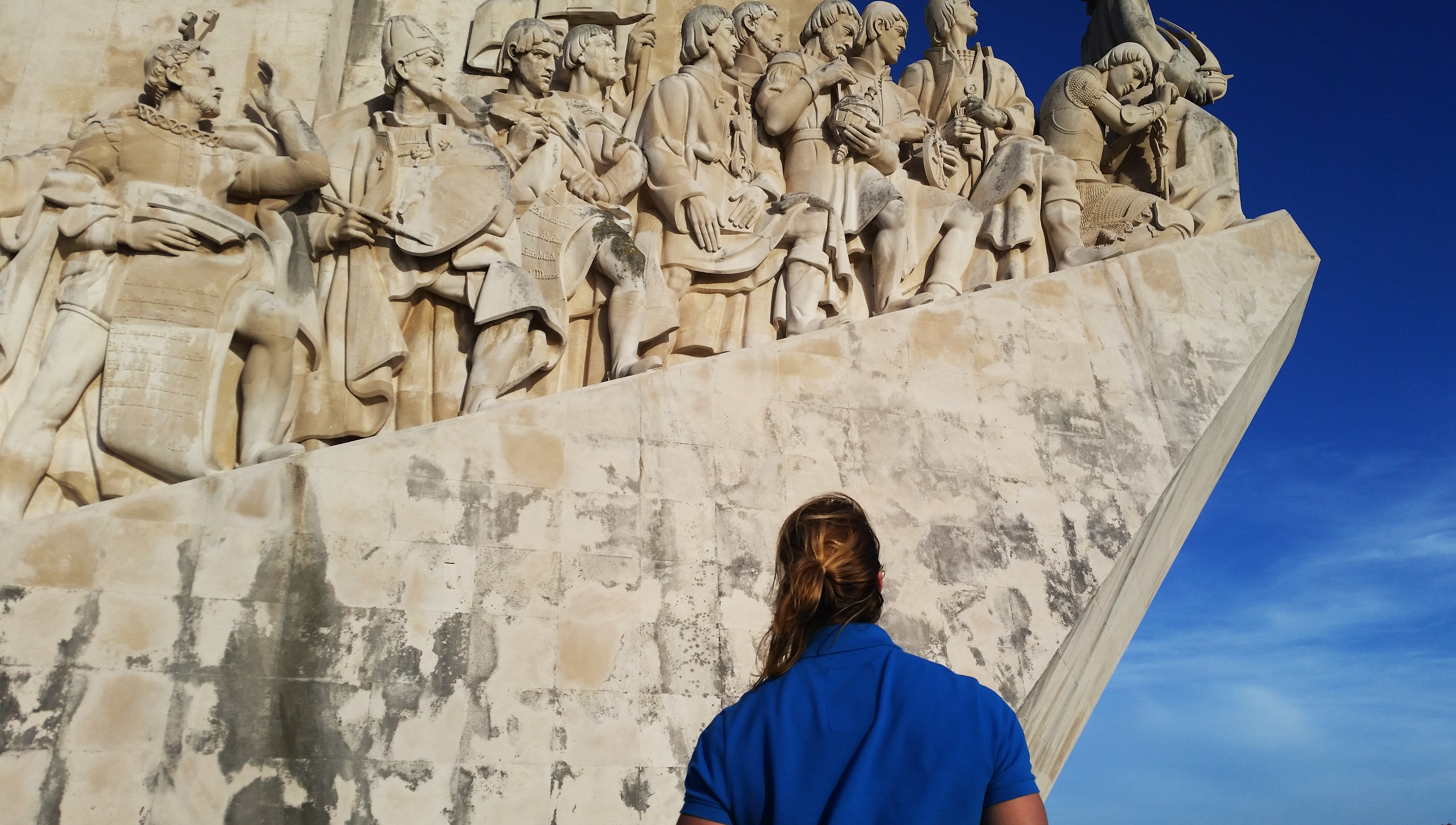
I have read Conquerors – How Portugal Forged the First Global Empire by Roger Crowley. First and foremost, I can definitely recommend the book. It is well-written and exciting. Below are some interesting insights I thought to share. I recommend reading this article prior to (or after) listening to Podcast Episode 12. The Greatest Glory (available on Patreon, SubscribeStar, and Gumroad). Pictured below: yours truly in Lisbon in 2016.
Striking Back
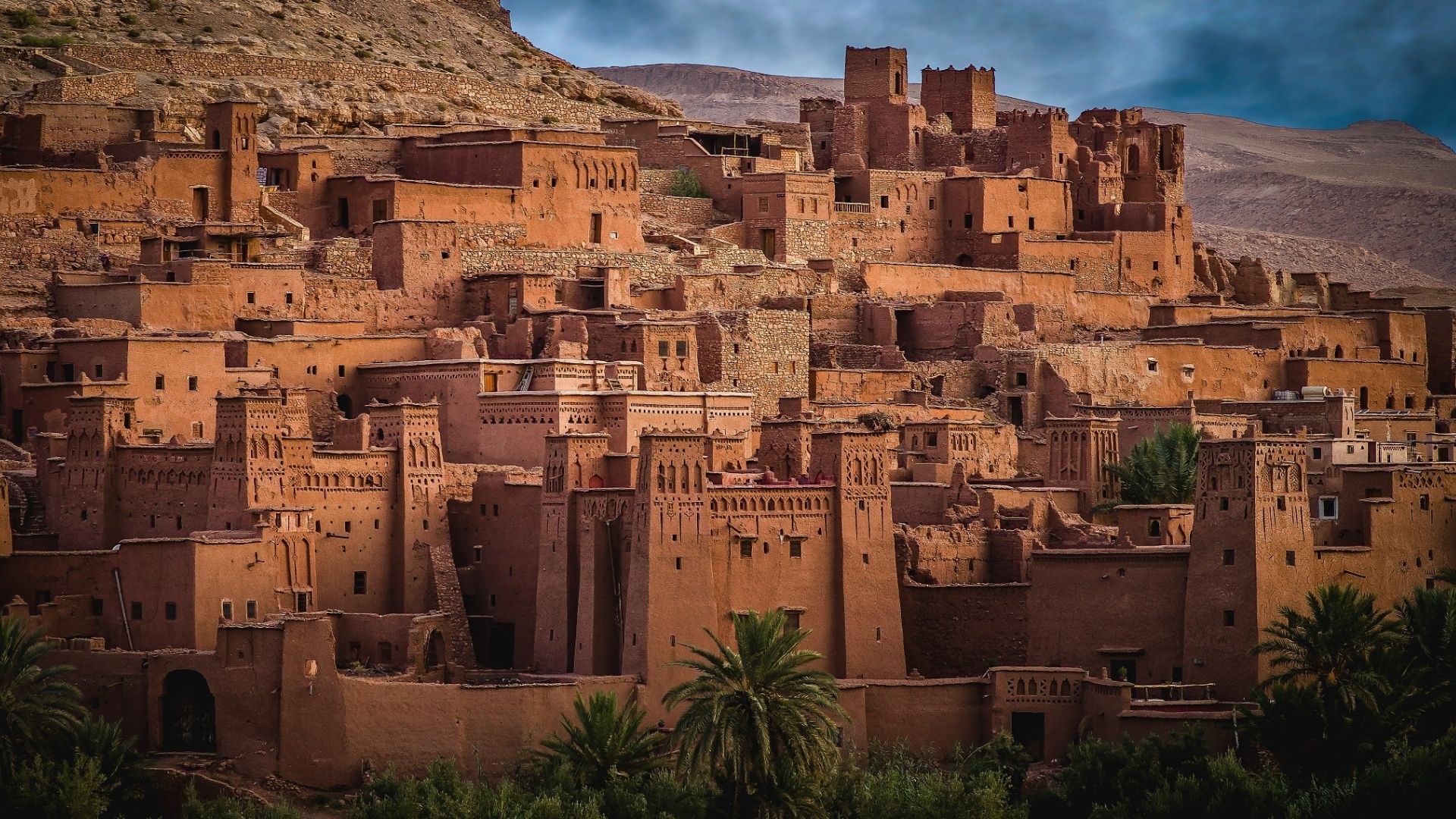
Understanding Portuguese actions in the Indian Ocean and North Africa can only be done when looking at the nation’s most recent history. Portugal, like the various Spanish kingdoms, had long suffered under Muslim occupation. A common misconception is that a golden age occurred during this time, this is thoroughly debunked in the book The Myth of the Andalusian Paradise by Dario Fernandez-Morera. This had two effects on the Portuguese psyche – they were battle-hardened and they were driven, to a large extent, by an ethno-religious hostility towards Muslims.
Another aspect to keep in mind is that slavers from the Barbary Coast raided the coasts of Western Europe. Thus, the threat from the south did not end with the conclusion of the Reconquista. For a brief overview of the Reconquista in video format, you can watch my video The Visigoths and the Reconquista.
Between 1801 and 1805, the United States, Sweden, and Sicily fought the Barbary Wars against the corsairs. This was the first United States military land action overseas. The brutal slaver raids from the Barbary corsairs did not end until the French conquest of North Africa in 1830.
Although the author does not go into length about the transgressions being done to the Portuguese, he acknowledges that a long-standing rivalry between the Portuguese and various Muslim nations had an effect on Portuguese fervour in the fighting against other Muslims in the Indian Ocean.
Prince Henry the Navigator
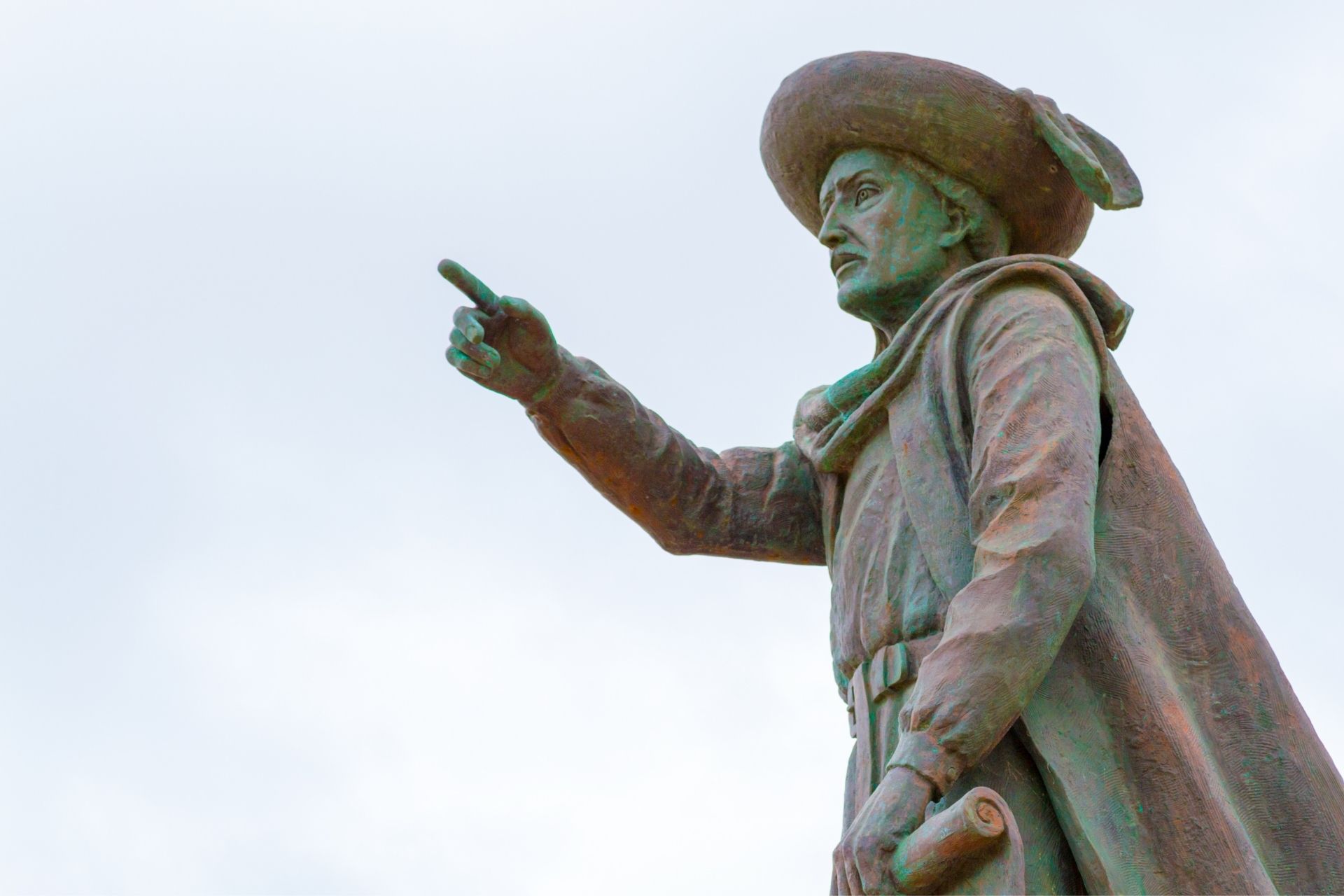
Henrique, more commonly known as Henry the Navigator, was a key individual in facilitating the Age of Exploration. He was also a warrior prince of note – he was 21 years of age when he accompanied his father King João and his brothers in the conquest of the Moorish port of Ceuta in 1415.
His mother was English and he was cousin to the great Henry V, most famous for his heroic triumph at Agincourt. Perhaps his Norman blood fuelled his desire for glory! Although the desire for glory and honour was not confined to the royal family…
Gold and Glory
In understanding the daring voyages done by the Portuguese, there are two aspects to highlight. They happen to be the same as for many other cultures – the Norsemen of the Viking Age to name one. Gold is easy to understand, the search for another way to India (to avoid the Ottomans and Mamluks in the east) was the primary catalyst for the first voyages. The successful voyages to the east brought power, prestige and splendour back to Portugal. Lisbon rose greatly in prominence as a result.
The yearn for glory is easy to understand for those who understand the essence of glory. Being the first to discover new lands, to conquer, to show one’s qualities, was a great motivating factor – as it has always been for high-thumos men. The search for new trade routes may have been the catalyst for the Age of Exploration, but the fuel for the explorers’ ambitions was a great desire for glory.
A good quote about glory can be found in an interview with the late, and great, French historian Dominique Venner in regard to the Iliad.
“He sings about bravery and cowardice, friendship, love, and tenderness. Of the need for glory that pulls men up to the height of the gods.”
Dominique Venner
The need for glory that pulls men up to the heights of the gods is a profound passage that can explain many a valiant action throughout history. It can certainly go a long way to explain the valour and bravery of the Portuguese.

Chivalry and Honour
Chivalry and honour are concepts closely related to a worldview based on the yearn for glory. Chivalry was still a prominent feature in Europe at the time. Again, Henry the Navigator was the cousin of England’s Henry V, and for these Norman royals, chivalry was a defining characteristic.
The Portuguese were so driven by honour that they, on at least one occasion as detailed in the book, neglected to sink an enemy ship with their superior fire-power, in favour of taking the ship in melee combat. The author also mentions that the berserker mentality and courage of the Portuguese made discipline harder, but served them well anyway in the type of warfare that took place in the Indian Ocean at the time. The aggression and bravery of the Portuguese gave them a fearsome reputation.
“Glory came from individual courage, hand-to-hand fighting and the winning of booty.”
Roger Crowley

The Portuguese were also devout men who believed in their divine mission to conquer in the name of their king and in the name of God. As mentioned above, the religious aspect of the warfare (likened to a crusade) is not to be underestimated. So, just as the desire for glory, faith was also an important fuel for their conquests.
Here lies
Epitaph
Dom Francisco de Almeida
Viceroy of India
Who never lied or fled.
To never lie and to never flee. Noble principles of chivalry and honour to live by.
Villainous Venice
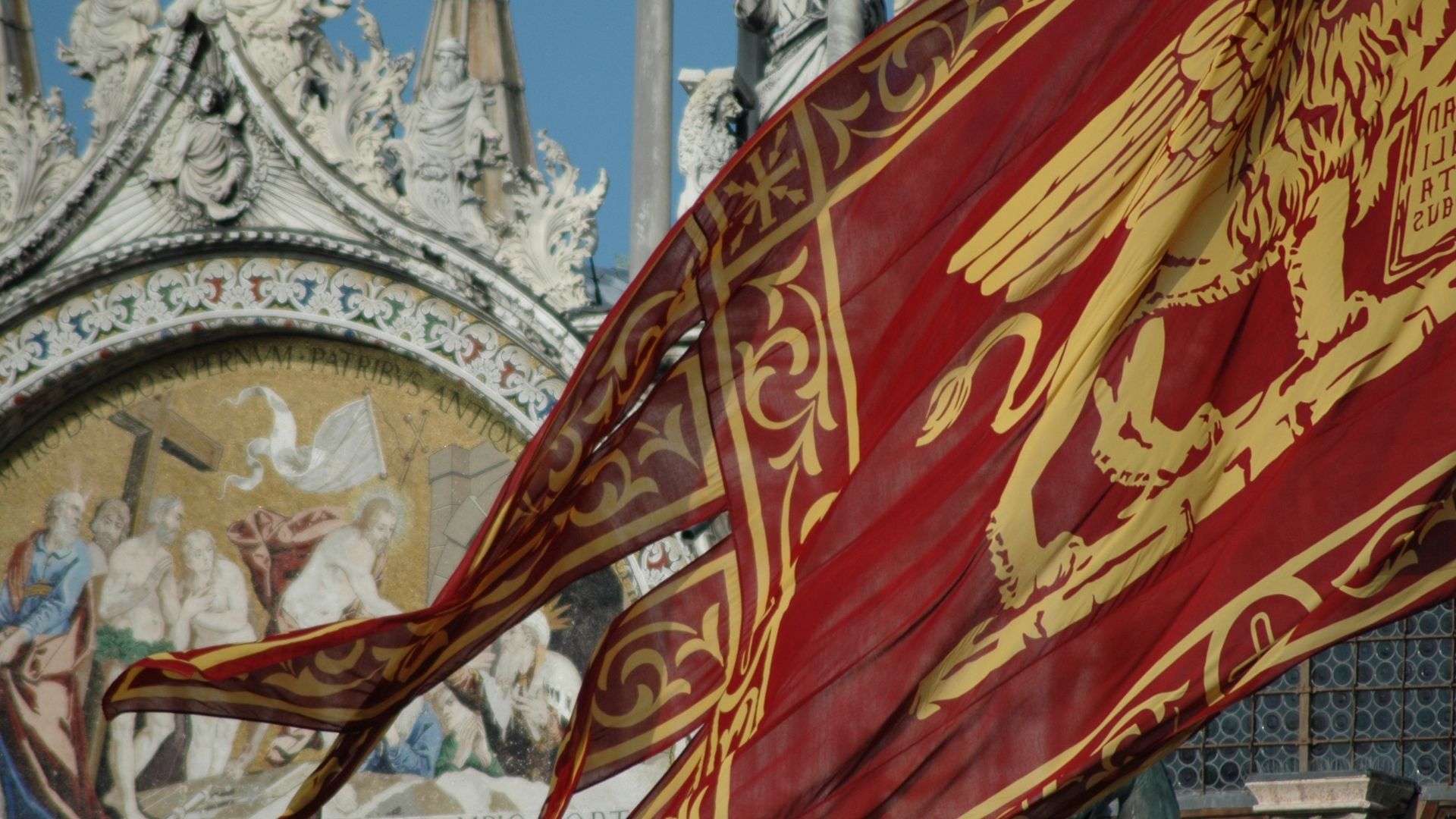
For anyone familiar with the disastrous Fourth Crusade, which ultimately led to the sack of the glorious city of Constantinople in 1204, it is clear that the Venetians had a tarnished reputation in the eyes of many. In this book, the author describes the various attempts by the Venetians to stifle Portuguese access to the lucrative spice-trade. The Venetians had long enjoyed a dominant position in regard to the east-ward trade. Thus, they saw the Portuguese expansion as a threat to their own wealth and power. They even sought to work with the Mamluks of Egypt to hinder the Portuguese. In order to not bring the scandal of working with the Egyptian Mamluk sultan to light, the Venetians had to keep their dealings as discreet as possible.
The Mamluk dynasty came to an end in 1516 when they were conquered by the great rising power of the day – the Ottoman Empire. Although the Portuguese were better fighters than the Ottomans, the latter proved to be a tougher enemy than the Mamluks that had faced them when they first came to the Indian Ocean.
The author, Roger Crowley, has written a book about Venice as well, perhaps I must read it and find a way to present the city in a better light!
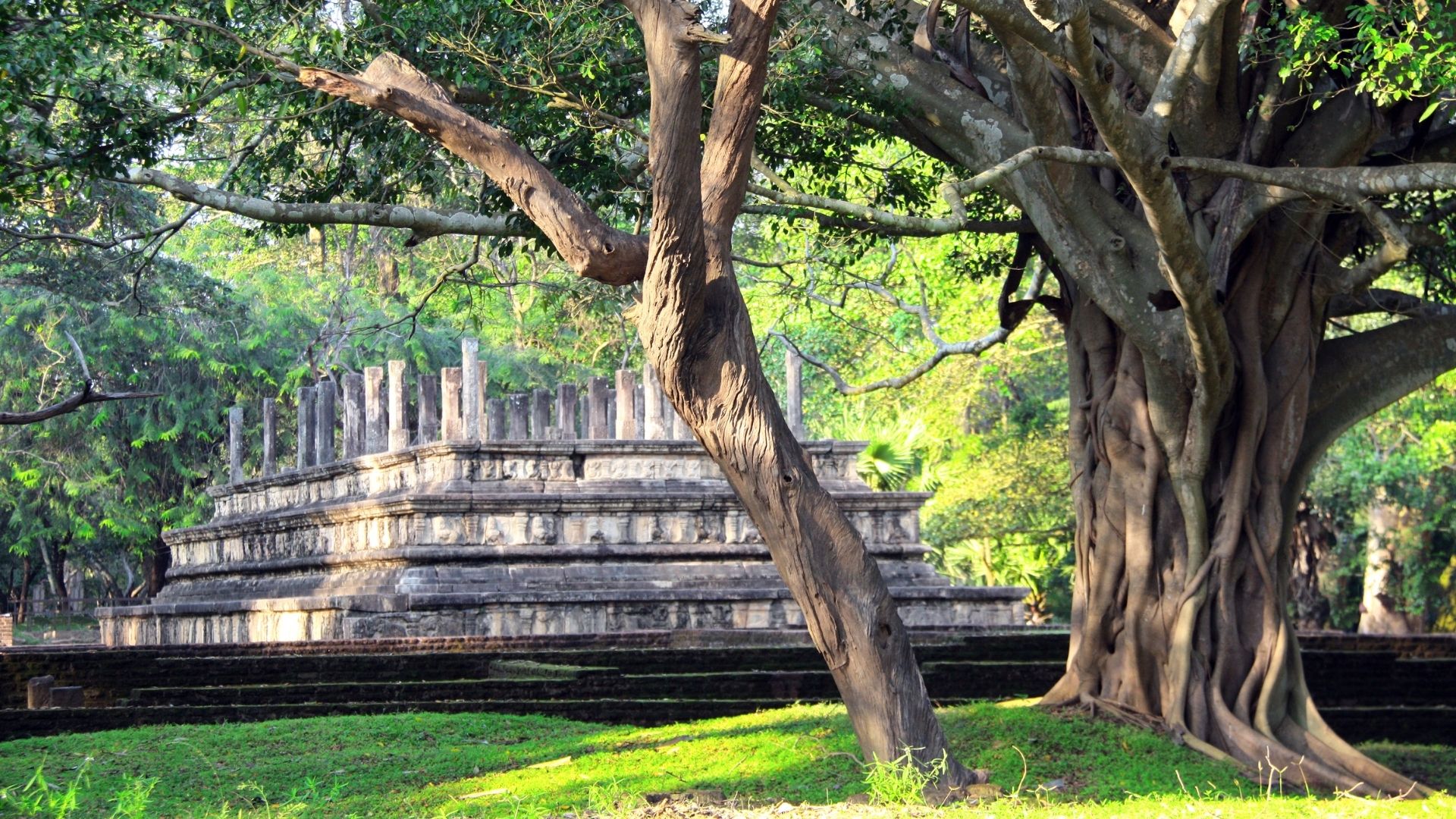
“A very white and beautiful people, who wear hats and boots of iron and never stop in one place.”
Sinhalese description of the Portuguese
Spice Trade and Inspiration
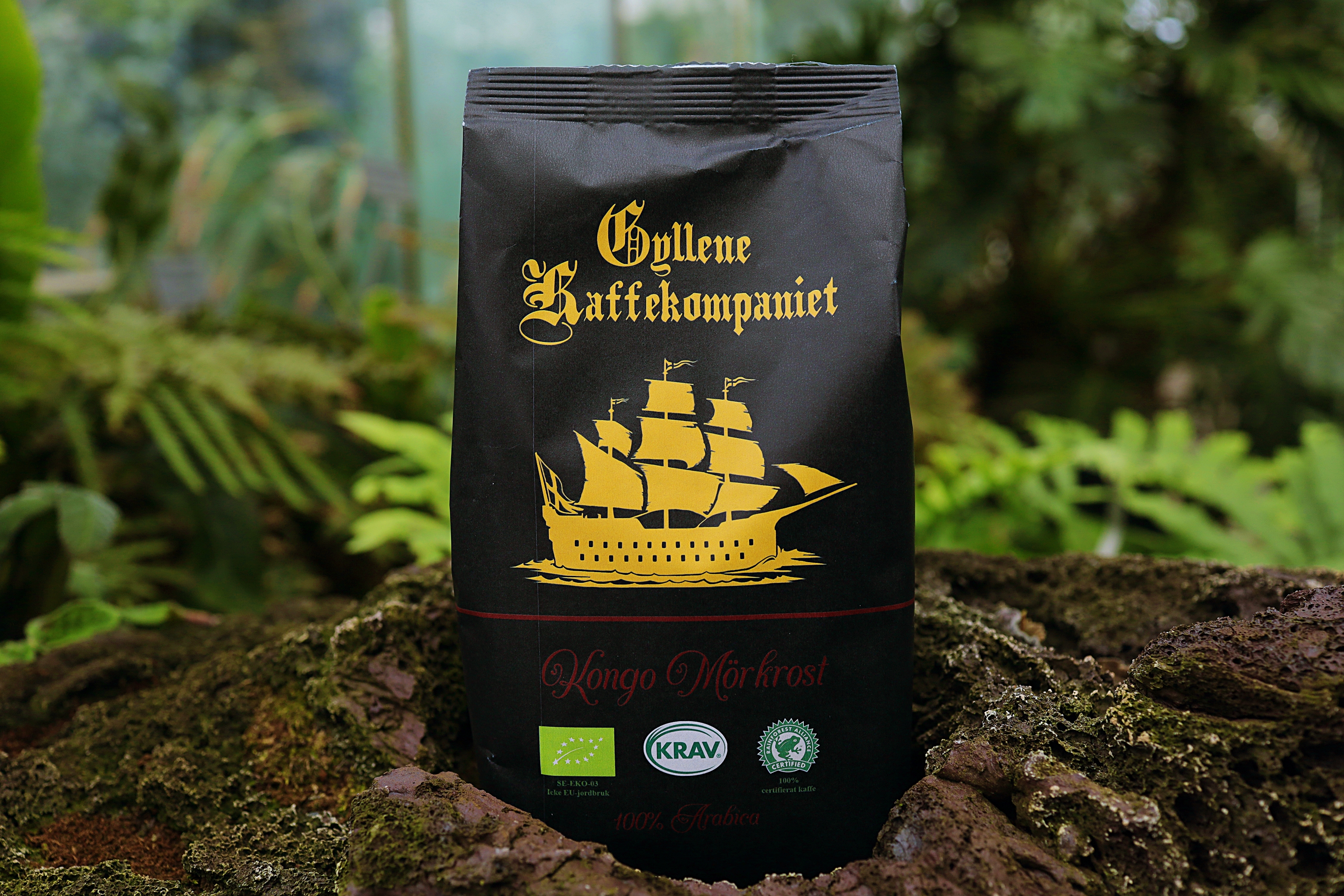
On a personal note, I get motivation when reading about spices routes and exotic trading posts. My aesthetic motivation for the Golden Coffee Company is the East India Companies of the 18th century. So, even if those voyages were undertaken later than the Portuguese era of exploration, I still get the same good vibes when reading about it. When I drink coffee, I always view it as a colonial luxury (which it is). If you decide to try the Golden Coffee Company gourmet coffee, I recommend accompanying the coffee with some fine chocolate for an optimal experience. The gourmet coffee is available for Swedish customers here:
https://jotunheimnutrition.se/, for European customers here: https://www.jotunheimnutrition.de/, and soon for American customers here: https://jotunheimnutrition.com/.
Conclusion
Reading about the valour of heroic and daring men is inspiring. This book contains many more interesting insights and stories than I have highlighted here and in the Podcast episode. I will probably return to the topic in coming posts. Again, I can recommend the book. Reading history is both important to understand the world and to get some perspective upon our own time.
Statement on the Legio Gloria Instagram Removal
Posted on July 11, 2021

Note: if you are subscribed to my YouTube channel, be sure to subscribe to my Odysee channel as well, should something happen to the YouTube channel I will continue to upload videos here: https://odysee.com/$/invite/@thegoldenone:a
Yesterday, to our horror, the Legio Gloria Instagram account was removed – just as with my personal account, no warning or reason was given.
Since January, I did not even run the Legio Gloria account myself, and the account only featured clothing and supporters wearing Legio Gloria clothes. Being attacked on a financial level is vile in a special way, but I have come to expect nothing less from the honour-less regime.
The sight of so many good-looking, healthy, young European men must really have made their blood boil – remember, as I have said before, they want you to be docile and submissive slaves, I want you to be forces of nature. This is what was being presented on the Legio Gloria account, completely unpolitical, yet a message that goes completely against their designs.

What is next?
With or without an Instagram account, Legio Gloria will continue its ascent. We just had a great release of various garments (which can be seen here: Legio Gloria New Releases), and we have more high quality garments incoming. This will be the subject for another article, but here is a hint of things to come:
- Wool garments
- Underwear in organic cotton (loose fitting)
- More shirts and polo shirts
- Garments containing silk
- More t-shirts and hoodies with new designs
Stay tuned! Big things to come. The Primordial Beast demands organic clothing!

A last note
To end with a positive note, a Flemish friend just sent me a picture of one of his best friends proposing to his girlfriend (she said yes) whilst wearing the Celestial Blue Men’s Shirt. It put me in a better mode.
If you are still on Instagram, be sure to follow the back-up account: https://www.instagram.com/legiogloriaclothing/
We are currently looking for a reasonable alternative to Instagram (i.e. a photography based platform).
Updates on Legio Gloria will be shared to my other channels:
Gab: https://gab.com/TheGoldenOne
Telegram: https://t.me/thegoldenone
Twitter: https://twitter.com/TheGloriousLion
You can also sign up for the Legio Gloria Newsletter: https://legiogloria.com/

The Great Legio Gloria Summer Release
Posted on June 24, 2021

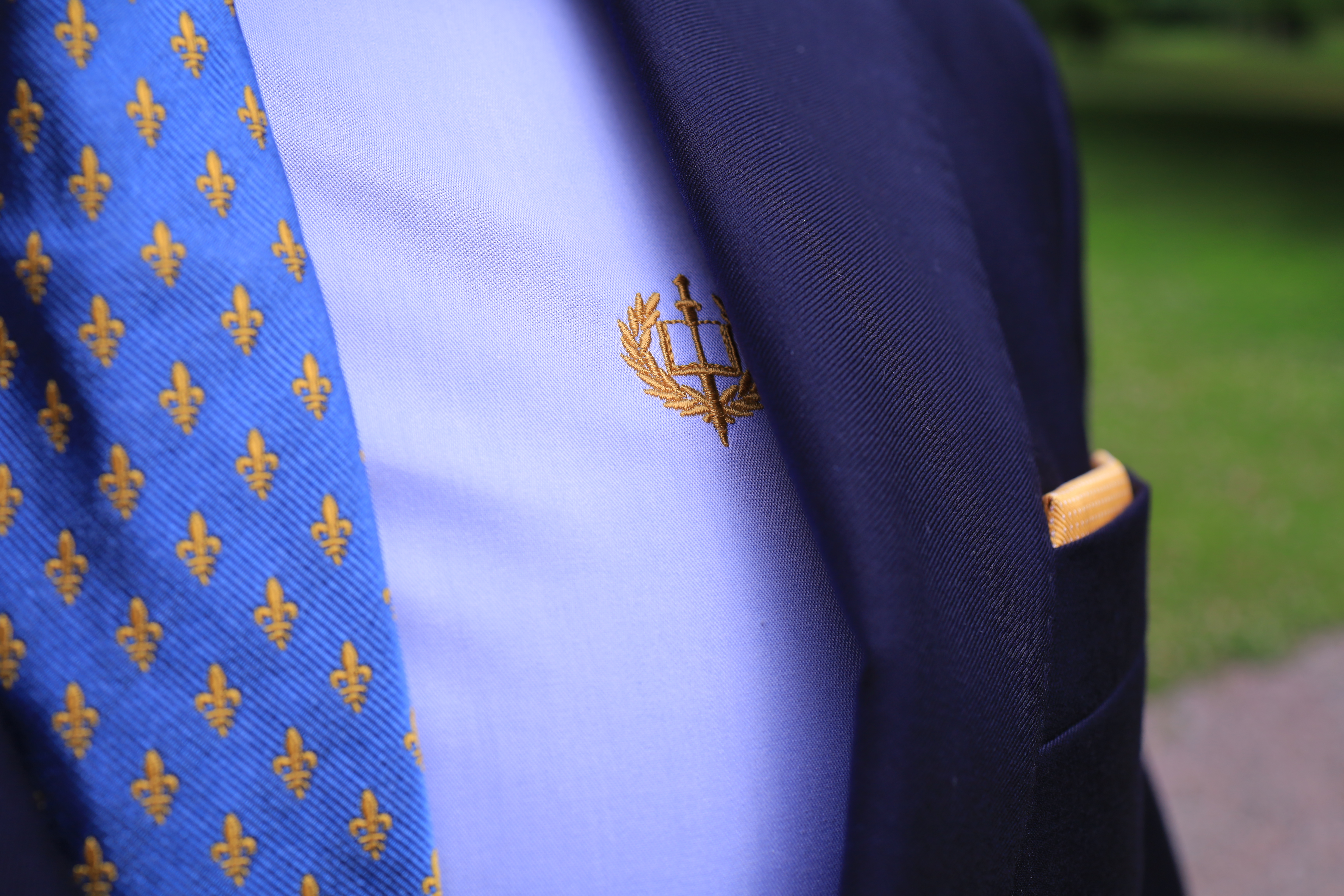
Behold! The greatest Legio Gloria release to date. There are many new garments, so let’s get straight into it. The one you see above is one that has been in the making for a long time. The Celestial Blue Men’s Shirt is a classic shirt that fits most occasions, either on its own or together with a blazer. The cut is fitted.
All new releases are proudly made in Poland. Moreover, as I have mentioned before, these new releases have been made possible by the success of previous releases. So, I want to aim a shout-out to all loyal Legio Gloria enjoyers!
Celestial Blue Men’s Shirt
Polo Shirts in Organic Cotton
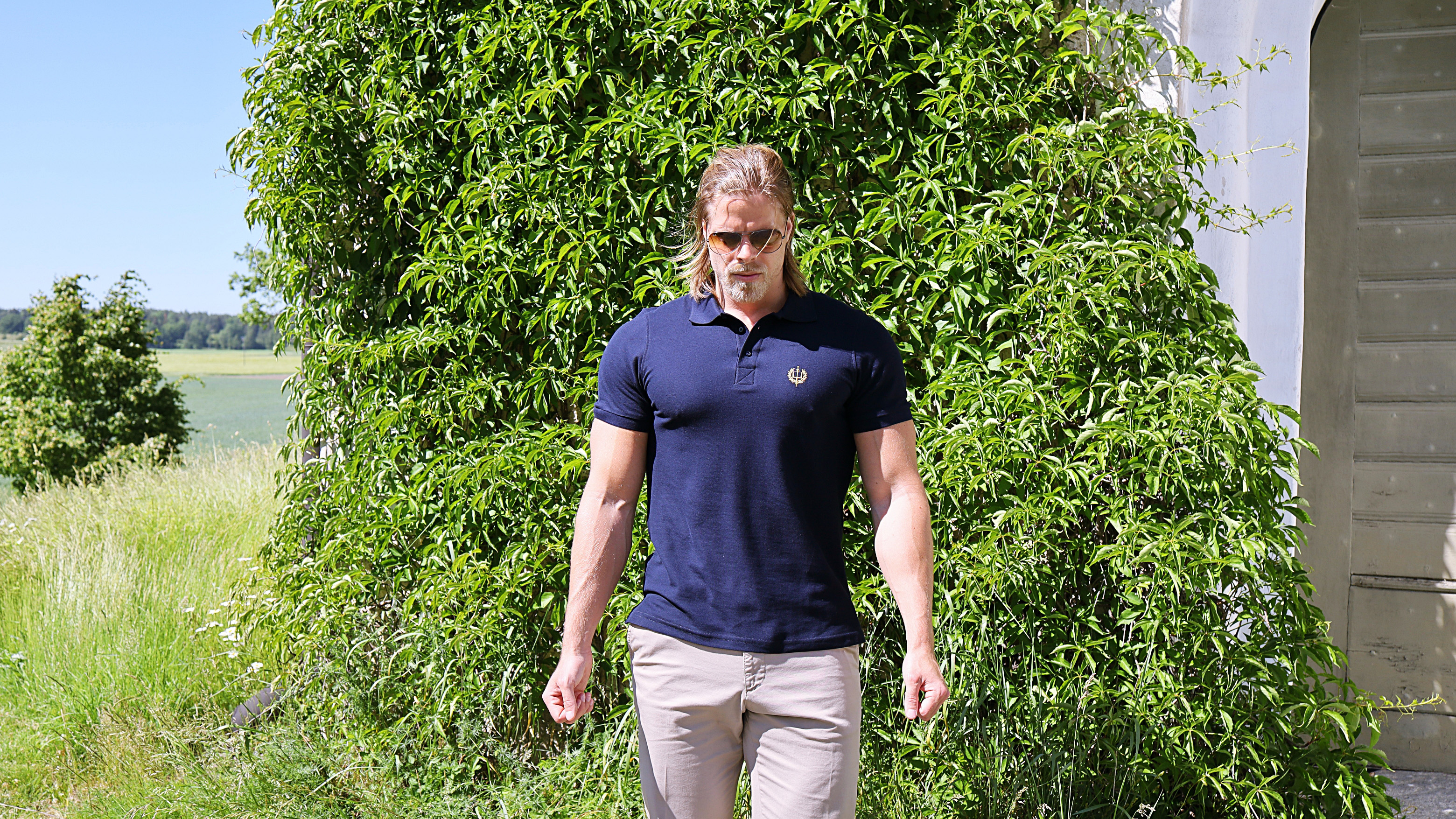
These two classics are back, Burgundy Polo Shirt and Imperial Polo Shirt. This time in organic cotton and with a cut that is more spacious around the shoulders. Most Legio Gloria guys like their shoulder-presses, so the new cut was necessary! Note: organic cotton is a quite sensitive fabric, so make sure to not wash them in a higher temperature than 30 degrees Celsius.

Thor and Jörmungand – Swimming Shorts

The iconic clash between Thor and Jörmungand – the Midgard Serpent – from Nordic mythology. I asked my designer, Paszkal to simply make an epic artwork that suited a pair of swimming shorts. The result is highly epic in my humble opinion. These fit like regular swimming shorts, and have a cut at the side for better flexibility. I am looking forward to seeing many aesthetic physique posts in these!
Gym Tanktops + Belt Bag

Lacedaemon’s Fitted Tanktop
Lacedaemon’s Fitted Tanktop has the same cut as Saturnus’ Fitted Tanktop (the navy version). This model is an altered version of one of the oldest Legio Gloria garments (dating back to 2017).
Lacedaemon was a mythical king of Laconia and son of Zeus in Greek mythology. He was the father of King Amyclas of Sparta and Queen Eurydice of Argos.

Odin’s Berserker- Tanktop
Odin’s Berserker- Tanktop also has the same cut, but with a different design.
The symbol is inspired by the Vendel-era Torslunda helmet, which was found on the Swedish island Öland (located in the sacred Baltic Sea).The runes say Legio Gloria.
The Belt Bag of the Ages is a completely new item to the webshop. Belt bags have been requested, and I have wanted one myself (for having when the pockets are not enough). The design is beautiful in its simplicity – black with a golden embroidery.

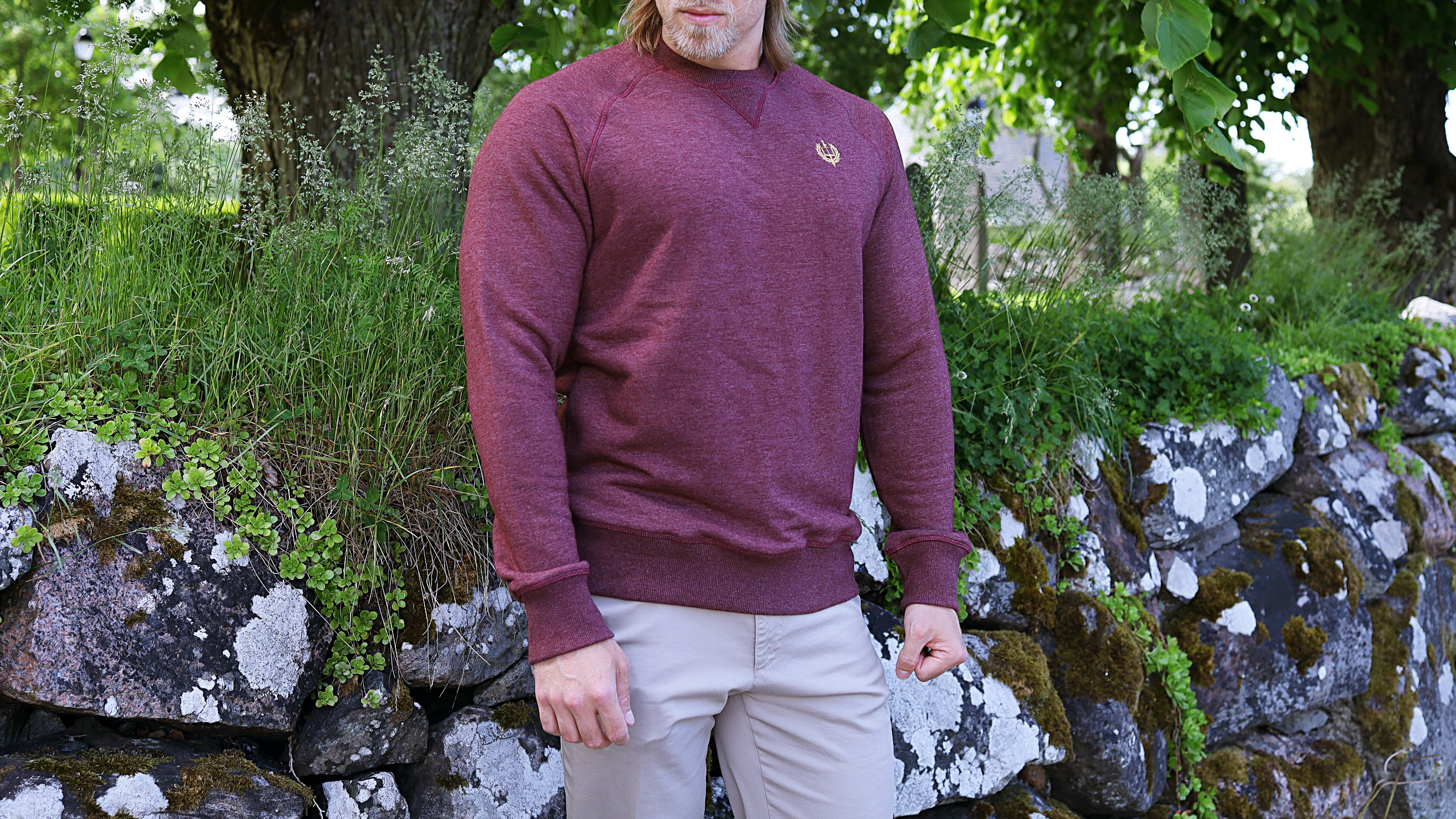
Gundobad’s Burgundy Sweater
As seen in my latest Gains Kitchen video, a burgundy sweater is now included in the collection.
Gundobad (452 – 516 AD) was king of the Burgundians, hence the name!
All new releases are available here: https://legiogloria.com/
Sun and Steel – Yukio Mishima
Posted on June 23, 2021

I have read Yukio Mishima’s classic, Sun and Steel. Below are some interesting insights I found in the book. This is the first book by Mishima I read, and thus, these are only my first impressions of his writings. Should I read more of his books, I might return to the subject with a deeper analysis. With that being said, let us delve into the book!
The Body as a Garden
Mishima refers to the body as a garden surrounding the self. It is common to hear references to the body as a temple, but this is the first time I heard it referred to as a garden. In the opening page of the book, he observes that he could either cultivate the garden (sculpt a glorious physique), or leave it for the weeds to take over (accept physical decadence). It is a quite aesthetically pleasing mental image!
Cynicism and Hero Worship
The most profound quote found in the book is one I have stumbled upon before (or at least the first part of it).
The cynicism that regards hero worship as comical is always shadowed by a sense of physical inferiority. Invariably, it is the man who believes himself to be physically lacking in heroic attributes who speaks mockingly of the hero.
Yukio Mishima
Anyone who has, in some capacity, been involved in political or philosophical discussions will know the truth of this statement. Irony is often used as a shield to hide behind for those without the guts to truly stand for something (except for whatever the mainstream culture tells them). Perhaps hero worship per se is not as common today, but the same can be said about the bugman’s criticism of traditional values.
My own personal experiences are congruent with this. My supporters are, in basically all cases, jacked and good looking. My detractors (whenever I have seen how they look) are, in basically all cases, deformed in some way. This might sound a bit arrogant, but it is simply the truth.

Romantic Death and a Heroic Physique
A powerful, tragic frame and sculpturesque muscles were indispensable in a romantically noble death. Any confrontation between weak, flabby flesh and death seemed to me absurdly inappropriate.
Yukio Mishima
This is an important quote to understand Mishima’s view of the importance of a heroic physique. In regard to death, there is an interesting interview (Yukio Mishima on WWII and Death) where he expresses his fear of dying an unromantic death by disease. Mishima would not die of disease, but would commit ritual suicide (seppuku) after a failed coup in 1970.
As I mentioned in my Podcast Episode 11. Demigod Mentality (which I highly recommend listening to, either before or after reading this article), my own perspective when it comes to an aesthetic physique is that it should be suitable to represent the ancient European ideals of the classical hero (or even a Nordic or Greek god). It is quite simple, if I (in this case) am to extoll the virtues of training hard and living a healthy life, I simply must be healthy myself. So, just as Mishima viewed it absurdly inappropriate to meet a romantically noble death with an un-aesthetic physique, so do I view it inappropriate to champion a certain lifestyle without emulating it myself.
Mishima on Action and Art
Mishima talks about action and art, and the balance between the two. He refers to the sword as the flower of physical perfection, and the literary principle as its opposite. The flower of action perishes with the blossom, whereas literature is an imperishable flower. This is connected to the aforementioned romantic death.
These thoughts reminded me of two things. First and foremost, about the destiny of Achilles, who had the choice of a short, but glorious life, or a long life without renown.
Secondly, they remind me of what Jonathan Bowden referred to as Lord Byron’s Cultured Thug, which is an ideal of someone who possesses both cognitive and physical prowess.
Mishima describes his own ideal style (in terms of personal aesthetics) in a poetically beautiful way.
My ideal style would have had the grave beauty of polished wood in the entrance hall of a samurai mansion on a winter’s day.
Yukio Mishima

Sun and Night
Mishima contrasts the day versus the night. He mentions his own dusky and dark room full of books, and that his mental starting position was one of the night. But, as he contemplated the matter further, he came to the conclusion that those who indulged in nocturnal thought were physically unimpressive, lacking the power and vitality he craved. Thus, he gravitated to the sun (as opposed to the night).
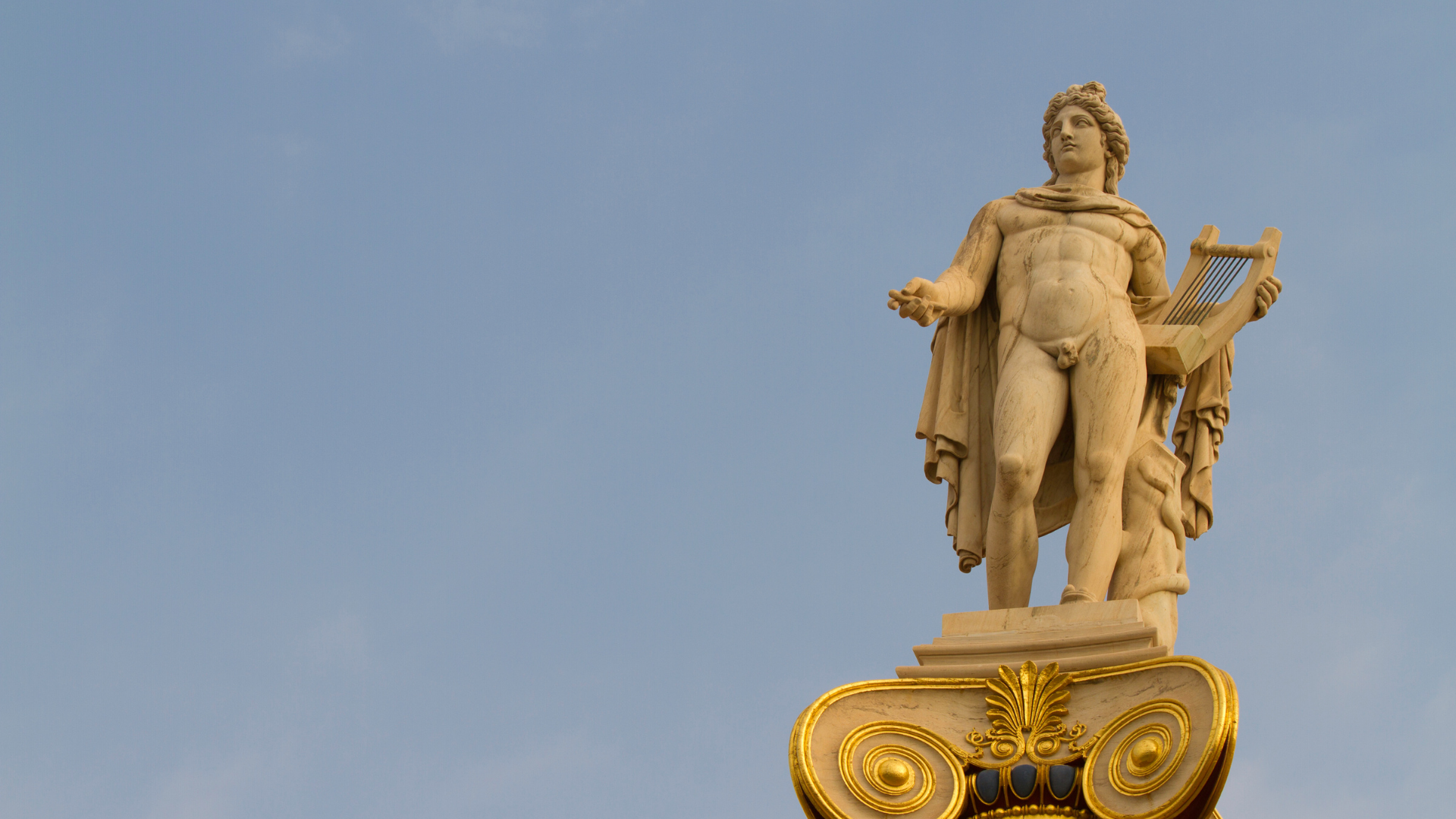
This reminds me of the contrast (popularised by Nietzsche) between Apollo (god of light) and Dionysus (god of wine). Apollo, in this sense, represents order, discipline, and the sun. Dionysus, in this sense, represents chaos, debauchery, and the night. Much more can be said about the relationship between the Apollonian and Dionysian aspects of men. A wise man I met in America a few years back said that he was Apollo every day of the month except one. On that one day, he let his Dionysian spirit come to life (in celebrations with his social group). It stuck with me, especially since the man who shared it with me is an impressive individual.
I mention this since most readers of this article might be more in tune with Apollo (I certainly am), but even for us, it might be good to not completely neglect Dionysus. This will be a topic for a coming podcast.
It is easier to understand that Mishima’s starting position was one closer to the night when keeping in mind that he was, first and foremost, an author and a poet. The sun and the steel came to him later in life. One could argue that many artists are closer to nocturnal Dionysus than to daybreak Apollo.

The Teachings of the Steel
Mishima connects the physical attributes of the body to the metaphysical attributes of the spirit. Feeble emotions correspond with flaccid muscles. And a muscular and fit body corresponds with an intrepid fighting spirit. Although this is, generally speaking, true, I must point out that there are plenty of muscular, strong, and fit guys who are, when push comes to shove, cowards. That being said, a healthy soul exists in a healthy body.
A certain body allows for a certain way of thinking. The way you view yourself influences the way you view the world (as I talked in the previously mentioned Podcast episode). Politics is biology, changing people’s political views is easier if they have a corresponding biology. A man lacking in the necessary physical requirements will be harder to convert to a righteous way of thinking. Adequate levels of testosterone are related to a stronger sense of justice (to give one example). A low-testosterone man might thus gravitate more towards left-wing thought. It is well known that right-wing men possess more physical strength than left-wing men.
Mishima also notes that the teachings of the steel are akin to a classical education, with the focus on progressively adding weight (or knowledge in the case of an education).
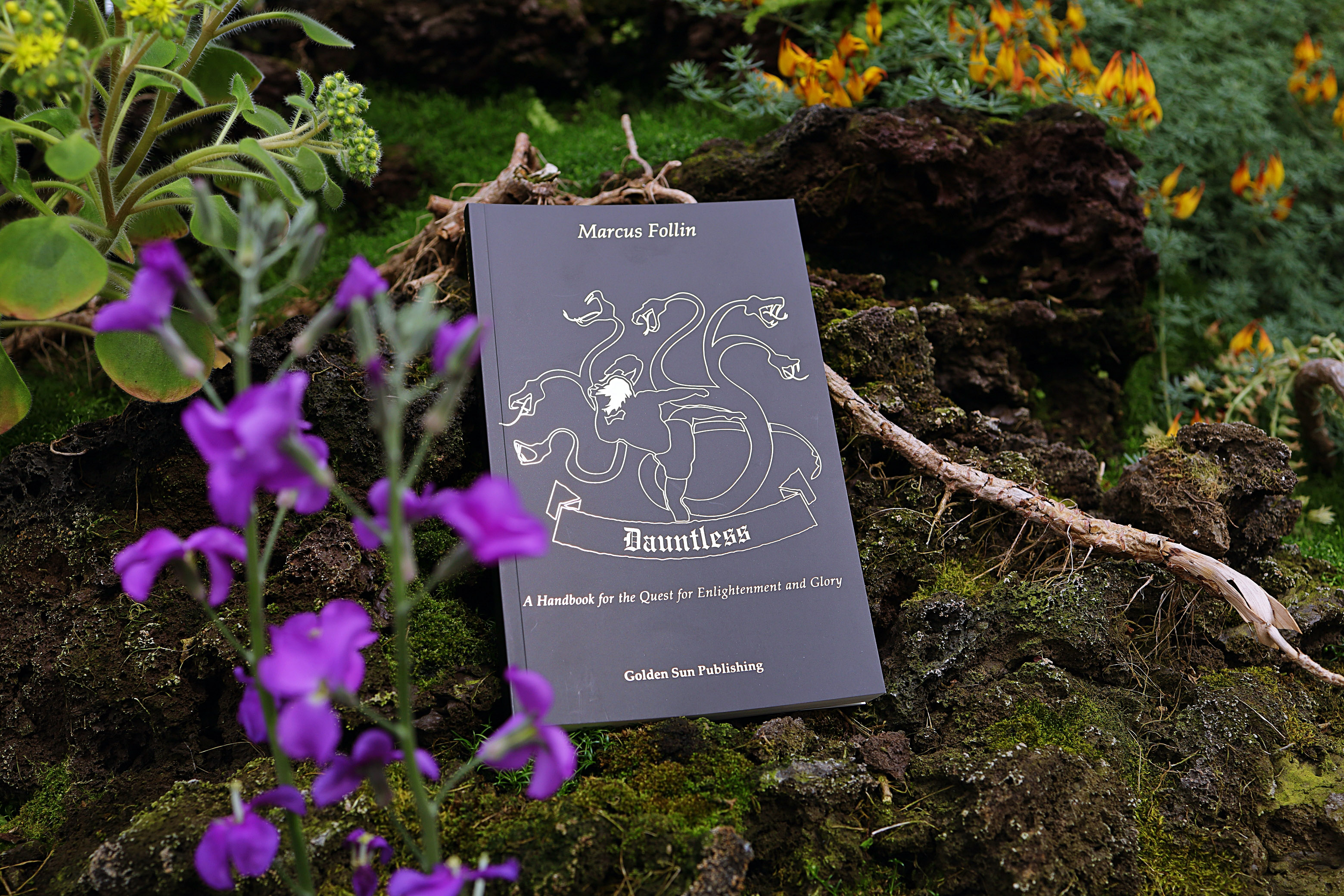
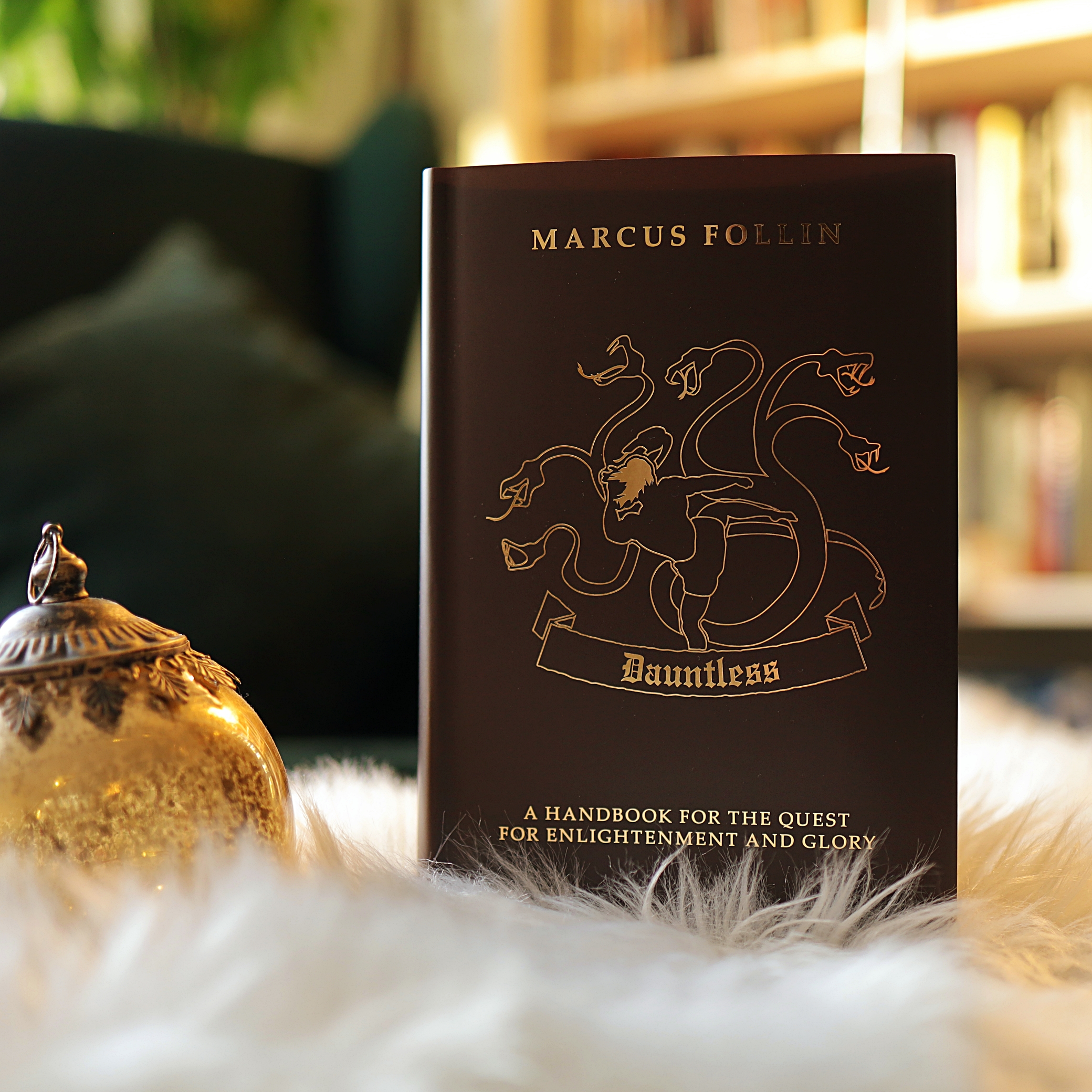
My own thoughts on the teachings of the steel (or in my case iron) will be familiar for those who have read Dauntless.
The Iron is truth in its purest form; it cannot lie. 200 kg will always be 200 kg. If you are weak; if you have failed to prepare properly, the Iron will not show any sympathy. If you are strong; if you have taken adequate measures of preparation, you will be rewarded accordingly.
Dauntless – Marcus Follin
In my work, I have always used Iron to refer to weight-training (The Temple of Iron = the gym), Mishima is using Steel for the same purpose. In purely aesthetic terms, Sun and Steel sounds better than Sun and Iron. So, I endorse the use of steel in this context. Moreover, it might be worth pointing out that I am currently rewriting Dauntless (as mentioned in this video).
Additional Note. I received this message from a supporter living in Japan (thank you, T)!
“Hey Marcus,
I thought you might be interested to know that while the English translation of the book is Sun and Steel, the original Japanese title is; 太陽と鉄. The character ‘鉄’ actually means ‘Iron’ and not ‘Steel’, which is of course a different word,‘鋼‘. As you mentioned in your article, I imagine that the word Steel was chosen purely for its euphony. Furthermore, the original title is pronounced Taiyo to Tetsu, and the translation Sun and Steel does a good job of capturing the original title’s alliteration.“
Conclusion
At 100 pages, Sun and Steel is a quick, albeit complex, read. Certain passages might have to be re-read to capture the essence of Mishima’s thoughts. It bears pointing out that the book was originally written in Japanese, thus, certain nuances might have been lost when it was translated into English. It should also be pointed out that the book is beautifully written, as one would except from a true poet, with many immersive passages. I enjoyed reading it and can recommend it to anyone interested in the topics mentioned above.
Below are two videos which Mishima might have looked upon approvingly! I thought to include them should you be unaware of my own artistic work.



 The Golden One
You must be logged in to post a comment.