Icelandic Magic by Stephen E. Flowers
Posted on December 22, 2021
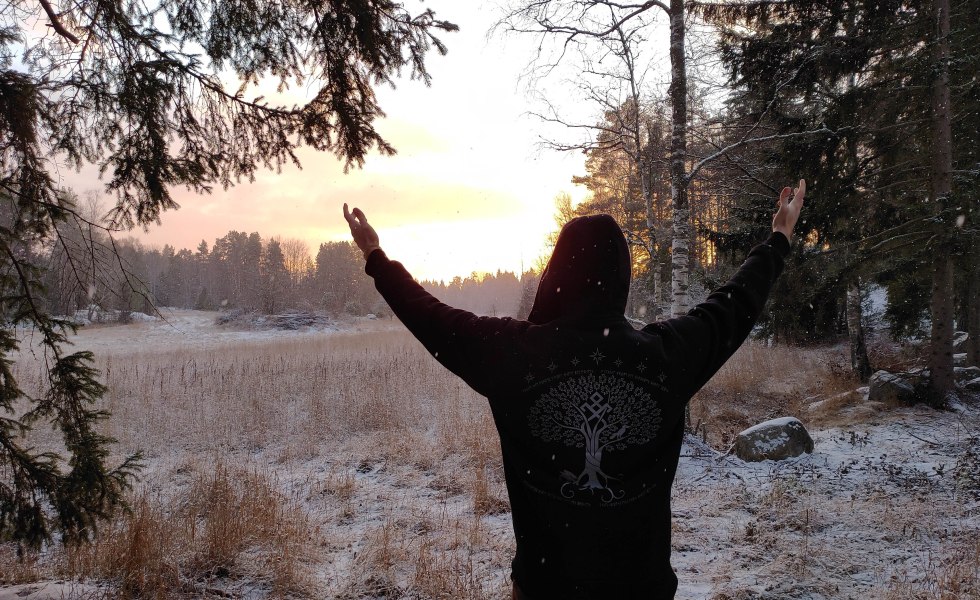
I have read Icelandic Magic: Practical Secrets of the Northern Grimoires by Stephen E. Flowers, Ph.D, and I can straight away recommend it for anyone interested in esoteric matters.
At around 100 pages it is a rather quick read. It is also written in an easier language than many other esoteric books, making it a good starting point. I am currently reading Introduction to Magic by Julius Evola and the UR group (which will be the subject of a coming article), and compared to those books, Icelandic Magic is much more accessible. Below are some interesting aspects of the book which I thought to highlight.

Religious Background
Iceland, like all Nordic countries, has had three different religious time-periods; Pagan, Catholic, and Protestant. As in most other countries that experienced these shifts, it was not a matter of an overnight change – rather, the transition happened gradually and many traditions survived into the later eras. Yule (Christmas) is a good example of this, although it changed and adopted Christian elements – just as it has changed even more over the last century.
One would perhaps expect rune magic to be a phenomenon restricted to the Pagan era. However, the practice continued throughout the Catholic era and long into the Protestant era (and is now alive again thanks to the work of the author). Moreover, just as Icelandic society as a whole became influenced by Christianity, so did the rune magic become influenced. Below is a quote from the book showing this:
‘In the world of magicians this meant that Christian figures could sometimes be used right next to pagan deities. And as our wondrous example in spell 46 of the Galdrabók shows, the northern sorcerer was so free magically that he could use the names of Odinn, the Saviour, and Satan in the same litany.’
Stephen E. Flowers
On a similar note, a majority of runestones in Sweden are actually from the Christian era (which is why you often see crosses on them).
Legendary Black Books
The Galdrabók is an Icelandic grimoire (a book of spells) written in the latter part of the 1500s. The book contains references to Germanic Paganism, which is interesting considering the fact that it was written in the Protestant Reformation Era (as mentioned above, much survived from previous eras). The book found its way to Denmark, and eventually came into the possession of a Swedish* philologist named Johan Gabriel Sparfwenfeldt.
*The author refers to him as Danish, but he was a Swedish diplomat (and orientalist, courtier, and, as mentioned above, philologist – a true renaissance man!).
The Galdrabók was translated into English by the Stephen E. Flowers in 1989 – which incidentally is the year of my birth. It is now in the possession of Kungliga Vetenskapsakademien (The Royal Swedish Academy of Sciences). I will investigate the possibility of seeing it – if that is possible, I will make a videolog for Odysee and YouTube to show it.
Rauðskinna is another book of magic. According to legend it was compiled by Bishop Gottskálk Niklásson the Cruel (1469–1520). Rauðskinna translates as Red-Skin and is said to be a grimoire of magic dating from the Pagan period.
Gráskinna (Grey-Skin) is another grimoire, which is translated and constitutes the second part of the Icelandic Magic book.

Sator Square
The Sator square (which conceals the Paternoster formula) was found in Nordic practice. Icelandic Magic includes a reproduction of a Sator square that was found on the bottom of a silver bowl dating to the 1300s. The bowl was found on Gotland (the sacred island in the Baltic). The author notes that the Paternoster (Our Father) may actually predate Christianity. This is based on a Sator square found in Pompeii (the Roman city that was buried under volcanic ash in AD 79). This may show that the Our Father prayer was used by another sect, most likely the Mithras cult. The Mithras cult appears in Dauntless: The Wild Hunt Edition and will appear in coming articles and books as well – it is a highly interesting topic!
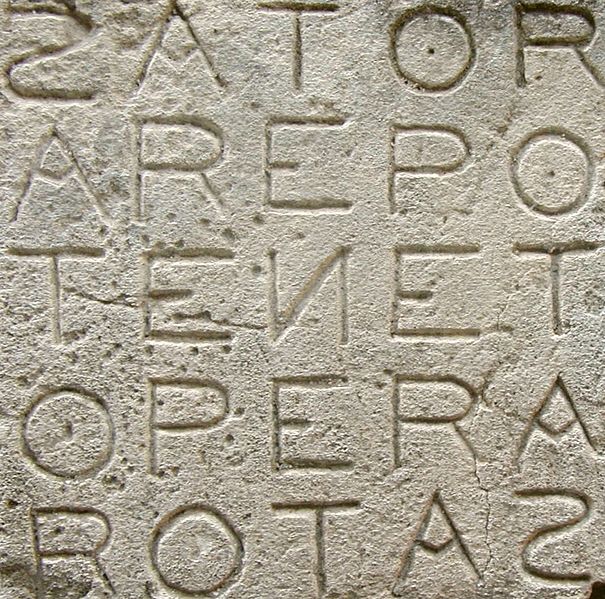
Regardless of the origins of the Paternoster, it was used in Icelandic rituals – and most likely came to Iceland as a part of Christian influence. To give an example, there is a concealment spell (if you want to hide something from others) that requires a reading of Paternoster.
Moreover, regarding incantations, the author points out that ‘the power of a name’ is a reoccurring phenomenon in magic texts. I elaborate on a similar topic in Podcast Episode 11. Demigod Mentality.
Practical Rune Magic
As mentioned above, the second part of the book consists of practical instructions for rune magic (taken from the Gráskinna).
The magic itself will be easier to do if you have some experience with meditation – when you draw the runes/staves/signs, you must visualise them in your mind. Some drawing practice may also be in order before doing a ritual to ensure that you can draw the sign in a fast and beautiful manner during the ritual itself.
In addition to plenty of spells (signs to draw and words to read etc.), there is also a practical guide to set up the ritual table. The recommended equipment is also listed: pens, parchment or paper, straightedge, compass, candles (not all are required for all spells).
Moreover, in Icelandic folklore, four guardian land-spirits watch over Iceland: a dragon in the east, a large bird in the north, a bull in the west, and a mountain giant in the south. These can be summoned in your mind (via an incantation and visualisation) to shield the practitioner before a ritual – epic stuff!

Conclusion
Again, I can definitely recommend the book for those interested in topics like this. I would also like to salute Stephen E. Flowers for his tremendous work in bringing these old texts back to life. When reading the book, I got got good vibes – perhaps as a result of ancient spirits blessing my quest for enlightenment!
The Agni and The Ecstasy by Steven J. Rosen
Posted on December 9, 2021
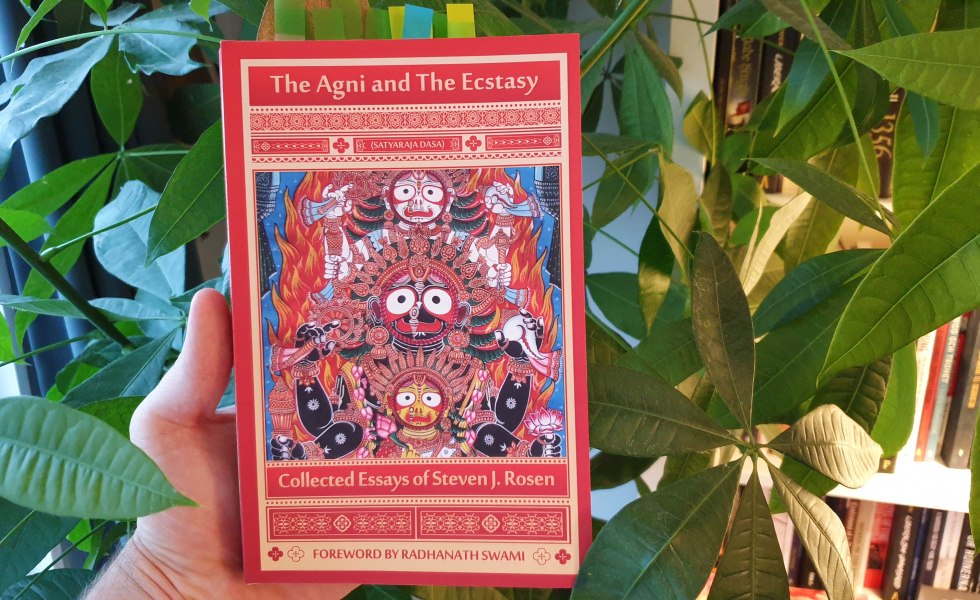
I have read The Agni and The Ecstasy by Steven J. Rosen (Satyaraja Dasa). The book consists of a collection of essays discussing Hinduism – to be more precise topics related to Vaishnava and the International Society for Krishna Consciousness (ISKCON) – more commonly known as the Hare Krishna movement.
As I mentioned in Podcast Episode 16. Dauntless, I have begun my quest to gain as many esoteric and spiritual insights as possible. I noticed that Arktos, great procurers of this kind of material, had published this work. The book caught my eye and I am happy it did. It contains some valuable insights. If you are interested in Indian spiritual tradition, I can definitely recommend it. Below are some aspects that I thought were interesting.

God, Hinduism, Polytheism
The most interesting and illuminating essays in the book are those discussing God. It is often said that Hinduism is a polytheistic religion, but one could also argue that it is a monist religion, since God is in everything, and the many gods are but reflections of God. In my Podcast Episode 16. Dauntless, I briefly discuss the topic and refer to the Neoplatonist teaching of The One. This is a discussing beyond the scope of this article, but definitely a topic I will return to.
I decided to ask my friend John B. Morgan about the polytheist nature of Hinduism. John is the editor of the book and has edited many interesting books besides this one. I can also add that John has done a tremendous work with the books (many of Evola’s works for example) he has edited – the footnotes greatly helps the reader understand the context of older literature. It is as if John’s spirit guides you through the texts!
John: The first thing is that there really isn’t any religion of “Hinduism,” which is really a misnomer created first by the Muslims and then the British when they in turn ruled the country, since they needed to come up with a label for all these people for bureaucratic convenience.
What “Hinduism” really is, is hundreds if not thousands of different traditions and forms of practice that are only connected by virtue of the fact that they involve the same deities, and in some way trace themselves back to the four Vedas. Apart from that, however, the traditions are more characterized by diversity than similarity.
More traditional Hindus today in India tend to reject the “Hindu” label and use the term “Sanatana Dharma” to describe their religion, which roughly means “eternal duty.”
Alain Danielou is one of the best writers on Hinduism, by the way. He was a friend of Guenon’s, although not quite a Traditionalist.
Now as for your specific question, it depends on the specific sampradaya that is being described, but generally, Hindus tend to see one of the deities as the “main God” whereas the other deities are more like his assistants, and in some way derive from him. So for example Gaudiya Vaishnavas like Steven Rosen see Krishna as God, and the other deities (Shiva, Brahma, Durga, etc.) are demigods who assist him. Shaivites, for their part, see Shiva as God and the others as demigods. And so on and so forth. There is a strand of Sanatana Dharma where the adherents try to worship all the gods equally, but it’s a very small sect.

Idol Worship
The passage below is taken from the essay Of Idols and Deities: Coming to Grips with a Misunderstood Form of Worship, and explains, in my humble opinion, quite well what some people refer to as ‘idol worship‘
‘… the Lord in His archa-murti, or form made of material elements, is not material, for those elements, although separated from the Lord, are also part of the Lord’s energy, as stated in Bhagavad Gita. Because the elements are the Lord’s own energy and because there is no difference between the energy and the energetic, the Lord can appear through any element. Just as the sun can act through the sunshine and thus distribute its heat and light, so Krishna, in His inconceivable power, can appear in His original spiritual form in any material element, including stone, wood, paint, gold, silver, and jewels…’
His Divine Grace A.C. Bhaktivedanta Swami Prabhupada
Hare Krishna
The main prayer of the Hare Krishna movement – the great mantra – may be familiar: ‘Hare Krishna, Hare Krishna, Krishna Krishna, Hare Hare/Hare Rama, Hare Rama, Rama Rama, Hare Hare.’ This translates as ‘O Lord! O energy of the Lord! Please engage me in your divine service.’
As I have mentioned, I have meditated quite a bit as of late. Chants are a good way to enter a different state of mind. This is a topic I will return to when I have come further upon my path of enlightenment. Moreover, since we are on the topic of chants, I must say that I have always had a penchant for Gregorian Chants. I mention this to emphasise the fact that many Eastern spiritual aspects can be found – albeit in a different form – in the West. In mentioning this, we move closer to a discussion of Philosophia perennis (Perennial philosophy), which will be discussed in coming videos and Podcast episodes. Here is a meditative and harmonious version of the mantra: MAHA MANTRAS :- HARE KRISHNA HARE RAMA.

Vegetarianism
‘The (Bhagavad) Gita specifies exactly what should be offered: “If one offers Me with love and devotion a leaf, a flower, a fruit, or water, I will accept it.” (9.26) Other references in the Vaishnava literature confirm that fruits, vegetables, grain, nuts, and dairy products are fit for human consumption. Followers of the Gita thus refrain from meat, fish, poultry, and eggs, since these are not sanctioned by either the scriptures or the sages. A vegan diet also fits nicely with Vaishnava dietary prerequisites.’
The author, in accord with Vedic teaching, promotes a vegetarian diet. This is similar to how the Cathar Pure Ones only ate fruit. I wrote about the Cathar Pure Ones in my book review of Otto Rahn’s Crusade Against the Grail. Only eating fruit, Cathar-style, is a bit harder than just being a vegetarian. Vegetarians are still allowed to eat dairy and usually eggs (but not in this case).
In my own physical ascent, I have relied heavily on both dairy (milk, whey, cottage cheese etc.) and eggs. Purely in terms of putting on muscle-mass you can go a long way even as a vegetarian. However, for optimal health it is recommended to eat meat – meat is the true superfood (in addition to animal products such as bone-broth and liver). Moreover, foregoing eggs (another true superfood) is not a sound approach to nutrition.
My perspective on diet is the following: we are currently involved in a titanic struggle to save our very civilisation from destruction. In order for me, as an agent of European restoration, to perform as well as possible, I must optimise everything. One’s diet influences everything else. Thus, in order for me optimise my cognitive performance, I must eat meat.
Dairy, eggs, meat, and fruit = the good stuff!

Aryan Invasion Theory
The author, in the essay Deconstructing Hari: The Creation of the Universe and the Origins of Disciplic Succession, incorrectly states that the Aryan Invasion Theory is ‘seriously questionable’. In fact, the theory has been proven to be correct. For an in-depth video on the subject, I can highly recommend the following video by respected video-maker and historian Thomas Rowsell:
Chaitanya Mahaprabhu, Portuguese, Mughals
In the essay Sri Chaitanya Mahaprabhu: The Father of Modern Kirtan the author introduces Chaitanya Mahaprabhu, who was a spiritual teacher active in India during the late 1400s. Kirtan is a style of chant, set to music. Here is a modern example of a Hare Krishna kirtan: Hare Krishna kirtan by Kishori Yatra at Boston Ratha Yatra 2019.
The author notes that the late 1400s was the time when European explorers came to India in search of treasure. He points out that they did indeed find much wealth: silks, spices, artwork, and magnificent jewels, but missed India’s real treasure; its spiritual teachings. To read more about this time period from a non-spiritual perspective, you can read my review of Roger Crowley’s excellent book Conquerors: How Portugal Forged the First Global Empire. Great as the spiritual wealth of India was, it could not compare to the prestige and fame its material wealth brought to the Europeans who came to the subcontinent.
Something else that happened during that time, namely the Mughal invasion. Babur – a descendant of Timur the Great – invaded India and established the Mughal empire in 1526. I have read the truly epic Empire of the Moghul series, which consists of six books and starts with Babur. I can highly recommend the books.
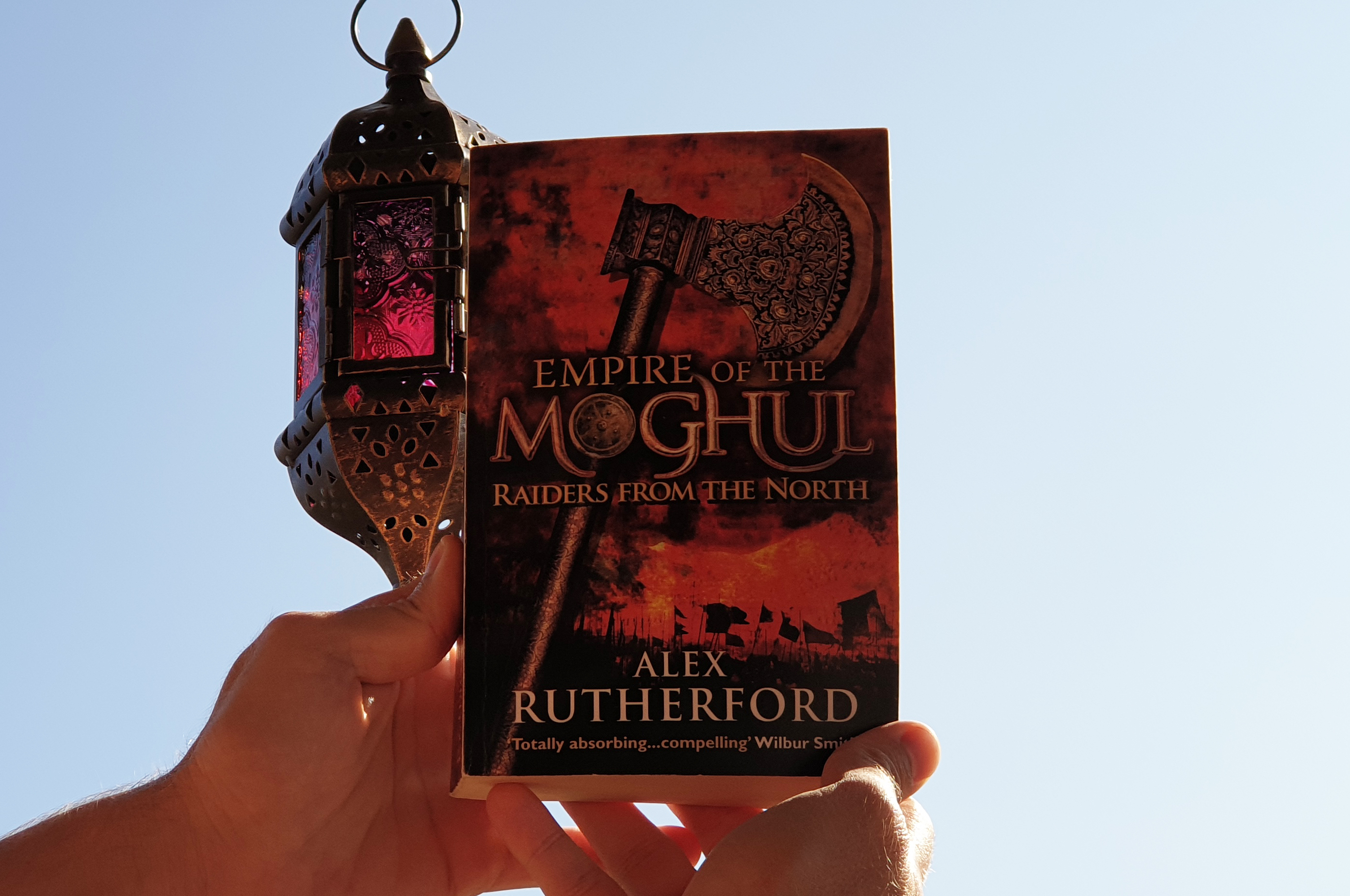
The third book in the series, Ruler of the World, follows the life of the greatest Moghul emperor, Akbar. He is renowned for his religious tolerance. In a letter to his son Humayun, Akbar writes the following:
‘Oh my son! The realm of Hindustan is full of diverse creeds. Praise be to God … that He has granted unto thee the empire of it. It is but proper that you, with heart cleansed of all religious bigotry, should dispense justice according to the tenets of each community. And in particular refrain from the sacrifice of cow, for that way lies the conquest of the hearts of the people of Hindustan; and the subjects of the realm will, through royal favour, be devoted to thee. And the temples and abodes of worship of every community under the imperial sway, you should not damage. Dispense justice so that the sovereign may be happy with the subjects and likewise the subjects with their sovereign. The progress of Islam is better by the sword of kindness, not by the sword of oppression.’

Taj Mahal was commissioned by the Moghul emperor Shah Jahan (Akbar’s grandson) to entomb his beloved wife Mumtaz Mahal.
On a similar note, I recently watched the Indian film Jodhaa Akbar, which is about Akbar and one of his wives, Jodhaa. Related to the aforementioned Aryan Invasion Theory, the actor who plays Akbar, Hrithik Roshan, does indeed look very Indo-European. The following music scene is seen after Akbar announces the abolishment of the pilgrim tax (which Hindus had to pay).
In addition to being a great song, the choreography is spectacular. Moreover, even though this is from a film, it is not unreasonable to believe that a similar love as shown in this scene was felt by the people to their emperor during Akbar’s reign.
Many people in the modern world may have a hard time understanding the love a people can feel for a just ruler – this is hardly strange, considering the fact that the majority of leaders today (especially in the West) are degenerates. A ruler who does well for his people will, most likely, be loved by his people. Akbar is an inspiration in this regard! I talk more about the archetype of the Philosopher Prince and the Enlightened Despot in Podcast Episode 13. Archetypes.
Hip-Hop Hinduism
To end on a light-hearted note, I thought it would be fun to introduce MC Yogi, a hip-hop artist from San Fransisco who incorporates Hindu teachings in his songs. I never thought I would write about such a concept as Hip-Hop Hinduism – but here we are! The reason for mentioning this is because an interview with him is included in the book, where the author interviews MC Yogi. The music style is not my cup of tea, but it is fun to see different expressions of art. Now you too are aware of MC Yogi!
Conclusion
Again, I can recommend the book if you are interested in the spiritual treasures of India. It definitely gave me a some new insights as well as further motivation to continue on the esoteric path!
Dauntless: The Wild Hunt Edition by Marcus Follin
Posted on November 27, 2021
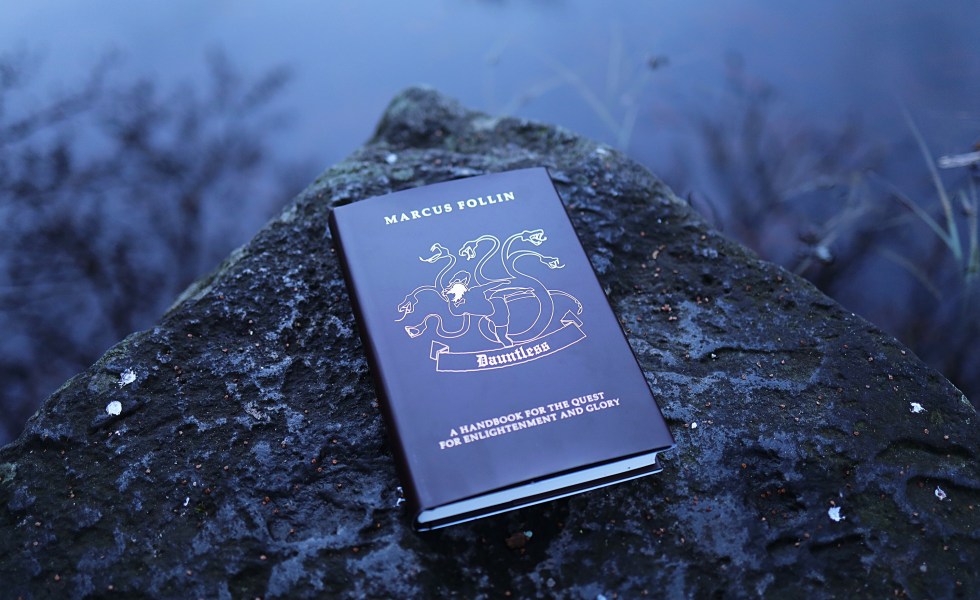
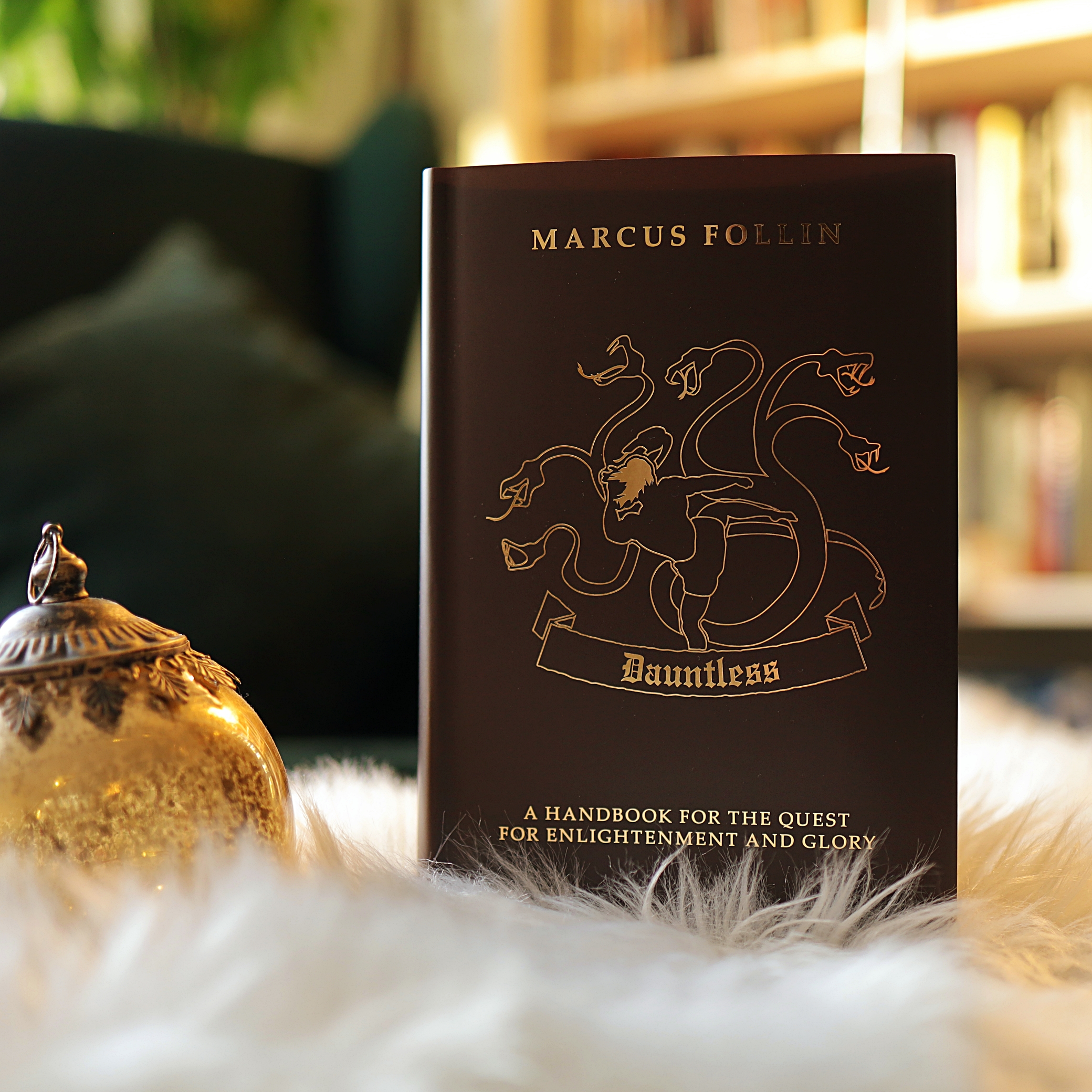
It is with great pleasure and joy that I announce the new and updated version of Dauntless. The first version of Dauntless, which came out in 2019, was well-received by the readers, and it is a work I am still happy with. That being said, I felt that it did not get the time and attention it deserved. Thus, before embarking upon my next literary quest, I decided to remake it into what I believe to be – excuse my lack of humility – one of the most important books of our time. I have often asked myself what I can do to aid in the struggle to save European civilisation from the death that defeatists view as certain. Aside from future aspirations, I have concluded that the best I can do at the moment is to get as many young men to read Dauntless as possible. The book’s target audience is not any particular age category per se – the teachings are valuable to older men as well.
Videos are good and important, but a book makes a deeper impact, and I believe that Dauntless will be more useful than to watch through my videos – especially since many political and philosophical ones have been removed by YouTube.
I have been an avid reader since my teenage years. However, to my great lament, no one presented me with a book such as Dauntless when I was 15 (or even 20); there are many things I wish I knew when I was younger. With Dauntless, I want to present a guide that can be applied in life.
On another note, it is common for authors to get financial backing upon writing and publishing a book. I have funded this operation myself and published it via our own Golden Sun Publishing. This means that I have not been beholden to anyone other than myself when composing my thoughts. Thus, the agenda is my own. The agenda is that the book will serve as a catalyst for the reader’s ascent into becoming a force of nature.
The previous edition had around 53 000 words; the new one has around 75 000 words. Except for the new content, I also made sure to rewrite most passages to make them clearer. My level of English has increased quite a bit since the time I wrote the first parts of Dauntless (in 2016). Therefore, there was plenty of room for improvement in that regard. The layout of the book is also changed to make certain parts clearer – especially in the training and nutrition parts.
The book contains the following chapters:
Chapter 1: A Phoenix Rising from the Ruins
Chapter 2: Creating a Demigod
Chapter 3: Martial Arts, Violence, and Health
Chapter 4: The Heroic Renaissance — Culture
Chapter 5: Religion and Faith
Chapter 6: Sexual Energy
Chapter 7: Philosophical Musings
Chapter 8: Tribe and Relationships
Chapter 9: Gender Relations
Chapter 10: Civilisation, Nationalism, and Politics
Chapter 11: Societal Musings
Chapter 12: On, to Adventure!
Dauntless is available on the following sites:
LegioGloria.com (worldwide shipping)
Jotunheimnutrition.se (for Swedish customers)
Jotunheimnutrition.de (for customers in the EU)

Yggdrasil and Perseus – Legio Gloria November Releases
Posted on November 6, 2021

As is my custom, I thought to share some thoughts regarding the latest Legio Gloria releases. I will get straight into it by presenting the Yggdrasil Enlightenment Hoodie, which has been very well-received, and understandably so; it is a great design.
Yggdrasil Enlightenment Hoodie
Yggdrasil – the World Tree in Norse mythology – is on proud display. Odin’s ravens, Hugin (thought) and Munin (memory), are also present; one is vanquishing a serpent of deceit, and the other is gazing out into the world.
The design also pays aesthetic and poetic homage to J.R.R. Tolkien, whom we all know and love. The Yggdrasil tree has a similar style to that of the White Tree of Gondor, and the runes say the following:
‘From the ashes a fire shall be woken,
A light from the shadows shall spring;
Renewed shall be blade that was broken,
The crownless again shall be king‘
Which is a quote from The Fellowship of the Ring.
In my humble opinion, J.R.R. Tolkien’s work can be classified as myth rather than fiction. The Lord of the Rings is, just as the myths about Perseus and other heroes from antiquity, a story that has the power to appeal to entire generations – admittedly, in the case of our generation, much thanks to Peter Jackson’s films.
It is a powerful and inspiring story – a story about friendship, loyalty, overcoming of hardships. It is a story about good versus evil, order and beauty versus chaos and degeneration.
It is not strange that the powers that be now seek to bastardise it (I am referring to Amazon’s upcoming series). It is quite similar to how they (BBC, to give an example) replace Europeans in history or how mobs tear down statues.
Male friendship (especially as shown in Lord of the Rings) is something that any regime fears. And for the dysfunctional young woman or man who has no conception of true friendship, seeing love between men must always be explained (in a joking way) as having to do with homosexuality. Presenting such an attitude (i.e. that tight-knit male friendship groups are ‘gay’) is very convenient for any regime – they would rather have men isolated and weak.
Much more can be said about Lord of the Rings and similar myths, but suffice to say it should come as no surprise that the enemies of European civilisation attack both our history and our myths.

Perseus’ Triumph Hoodie
The Perseus’ Triumph Hoodie is an updated version of the popular Perseus’ Gym and Exploration Hoodie. The new version is a bit different. The garment is in a lighter grey (making the artwork stand out clearer), and the front of the neck has more cloth – making it more comfortable and adding a bit of extra protection to the neck. The design itself is an homage to classical Europe in addition to the ideal of overcoming yourself.
The Perseus’ Victory – T-Shirt is also a favourite. It will be restocked in all sizes come spring.

Coming Garments
I am currently planning the May 2022 linen collection, which is a great joy. Linen is a truly great material, so I am genuinely happy and excited to plan it. If you have not already done so, be sure to read the following article: 5 Reasons to Wear Linen.
The next big release, except for Dauntless: The Wild Hunt Edition (which will be out in about two weeks), will be in January. That collection will feature historical designs – Teutonic, Slavic, Wallachian. It will be good! Between January and May, we will see even more good stuff coming out. Feels absolutely great. As I have mentioned before, the success of previous releases enables bigger and better things to come – this momentum is truly something glorious!

Currencies
On a last note regarding the Legio Gloria webshop, we added SEK (Swedish Kronor), USD, and GBP to make payments smoother and to save time. We also added Swish as a payment method for Swedish customers (also to make payments smoother and faster).



 The Golden One
You must be logged in to post a comment.