Archeofuturism by Guillaume Faye
Posted on June 12, 2024

I have read Guillaume Faye‘s great classic Archeofuturism – European Visions of the Post-Catastrophic Age.
Metapolitics & Politics
In the chapter titled An Assessment of the Nouvelle Driote, the author discusses and analyses the French New Right. I found this chapter particularly interesting, especially since he critically looks at the New Right (of which he was a part of) and does not refrain from bringing up their weaknesses and failures. He says the following about metapolitics, for example:
‘In order to prove effective, ideological and cultural action must be supported by concrete political forces which it integrates and extends.’
Guillaume Faye – Archeofuturism. Page 29.
This is a simple but vital insight that we need to repeat. We can win non-stop in the metapolitical arena (which we do, by the way) but without having actors in the political arena, real change will not come. Metapolitics and politics must work in tandem. This is why we should encourage young men to go into politics. If we do not contest the political arena, our opponents will simply win by default.
Third-Worldism
In the same chapter, he discusses a topic that has been the subject of discussion in recent times as well – namely, Third-Worldism. This reminds us of a recent debate (sparked by the most recent Israel-Palestine conflict).
‘Fifth ideological mistake: Third-Worldism. I have fully contributed to this and am willing to exercise self-criticism. Alain de Benoist’s essay Europe-Tiers-même combat, a crucial work on the matter, and the articles I myself wrote on the issue in the early 1980s, driven by misdirected anti-Americanism, have been ideological and strategic impasses which have worried me since. No folk in history fights ‘the same battle’ as other peoples: every alliance is temporary.’
Guillaume Faye – Archeofuturism. Page 37.
My position is (as I have noted previously) quite straightforward – I am always for European civilisation. If I am against something, it is only in relation to being for our side. This is also why you will not see me voicing support for either Israel or Palestine.

Realism & Realism
A passage I found particularly good was the following:
‘I reproach Nouvelle Droit for its adherence to a worldview that is undermined by a devastating concept: ‘realism’ – which often takes the form of disheartened fatalism.
Guillaume Faye – Archeofuturism. Page 42.
I am Nietzschean and do not like the term ‘realist’. History is not realist.’
Great stuff! I have emphasised this quite a bit myself over the last year – i.e. correctly identifying the fact that you can change reality via your will-power. I will return to this topic as it is of vital importance.
Archeofuturism
As for the title of the book itself, the following quote explains it fairly well:
‘The second axis may be defined as Archeofuturism: to envisage a future society that combines techno-scientific progress with a return to the traditional answers that stretch back into the mists of time.’
Guillaume Faye – Archeofuturism. Page 45.
The quote continues:
‘It is necessary to reconcile Evola and Marinetti, and do away with the notion of ‘modernity’ produced by Enlightenment ideology. The Ancients must be associated not with the Moderns but with the Futurists.’
Guillaume Faye – Archeofuturism. Page 45.
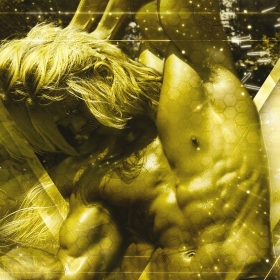
The Great Baron needs no further introduction. Marinetti was the founder of the Italian Futurist movement. Warhammer 40 000 comes quite close to a representation of Archeofuturism – the Space Marines can be seen as initiatory Männerbund (i.e. a traditional answer that stretches back in time) combined with techno-scientific progress. Pictured below: Yours truly depicted by Alex Cristi as the Primarch Fulgrim.

A True Politician
I found the following passage profound and inspiring:
‘The true politician is an artist, a drafter of projects, a sculptor of history. He is someone who can immediately answer the questions: Who is part of my people and what are their values? Who are its enemies and how can we fight and defeat them? And finally: What destiny should we choose to acquire power and carve out a place for ourselves in history?’
Guillaume Faye – Archeofuturism. Page 153.
The True Politician can be contrasted against the career politician. Needless to say, we need many a True Politician at the moment!
Conclusion
Archeofuturism has 249 pages and contains plenty of valuable insights (the ones shared above are but a few – I could have made this review a lot longer). There are a few ideas that are a bit outdated (Eurosiberianism, for example) and I do not agree with all of his points, but overall it is a great book that I can definitely recommend. I would also say that this is a good starting point for those who would like to get further acquainted with the work of Faye.
Onwards!
Esoteric Reading List
Posted on June 10, 2024

Here is a list of spiritually orientated books that I found particularly insightful. Including the books in this list does not mean that I endorse all of the statements and teachings in the books, nor does it mean an endorsement of the authors per se. The list is meant to be beginner friendly; all of the books presented below can be read without extensive previous knowledge. The books below are presented in no particular order. The list will be updated should I find more books that fit the list. I will compose a socio-political reading list later on.

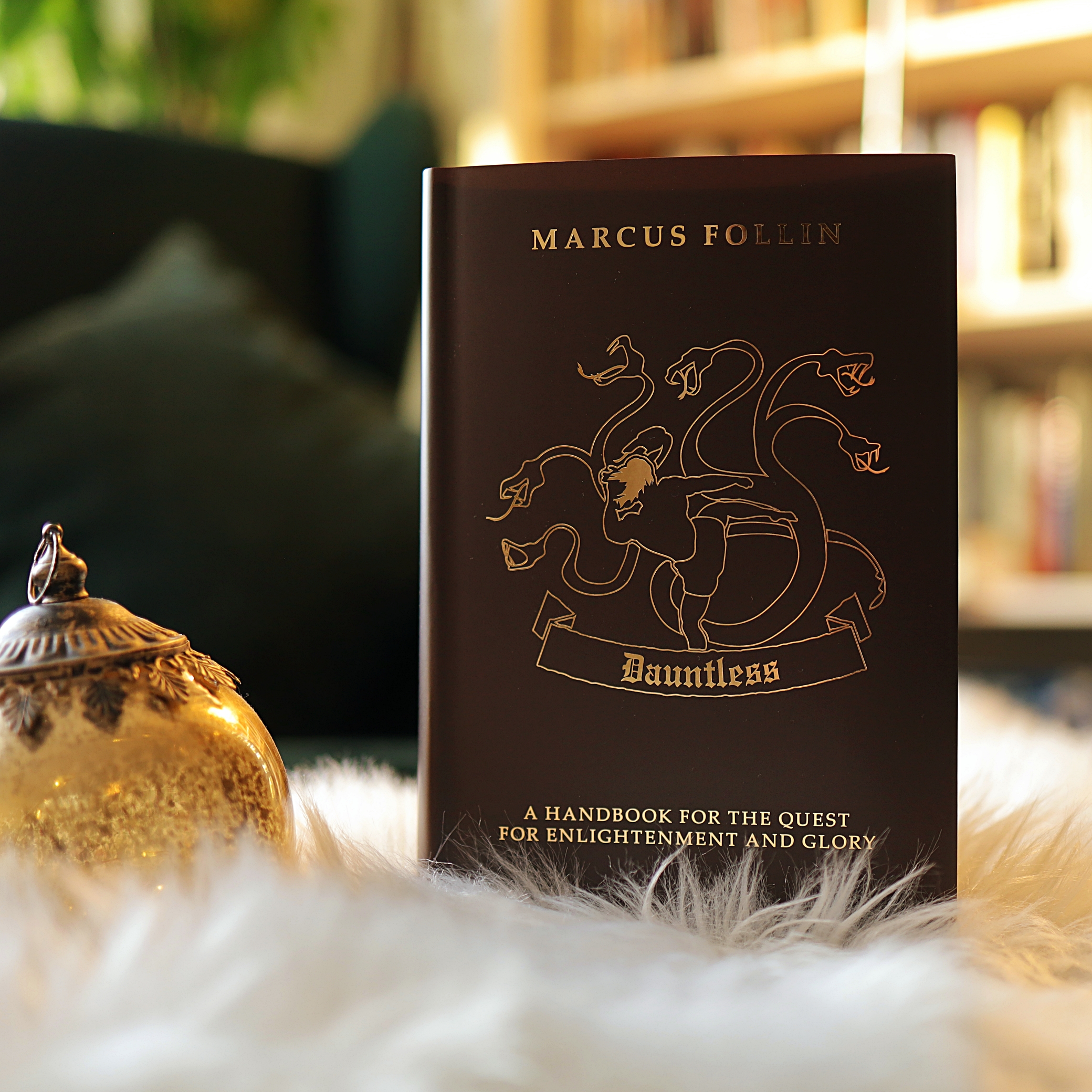
Above all else, I must throw my humility aside and recommend Dauntless and Demigod Mentality – not only because they are my own books but also because they will give you a good foundation to stand on.

Mircea Eliade‘s great classic The Myth of the Eternal Return. This book is great for understanding the mythical worldview of the archaic (or Traditional) man. Read my review of it here.

The Germanization of Early Medieval Christianity is a great book for understanding the spiritually of the Middle Ages – what one could call a period of Syncretic Paganism and Christianity. Read my review of it here.

The Northern Dawn by Stephen E. Flowers is similar to The Germanization of Early Medieval Christianity but is less academic in its style. Read my review of it here.
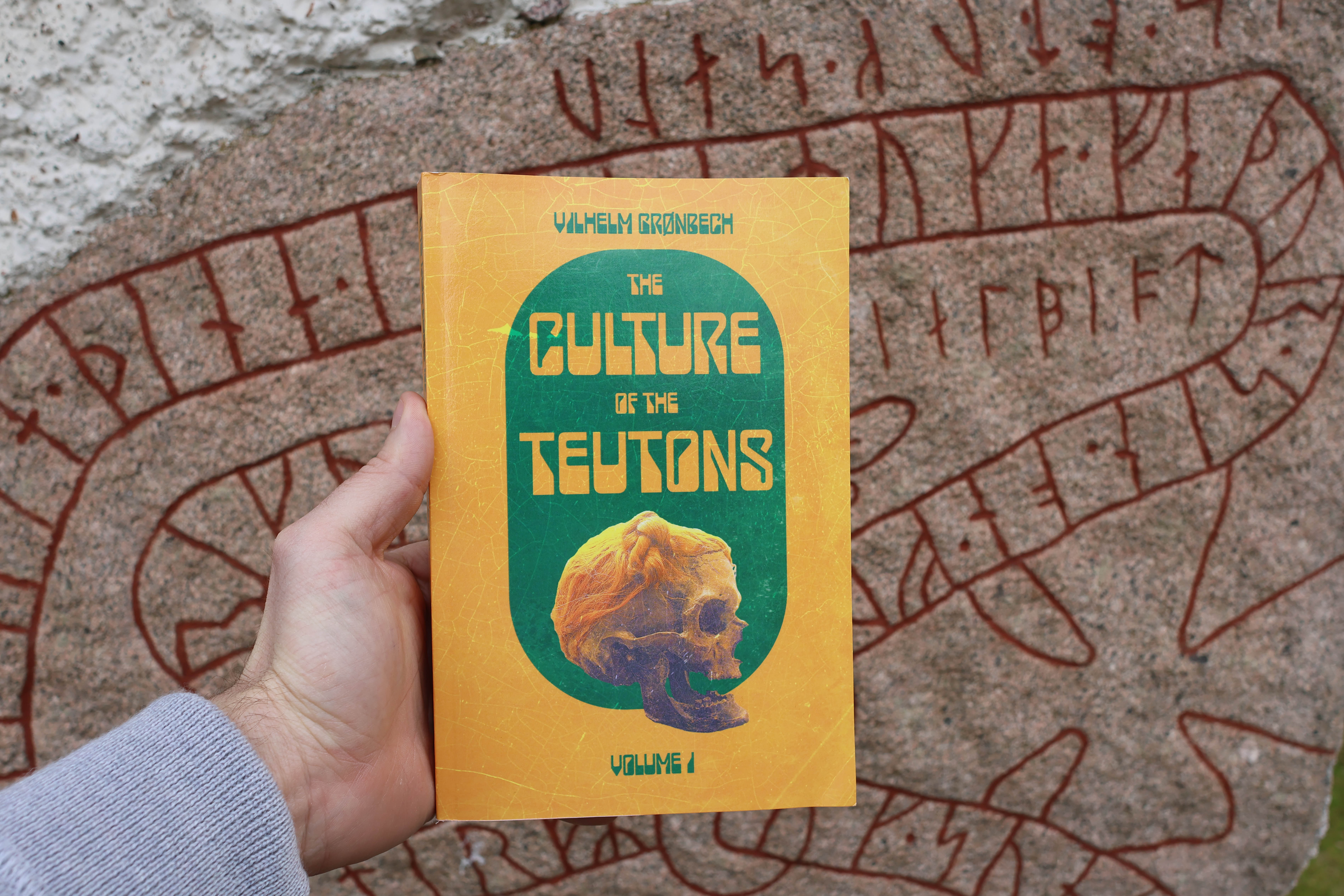
The Culture of the Teutons by Vilhelm Grønbech provides great insights into the worldview of the Germanic peoples – the Scandinavians of the Viking Age in particular. I discuss this book (volume 1 & 2) in Podcast Episode 45. Viking Worldview.

Temple of the Cosmos by Jeremy Naydler is an excellent book on Egyptian religion and worldview. Understanding Egyptian religion is good for understanding religion overall. Read my review of it here.

In Nietzsche‘s Coming God, Abir Taha does great work in presenting Nietzsche‘s spiritual views. Nietzsche‘s books are quite dense and not always easy reads; Taha distils her insights and presents them in a concise fashion. Read my review of it here.
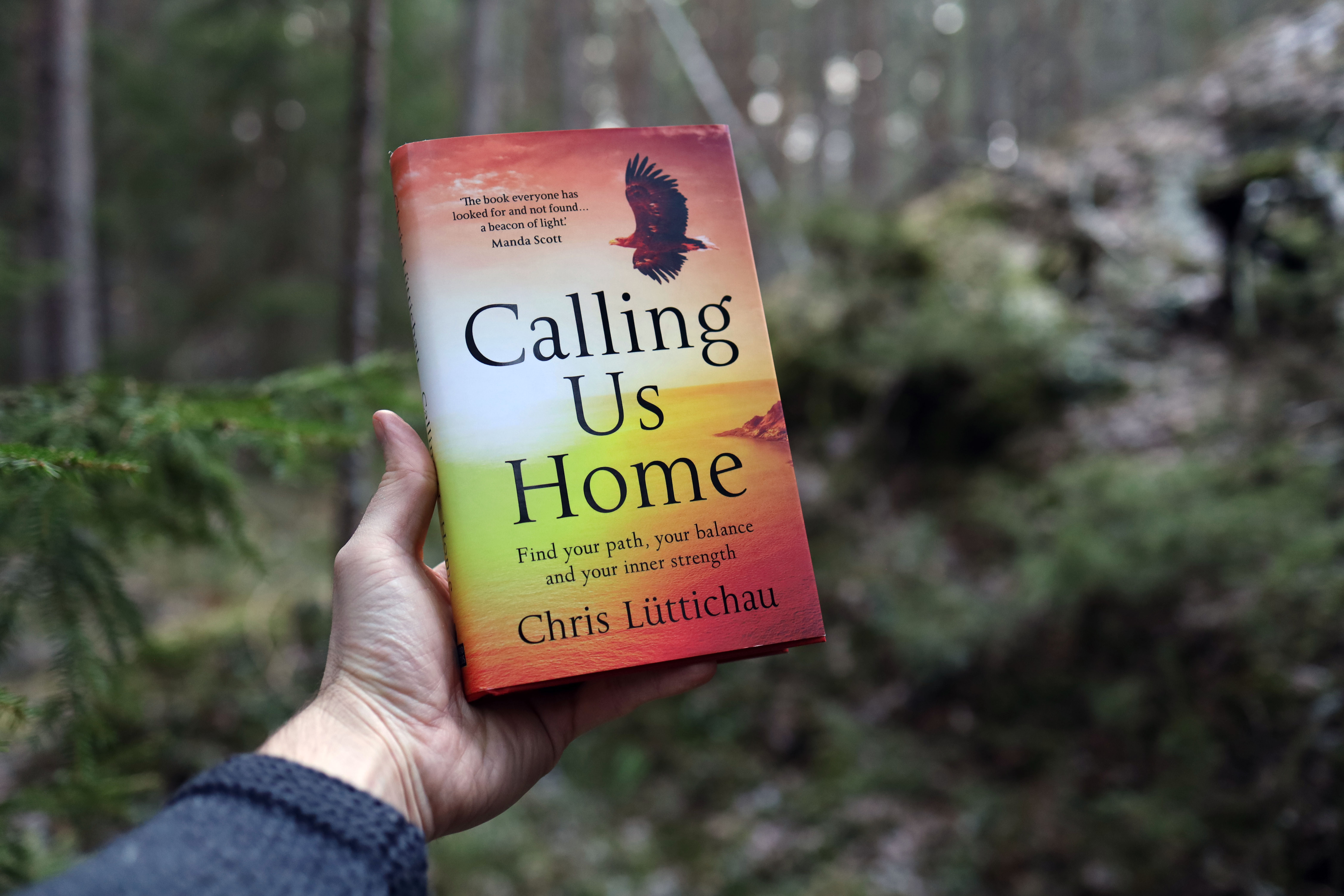
Calling Us Home by Chris Lüttichau is a good book for those interested in animism and shamanism. Read my review of it here.

The One-eyed God by Kris Kershaw is an excellent academic book about the religious attitudes of the Aryans (Indo-Europeans). It is quite hard to come by (hopefully a re-print of it will come out). Read my review of it here.
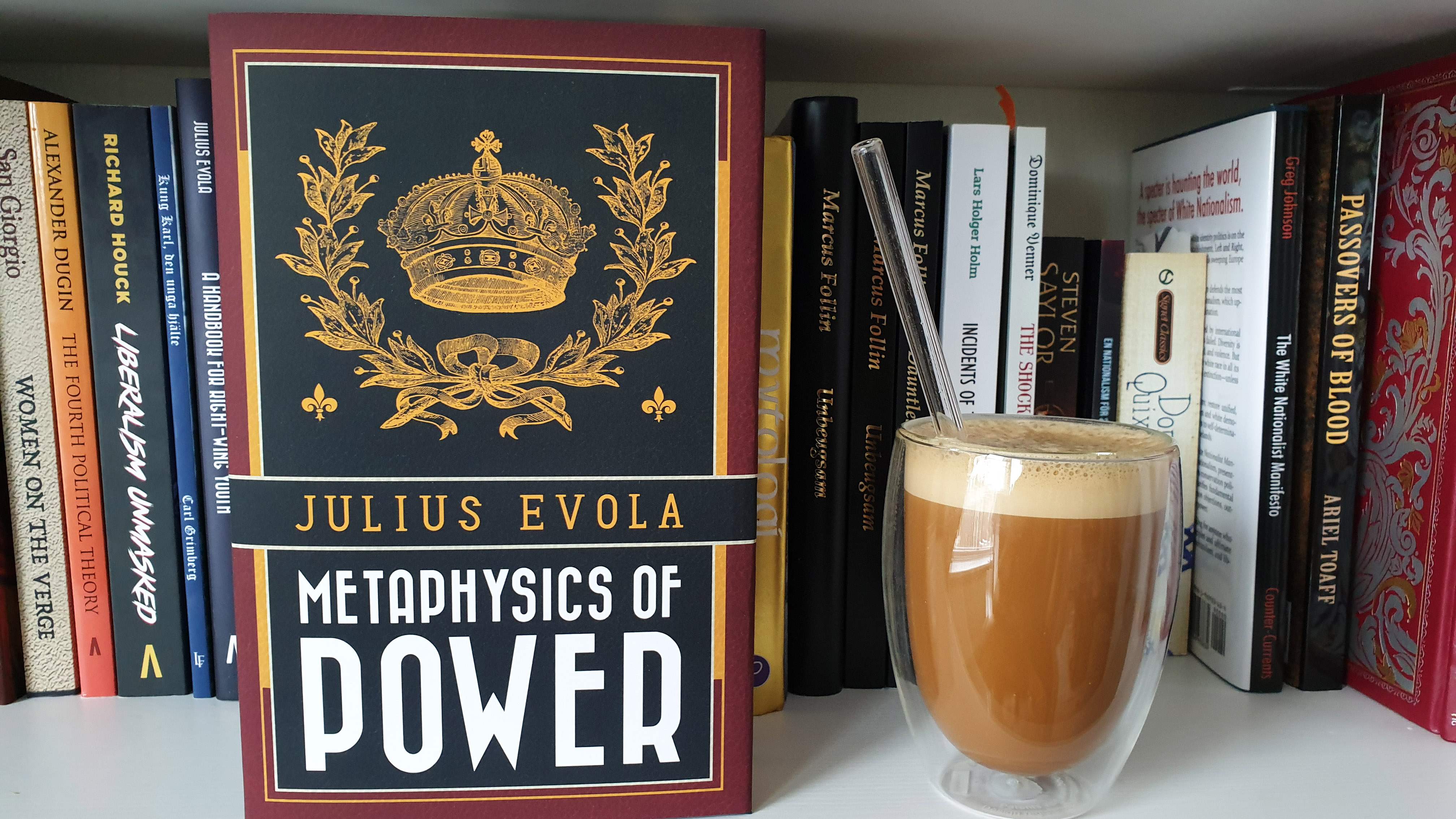
The legendary Julius Evola wrote many books. His socio-political commentary is (in my humble opinion) not very interesting. His esoterico-magical and esoterico-historical writings, on the other hand, are highly interesting and insightful. Metaphysics of Power and Metaphysics of War are two good starting points. For those who would like to go further, Revolt Against the Modern World (review), Men Among the Ruins (review), The Mystery of the Grail (review), and Introduction to Magic (review 1, review 2) are good follow-ups.

Meditations on the Peaks by Julius Evola is a concise compilation of essays. This book could, just as The Mystery of the Grail, serve as an Evolian starting point. Read my review of it here.
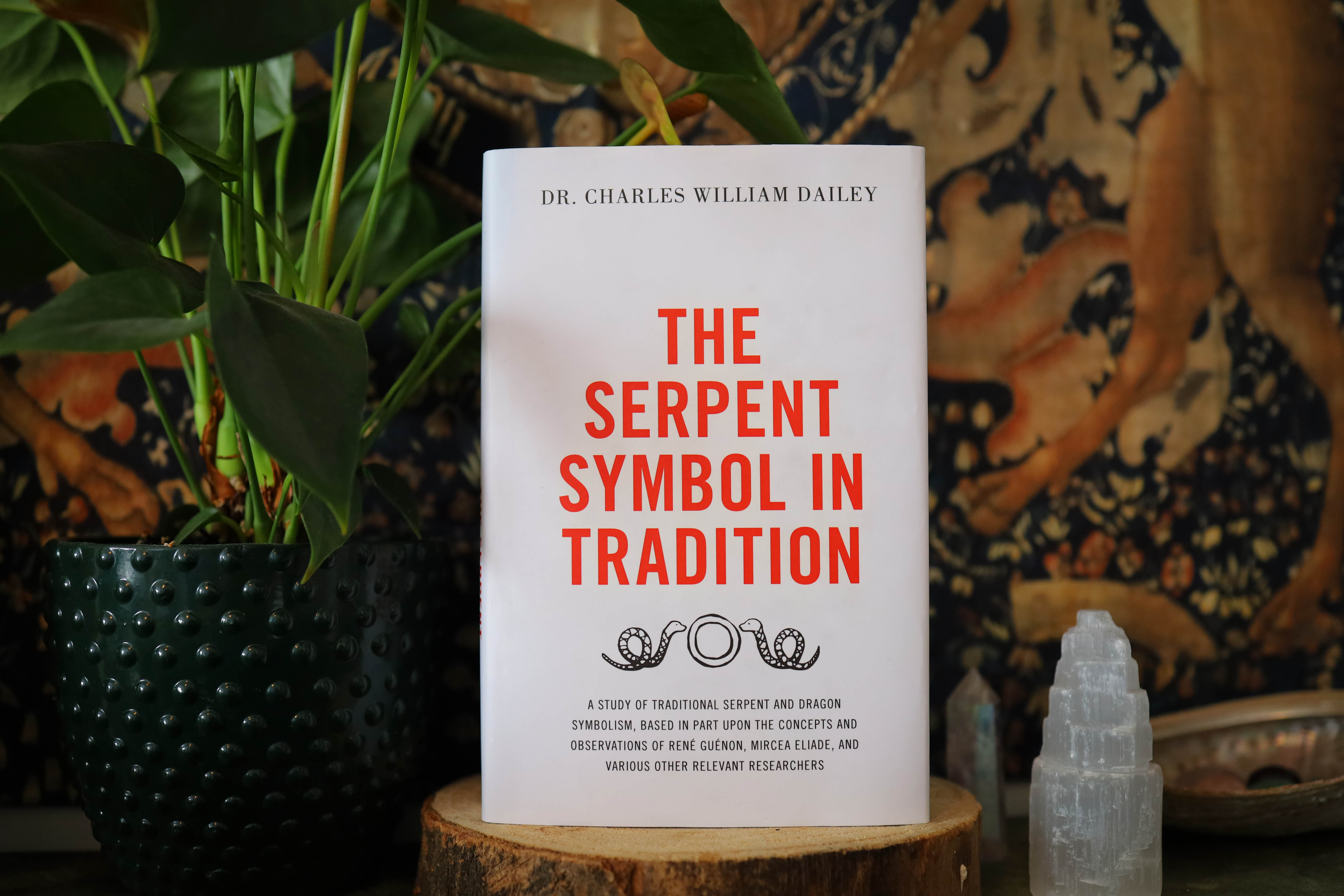
The Serpent Symbol in Tradition by Charles William Dailey contains a wealth of spiritual knowledge. The book also introduces the thoughts of great scholars of Tradition such as Mircea Eliade and René Guénon. Read my review of it here.

Icelandic Magic by Stephen E. Flowers was one of the first esoteric books I read. It is a concise read and presents the Icelandic magical tradition. Read my review of it here.

Yukio Mishima’s great classic Sun and Steel. It is a beautiful book, especially relevant for those who pray in the Temple of Iron. Read my review of it here.

The Pagan Book of Days by Nigel Pennick contains a list of Pagan holy days throughout the year. It is a good resource for those who would like to include more ceremonies and celebrations in their lives. I made a video about the book which can be seen here.

The Mysteries of Mithras by Payam Nabarz is a great introduction to Mithras and Mithra (i.e. the Roman God Mithras and the Iranian God Mithra). Read my review of it here.

The Lightning and the Sun by Savitri Devi is an interesting book that gives a spiritual dimension to history. I elaborate at length about her book in Podcast Episode 44. The Lightning and the Sun.
A Handbook For Right-Wing Youth by Julius Evola
Posted on June 2, 2024

I have read A Handbook For Right-Wing Youth by Julius Evola. Contrary to its title, the book is not quite a handbook, but rather a collection of socio-political essays written in the post-War period (except for one essay published in 1933). As Enjoyers of my content will perhaps be aware, I am an Enthusiast of Evola’s esoterico-magical writings and his writings on religion and Tradition – his socio-political ones, not so much. Even so, reading Evola is always joyful (at least for me).
Against Marxism & Psychoanalysis
In the first essay of the collection, A Message to the Youth, written in 1950, the good baron shares a few fundamental attitudes which I thought were well-formulated:
‘Against Marxism and socialism, let us affirm that the economy and economic interests in all their forms have always exercised – and always will exercise – a subordinate function in normal humanity; that history and every healthy sociopolitical structure are determined by forces of a different sort; and that the fundamental fallacy is to believe that material, environmental factors and conditions of affluence, wealth, or poverty play a decisive role for real human progress.’
Julius Evola – A Handbook For Right-Wing Youth. Page 2.
I have touched on this topic in several podcast episodes and I will return to the topic later on – but to summarise the matter; great men shape history (Napoleon, for example) and economic developments influence the course of history to a lesser extent. In the following passage he states the following against the teachings of (primarily) Freud:
‘Against psychoanalysis, let us uphold the ideal of a personality which does not relinquish its role; an aware and autonomous personality which retains its sovereignty over the nocturnal and subterranean part of its soul and the demon of sexuality – a personality that is neither ‘repressed’ nor psychotically split, but which attains a healthy balance of all its faculties by subordinating them to a higher meaning of life and action.’
Julius Evola – A Handbook For Right-Wing Youth. Pages 2-3.
I elaborate on a similar topic in Demigod Mentality – more specifically, I discuss Plato’s chariot allegory and the different forces within us. Eros – the black horse of desire represents the sexual impulse in this allegory. Pictured below: A Compassionate Chakravarti with all parts of the soul working in harmonious union.

The Definition of Youth
Evola defines youth in the following way:
‘We conceive youth not as a matter of age or a biological fact, but essentially as a spiritual attitude, as a tone and style of life. It is defined by the enthusiasm and generosity of those who follow an ideal simply out of love for this ideal; by a yearning for the unconditional, which is inseparable from any idealism; by a taste for action; by an impulse towards renovation, matching forward; by contempt for easy living.’
Julius Evola – A Handbook For Right-Wing Youth. Page 84.
A Profound Insight
In the essay titled Biological Youthfulness and Political Youthfulness from 1974, the author shares the following insight:
‘In order to perceive their individuality, their importance, many people feel the need to get all worked up, to put themselves against something or someone.’
Julius Evola – A Handbook For Right-Wing Youth. Page 93.
Evola elaborates on a similar topic in another one of his books (Men Among the Ruins or Revolt Against the Modern World). There, he notes that the need to stir up hatred for one‘s enemies is something related to warfare of the lower castes – the Warrior (i.e. those of the Warrior caste) does not need hatred of his enemies, he simply does his duty. In my humble opinion, it is always better to be for something, rather than against something. Being for something does, of course, sometimes mean being against something that threatens that which you are for. It is a subtle but important difference – my position is always that I am for European civilisation. There is also a danger in being drawn down to a constant negative state of mind when one focuses only on what is wrong. Simply put, do not let the black-pills outweigh the white-pills! I will clarify this in a video later on.

Conclusion
As already noted, I prefer Evola‘s more esoteric writings, and there are many books of his that I would recommend before this one (I have reviewed quite a few by now). For radical socio-political commentary, I would rather recommend the works of Guillaume Faye. His Why We Fight was one of the first political books I read, and I have read a few other books of his as well (I will make a podcast episode discussing his insights). Kerry Bolton is another good author when it comes to socio-political matters. When it comes to recommending a handbook (i.e. a book with practical instructions), I would humbly suggest my own Dauntless.
Onwards!
The Way of the Tarot by Alejandro Jodorowsky
Posted on May 28, 2024
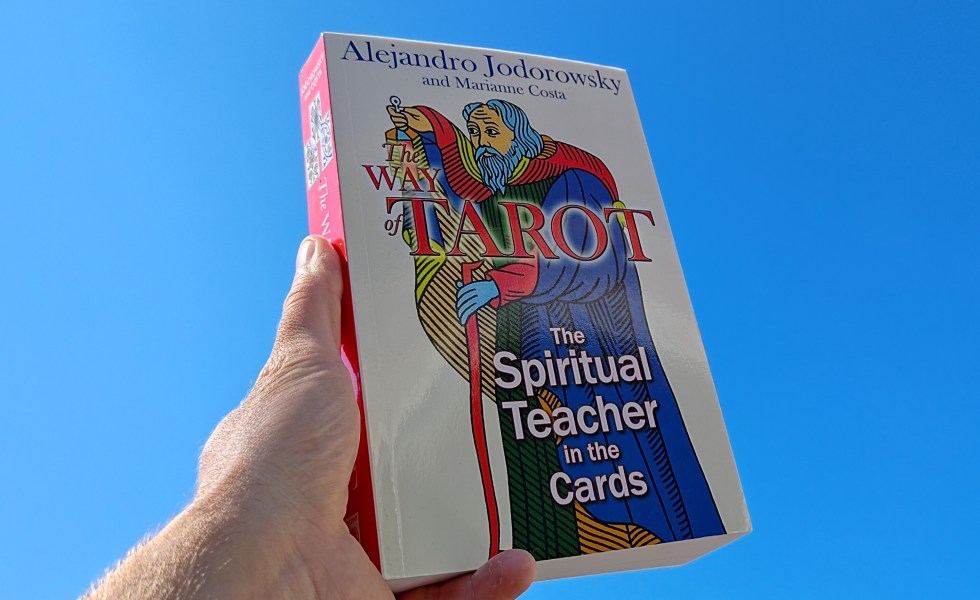
I have read The Way of the Tarot – The Spiritual Teacher in the Cards by Alejandro Jodorowsky and Marianne Costa. I read it per the recommendation of Paul Waggener in his excellent Tarot Unveiled.
Is the Tarot Legit or Just New-Age Nonsense?
A valiant companion of mine recently asked me whether the Tarot is spiritually based or just New-Age nonsense. I responded that it depends on how you approach it. A good comparison would be to Karate in America. “McDojos” are common, but there are also legitimate dojos which teach good martial techniques. I view the Tarot Arcana as containing psycho-magical teachings that can be used in a variety of ways in one’s quest for excellence. I discuss The Fool Arcanum in Demigod Mentality – it is my favourite card and has a profound meaning. I will write about the Tarot at length later on – I will also dedicate a podcast episode to the topic (soon).
My View of the Tarot
To summarise my own take on the Tarot in an as concise manner possible, we can use the Death Arcanum (card) as an example. What does it mean? It means that you should do a 24-hour fast. Death (in this scenario) is your friend that goes through your body, cleansing it (via autophagy). As I noted in Dauntless, The Black Death was followed by the Renaissance – life follows death. Therefore, the Death Arcanum is not something negative, but rather a herald of new growth!
Each Arcanum provides a teaching which you can apply in your life to optimise your journey forward. My interest lies (at the moment) in the 22 Major Arcana (there are also Minor Arcana), and it is on these 22 Arcana that I have meditated. Moreover, I have no interest in Tarot readings or using them as an instrument for divination – I create my own luck!

A Useful Insight
In the introduction, the author shares an insight which I found useful. Said insight is quite straightforward – namely that each Arcana can be seen as mirror and that one can become what is seen in them. To give a personal example, I wish to embody the stability of the Emperor (with good habits and a stable center).
The Marseilles Deck vs the Rider-Waite Deck
The author uses the Marseilles deck (as does Paul Waggener in his Tarot Unveiled). I prefer the Rider-Waite deck; my reason for this is simply that I prefer it, aesthetically speaking. I endeavour to surround myself with as much beauty as possible. Since meditating upon the Tarot is best done when imprinting the Arcana themselves in your mind, it feels better to imprint the more beautiful images of the Rider-Waite deck as opposed to the less beautiful ones from the Marseilles deck.
In the introduction, the author shares his own journey. He notes that he started to frequent a Parisian café where the surrealist artist André Breton (whom he admired) would meet with a group of fellow artists. Said artist did not have anything kind to say about the Rider-Waite deck – proclaiming that there is nothing profound in the deck and that the only valid deck is the Marseilles one.
I am not a fan of surrealism, to put it mildly – so therefore it is perhaps natural that I should have a radically different perspective than Breton when it comes to artistic preference of the Tarot.
On a similar note, in terms of his background and perspectives, the author is quite different from myself (from what I could gather from the biographical elements of the book, at least). With this in mind, it is natural that his interpretations of the Arcana would be different from mine

The Lover
In the chapter about the Major Arcana (which is, in my humble opinion, the most interesting part), the author shares what he believes the Arcana would say – for example, ‘And If The Lover Spoke’:
‘I am the sun of the Arcanum, the white sun: almost invisible but casting my light upon all the figures. I am this star: the joy of existing and the joy that the Other exists. I live in ecstacy. Everything fills me with happiness: nature, the entire universe, the existence of the Other in all its forms – this Other who is none other than me.’
Alejandro Jodorowsky – The Way of the Tarot. Page 160.
I found this quite beautiful (and useful). I got a bit of Sufi vibes from this passage as well. A mystical union with the World and Creation! On a related note, in the Rider-Waite deck this card is named The Lovers (i.e. plural) instead of the Lover as in the Marseilles deck.
Combining Cards
An interesting part in the book is the one concerning the combination of cards – this reminded me a bit of Bind-Runes. This is something I will meditate more upon. To share a combination that I came to think of: The Hanged Man (which can be interpreted as voluntary suffering) can be the base, added to this can be Death (resulting in that the voluntary suffering should be a fast). The Hanged Man with the addition of an Arcanum like the Chariot (conquest) could signify that a hard MMA-session is in order (or a similar endeavour). I will elaborate more on this later on.

Conclusion
The book has 535 pages. Some of the chapters (the one discussing numerology, for example) were not as interesting or relevant for me personally. For those who are unfamiliar with the Tarot, I would recommend starting with Stephen Flowers The Magian Tarok (review) in which the author discusses the origins of the Tarot and the Mithraic influence upon this magical system. Perhaps I will revisit parts of The Way of Tarot later on. For those who want a deep-dive and who will use the Marseilles deck, I can recommend the book.
Onwards!




 The Golden One
You must be logged in to post a comment.