Men Among the Ruins by Julius Evola
Posted on July 6, 2022
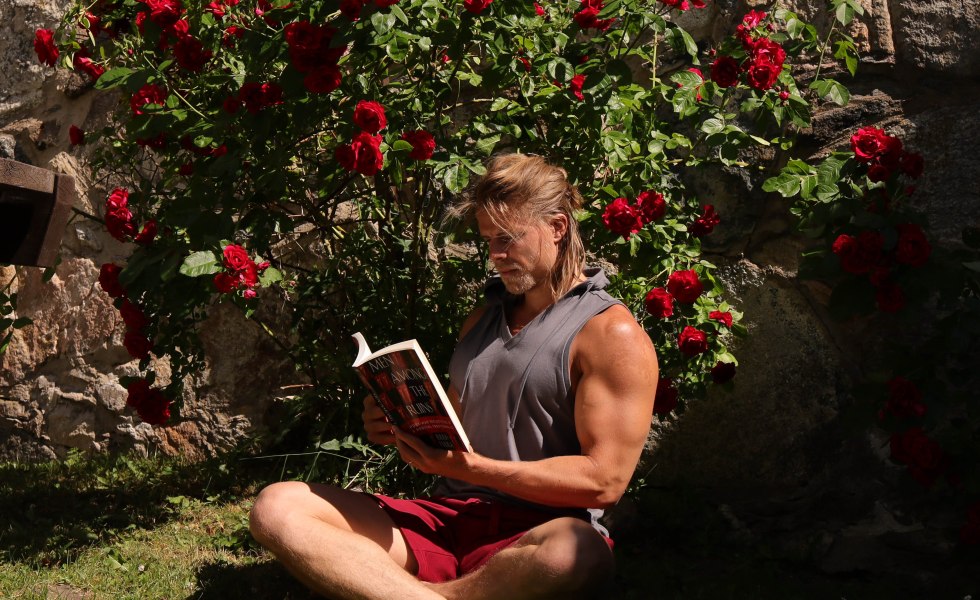
I have read Men Among the Ruins by Julius Evola. Written after the Second World War as a commentary on social, political, and historical matters, it contains many interesting insights. Some have labelled Evola’s post-war writings as ‘black-pilled’ (i.e. negative and defeatist); I did not get this impression upon reading it. Instead, I found it to be a reasonable and measured observation of the world at the time. Compared to Ride the Tiger, Men Among the Ruins is, in my opinion, much better. Below are but a few of the interesting insights found in the book.
My Critique of Evola
Since I have reviewed and referred to Evola quite many times over the last year, I deem it necessary to point out a few things. Firstly, I am mainly interested in his teachings that pertain to matters of the spirit. I believe that Evola as a spiritual seeker has few rivals. As for his social and political commentary, they do not necessarily align with my own. Therefore, it is good to point out that those who are sceptical of his social commentary would do themselves a great disservice by not reading his esoteric works because of said scepticism.
I sometimes see young men invoke Evola as a way to be ‘uniquely radical’ or as a way to side-step accusations of being a Fascist. Moreover, to my great lament, I often see said younger men refer to Evola or other thinkers of the Right (of the German Conservative Revolution, for example) as a way to ‘look down’ on the ‘Plebs’ (especially in regard to Nationalism). I find this unwarranted sense of superiority laughable. I also find the disdain for one’s own people to be incongruent with the sense of love for one’s own that should be a driving force for any champion of Mother Europa – or any Nationalist for that matter. I am certainly frustrated with Europeans in general and Swedes in particular from time to time, but I still love them (again, the Swedish people in particular).
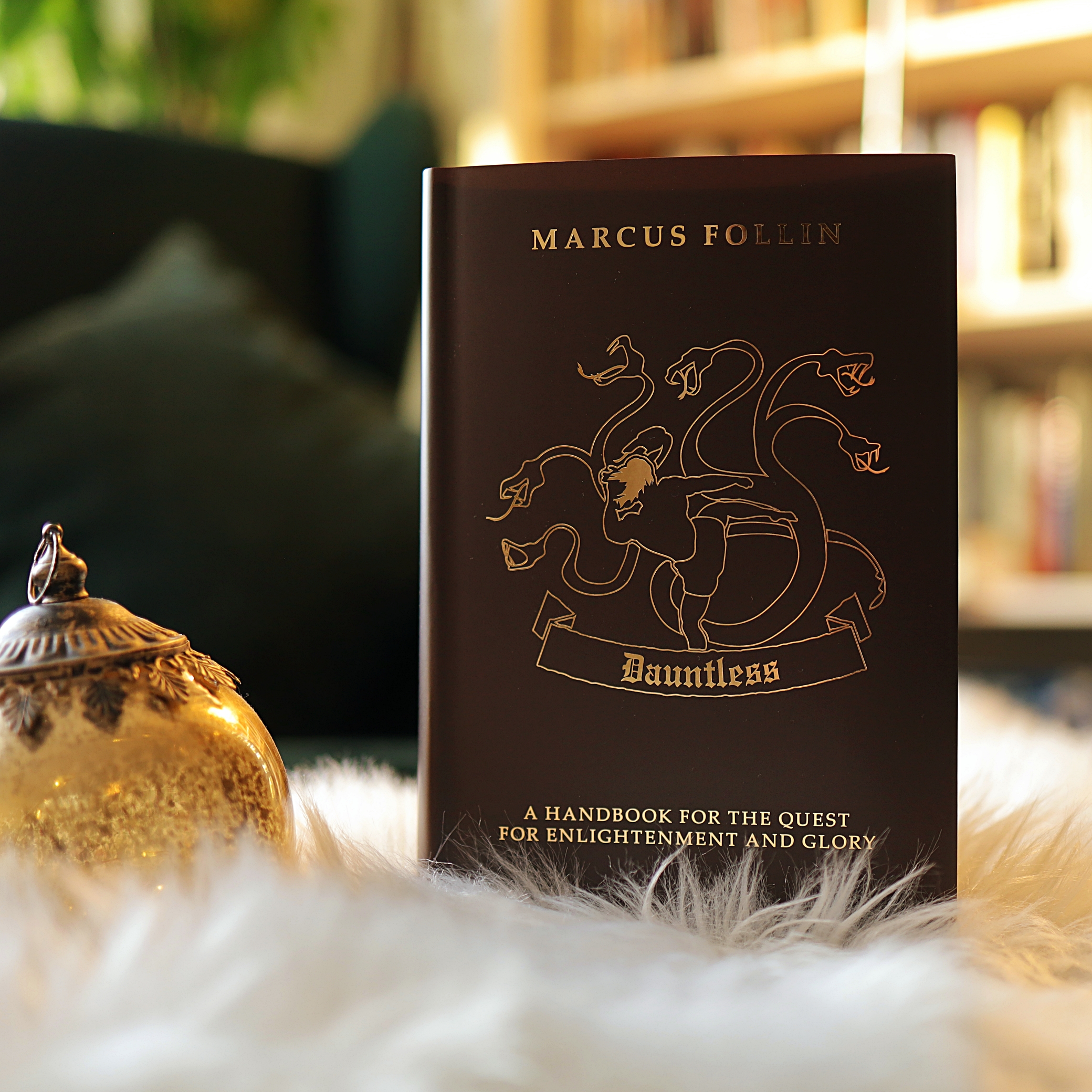
Moreover, I am a man of the people (of the middle class* that Evola so despises) and a man for the people. I am, of course, also an Aristocrat of the Soul, and I aspire to become what I refer to in Dauntless as a man of a new Countryside Aristocracy. Furthermore, I am, as I have mentioned before, an aspiring Enlightened Despot. I point this out so that no one will mistake my enthusiasm for Evola’s teachings with a disdain for my own people or for Nationalism (note: I do not refer to myself as a Nationalist to the initiated, as explained in Podcast Episode 7. Europa).
*The middle class is very broad in Sweden, Swedish society also has a certain level of upward mobility – both of these factors are aspects that I view as beneficial for the well-being of the people.
There are, of course, other aspects of Evola’s teachings which I do not endorse. I understand that you, my dear reader, understand this – I am merely pointing it out should nefarious elements seek to misrepresent my own teachings. To give an example, Evola would classify boxing as a vulgar display of American degeneracy (I am paraphrasing him here – he writes about this in The Bow and the Club). Had he been alive to witness the rise of MMA, he would most likely have labelled it as even more barbaric! And I do, as you know, recommend MMA (including boxing) as a form of training.
Furthermore, I am not opposed to Bonapartism or Caesarism (although Rome saw its glory days during the Republic). I am not opposed to a strong monarch with the love and support of the people. For more information about this subject, I wrote a short review of Two Models of Government by Dr Michael Arnheim. Moreover, in Metaphysics of Power, Evola voices his reservations about France’s Philip the Fair – the critique is not only based on Philip’s attack on the Templars, but also because he centralised power (at the expense of the aristocracy). I see no issue in Philip centralising power in this manner – heroic king Gustav Vasa of Sweden did the same. Perhaps I will elaborate on this topic at length in a coming Podcast episode!
Powerful Women – the High Priestess
Although not necessarily related to Men Among the Ruins, a common theme in Evola’s books is the dichotomy of the chthonic Earth Mother and the celestial Olympian Father.
Perhaps some would interpret Evola’s teachings as being hostile to women. Although I would not necessarily agree with this, I would like to note that Evola (from what I have gathered thus far) does not highlight certain powerful feminine archetypes – such as the High Priestess or the Queen. Although this is a topic that lies beyond the scope of this book review, it is good to note that there are archetypes a woman can strive for within a Traditional setting. Traditional here denotes eternal metaphysical principles – and not ‘Trad’ (which has become a bit of a ridiculous meme at this point). In essence, a High Priestess or Queen can become powerful via the love and loyalty she inspires in the men of the tribe or nation. This love and loyalty can be based on many different factors – on a more local level, it can be based upon favours and kindness. To give an example (that is not necessarily related to the archetypes of the High Priestess or the Queen): the gentle grandmother who is kind to her grandson and his friends (inspiring love). When they are young men she will potentially have a Männerbund to call upon should she be in danger.
Modern culture has made a mockery of feminine power – portraying women as having masculine power is only obnoxious and can, in some cases, present a young woman with a false sense of security, and it will certainly deprive the woman of any true power (based on love) she could have.
A powerful woman is not a ‘girl-boss’ that no one likes (let alone loves), nor is it someone who tries to emulate masculine archetypes (i.e. a Warrior). A powerful woman is the beloved Queen, Mother, and Priestess that can call on the loyalty of men who feel love (non-sexual) for her.
Lastly, an obvious example is, of course, the Mother, who can count on the loyalty of her sons and daughters.
Note: Evola discusses the role and archetypes of women in Revolt Against the Modern World (which we will review at a later point).

Evola and Christianity
Since I have mentioned some disagreements above, I thought it would be reasonable to also share something in particular that I appreciate with Evola. His view of Christianity is very measured and reasonable – and matches my own to a large extent (my views have, it must be noted, been influenced by his in this matter). Although not strictly related to any chapter in Men Among the Ruins, I deemed it reasonable to elaborate on this here.
A superficial critique of Christianity is often accompanied by a view in which Christianity and Paganism are seen as two competing sport-teams. A person harbouring said such superficial view of the matter could ask:
‘How can you admire the Teutonic Order that fought against Pagan Lithuanians?‘
Those who harbour these sentiments fail to realise a historical truth – that Europeans have fought in countless wars against each other since time immemorial. Is it right or is it wrong? It is what it is. At the present moment, it is good to promote a sense of European unity. But it is not reasonable getting upset over medieval conflicts.
The Teutonic Order, the Templars, and the Hospitallers are worthy of admiration because of the heroic ideals they embodied. These orders expressed themselves in congruence with the Indo-European spirit – the spirit of the initiatory Männerbund. I admire these orders because of this. That they wore crosses does not bother me – the Swedish flag also has a cross on it; I still find it beautiful.
Thus, the superficial critique of the Teutonic Order, the Templars, or Hospitallers would be to point to their crosses and say that they were on ‘Team Christianity’ (i.e. as in the view of the aforementioned sport teams).
In the notes (page 306) of Men Among the Ruins, the following is noted: ‘Concerning the Knights Templar, they had their own initiation and esoteric doctrine, reserved to higher degrees, which were not reducible to the mere Christian religiosity fostered by the Church.’ This can explain why Evola liked the Templars, despite not liking Christianity.
Evola During WW2
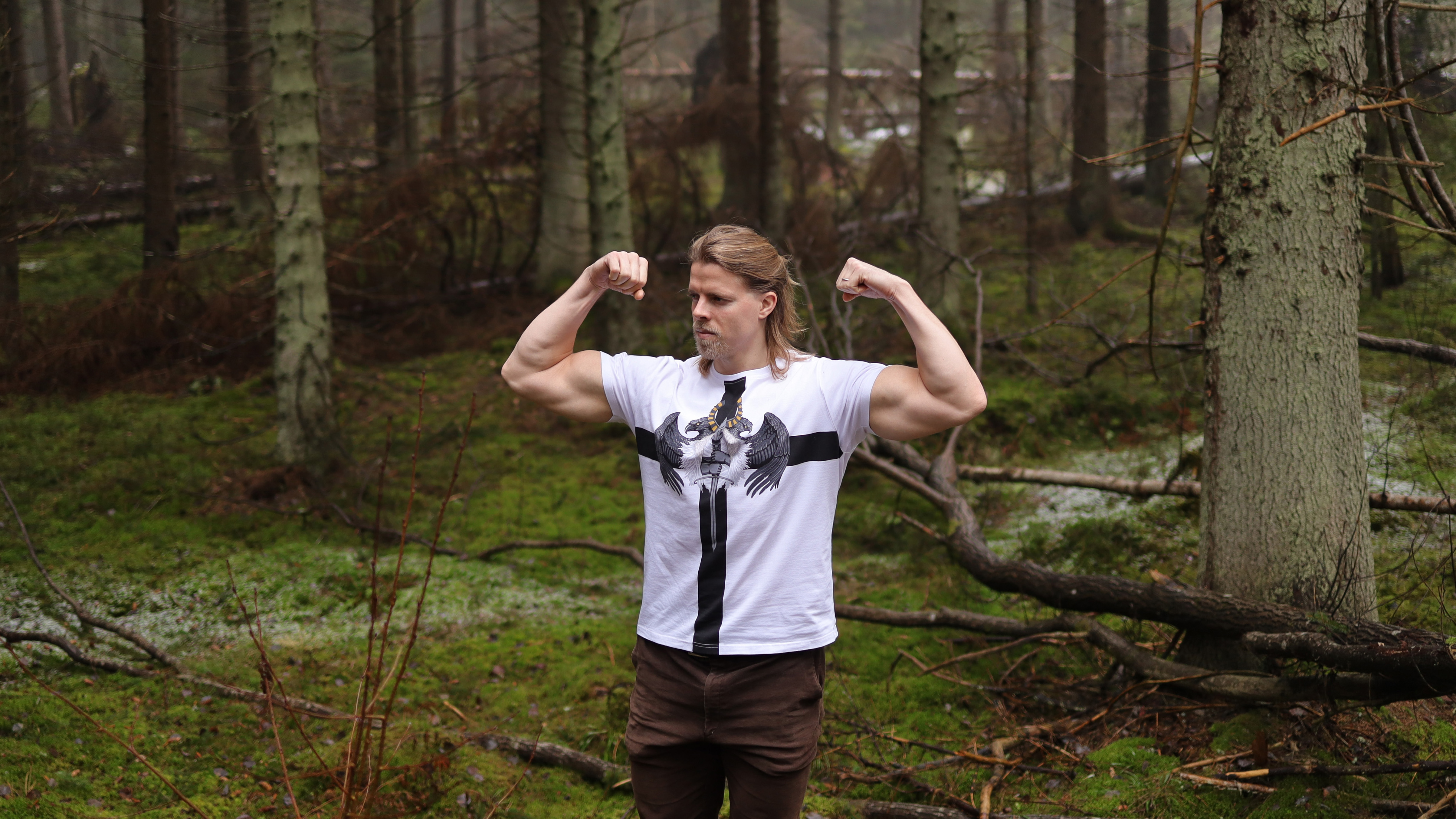
In the introduction of the book, Dr. H. T. Hansen notes that Evola wanted to fight on the Eastern Front against Bolshevik Russia. However, since he was not a member of the Fascist party, his application was delayed again and again, and even upon declaring his willingness to join the party (to be able to join the war effort), he was declined. He had many enemies in the party – which is perhaps not so surprising given his rather confrontative nature and his critical view of Fascism. Evola fought as an officer during the First World War, and his status as belonging to the Kshatriya (Warrior caste) is beyond dispute. I mention this here to emphasise the fact that he was someone who lived in accord with his teachings. This is, in my humble opinion, an important aspect to look at when judging any philosopher.

Mana
In the chapter Personality – Freedom – Hierarchy, the following interesting passage appears:
‘Ancient primitive man essentially obeyed not the strongest members of society, but those in whom he perceived a saturation of mana (i.e., a sacred energy and life force) and who, for this reason, seemed to him best qualified to perform activities usually precluded to others.’
Julius Evola – Men Among the Ruins. Page 142.
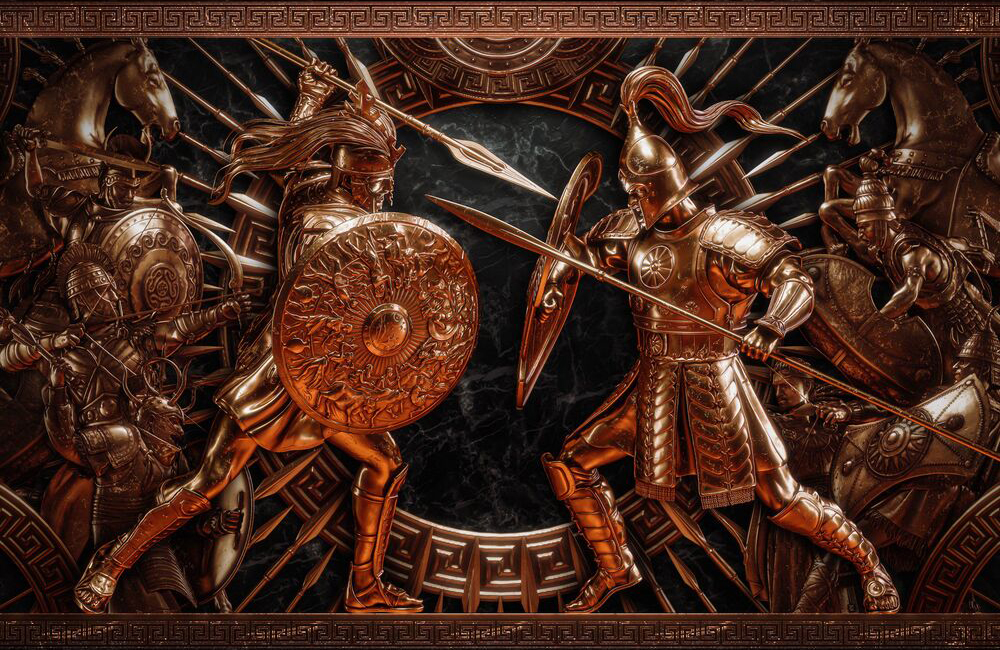
I thought it would be interesting to share for my esteemed Podcast subscribers. In Episode 23. Beauty, I noted that Achilles must not be portrayed as a mere brute (as in Total War Saga: Troy) – but as a divinely blessed specimen with great martial prowess, but also full of charisma. Certain men have an ‘it’-factor; this ‘it’-factor can be explained as being saturated with mana, as mentioned in the quote above. This is a deep and interesting subject that we will return to in coming Podcast episodes as well as book reviews.
Nordic-Aryan – Indo-European
Evola often returns to the Aryans, which is the word he uses for Indo-European – the term I use (to avoid confusion). He defined the term thus:
‘It must be realized that in modern racial studies, “Aryan” and even “Nordic” do not in fact mean German; the term is synonymous with “Indo-European,” and is correctly applied to a primordial, pre-historic race from which were derived the first creators of the Indian, Persian, Greek, and Roman civilizations, and of which the Germans are only the final adventitious branches.’
Julius Evola’s Autodifensa (Self-Defense Statement in court during a trial in 1951 – found in the appendix of the book).
Evola expressed a wish for Italy to reaffirm the Roman (Aryan) spirit as opposed to the ‘degenerated’ (his word) Mediterranean (Pelasgian) spirit. This was, as one can imagine, a quite controversial statement in the biologically heterogenous Italy of the post-war period. This, in addition to his affinity for Germany, landed him in trouble after the war. In several of his books, Evola emphasises the Indo-European blood and spirit. As we saw in our review of The Doctrine of Awakening:
‘We have to remember that behind the various caprices of modern historical theories, and as a far more profound and primordial reality, there stands the unity of blood and spirit of the white races who created the greatest civilizations both of East and West, the Iranian and Hindu as well as the ancient Greek and Roman and the Germanic.’
Julius Evola – The Doctrine of Awakening. Page 14.
Moreover, some people associate the term Aryan with certain features (blond hair and light eyes for example). While it is true that many of the Indo-European tribes (the Dorian Greeks, for example) frequently had these features (as is evident in both DNA studies as well as in how the Ancient Greeks depicted their Gods and heroes), it is important to recognise that said features are not necessarily indicative of Indo-European-ness (Steppe ancestry, to be even more precise), and a lack of said features does not mean a lack of Indo-European blood.
Furthermore, it is reasonable to point out that the Indo-European (Aryan) origins of Roman and Hellenic greatness is a rather controversial topic, and it is not uncommon to see non-European Mediterraneans (i.e. individuals from the Near East) claim a closer kinship with ancient Greece and Rome than what Northern Europeans have. This video illustrates clearly that these claims are incorrect: JIVE TALK: Ancient DNA news: Greece and Italy. In regard to a metapolitical analysis as to why these faulty claims are made, one could say that it is both an attack on European Unity (in this case, north–south) and European (White) identity as a whole.

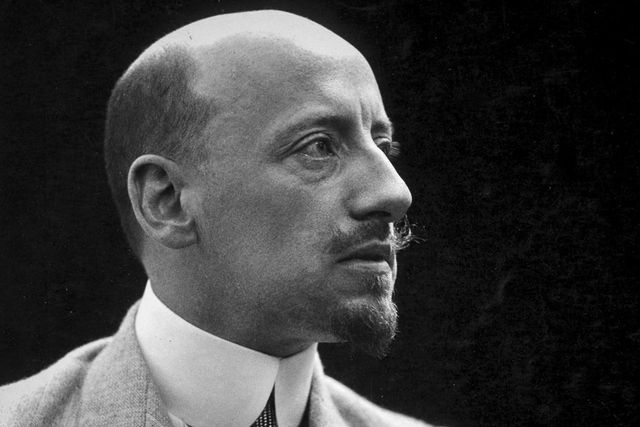
Gabriele D’Annunzio
On a personal note, I do not use the term ‘Mediterranean’ (since it is often misused), and I am not as critical of certain Mediterranean elements as Evola is – he goes quite hard against them in Men Among the Ruins. Evola notes the following:
‘In the Mediterranean man there is a splitting between an “I” that plays the role and an “I” that regards his part from the point of view of a possible observer or spectator, more or less as actors do.’
Julius Evola – Men Among the Ruins. Page 142.
Evola accompanies this passage with a footnote which reads as follows:
‘D’Annunzianism is one of the most characteristic phenomena of the “Mediterranean” style in regard to this particular trait. This is true when we consider not just an artistic component, but the overall style that Gabriele D’Annunzio exhibited in his life, even as a leader and a soldier.’
Julius Evola – Men Among the Ruins. Page. 310.
In my humble opinion, Gabriele D’Annunzio embodied an Indo-European (Faustian, Aryan) spirit of greatness. His character can also be explained by the fact that he was an artist. Moreover, I must admit that D’Annunzio is an inspiration of mine, and a man I hold in high regard. This is not to say that I endorse everything he did – this is, of course, obvious to any of my regular readers, but I thought to point it out anyway for good measure.
The following quote by Yukio Mishima comes to mind when contemplating the life of Gabriele D’Annunzio.
“Perfect purity is possible if you turn your life into a line of poetry written with a splash of blood.”
– Yukio Mishima,
Germany and Italy – The Holy Roman Empire
As we saw in our review of The Mystery of the Grail, a topic Evola often returns to is the medieval conflict between the Guelphs (the pro-Pope faction) and the Ghibellines (the pro-Emperor faction). Understanding Evola’s view of this conflict is the key to understanding his view of a great many other things – his positive view of Germany, for one.
Certain Italian Nationalists (contemporaries of Evola) viewed the Germans (during the Middle Ages) as foreign oppressors. Evola, on the other hand, viewed the Holy Roman Empire as the legitimate spiritual successor of Rome. He also viewed the Ghibelline Middle Ages as a spiritual high-point. The following quote illustrates this quite well:
‘Frederick I fought against the Communes not as a Teutonic prince but as “Roman” emperor, upholding the supernational and sacred principle of authority that was exclusively derived from his qualification and function.’
Julius Evola – Men Among the Ruins. Page 184.
I will elaborate on this at length in my coming book, but a short summary of my not-yet-complete analysis is the following: Primacy amongst Indo-Europeans has gone from culture to culture. At one stage Sparta had it, thereafter it went to Alexander’s Macedon, thereafter to Rome, thereafter the Goths gained it, thereafter it went to Charlemange’s empire, and so on. Our quest today is to reawaken the spirit.

Imperium Europa and Christianity
Evola discusses Imperium Europa in Men Among the Ruins. This is, of course, a topic that is as relevant for any European gentleman today as ever. I discussed it in Podcast Episode 7. Europa and will return to it in coming episodes as well.
Evola notes that Christianity cannot be the unifying factor for Europe. The reasons for this are, among others, that:
- Catholicism is the faith only in some European nations.
- Becauce of the desacralisation and secularisation that has occurred in Europe.
- Because of Christianity’s universal nature.
These are all valid points. Perhaps a return to Paganism is the most reasonable course of action. Not the superficial Paganism – i.e. the other ‘sport team’ that we mentioned above in regard to the attitudes of some anti-Christians – but rather a sincere and solid foundation based on shared Indo-European metaphysics and the wisdom of Plato. I am not yet wise enough to set a clear course in this matter, so these thoughts are still in development. Moreover, to elaborate fully on these factors lies beyond the scope of this review.
Male Initiation
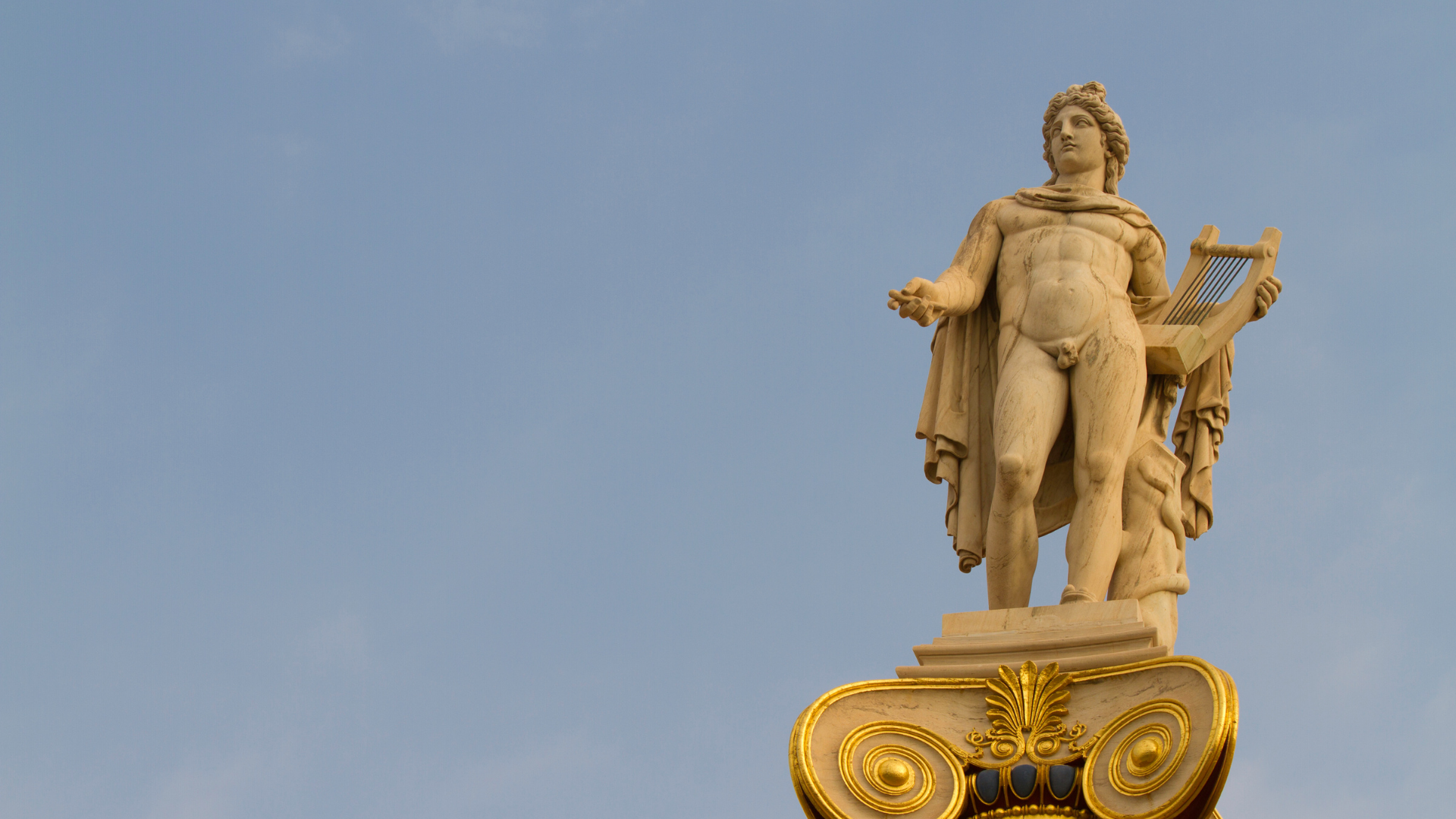
Evola discusses the important concept of male initiation. We have encountered the topic before, most notably in our review of Kris Kershaw’s The One-eyed God and the (Indo)-Germanic Männerbünde. The following quote illustrates this quite well:
‘In fact, prior to this initiation, the member of the group, no matter what his age, was believed to belong to the same category that included women, children, and animals. Once the transformation occurred, the individual was incorporated into the Männerbund.’
Julius Evola – Men Among the Ruins. Page 125.
Conclusion
Men Among the Ruins is a great book to read for those who wish to get a good view of Evola’s Weltanschauung. The edition I read by Inner Traditions (published in 2002) is 310 pages and includes a 106 pages long preface by Dr. H.T. Hansen as well as Evola’s Autodifensa.
The Magian Tarok by Stephen E. Flowers, PH. D.
Posted on June 28, 2022

I have, yet again, had the pleasure of reading a book by Stephen E. Flowers. The Magian Tarok – The Origins of the Tarot in the Mithraic and Hermetic Traditions is, as the title suggests, a book about the origins of the tarot. As regular readers of my book reviews will know, I have a particular affinity for the Mithraic Mysteries. Moreover, since we recently became familiar with the Hermetic Tradition, I deemed this book to be a natural next step.
Tarot
As with many other magical traditions, Tarot has gotten a somewhat bad reputation due to its association with ‘New Age’ spirituality. However, as the author shows, the origins of the Tarot prove its magical legitimacy.
The Magian Tarok gives, in addition to other insights, a good overview of all of the 22 images of the Major Arcana. Each card can be seen as a mystery, archetype, or teaching – quite similar to the Runes. The picture below is from the Rider–Waite deck (perhaps the most common and well-known Tarot deck).
At the time of writing this review, I am meditating upon the Runes of the Elder Futhark*; after that, I will delve deeper into the Tarot.
*In case you have not already read my reviews of Rune Might and Revival of the Runes, you can do so here and here.

The Visconti-Sforza Tarot
The author notes that the oldest verified Tarot images come from Renaissance Italy: the Visconti-Sforza Tarot of the fifteenth century. As the name suggests, it was most likely commissioned by the Sforza family, which ruled Milan from 1450 to 1535. The name Sforza will be familiar to Age of Empires 2: Definitive Edition enjoyers – Francesco Sforza is the protagonist of one of the campaigns. Renaissance Italy is an interesting subject to study – both for the aspiring magician and for the historian. The author does not elaborate on the Sforza family beyond their relation to the Tarot; I merely thought it was interesting to point out.
Mithraists and the Tauroctony
Mithraism has, by some, been labelled as an early competitor to Christianity – the two religions were quite dissimilar though; Mithraism being an initiatory cult and Christianity one open to everyone (which is why it was popular among the lower strata of society). The author notes that the Mithraists were known for their loyalty to the emperor and empire – in sharp contrast to the Christians of the time. This is understandable since the Mithraic mysteries was, to a large extent, a cult for soldiers.
The author also comments on the Christian tactic of placing Christian celebrations on Pagan holy days (as a way to outmanoeuvre competitors). A primary example of this is the birthday of Mithras, which was celebrated on the 25th of December. Saturnalia was celebrated between the 17th and the 23rd of December. Jul (Yule – Christmas) is celebrated in Sweden on the 24th of December.
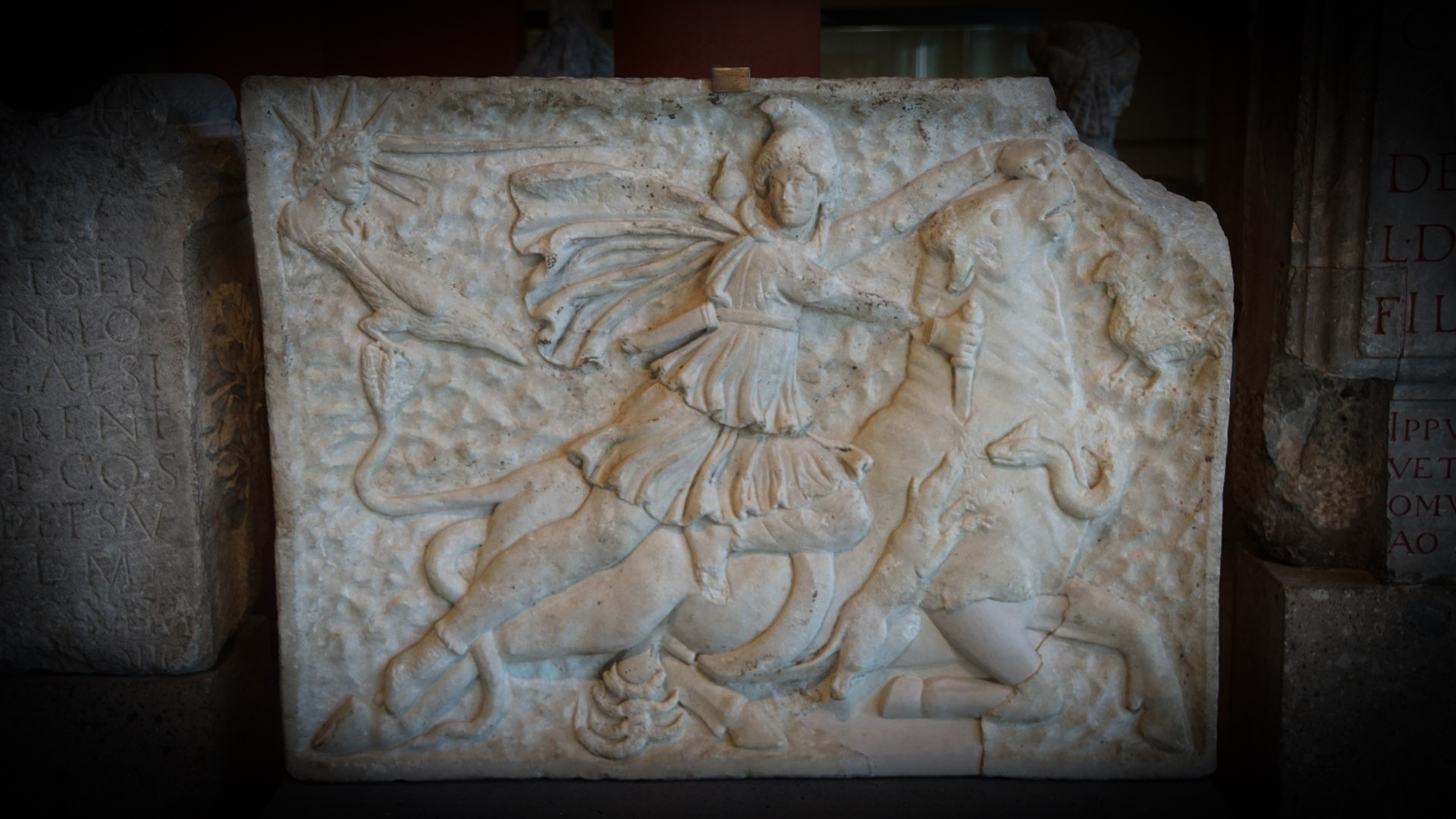
The Tauroctony (pictured below) will be a familiar image to readers of my book reviews. Although the cosmological meaning behind it lies outside the scope of this review, we can nonetheless share the following in regard to its connection to the Tarot.
‘It is not his conscious will to kill the bull, but he is forced by circumstance into doing so. But a greater good, previously hidden from him, is revealed through this act. This is why he is called the “Fool.” All acts based on the exploration of the unknown, based on the impulse to satisfy curiosities about what is hidden, begin in Foolishness.’
Stephen E. Flowers – The Magian Tarok. Page 77.
The Fool is, appropriately (as is shown in the quote above), the first card (card 0 or 1) of the Major Arcana.
The Triple Mithras
‘“The Triple Mithras” refers to the images of Mithras flanked by the two torchbearers Cautes and Cautopates, who represent the rising and falling, waxing and waning powers of the sidereal manifestations of the god: the Stars, the Sun, and the Moon. Cautes is represented with a raised torch. He is also called Lucifer in Latin.’
Stephen E. Flowers – The Magian Tarok. Page 42.
The insight presented above will be of interest to those who, like Otto Rahn, are interested in Lucifer. I have reviewed Rahn’s two books here: Crusade Against the Grail by Otto Rahn, Lucifer’s Court – Book Review and Inspiring Quotes.
Evola on the Mithraic Mysteries
The following epic quote appears in an essay by Julius Evola. I thought it was reasonable to include it in this review since it is relevant to the topic at hand.
‘The Mithraic mysteries lead to the very heart of the magical Western tradition – a world characterized by self-affirmation, light, greatness, regal spirituality and spiritual regality. In this path there is no room for escapism; or asceticism; or mortification of the self through humility and devotion; or renunciation and contemplative abstraction. Mithras’ path is one of action, of solar power and of spirituality, which is opposed to both the dull and dreamy orientalism and to Christian sentimentalism and moralism. It is said that only a “man” could proceed along this path; any “woman” would be consumed and broken by the “taurine strength.” The brightness of the hvareno, of the glorious and radiant Mithraic halo, arises only out of a frightful tension, and it only crowns the “eagle,” which was capable of “staring” at the Sun.’
Julius Evola – The Path of Enlightenment According to the Mysteries of Mithras

Ahura Mazda
In the chapter titled Magianism and Mithrism/Mithraism, the author introduces orthodox Zoroastrianism thus:
‘The philosophical moral dualism of the orthodox Zoroastrians was based not on world-denying emotions but rather on rational, world-affirming principles: the good and wise god (Ahura Mazda, or Ohrmazd) created a perfect world, which was beset and corrupted by evil entities, where humanity exists as the comrade and coworker with this Ahura Mazda to restore the good creation. Those things are classified as good which promote the happiness, well-being, prosperity, strength, courage, intelligence, and wisdom within creation; those things are seen as evil (or bad) which promote misery, sickness, poverty, weakness, cowardice, stupidity, and ignorance.’
Stephen E. Flowers – The Magian Tarok. Page 22.
Reading this put a smile on my lips. If I may be so bold as to point out the following: the things classified as good are the things I have been promoting for a long time now. And, to no one’s surprise, my detractors do indeed promote the things that are seen as evil. I have said it before, and I will say it again – our current struggle is, to a large extent, between good and evil.

The Soul
In the introduction, the author beautifully states the following regarding the limitations of science:
‘Science cannot answer the most basic and essential questions concerning the nature of the sender and receiver (their psyches) or of the system they use to communicate (language). What is it? Where did it come from? How does it work? It has been said by the wisest of men that nothing that has its origins in the human mind can be reduced to a set of logical, rational rules. The soul is not a compilation of chemical reactions – otherwise its mysteries would have long since been unraveled’
Stephen E. Flowers – The Magian Tarok. Page 4.
In the same chapter, the author goes on to note that systems like the Tarot can be seen as mythic maps of the world and of consciousness. Much more can, of course, be said about the topic, and we will return to it at a later point.
Conclusion
Just as the other works by Stephen E. Flowers we have reviewed, The Magian Tarok is an excellent book full of valuable insights. For anyone interested in Zoroastrianism, Mithraism, or the Tarot, I can highly recommend it. At 168 pages, it does not require a great time investment. The book can also be used as a handbook for those engaging in Tarot – I will definitely refer to the book as I delve deeper into it!
The One-eyed God and the (Indo)-Germanic Männerbünde by Kris Kershaw
Posted on June 26, 2022
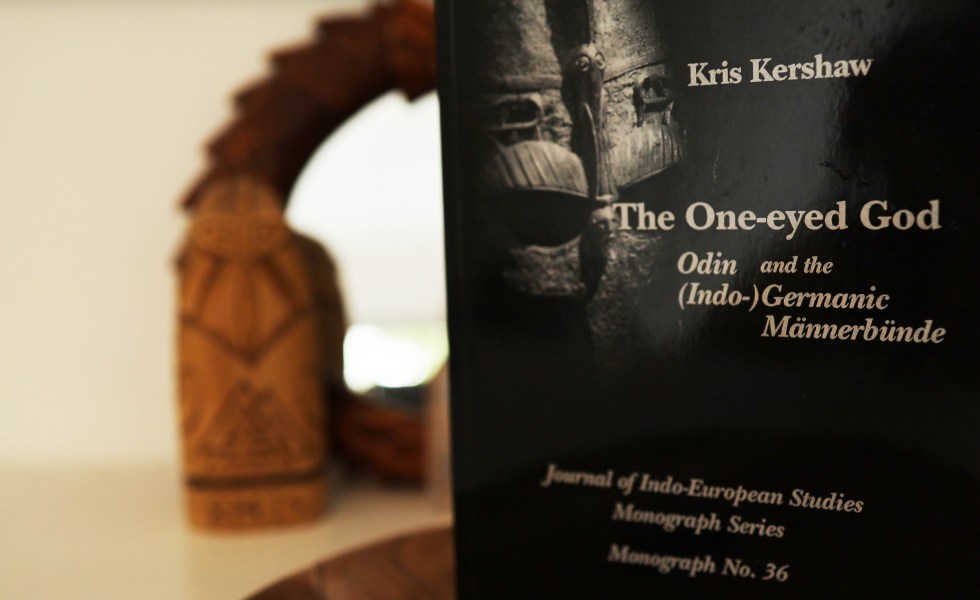
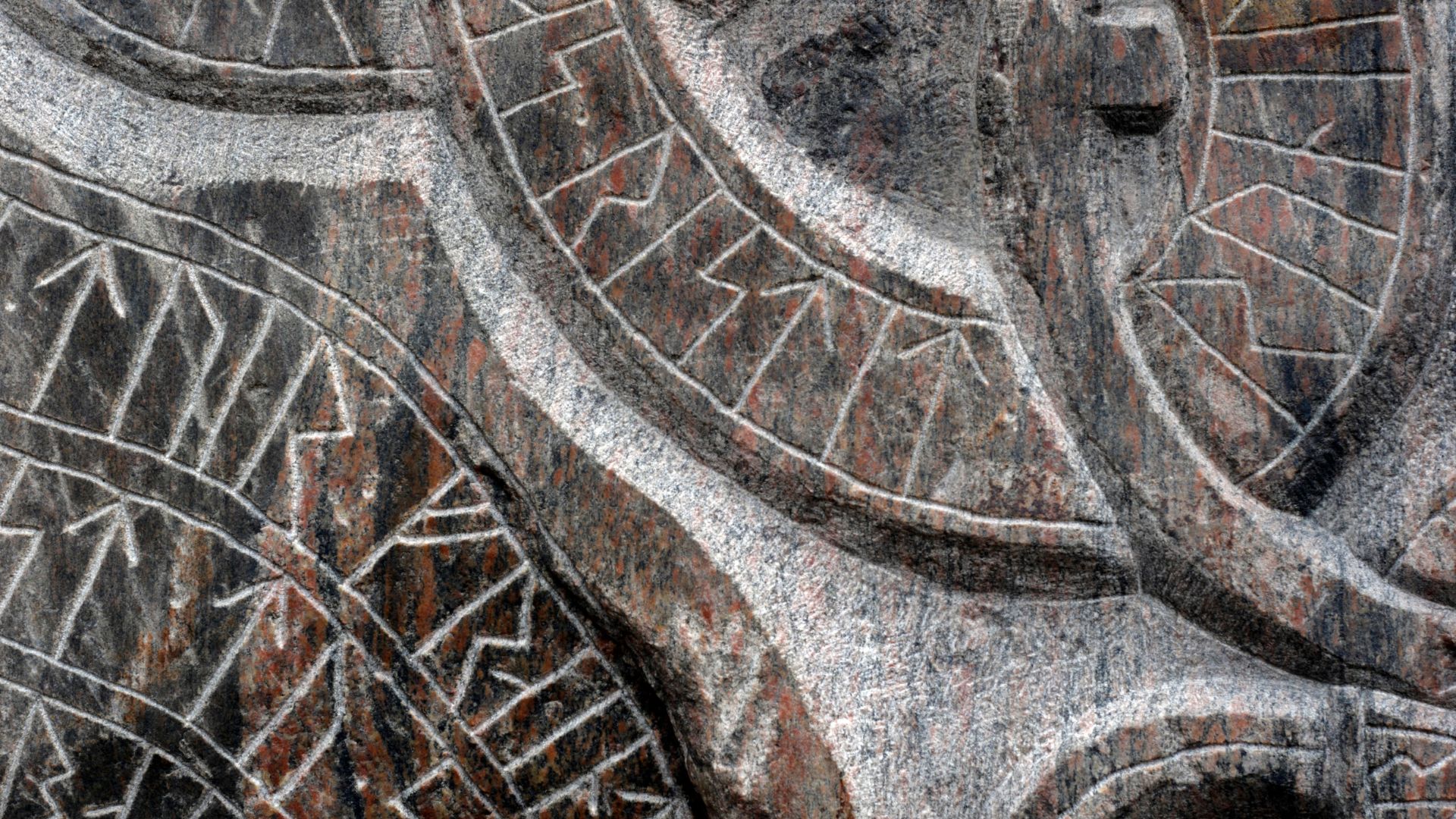
I have read The One-eyed God and the (Indo)-Germanic Männerbünde by Kris Kershaw. Written in 1997 as a dissertation, it is 457 pages long and contains plenty of interesting insights. One could liken it to a gold ore that can be mined for said interesting and valuable insights!
A Call to Action
The dissertation truly deserves to be made into a well-structured book. The content is great. However, it is not particularly smooth to read (plenty of text is in the footnotes, for example). It would also benefit from a clear structuring with regard to chapters and headers. Significant parts of the book are in German (when the author is quoting authors writing in German). On a personal note, it gave me an additional opportunity to train my German (which I am now doing, as I mentioned in a recent video) – but those who do not read German will miss out on some references.
I am mentioning this because the excellent work of the author deserves to be reworked into the book it is destined to be. Thus, my hope is that one of our friends with publishing companies can reach out to Kris Kershaw (or her sons) and investigate the possibility of having the document published anew.
The Koryos and Male Initiation
Related to the topic of the book at hand, I highly recommend this video by Dan Davis: The First Berserkers: The Koryos | Bronze Age Warfare, which is a great introduction to one of the most important aspects of Indo-European culture. Understanding the Koryos, the Männerbund, and male initiation, is the key to understanding the Indo-European expansion – and in understanding the Indo-European expansion, one can understand world history itself. Male initiation for many of the Indo-European peoples consisted of the young men leaving the tribe to enter the liminal state – meaning that the young men were no longer part of home nor part of the adult male community. How long this state was varied between cultures and time-periods, but the main point was that the boy leaves the home and tribe, spends time doing arduous activities (raiding, hunting, fighting) in the wild, before (hopefully) returning triumphantly as a man – whereupon he enters the social structure as an adult man of the tribe.
On a personal note, I have contemplated the issue of male initiation in our current time quite a bit. As I detailed in Podcast Episode 21. The Swedish Army, a mandatory year in the army used to be a sort of male initiation in Swedish society during the last century. I count myself fortunate in having had the opportunity to do the military service. However, as I note in this video, the army does not necessarily turn boys into men, but it can help them build the habits and mindset required to become a man. Either way, the topic of male initiation is an important one that we will return to.
Since I shared the following on Telegram, I thought to share it here as well since it is relevant to the topic at hand:
Dan Davis’ excellent book Gods of Bronze – Godborn is a historically accurate description of the Eurasian steppes of the Bronze Age with mythological elements (the Hercules myth) that follows a group of adolescents who are out on their Koryos (their time in the liminal state).

Odin – The Chariot God
As the title The One-eyed God and the (Indo)-Germanic Männerbünde suggests, the role of Odin (the One-eyed God) is, alongside the Koryos and Männerbund, a central theme of the dissertation. The author notes that Odin as the Rider-God is well-known (he is commonly depicted riding Sleipner). Odin is also, the author points out, a Chariot-God:
‘Odin is indeed the Rider-God /…/ But he is also Reiðartýr, Chariot-god, reminding us that IE warriors and their gods were chariot drivers long before they became riders.’
Kris Kershaw – The One-eyed God and the (Indo)-Germanic Männerbünde. Page 51.
In its day, the chariot was the gold standard of warfare – its development and use are vital to understanding the Bronze Age. The fact that Odin was known as a Chariot-God is of interest to those who study comparative mythology. For more about comparative mythology, you can read my review of Taliesin’s Map: The Comparative Guide to Celtic Mythology.
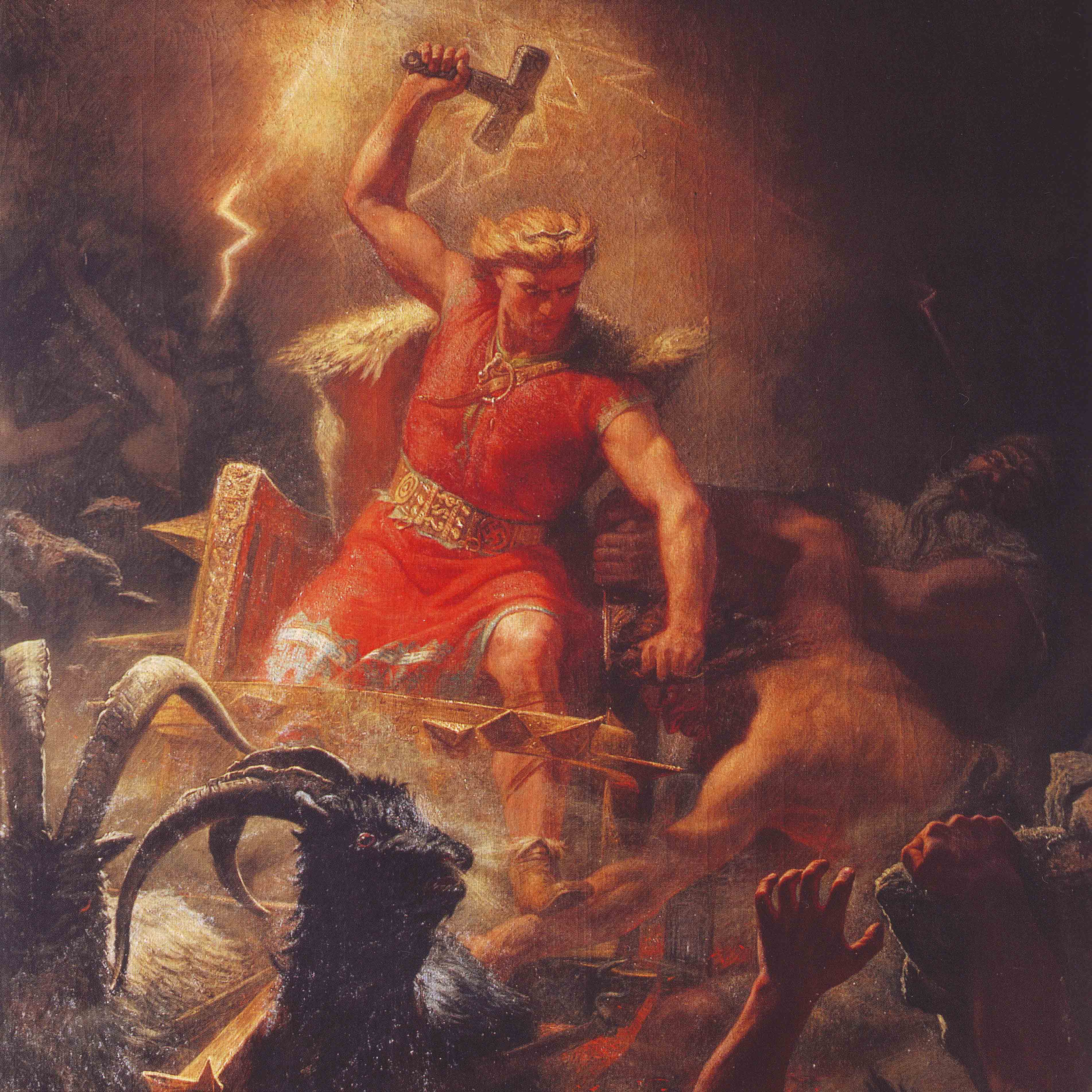
Odin’s son Thor is commonly depicted riding his chariot. Pictured below: Thor’s Battle Against the Jötnar (1872) by Mårten Eskil Winge. Jötnar = Giants (in this context, the enemies of the Aesir Gods).
Wolves, Dogs, Berserkers
The importance of the Wolf and Dog for the warrior is emphasised in the book. The author shares the following insight, which demonstrates the role of the Dog in the mythos of the tribe:
‘Ideally, both dog and warrior show a benign face towards their own people as their staunch defenders, while meeting their people’s enemies with hostility and aggression.’
Kris Kershaw – The One-eyed God and the (Indo)-Germanic Männerbünde. Page 295.
The author goes on to note that the warrior is dangerous and can also pose a threat to his own people (as a dog out of control can). She also discusses the problematic nature of the infamous berserkers – using Starkad* as an example. This nature can briefly be summarised as follows: good to use against one’s enemies, not as good to have in a civilised setting.
The importance of the wolf in Indo-European mythology is known to most. Odin had two wolves, Geri and Freki, and, as the legend goes, the founders of Rome, Romulus and Remus, were raised by a she-wolf. The author elaborates on the topic with more examples.
Survive the Jive (with memetic help from The Chad Pastoralist) made a video on Starkad which you can watch here: Starkad, the Sigma Male Viking Indo-European Lone Wolf.

Man–Boy Relationships in Greece
The author correctly points out the following in regard to the very misunderstood man-boy relationships of Ancient Greece:
‘The relationship between the mature warrior and the growing boy is one of nurturing and sponsorship; it has nothing to do with sex. It is, in fact, part of a rite of passage.’
Kris Kershaw – The One-eyed God and the (Indo)-Germanic Männerbünde. Page 83.
‘It must be stressed that the relationship was between a man and a beardless boy and ended when the boy became an adult physically; that the man was the affectionate sponsor of the boy, concerned for his development and well-being; that sponsorship was a societal was a social responsibility; and that intercourse, far from being the purpose of the relationship, was rare and governed by ritual form: the nurturing love of the philetor must not devolve into lust, the boy must not be exploited or womanized.’
Kris Kershaw – The One-eyed God and the (Indo)-Germanic Männerbünde. Page 83.
The author goes on to note that in the rare cases of intercourse, it was done between the thighs (standing) and not ‘in the body’ – the boy never ‘played the woman’. The importance of this topic is beyond the scope of this book review – suffice to say that nefarious forces are trying to misconstrue European history.
Heroes Greedy For Gold and Honour
The author notes the following:
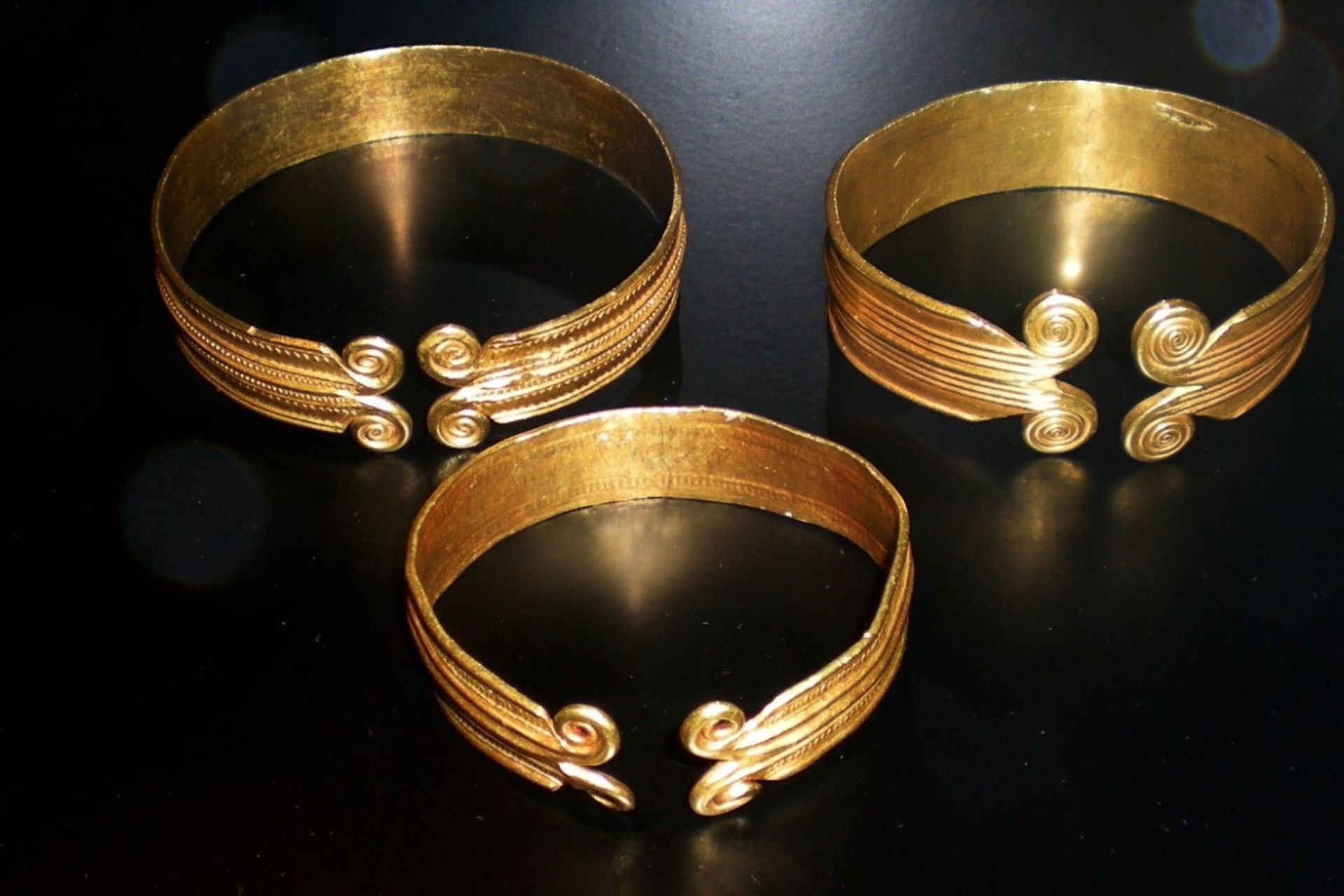
‘To us, the Viking and Anglo-Saxon heroes seem greedy, but it must be remembered that “rings” were more than golden objects /…/ They [the heroes] were greedy for honor; as great herds of cattle had brought honor to their forebears, gold arm-rings brought honor and respect to them, and of honor and respect one can never have too much.’
Kris Kershaw – The One-eyed God and the (Indo)-Germanic Männerbünde. Page 73.
It is common to encounter descriptions of a good Jarl as being ring-giver. A good Jarl should, of course, be a leader who can bring both wealth and glory to his followers. I elaborate on this in Dauntless.
On a personal note, my business ethic is the following: wealth gained from bringing value to my supporters is good. Thus, whatever product I present must bring value to the customer. This is also a good guideline for any content creator. Ask yourself: does this bring value to my subscribers? If the answer is no, then think of ways to add value. Moreover, as a consumer, ask yourself the following: does this content bring value to me? If you are watching a two-hour drama stream, then the answer will perhaps be no. If you are watching the aforementioned video by Dan Davis (or a video by Survive the Jive), the answer will most likely be yes.
What is stated above is not necessarily related to the topic at hand, but I thought to mention it for good measure. To conclude: wealth gained from supplying value is good. If you are in possession of wealth that has been accrued in a way that does not bring value – make sure to use that wealth to support those who do good work (content creators like the ones mentioned above, for example).
Conclusion
I wanted to write this review mainly as a way to encourage whoever has the possibility to do so to craft this work into the diamond it was meant to be. I would not necessarily recommend reading it as it looks right now, but when or if it comes out reworked into a book, then I will most definitely recommend it. If you are interested in these matters, I strongly suggest that you watch the videos of Dan Davis Author on Odysee or YouTube.
The Practical Art of Divine Magic by Patrick Dunn
Posted on June 19, 2022
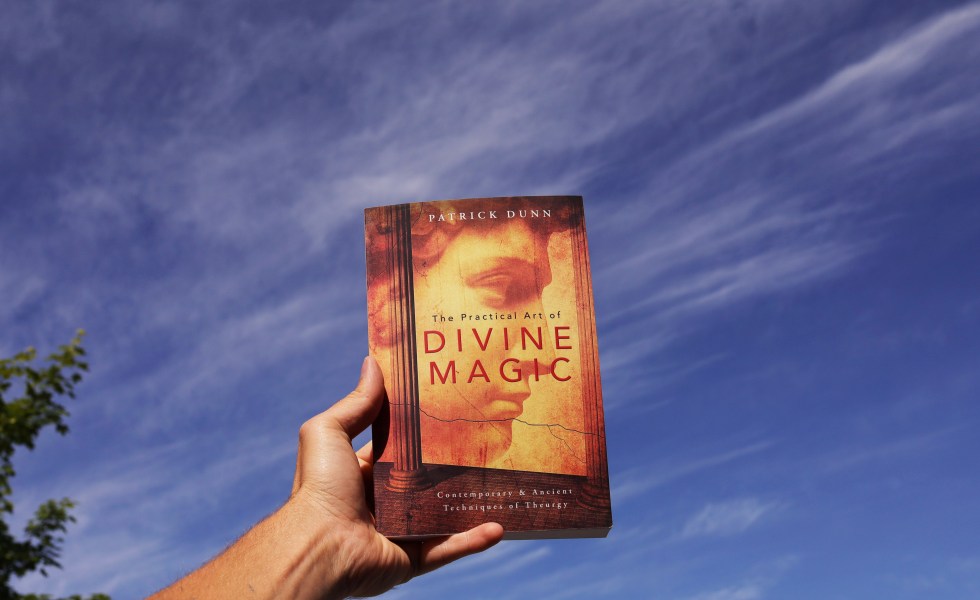
I have read The Practical Art of Divine Magic by Patrick Dunn per the recommendation of a trusted friend. It turned out to be a solid recommendation. The author discusses various, sometimes complicated, concepts and explains them in a very accessible way – making the book a good introduction to the metaphysics of antiquity. Since we have encountered Neoplatonic teachings in so many other books, reading this book was a natural next step. The book also contains some meditation techniques, as well as (like the title of the book suggests) practical instructions for worship of the Gods – in the author’s case, the Graeco-Roman Gods.
Neoplatonism and Theurgy
Neoplatonism is a term to denote the philosophers during Late Antiquity – the later years of the Roman Empire – who derived their metaphysical views from Plato (hence the name). A spiritual goal of the Neoplatonists was henosis – a sense of unity with the divine. Thus, they can be said to have belonged to the Right-Hand Path of magic that we encountered in our review of Lords of the Left-Hand Path by Stephen E. Flowers.
Theurgy basically means ‘god-working’ and is the practice of magic that looks upwards with the aim of unifying the human mind with the divine. One’s will is sent upward. An interesting quote shows the Platonic influence on Christianity.
‘The rise of Christianity did not kill theurgy; in fact, in many ways it invigorated it. Theurgic practices adapted well to the theology of Christianity and were sometimes incorporated wholesale. The gods became angels, the One became God, and the logos became Jesus. When the gospel of John begins “In the beginning was the Word, and the Word was with God, and the Word was God,” the Greek for “word” is logos. We could do a Neoplatonic translation of this just as easily, without having to modify the original Koine text at all: “In the beginning was the rational basis of the universe, and the rational basis of the universe was with the One, and it was also the One.”’
Patrick Dunn – The Practical Art of Divine Magic. Page 5.
The author also notes that later Christian Neoplatonists such as John Dee and Henry Agrippa (whom we have encountered before) among others contributed with their philosophies to the practice of magic.
Plotinus on Statues
The author shares an insightful quote by Plotinus, a chief proponent of Neoplatonism:
‘IV. 3, 11. The olden sages, in seeking to procure the presence of the Gods by erecting temples and statues, seem to me to have possessed deep insight into the nature of the universe: They felt the All-Soul to be a Principle ever at our call; it is but fitly preparing a place in which some phase of it may be received, and a thing is always fit to receive the operation of the Soul when it is brought to the condition of a mirror, apt to catch the image.’
Plotinus – The Ethical Treatises, being the Treatises of the First Ennead
The author notes that a statue is a site of contemplation of the One, through the intermediaries of the Gods. This is a good insight and a reasonable view of holy sites. We encountered another interesting view of statues in The Agni and The Ecstasy by Steven J. Rosen (read our review here). Pictured below, yours truly in San Ildefonso, Spain – a sacred place with beautiful statues galore!

Aristotle, Plato, and the Soul
I am not yet wise enough to give a definitive statement on the nature of the soul (one day I will!), but I thought the following passage would be interesting and relevant to share:
‘That the soul is a single thing, indivisible, comes from Aristotle, and this notion was a new one. Aristotle defined the soul as that first cause of thing, its purpose of being. The soul of a clock is to tell time. The soul of a dog is to be a dog. But the soul, for Aristotle, was merely the cause of the body; without the body, there was no soul, or need for one. Aristotle was responding to Platonism, which argues that not only is there a soul, it is the intermediary between the human consciousness and the world of Ideas, or Nous.’
Patrick Dunn – The Practical Art of Divine Magic. Page 30.
The author goes on to describe Plato’s tripartite division of the soul: the driver (the rational part), and the two horses (Eros and Thymos) – which I elaborated on briefly in a video (Lose Fat With Plato – Mental Technique to Resist Cravings).
Corpus Hermeticum
The Corpus Hermeticum that we encountered in our review of Evola’s The Hermetic Tradition (review here) is referenced in this book as well. Just as the teachings of the Neoplatonists are reoccurring in spiritual books, so is the wisdom of the Corpus Hermeticum. The quote below concerns astrology – a topic we will return to in coming book-reviews (or videos or Podcast episodes).
‘Each of us at birth, when we receive a soul, are taken under the wings of the daimones who are assigned that sign of birth, who govern each of the stars… So they, plunging into the two parts of the soul through the body, twist each to their particular energy; but the rational portion of the soul stands, unruled by the daimones, ready to welcome the divine.’
Corpus Hermeticum XVI: 15. Translation by Patrick Dunn.
We will encounter and elaborate on daimones again, but what we can say for now is that the daimon (which is not evil but not always benevolent) should not be confused with the (evil) demon of Christianity.
The Olympic Games
In a passage concerning festivals, the author describes the Olympic Games in the following beautiful manner:
‘The games themselves were a tribute to Zeus, showcasing the most perfect and beautiful achievements capable of the human body. But not only physical achievement was displayed: artistic and poetic talent also had their competitions. The festival was an offering of human beauty to the gods.’
Patrick Dunn – The Practical Art of Divine Magic. Page 115.
Keeping this in mind, one could argue that seeking physical perfection is an act of piety. Moreover, although the following quote is not from the book that is the subject of this review, it is highly fitting to include nonetheless:
‘/…/ Polynikes’ supreme physical beauty. In every aspect of his person, face as well as physique, the Knight was formed as flawlessly as a god. Naked in the Gymnasion, even alongside scores of youths and warriors blessed in comeliness and elevated by their training to the peak of condition, Polynikes stood out, without equal, surpassing all others in symmetry of form and faultlessness of physical structure. Clothed in white robes for the Assembly, he shone like Adonis. And armed for war, with the bronze of his shield burnished, his scarlet cloak across his shoulders and the horsehair-crested helmet of a Knight pushed back upon his brow, he shone forth, peerless as Achilles.’
Steven Pressfield – Gates of Fire

Conclusion
At 314 pages and written in an easily digested manner (as opposed to some other esoteric books one might encounter), The Practical Art of Divine Magic can be read within a reasonable time-frame. The book contains several more interesting insights in addition to the ones presented above. As stated in the introduction, it was a good recommendation by a trusted friend that I can now recommend to others.
Onwards and upwards!



 The Golden One
You must be logged in to post a comment.