Patreon Removed My Account
Posted on March 9, 2022

Patreon just removed my account – I have supposedly not adhered to their ‘community guidelines’. I have asked them to supply evidence of when and where this happened.
I am not expecting an answer though. And, being honest, we all know what is going on here. It is always the same story. You can watch this video: Why They Hate Me, and read this article: Statement on the Legio Gloria Instagram Removal for further context.
I get censored for who I am, not for anything in particular I say.
This is a heavy blow (it directly impacts my ability to supply for my family – which tells you quite a bit about the people who work against us).
🎙The Greatest Podcast will thus no longer be available on Patreon. However, it is available on SubscribeStar (the same is true for the Physique Manufactorum).
Am I down and demoralised? Not at all, this only shows that my work has effect. In fact, I will increase the uploading frequency of the Greatest Podcast. My initial plan was to make one episode a month, but going forward it will be more often.
Adversity only strengthens my resolve.
I am extremely appreciative of everyone signing up to continue subscribing to the Podcast.
The Sword and Shield of Carl Gustaf Wrangel
Posted on February 21, 2022

The sword and shield were taken as spoils of war by Carl Gustaf Wrangel from Voivode Jan Zamoiskij following the Battle of Warsaw in 1656. The set was, according to some sources, initially a gift from the Ottoman Sultan Murad III to Stephen Báthory – King of Poland and Grand Duke of Lithuania, Prince of Transylvania.
Picture: Skokloster, Sweden, Anno Domini 2020.
Taliesin’s Map: The Comparative Guide to Celtic Mythology
Posted on February 13, 2022

I have read Taliesin’s Map: The Comparative Guide to Celtic Mythology by J. Dolan. Taliesin was a Welsh seer-poet who is said to have tasted the liquid of poetic illumination – historical details of his life are sparse, so he remains a semi-mythological individual. He does not have a prominent role in the book, but the title of the book, Taliesin’s Map, fits rather nicely nonetheless.
The book is not only about Celtic mythology; the author compares myths from various Aryan traditions (Aryan = Indo-European) – primarily Celtic, Germanic, Greek, Roman, Iranic, and Indian. Below are some insights from the book I found interesting.
Note: if some of these topics seem unclear, it is natural. Many interpreters of religious traditions disagree with each other, and for each interpretation there are several that go against it. Religious tradition can be a bit of a jungle – the best way to navigate it is to simply read as much as possible and contemplate what sounds reasonable. When I am in doubt, I consult Survive the Jive.
Comparative Mythology
Comparative mythology basically means finding common themes in myths from different cultures – this ties into Perennialism, which I have mentioned before.
I have read quite a few books and articles that make rather far-fetched comparisons and speculations regarding religious traditions and myths. An example of this is Otto Rahn’s comparison between Balder (and Apollo) and Lucifer – more on this here: Lucifer’s Court – Book Review and Inspiring Quotes. Lucifer’s Court is a quite interesting book, despite some inaccurate claims, which is why I mention it here. I will not mention certain other books that are not as interesting. I point this out to emphasise the fact that many of the comparisons in Taliesin’s Map actually make a fair bit of sense.
The Heroes of the Iliad as Indo-European Gods
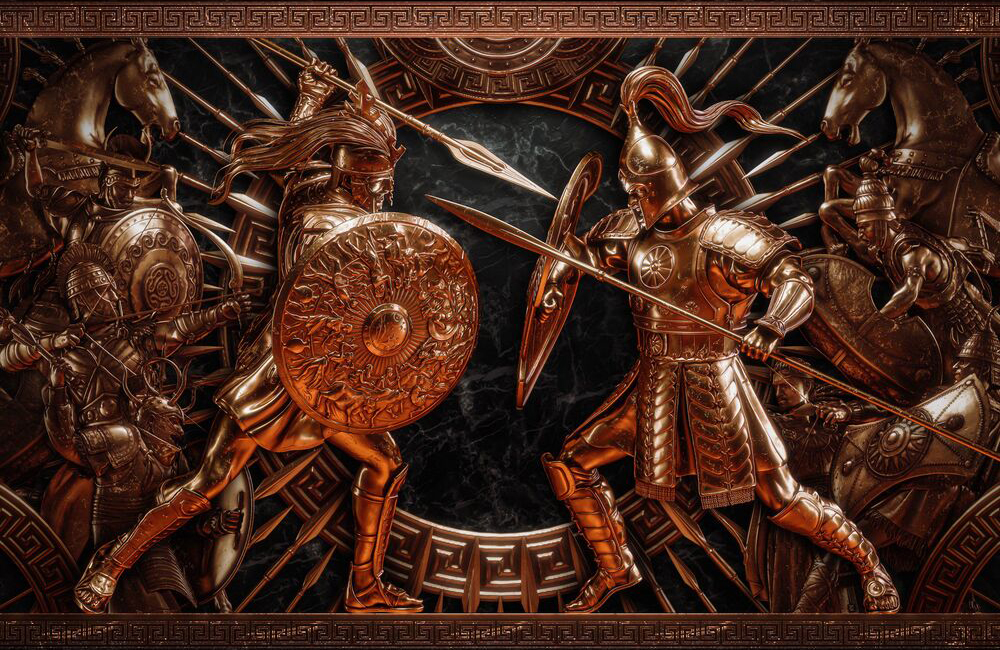
In the first chapter of the book, the author makes the case that, as the title suggests, the heroes of the Iliad can be seen as Indo-European gods. He connects many themes found in the Iliad with themes found in other mythologies. I found this chapter quite interesting. Below are some of the heroes he connects to gods.
Agamemnon – Varuna (The Terrible Sovereign)
Menelaus – Mitra (The Lawful Sovereign)
Ajax – Vayu (The Lord of the Wind)
Achilles – Indra (The Thunderer)
Odysseus and Diomedes – The Horse Twins (Nasatya and Dasra)
Paris – Surya (The Sun)
Hector – Kali (The Demon of the Dark Age)
Helen – Ushas (The Dawn Goddess)
The mythological aspect of the Iliad is intriguing, as is the historical aspect. I am not in a position to make a statement regarding the historicity of the the Trojan War, but it is not far-fetched to assume that the war itself happened and that many of the details surrounding it have their roots in historical facts. This was certainly the view of the German businessman and archaeologist Heinrich Schliemann (1822–1890), who mounted several expeditions in search of Troy. Below is the Mask of Agamemnon, discovered by Schliemann in 1876 at Mycenae. I will comment further upon the Iliad at a later stage.

Warrior Caste vs Priestly Caste
In the chapter The Great Lunar Cycle, under the title of Peredus as Horse Twin, the author discusses a reoccurring theme in various myths – the conflict between the warrior caste and the kingly/priestly caste. This ties into the disagreement between Evola and Guénon mentioned in this book review: Julius Evola and the UR Group – Introduction to Magic: Volume II & III.
Although the disagreement between Evola and Guénon is not strictly related to the context of the chapter in Taliesin’s Map, I thought to mention it since it is a reoccurring topic in discussions regarding religion and tradition.
This conflict appears in the Iliad between Achilles (warrior) and Agamemnon (king) and in the ancient Indian Mahabharata between Arjuna (warrior) and Yudhishthira (king). The author also mentions the legendary third king of Rome, Tullus Hostilius (warrior), who succeeded Numa Pompilius. The former viewed the latter’s pacifism as a weakening of Rome. More examples from the various Indo-European mythologies are given.
Trifunctional Hypothesis
The trifunctional hypothesis of prehistoric Proto-Indo-European society, introduced by French mythographer Georges Dumézil in 1929, postulates a tripartite ideology (in French: idéologie tripartite) reflected in the existence of three castes – kings/priests, warriors, and producers/farmers.
Although the hypothesis has some merit, it does not apply to all Aryan societies. As Evola mentioned in a response to Guénon (read more here), the kings and (later) emperors of Rome simultaneously held the title Pontifex (the highest spiritual authority). Germanic kings were also from the warrior caste.
I mention this here since it can be good to be familiar with this concept prior to reading Taliesin’s Map.
The Ambivalent Nature of the Sun and Sun Gods
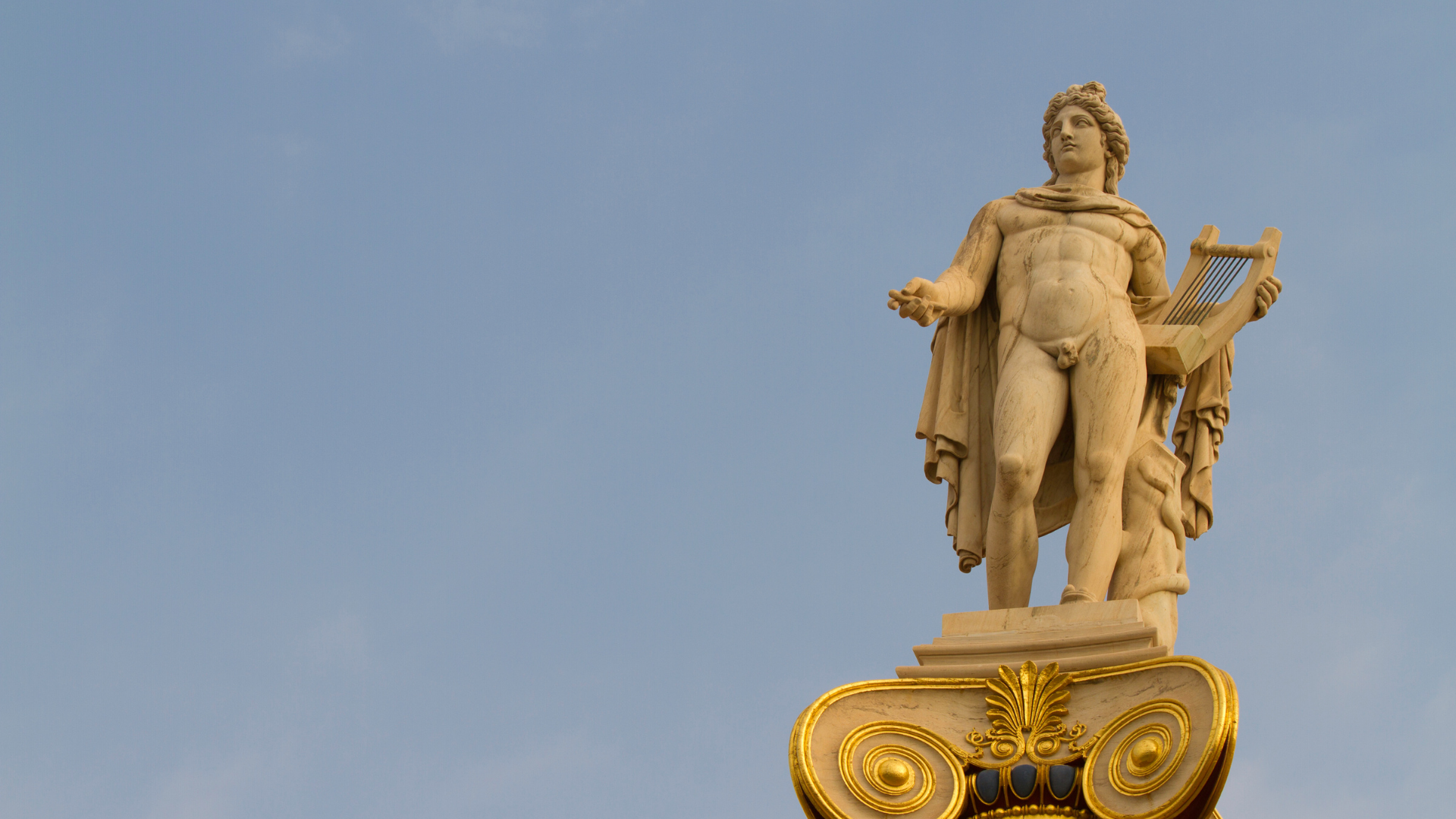
‘The Sun God heroes are always depicted as morally ambivalent, yet highly noble nonetheless. This is due to the way the Indo-European peoples viewed the Sun, as often inhospitable, even abusive, potentially exceedingly destructive, a psychopomp who draws souls down to their fates and then to the land of the dead, and yet as beautiful, life giving, a symbol of intellect and sovereignty, and associated with the elitist esoteric pursuit of immortality. ’
Taliesin’s Map. Page 34.
Over the last while, I have talked quite a bit about solar worship. Worth pointing out is that the Sun can indeed be seen as both benevolent and malevolent. For someone who lives in Scandinavia, it is virtually always benevolent. Especially for the particular Scandinavian phenotype that tans well and gets lighter hair as a result of sun exposure – as I pointed out in the latest Podcast episode when talking about the blessings of solar gods. On the other hand, for a redhead living in California (to give an example), the Sun will most likely not only be seen as benevolent.

The Golden Irish God Bres
‘Then she saw that it was a man of fairest appearance. He had golden-yellow hair down to his shoulders, and a cloak with bands of gold thread about it. His shirt had embroidery of gold thread. On his breast was a brooch of gold with the lustre of a precious stone in it.’
Description of the Irish god Bres. Page 39.
As we have previously noted, any good esoteric book must contain descriptions of golden gods. The context of this passage is in regard to a comparison between an Irish and an Indian myth, where a Sun god makes love to women – in the Irish case, the woman may be a representation of Ireland.
Rome and the Sabine Women
In a the chapter The Great Lunar Cycle, under the title of The Welsh “Aesir-Vanir War”, the author notes that there are similarities between the Welsh myth of the Mabinogi (also called Mabinogion) and the historical-mythic Roman ‘Rape of the Sabine Women’. The story of the Romans and the Sabine women may be a myth, but the story closely aligns with the modus operandi of the Aryan (Indo-European) Koryos – i.e. a band of young men entering a territory, conquering land and women, thus (in some cases) creating a civilisation (in this case Rome).
This is a highly interesting topic that we will return to. To learn more about the Koryos and Bronze Age Europe, I can highly recommend the videos of Dan Davis. Available on Odysee here: Dan Davis Author.
Mithraic Mysteries
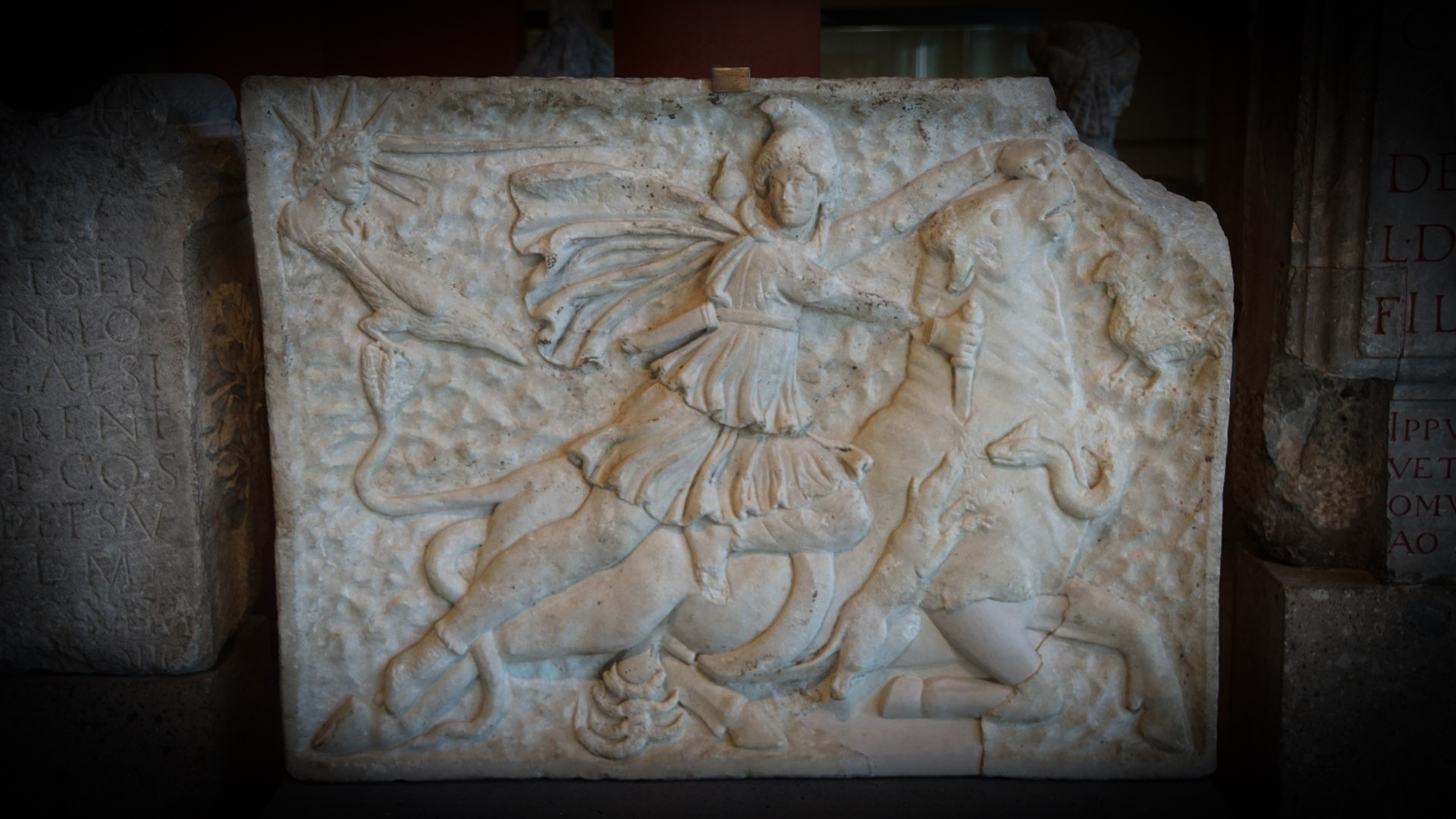
By now, we are all familiar with the Mithraic Mysteries. The author begins the chapter The Mithraic Path of Immortality and the Mithraic Mysteries with a reference to an essay by Julius Evola titled The Path of Enlightenment in the Mithraic Mysteries, I will elaborate on this essay in a coming post (or Podcast episode or video). The author notes that there are two extremes in current scholarship regarding the Mithras Cult – one which denies any links to Iranic religion, and one that views it as a direct religious import. He then correctly emphasises the fact that both Roman and Iranian mythology share common Aryan origins:
‘Could it be that the Mithraic mysteries derived their general narrative framework from the archaic Indo-European mythological narrative itself, from the clearly central and important path of the great Sovereign of Justice, the Mitraic god?’
Taliesin’s Map. Page 506.
The deity in question has different spellings: Mithras, Mithra, Mitra etc. Mithras = the Graeco-Roman god. Mitra = the Iranian god. This can be good to keep in mind to avoid confusion!
Conclusion
At 525 pages, reading the book will be a bit of a time investment. Many chapters are also quite technical and detailed – which lends credence to some of the comparisons and takes. However, for someone who is new to this sort of material, it might be overwhelming. I enjoyed reading it and found many of the chapters insightful. If you are interested in mythology, I can recommend it.
You can follow the author at Telegram here: https://t.me/solarcult (the Telegram channel is also worth following).
Folktales in the Indo-European Tradition
Posted on February 9, 2022
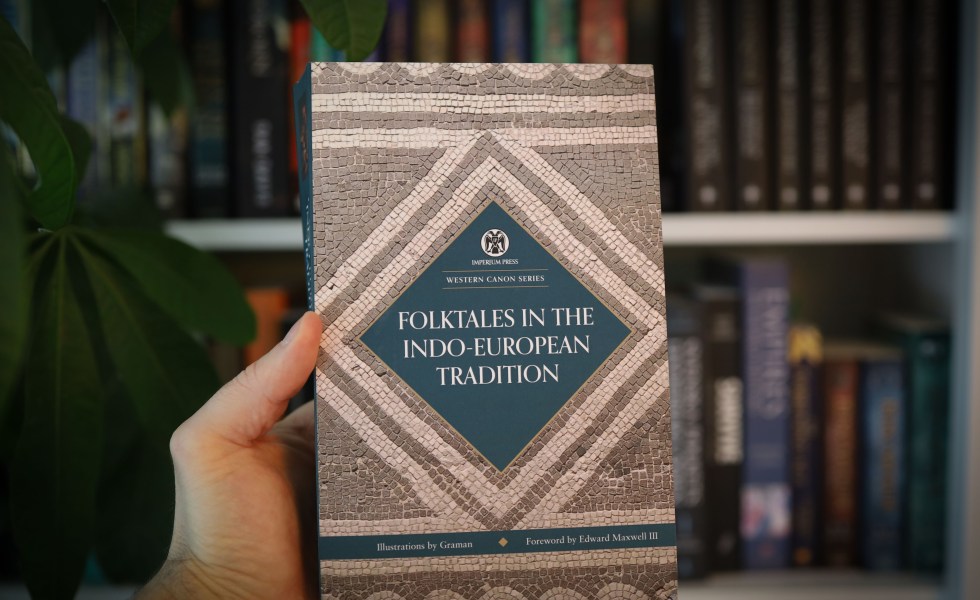
Folktales in the Indo-European Tradition by Imperium Press is a 757-page behemoth of a book. Part of their Western Canon Series, it covers (as the name suggests) folktales from various Indo-European traditions. The book also contains beautiful illustrations. I can definitely recommend the book, it is a nice addition to any library, and will be especially useful for parents who wish to introduce their children to our stories.
Contents
- Proto-Indo-European
- Proto-Western-Indo-European
- Proto-Germanic-Italo-Celtic
- Proto-Baltic-Slavic
- Proto-Celtic
- Proto-Germanic
- Proto-Romance
Some of the tales will probably be familiar – Beauty and the Beast and Little Red Riding Hood for example. Most others will perhaps not be as familiar. This is especially true in this day and age where many Europeans are ever more disconnected from their history and culture.



 The Golden One
You must be logged in to post a comment.