Ernst Jünger – A Different European Destiny by Dominique Venner
Posted on November 9, 2024
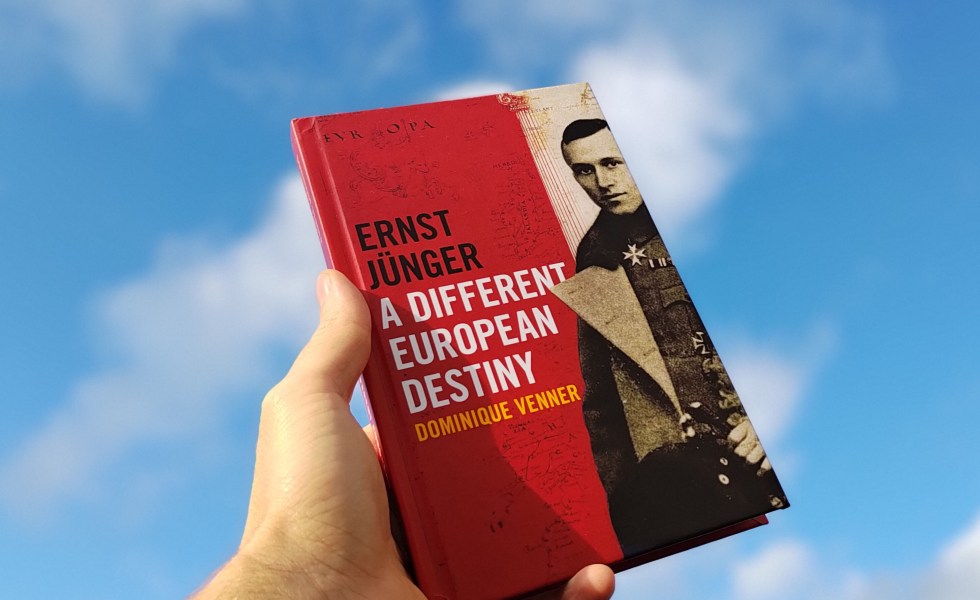
I have read Ernst Jünger – A Different European Destiny by Dominique Venner. As I mentioned upon seeing the announcement of the release of this book: a High-Thumos Chad writing about another High-Thumos Chad! The author, Dominique Venner, was a man cut of the same cloth as Jünger – men of action and contemplation, Cultured Thugs in the finest sense of the word.
Germany and France
Since the book is written by a Frenchman and is about a German, it is natural that the book contains some interesting observations regarding these two (formerly) titanic nations. Their destinies are intertwined – as I have observed before. Venner notes that Jünger was an admirer of French culture. He also notes the following:
‘And although in the 18th century, the French had an aversion to the Habsburgs, who were considered their traditional enemies, they were full of admiration for the King of Prussia, a German prince. The antagonism between the two peoples would only awaken after 1870, against a backdrop of French defeat and territorial conflict relating to the Alsace and Moselle regions.’
Dominique Venner – Ernst Jünger. Page 81.
In the same chapter, the author emphasises the fact that the destructive Franco-German rivalry truly began with Prussia’s defeat of France in 1871.
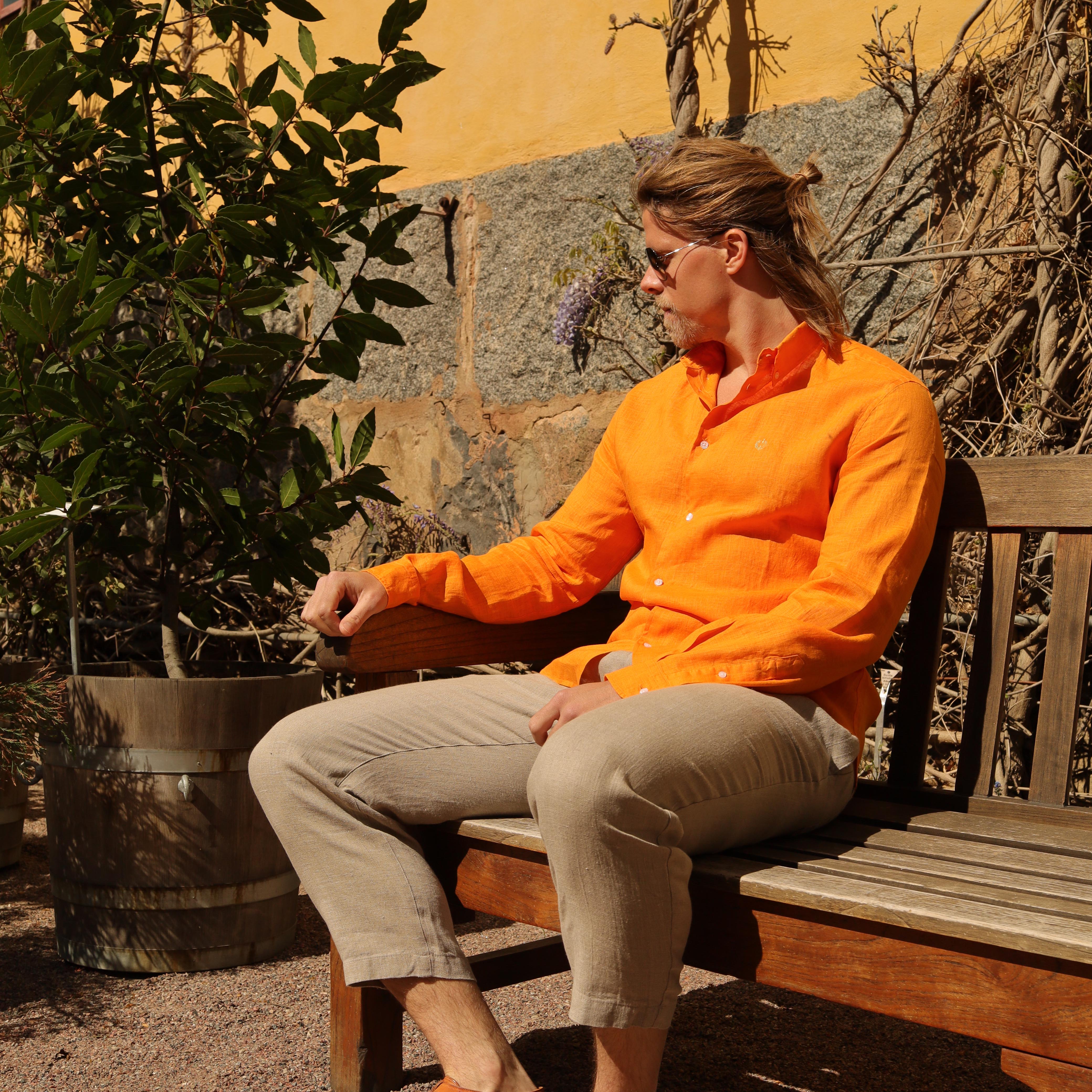
Pictured below: A Swedish Agent of European Civilisation full of admiration for both French and German culture. Location: Bayonne, France.

Germany and Russia
The author also shares an interesting insight regarding Germany’s relationship with Russia. The following passage appears under the title Northern Germany and Southern Germany:
‘In Germany, the borders that delineate people’s feelings towards Russia coincide with the very ancient, cultural and historical border of the Limes and the Main. It divides Germany in two: a predominantly Catholic Germany, that of the South-West, which was subjected to Roman and Catholic influence; and another, that of the North-East, which evaded it. The former is associated with the Austro-Hungarian monarchy and was often at odds with Russia, with the latter acting as the heir to the Prussian and Lutheran tradition and frequently seeking an alliance with Russia.’
Dominique Venner – Ernst Jünger. Page 57.
I will return to this fascinating subject in a coming podcast episode. An example of when Prussia allied with Russia was during the Partitions of Poland. Hostilities between Germany (in this context its North-Eastern part) and Russia can be found when studying the history of the Teutonic Order.
German Romanticism
In the chapter titled Weimar and the Conservative Revolution, the author shares the following insight:
‘A powerful intellectual and poetic current born at the end of the 18th century, German romanticism rebelled against the artificiality and rationalism of French Enlightenment. Following in Herder’s footsteps, it contrasted abstract universalism with the living and multifaceted reality of different cultures, in the context of which all peoples are bearers of their own original genius, of a soul that endures through time by adopting ever-changing forms and of which language is the expression.’
Dominique Venner – Ernst Jünger. Page 42.
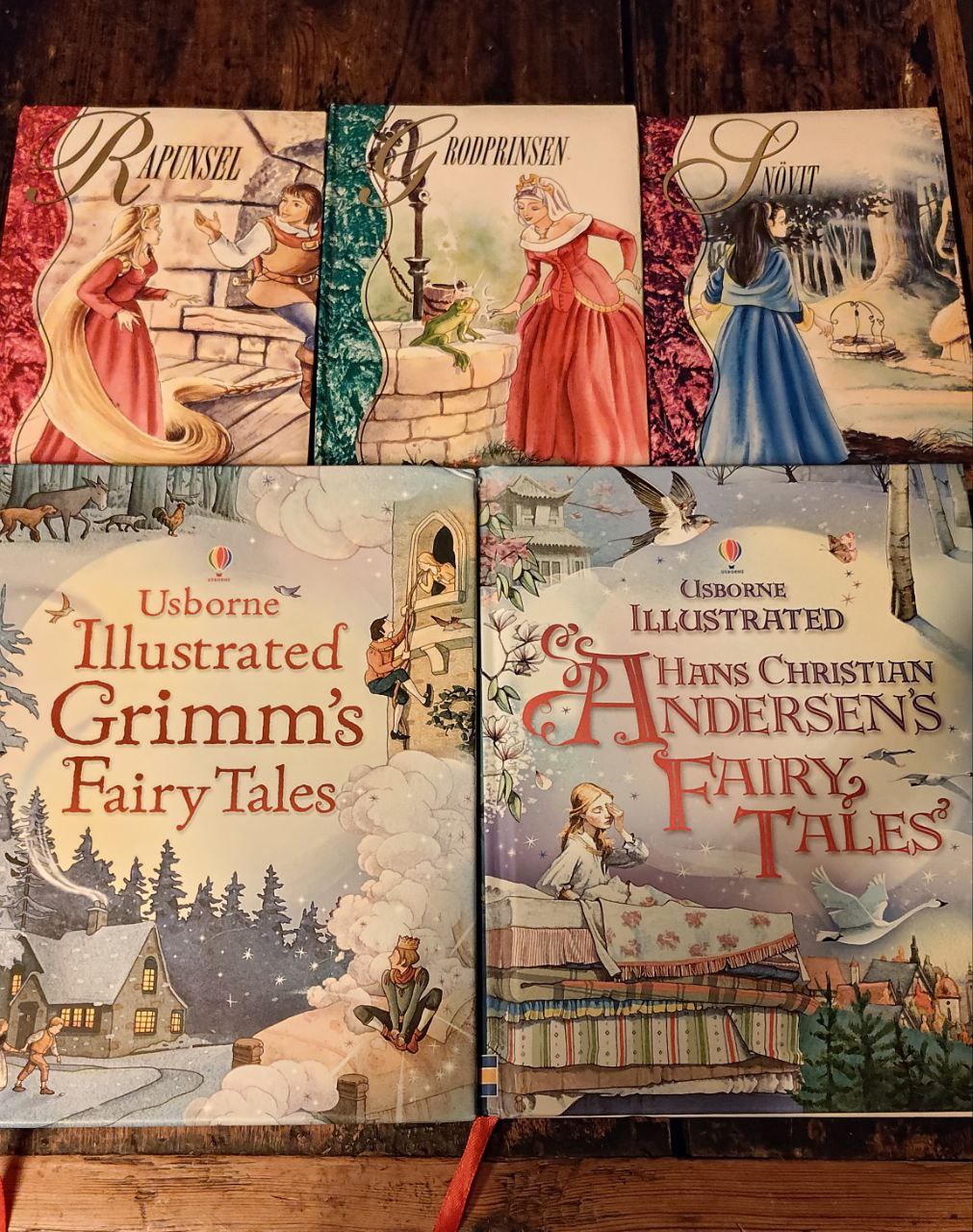
Well formulated! Sensitive Young Men must be familiar with German Romanticism. My to-read-list is quite long, but I will endeavour to read Die Leiden des jungen Werthers (The Sorrows of Young Werther) soon. Speaking of German Romanticism – the Brothers Grimm, to be precise – I recently shared that I read a few stories for my elder daughter (five years of age) every night (below are some of the books I read from):
A Sensitive Man of Culture
In the epilogue, the author shares the following beautiful description of Jünger:
‘Whether in times of war of periods of peace, it is his life that testifies to his having been an exemplary European. Ever wakeful within him was the immanent perception of a beautiful and dangerous world. A man of both action and contemplation, of high culture and great sensitivity, he managed, thanks to his unbroken fondness of France, to reconcile within himself the two brotherly and sometimes rival peoples born from the Carolingian world, a world that traced the visible outlines of the European body.’
Dominique Venner – Ernst Jünger. Page 195.
A strong bond between France and Germany is of utmost importance in order for Europe to reclaim its own destiny. I will elaborate more on this later on.
Conclusion
Ernst Jünger – A Different European Destiny has 212 pages and serves as a good introduction to the life and work of Ernst Jünger. I would recommend the book not only to those interested in the man himself or in European literature but also to those interested in the chaotic first half of the 20th century in Germany. As shown above, the book also contains plenty of historico-geopolitical insights.
Great stuff!
Pagan Imperialism by Julius Evola
Posted on October 20, 2024
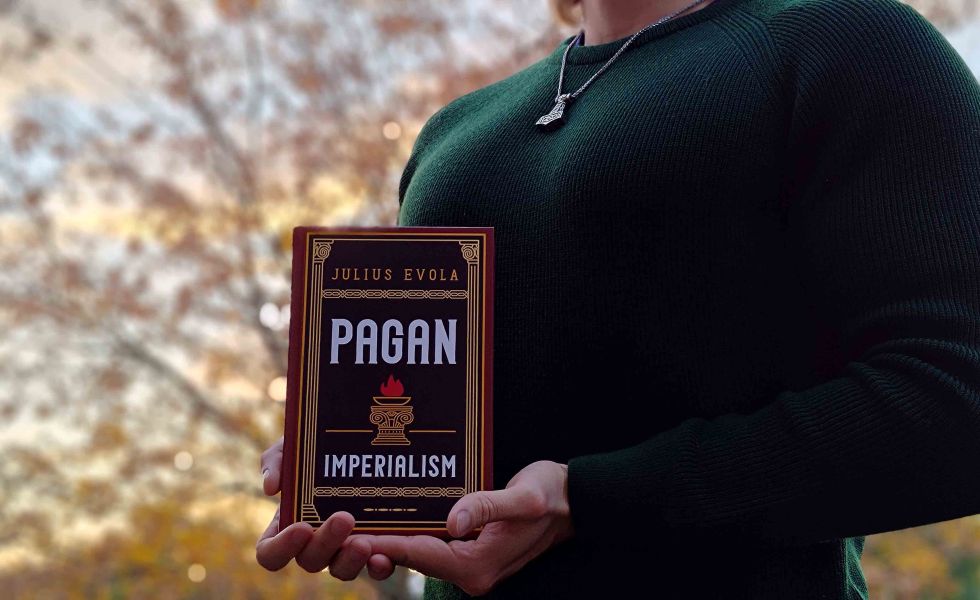
I have had the pleasure of reading one of our esteemed Baron’s early works – Pagan Imperialism. This edition by Arktos comes with two helpful forewords; the first is by James Kirkpatrick – whose clear-sighted sociopolitical commentary I always appreciate. Enjoyers of Evola will be familiar with many of the views presented in the book (he returns to them in his later books) – the only major difference I noticed was that he uses the term Mediterranean in a positive sense in this book. In his later works he juxtaposes the Mediterranean (negative) against the Aryan-Roman (positive). Pagan Imperialism is Evola’s harshest critique against Christianity – when reading it one can sense his hope for Italy to return to a Pagan Imperial* Tradition. As it turned out, Mussolini chose an alliance with the Catholic Church – to Evola’s dismay.
*Imperial in this context does not necessarily refer to an empire which conquers other nations, but rather a Tradition in which the Emperor (and not the Pope) holds the highest spiritual authority (thus combining temporal and spiritual power, and not separating them).
Why Do I Read Evola?
I responded to this question at length in Podcast Episode 48. Contemplations on the Mountain. Formulated in the most unpretentious and straightforward way possible, reading Evola makes me feel cool. It makes me feel like I am in the League of Shadows in Christopher Nolan’s Batman, or like I am about to embark upon an expedition to find Shambala. Do not get me wrong; in Evola’s many books there is plenty of valuable knowledge to be found – especially when it comes to religio-social and esoterico-magical matters. For me, however, the most potent magnetism of his work lies in his epic and unapologetic way of describing things. The following quote is a good example:
‘Similarly, the Indo-Aryan tradition knows of Shveta Dvipa, the “Island of Splendor,” also located in the extreme North, where Narayana, the one who “is the light” and “stands above the waters” (above the randomness of events), resides. They also speak of the Uttarakura, a primordial Nordic race; for them, “Nordic” means the solar path of the gods – deva yāna – and the term uttara conveys the concept of everything sublime, elevated and superior – what can be called Arya, Aryan, in the sense of Nordic.’
Julius Evola – Pagan Imperialism. Page 7.
Sounds absolutely epic. The quote continues:
‘The Achaean-Dorian lineages are heirs to the legendary Hyperborean Nordics: from here came the most characteristic god and hero of this race, the solar Apollo, the destroyer of the serpent Python.’
Julius Evola – Pagan Imperialism. Page 7.
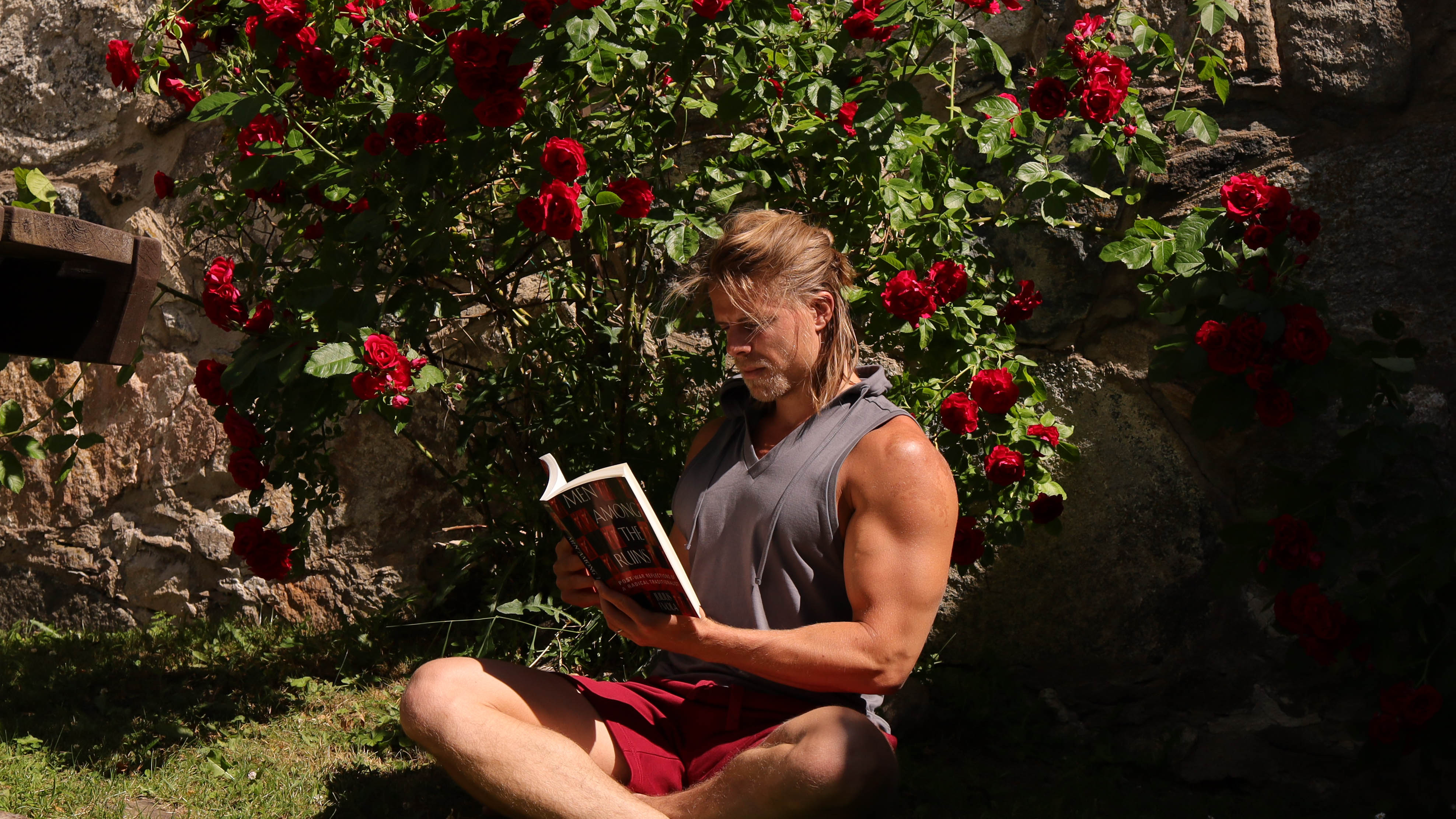
The historical context behind these myths is that the ruling castes of Iran and India originated in Europe – I have discussed the Corded Ware Culture at length elsewhere. Pictured below: An Aspiring Mystic reading Evola’s Men Among the Ruins (review).
Catholicism and Christianity
A main point in the book is that there is a difference between Catholicism and Christianity. Evola notes, in regard to the formation of the Roman Catholic Church, that a compromise was reached (meaning that Pagan elements were retained).
‘Let us state this point without uncertainty. Christianity is one thing, Catholicism is another.’
Julius Evola – Pagan Imperialism. Page 33.
In the foreword James Kirkpatrick refers to the excellent book The Germanization of Early Medieval Christianity by James C. Russel (review) – in which the author details the changes Christianity underwent as it came into contact with European (first Graeco-Roman and later Germanic and Celtic) religious traditions. In another book Evola notes the following:
‘Whoever is traditional by being Catholic, is not traditional but halfway.’
Julius Evola – Recognitions. Page 120.
So, he is not necessarily hostile to the Catholic Church, but rather he views it as insufficient.
Charlemagne and the Pope
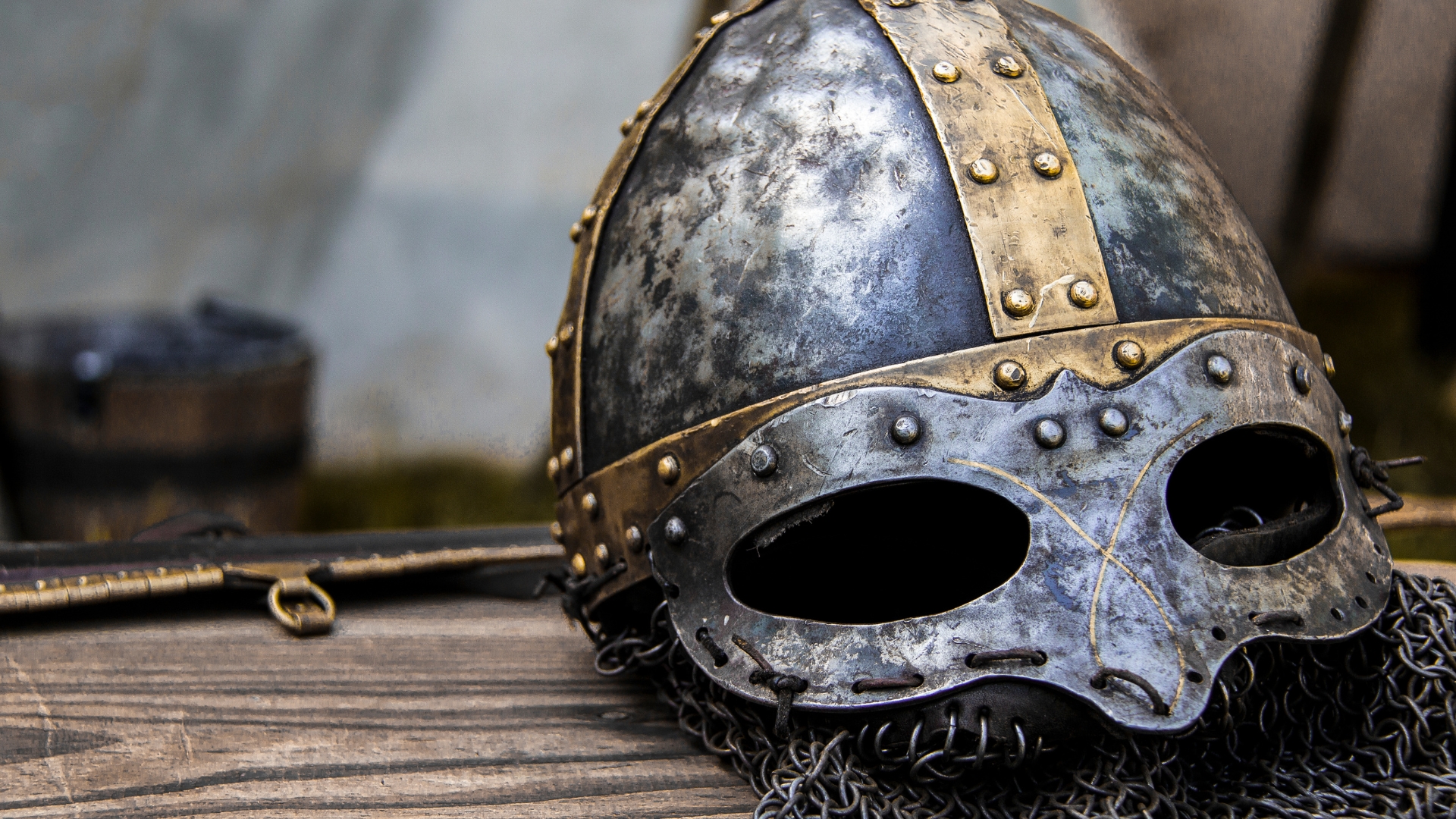
In the chapter titled Pagan Values and Christian Values, Evola notes that Pope Leo III prostrated himself before Charlemagne during the latter’s coronation. This event was pleasing to Evola since the correct hierarchy was observed – i.e. Emperor being higher than the Pope. Pagans usually dislike Charlemagne for his brutality against the Pagan Saxons. Said brutality was responded to by our Scandinavian forefathers – who retaliated with a holy war against the Christian nations (the Frankish one, for example). There were, of course, other factors that ignited the Viking Age, but the religious aspect is an interesting one to take into consideration.
The Guelphs and Ghibellines
Since I have reviewed quite a few of Evola’s books, I have talked about this at length before (both in my podcast and in book reviews), but it bears mentioning here as well since understanding the conflict is central to understanding Evola’s views on Imperium. The Guelphs were supporters of the Pope, the Ghibellines were supporters of the Holy Roman Emperor. Evola maintained that the true Solar-Pagan Regal Tradition was that the Emperor (Pontifex Maximus during Roman times) should be the highest spiritual authority – and not the Pope.
Jesus as God-Man
Evola says the following about Jesus:
‘Jesus is not the highest and noblest type of man imaginable. Jesus is not of the race of god-men.
Julius Evola – Pagan Imperialism. Page 158.
For us, as for the Romans, a god-man cannot be someone who was executed and crucified.’
I will share my own view of Jesus in a coming video, but what I can say for now that I believe Jesus to be a noble and divinely blessed man – he is not a God of mine, but I respect him, and he has a place in my heart by virtue of having been an important entity for many of my ancestors. On the following page, Evola says the following about the Buddha:
‘We are sceptical of all the so-called virtues of Christ and his followers because they often seem like mere disguises for necessity. We also understand sacrifice, dedication, forgiveness, and love, as we have already mentioned. But true renunciation is not for those who have nothing to lose. It is for the Buddha, who – young, beautiful, and regal, with the world at his feet – says no to it all.’
Julius Evola – Pagan Imperialism. Page 159.
For those interested in Evola’s views on Buddhism, I can recommend The Doctrine of Awakening (review) and The Yoga of Power (review). Pictured below: Yours Truly meditating upon the cosmos after reading said books.

Biological Race is Not Everything
In the chapter titled The Democratic Error, Evola shares the following:
‘We must remember that speaking of blood in humans is not the same as in animals. If by blood we mean the biological heritage of a race, race in animals is everything, whereas in humans it is only a part.’
Julius Evola – Pagan Imperialism. Page 95.
There is a popular misconception regarding Evola’s views on race. The misconception is that he did not place emphasis on biological race. He never said that biological race was not important. As shown in the quote above, he (correctly) just emphasised the fact that biological race is not everything, and it would be a mistake to only focus on that aspect of the human being. He elaborates on this at length in other books – I also elaborate on the matter in Dauntless.
Conclusion
Pagan Imperialism has 234 pages and is one of Evola’s more accessible works – making it a good book to start with for those who are unfamiliar with the author. I can also recommend it for those who are previously familiar with Evola! Lastly, I want to thank Arktos for doing a really good job with this edition – beautiful stuff!
The Book of Primal Signs by Nigel Pennick
Posted on October 13, 2024

I have read The Book Primal Signs – The High Magic of Symbols by Nigel Pennick. In the book, the author presents and discusses various common (as well as some rarer) symbols – primarily spiritual ones. Below are a few insights from the book.
Orthodox Icons
In the chapter titled A Symbolic World, the author discussed the Abrahamic attitudes towards images and icons. He shares the following insight:
‘There was a fierce fight using violence over images in the Eastern Church, which went on for decades until it finally led to the reinstatement of image making and the development of the instantly recognizable Orthodox icon.’
Nigel Pennick – The Book of Primal Signs. Page 2.
As an appreciator of Orthodox icons, I am happy that the good faction won this fight! Pictured below: My modest collection of icons.

The Destruction of Meaningful Symbols
As any reasonable person should, the author takes issue with the destruction of unique and beautiful symbols.
‘Traditional ornament was denigrated during the twentieth century by futurist-inspired, machine-loving architectural theorists who claimed puritanically that only machine-made blank surfaces were morally proper and that the authoritarian brave new world of the future would be devoid of ornament and the decorative arts. Part of the underlying reason for this crusade against art was the mistaken belief that if one destroys all meaningful cultural references to local identity, then one will abolish human conflict by making all people the same.’
Nigel Pennick – The Book of Primal Signs. Page 7.
This is a good analysis. A less generous one would be to state that the impulse described above is simply the Leftist hatred of beauty. Beauty implies a hierarchy and Leftists hate hierarchy. I elaborate more about this important topic in Demigod Mentality. Pictured below: A Nordic Druid absorbing natural energies.
The Temperance Tarot Card
In the chapter titled The Crescent Moon, Star, and Comet, the author discusses the symbolism of the Tarot cards:
‘The star as a tarot card has the traditional imagery of a woman with vases in each hand, an imagine of one of the four cardinal virtues, Temperance, who pours water into wine, producing a synthesis that retains the best qualities of two opposites while eliminating their worst natures.’
Nigel Pennick – The Book of Primal Signs. Page 64.
Quite beautifully stated about the Temperance card – something to be meditated upon! I will return to the Tarot later on.

Cosmic Axis
In the chapter titled The Tree of Life, the author discusses symbolism surrounding trees.
‘As the cosmic axis, the tree is a significant element in shamanism, linking the world we live on with those above and below, allowing the shaman to travel between the worlds. Trees are, of course, the natural habitat of many kinds of living birds, but drawings and artifacts from shamanic cultures also frequently depict birds as a metaphor for the soul or externalized consciousness. Christian symbolism depicts the Holy Ghost, and aspect of God, as a dove.’
Nigel Pennick – The Book of Primal Signs. Page 84.
Speaking of which, I note the following about the Rune Eihwaz Demigod Mentality:
‘Eihwaz – The World Tree, the Axis Mundi. Eihwaz can be said to represent Yggdrasil or, more precisely, the vertical axis of Yggdrasil. The Rune can be seen as representing different levels of consciousness. Eihwaz penetrates through Asgard, Midgard, and Hel – heaven, middle-earth, and the underworld. Similarly, your own consciousness can also travel up and down along this axis.’
Conclusion
The Book Primal Signs is a valuable resource for those who want to understand the meaning of symbols and should be of interest for those interested in spiritual matters and folklore. The book has 200 pages.
Pagan Magic of the Northern Tradition by Nigel Pennick
Posted on October 10, 2024

I have read Pagan Magic of the Northern Tradition – Customs, Rites, and Ceremonies by Nigel Pennick. As the title suggests, the book contains a treasure trove of insights relating to European (primarily British and Scandinavian) folklore and our magico-religious traditions.
Paganism is Participation
In the introductory chapter, the author shares the following well-formulated insight:
‘Ancient Pagan religions in Europe were concerned with rites and ceremonies; there was neither creed nor essential doctrines. All members of the family, clan, tribe, or nation participated in ritual activities, but belief was not demanded of the participants. There was no orthodoxy, and no heresy; participation was all that was required.’
Nigel Pennick – Pagan Magic of the Northern Tradition. Page 1.
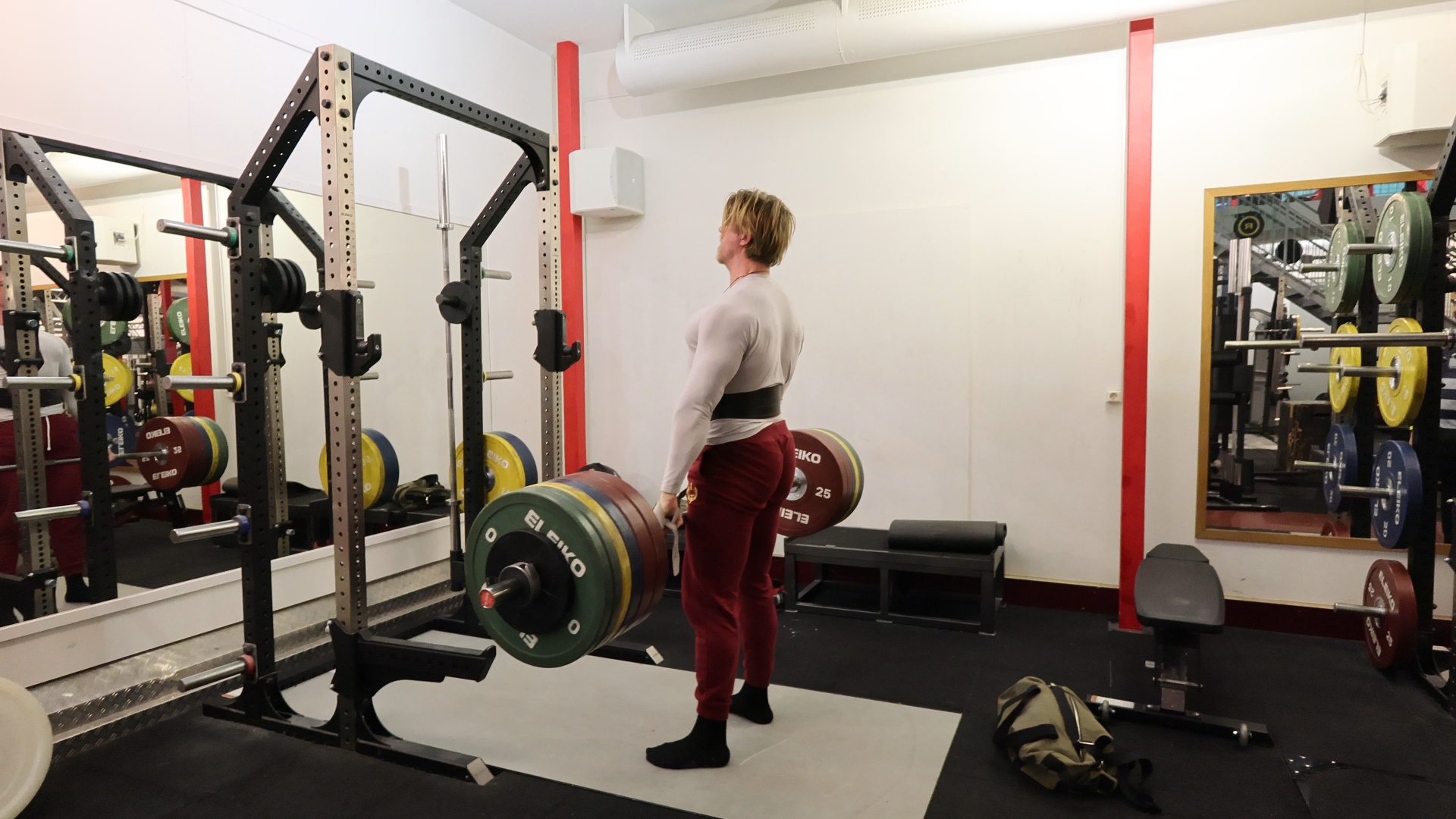
This is a vital insight when it comes to understanding the difference between Paganism and Christianity. Pictured below: I am participating in an activity that will enable Thor to bless me.
Might and Main
In the chapter titled Traditional Operative Magic, Philosophy, and Theory, the author shares the following:
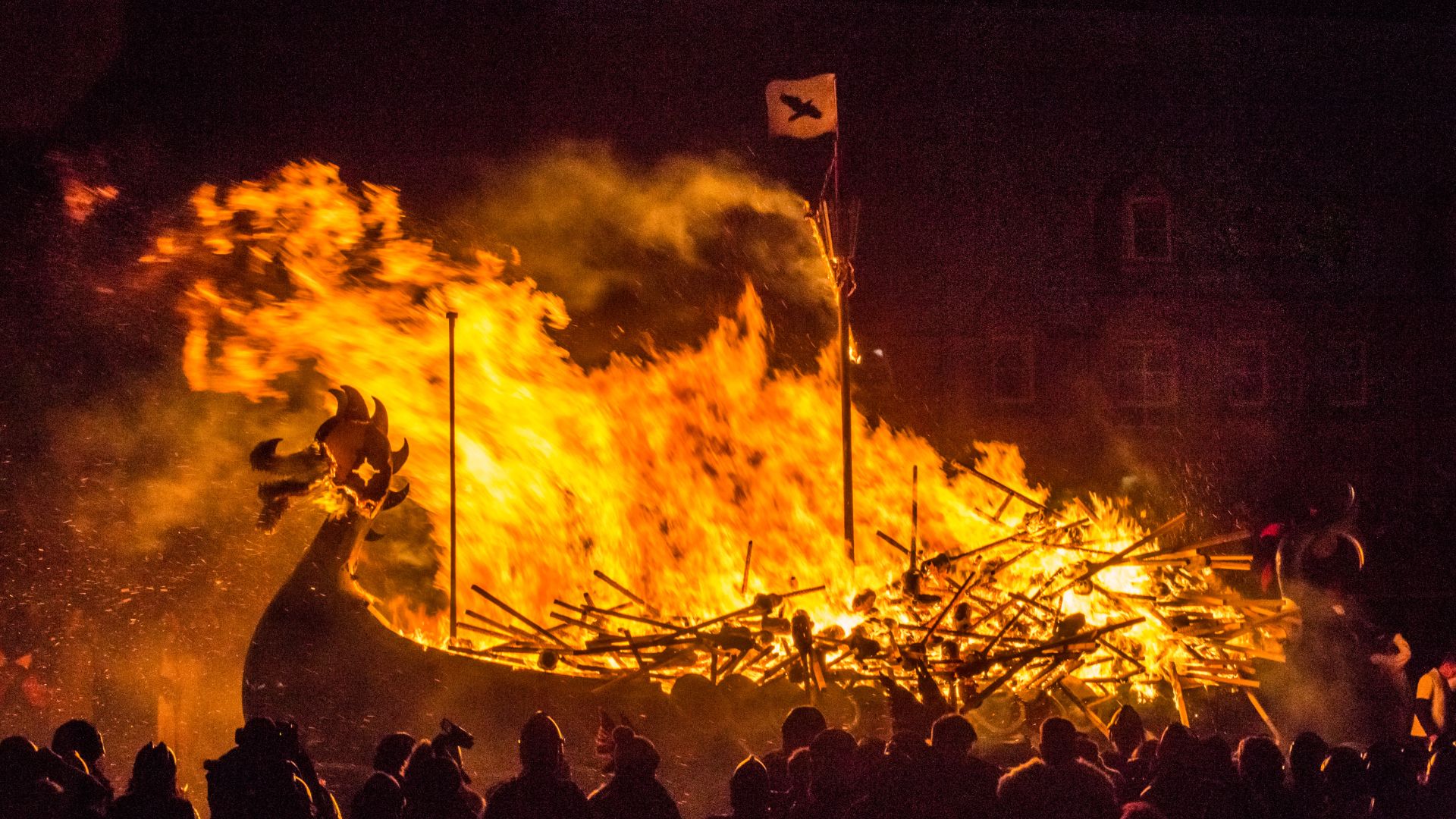
‘The northern tradition views bodily powers as consisting of two separate but linked qualities: might and main. Might (Old English meath; Old Norse máttr) is the physical strength of the body, the energy within it that enables it to live, powering through its movements and actions. Main (Old English mægen; Old Norse megin) is the inner psychological strength that empowers the personality; it is transferable to other people and to objects.’
Nigel Pennick – Pagan Magic of the Northern Tradition. Page 28.
I elaborate on similar matters in Podcast Episode 45. Viking Worldview – I encourage you to listen to it if you have not already! Might and Main affect each other – when one is increased, so is the other (usually, at least). I will elaborate more on this later on – the Nordic soul complex is a fascinating topic.
The Creative Process
In the chapter titled The Craft and Magic of Buildings, the author shares a beautiful quote from the year 1210 from the poet Geoffrey de Vinsauf:
‘The imagination designs everything before the body performs the act. The pattern is first idea, then physical reality.’
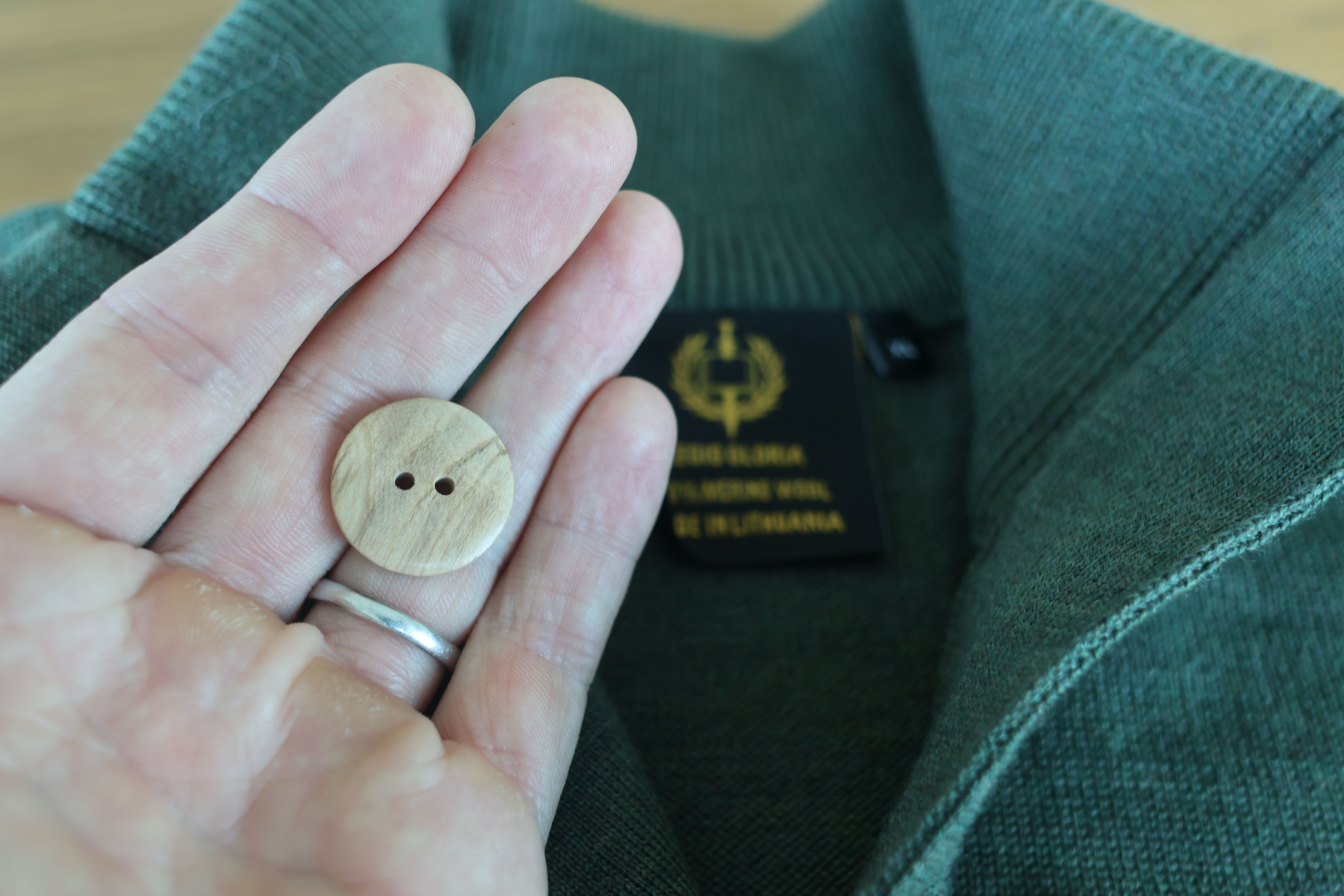
This is the very essence of magic – to create reality first in your mind. I do the same when designing clothes. I also do the same before heavy lifts in the Temple of Iron. I encourage my esteemed readers to try it the next time you train – see the lift with your mind’s eye before making the lift. Pictured below: Deciding upon the final details for an upcoming Legio Gloria garment.
Magic and Religion
In the chapter titled Practical Magic, the author shares the following:
‘There is no distinction between religion and magic in traditional societies. It is only a matter of semantics how we describe the saying of prayers, incantations, and making signs when something is done.’
Nigel Pennick – Pagan Magic of the Northern Tradition. Page 28.
This is a good insight when it comes to understanding the religious attitudes of our ancestors. This reminded me of Mircea Eliade’s teachings presented in The Myth of the Eternal Return (review).
Conclusion
I enjoyed reading Pagan Magic of the Northern Tradition and can definitely recommend it for those who are interested in European folklore. The book has 286 pages.



 The Golden One
You must be logged in to post a comment.