The Yoga of Power by Julius Evola
Posted on April 1, 2022

After reading The Hermetic Tradition (review here) and the three volumes of Introduction to Magic (reviews here and here) by Evola and the UR Group, I decided to continue along the esoteric path by reading The Yoga of Power. Evola approaches yoga in the spiritual sense, so this book is not practical in its nature – he does not elaborate on various flexibility exercises. He is more interested in Hindu* metaphysics and the various spiritual paths derived therefrom.
*For more information on the term Hinduism, read John Morgan’s definition under the title God, Hinduism, Polytheism in my book review of The Agni and The Ecstasy by Steven J. Rosen (here).
Action vs Contemplation
Since we have discussed this theme – Kshatriya/Warrior/Action vs Brahmin/Priest/Contemplation – in previous articles, I thought the following quote from a Tantric text would be interesting to share. Evola notes that Tantric practices based on shakti-sadhana are suitable to our contemporary age (the Kali Yuga). He also notes that Tantrism does not reject ancient wisdom, but reacts to ‘hollow and stereotypical ritualism‘, ‘mere speculation or contemplation‘, and ‘any asceticism of a unilateral, mortifying, and penitential nature.’ Or, in short, a ‘degenerated brahmanism.’
‘It is a womanly thing to establish superiority through convincing arguments; it is a manly thing to conquer the world through one’s power. Reasoning, argument, and inference may be the work of other schools [shastras]; but the work of the Tantra is to accomplish superhuman and divine events through the force of their own words of power [mantras].’
Tantrattva 1:27
As mentioned in previous articles, Evola held the action of the Kshatriya/Warrior above the contemplation of the Brahmin/Priest; therefore, it is no surprise that he would include such a passage in his work on Hindu metaphysics.
Although the quote above is rather epic and inspiring in its nature, a well-crafted argument should not be seen as unmanly – especially considering the metapolitical struggle we are all partaking in.
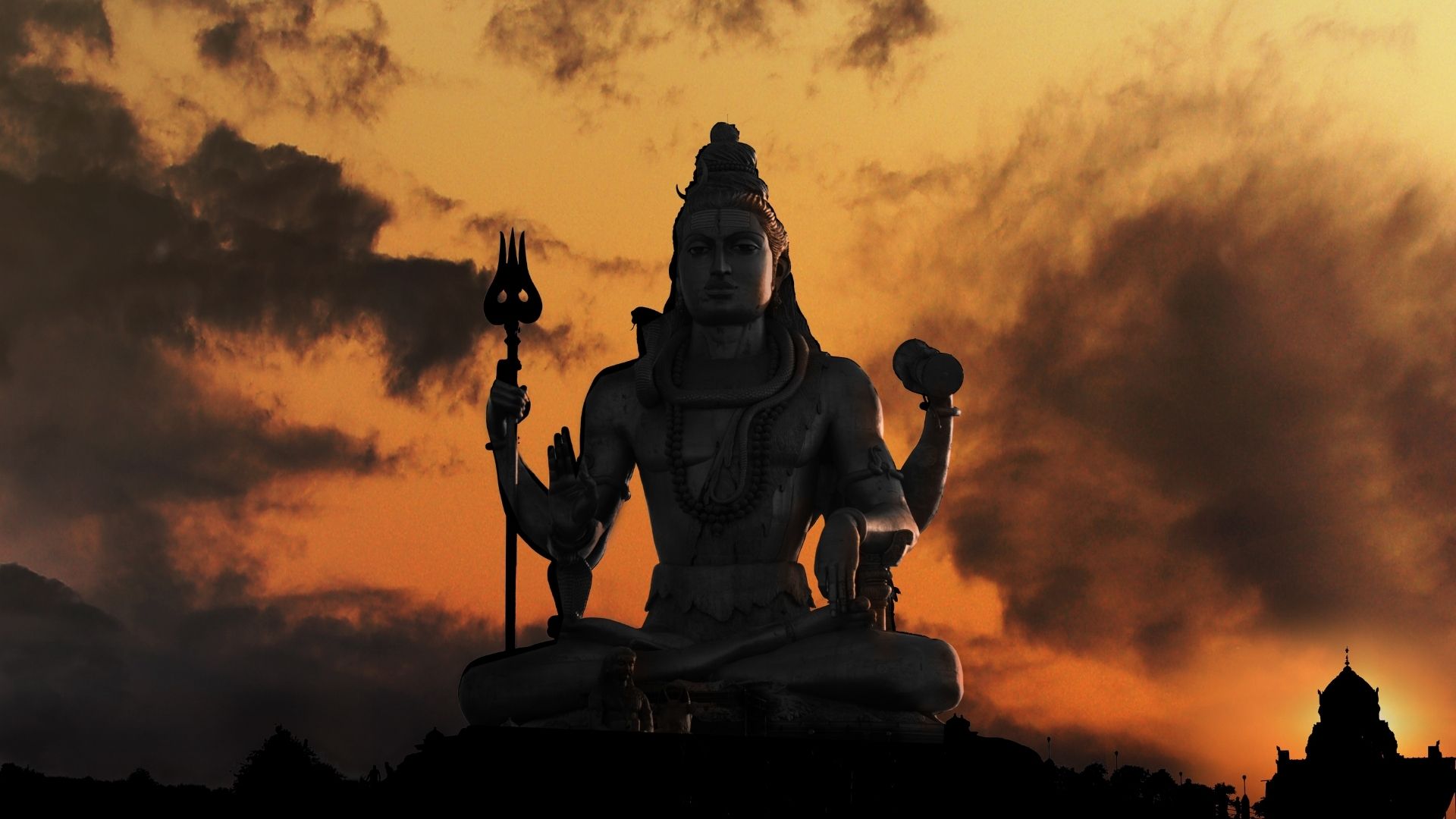
Pre-Aryan Goddess – Magna Mater
For those who listen to Caribbean Rhythms (read my interview with Bronze Age Pervert here), the Great Mother may be familiar. BAP often refers to her and the connected Longhouse – he contrasts said Longhouse with the adventurous and enterprising nature of the Aryan spirit. Evola mentions her cult, the Cult of the Great Mother, Magna Mater, in the beginning of the book when presenting the origins of the Tantras.
‘The ancient pre-Aryan understanding of Shakti as the magna mater, or mother of the gods – a sovereign divinity from whom every life and existence derives – undergoes a radical transformation as a consequence of the encounter with Aryan Upanishadic metaphysics.’
Julius Evola – The Yoga of Power. Page 22.
Evola connects the pre-Hellenic (Hellenic = Aryan) Mediterranean goddesses such as Demeter with pre-Aryan (Aryan in the Indian context) goddesses such as Kali. He notes that in India the cult survived by going underground following the Aryan (Indo-European) conquest of the region. He contrasts the pre-Aryan religion with the virile and patriarchal spirituality of the Aryans (both in Greece and India) For more information about the Aryan Invasion of India, see the following video: Aryan Invasion of India: Myth or Reality?
Note: the word Aryan is not as commonly used today as it was during the time of Evola’s writings. Another word for the same group is Indo-European.
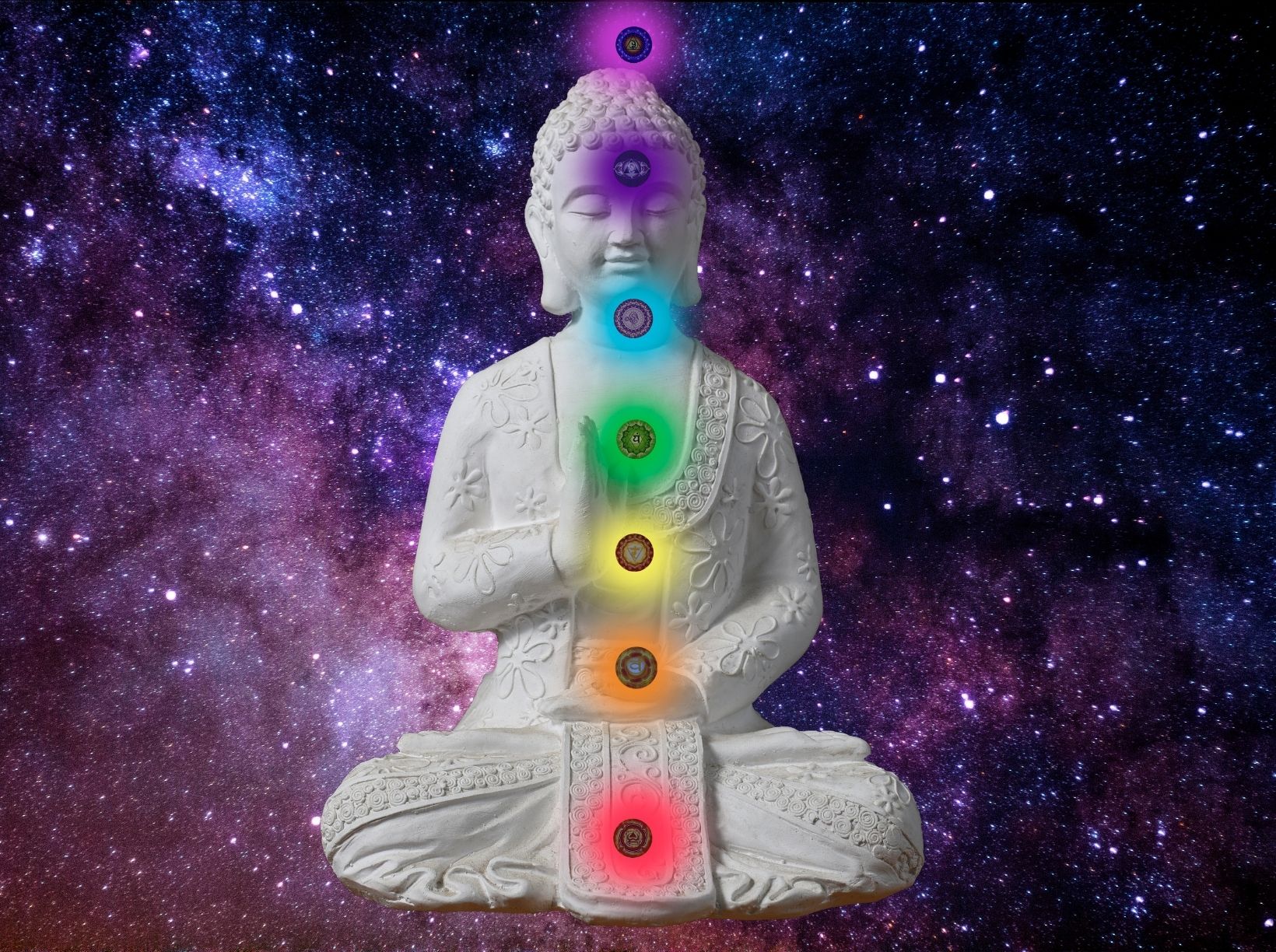
Chakras
May the spirit of Evola forgive me for pointing this out, but he presents a erroneous* version of the chakras. Below is a concise summary of my view (which aligns with the commonly accepted view).
- Muladhara. Root Chakra (red) – Physical stability.
- Swadhisthana. Sacral Chakra (orange) – Sexuality, creativity.
- Manipura. Solar Plexus Chakra (yellow) – Confidence.
- Anahata. Heart Chakra (green) – Love, compassion.
- Vishuddha. Throat Chakra (light blue) – Communication.
- Ajna. Third Eye Chakra (indigo) – Intuition, imagination, magic.
- Sahasrara. Crown Chakra (violet or white) – Awareness, intelligence, connection to divine powers.
Evola presents the Root Chakra as being yellow, the Sacral Chakra as being white, the Solar Plexus Chakra as red, the Heart Chakra as dark grey, the Throat Chakra as a bright, shining white, the Third Eye Chakra as a dazzling white blaze. He presents the Crown Chakra without assigning it a colour.
*In my humble opinion, it is more reasonable to envision the chakras as described in the list above rather than to envision them as Evola presented them. A vivid green Heart Chakra makes more sense, aesthetically speaking, than a dark grey one, for example. Moreover, when doing certain meditation techniques (where one has to focus on each center/chakra) it is more helpful to envision them as having distinct colours.
Evola correctly points this out at a later stage:
‘In order to reach every chakra, it is a standard procedure, in yogic practice, to concentrate gradually the mental and imaginative focus on each of them, by recalling their meaning and by employing the symbols and mantras that traditional teachings attribute to them. In such a way the awakening power is properly led and induced to act.’
Julius Evola – The Yoga of Power. Page 177.
Since the chakras are a part of many meditation exercises, it can be a good idea to learn them. In a way, the chakras are similar to the Norse runes (which I will elaborate on at a later stage).

Semen Retention
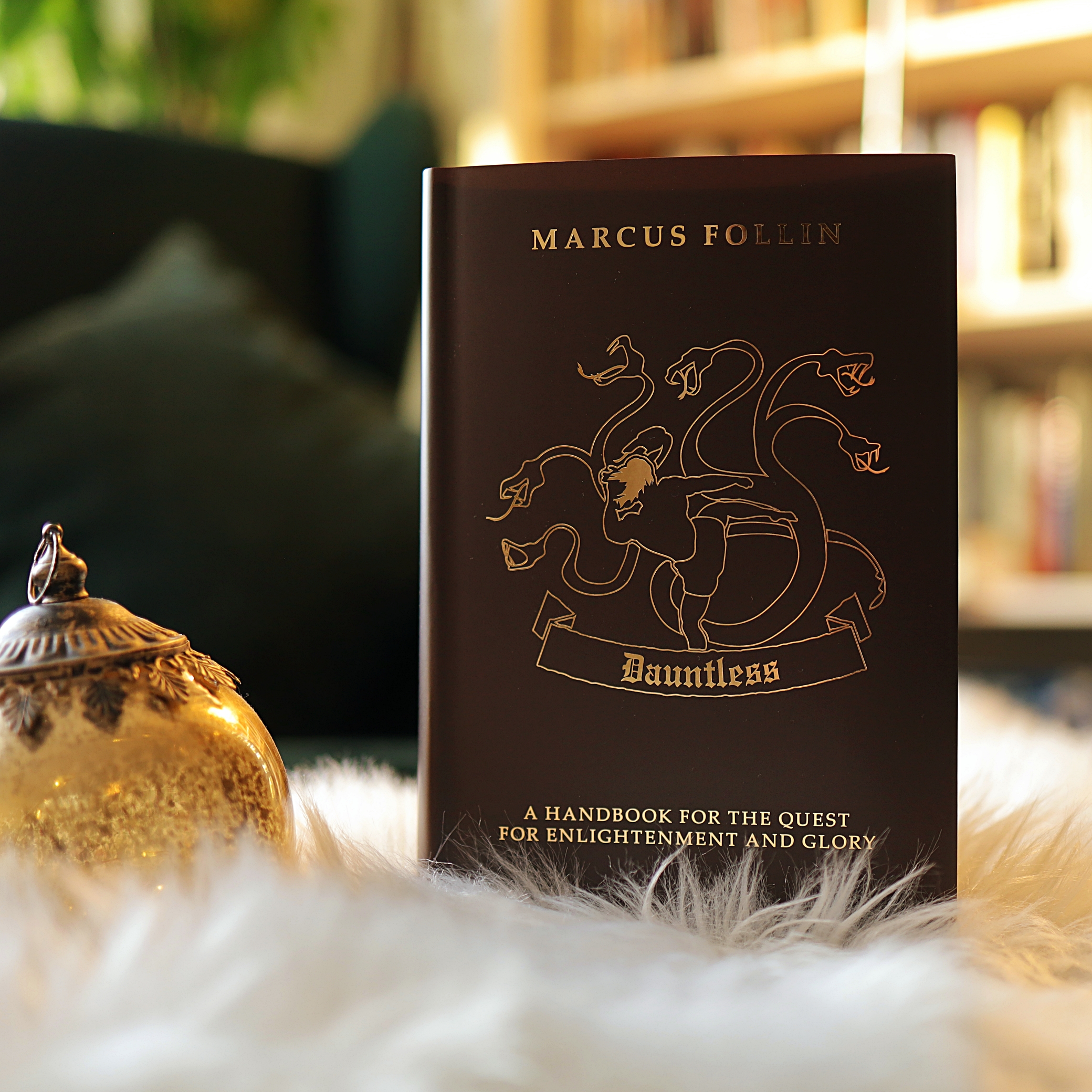
A reoccurring concept that is discussed in the book is that of semen retention. I elaborate on this in Dauntless as well – where I title it Dragon’s Breath. Evola notes the following in regard to a specific ritual:
‘In hatha yoga sexual intercourse is considered a means to bring about a traumatic shift in the level of consciousness, as well as an effective opening to transcendence, but only when the intercourse is performed according to specific rules. These rules essentially prescribe the inhibition of the man’s ejaculation and the release of even the smallest quantity of semen inside the woman’s body. The semen should never be released.’
Julius Evola – The Yoga of Power. Page 131.
Even though the yogic teachings are not talking about semen retention in everyday life for men in general, it is still interesting to note how semen retention appears as a phenomenon throughout time and space. To not release one’s Dragon’s Breath is a perennial truth that must be respected. In my view, one has to be mad to not respect this wisdom. The book contains more insights regarding the sexual nature of certain spiritual paths.
The Mind is the Cosmos
In the appendix of the book, in the chapter titled Bardo: Actions After Death, the following epic quote appears:
‘The Mind is the Cosmos. To the Enlightened One, this apparent duality has no existence, since neither samsara nor nirvana are two things apart from individualism, but merely two aspects of One, which is the All-Knowledge, All-Wisdom. Hence, as the texts teach, samsara and nirvana are, in this occult sense, said to be inseparable. Duality is present in appearance, but not in essence.’
Evans-Wentz, Tibetan Book of the Dead, 166-67.
I am not yet knowledgeable enough in matters of Buddhism to comment further upon this. However, I thought it would be interesting to share the quote for future reference, since we are bound to return to these concepts at a later point.

Conclusion
The book contains many more interesting passages, the ones above are just a few I thought to highlight. On a personal note, I always enjoy the writings of Evola. There may be esoteric authors who are better suited to explain the various spiritual doctrines of the East – perhaps René Guénon. In terms of Western spiritual tradition, however, I view Evola as the primary authority.
Just as I noted in my review of The Hermetic Tradition, I can recommend this book to true Evola-appreciators. If you are interested in magic and spirituality but are not used to reading Evola, I would recommend starting with Introduction to Magic instead.
New Legio Gloria Releases – Underwear and Gothic Kings
Posted on March 27, 2022

At long last the Frey’s Organic Cotton Underwear is finally here. Now you can throw away your tight-fitting non-cotton underwear! These have been highly requested, and I have eagerly awaited them myself. Thus, I am happy to finally present them. As with most other garments, I asked myself what I want, I worked towards it, and here we are. Good times!

If you are unsure or between sizes, go with one size larger – it is better to have them a bit looser than a bit tighter. Also, since it is organic cotton, they will shrink a bit if washed in high temperatures.
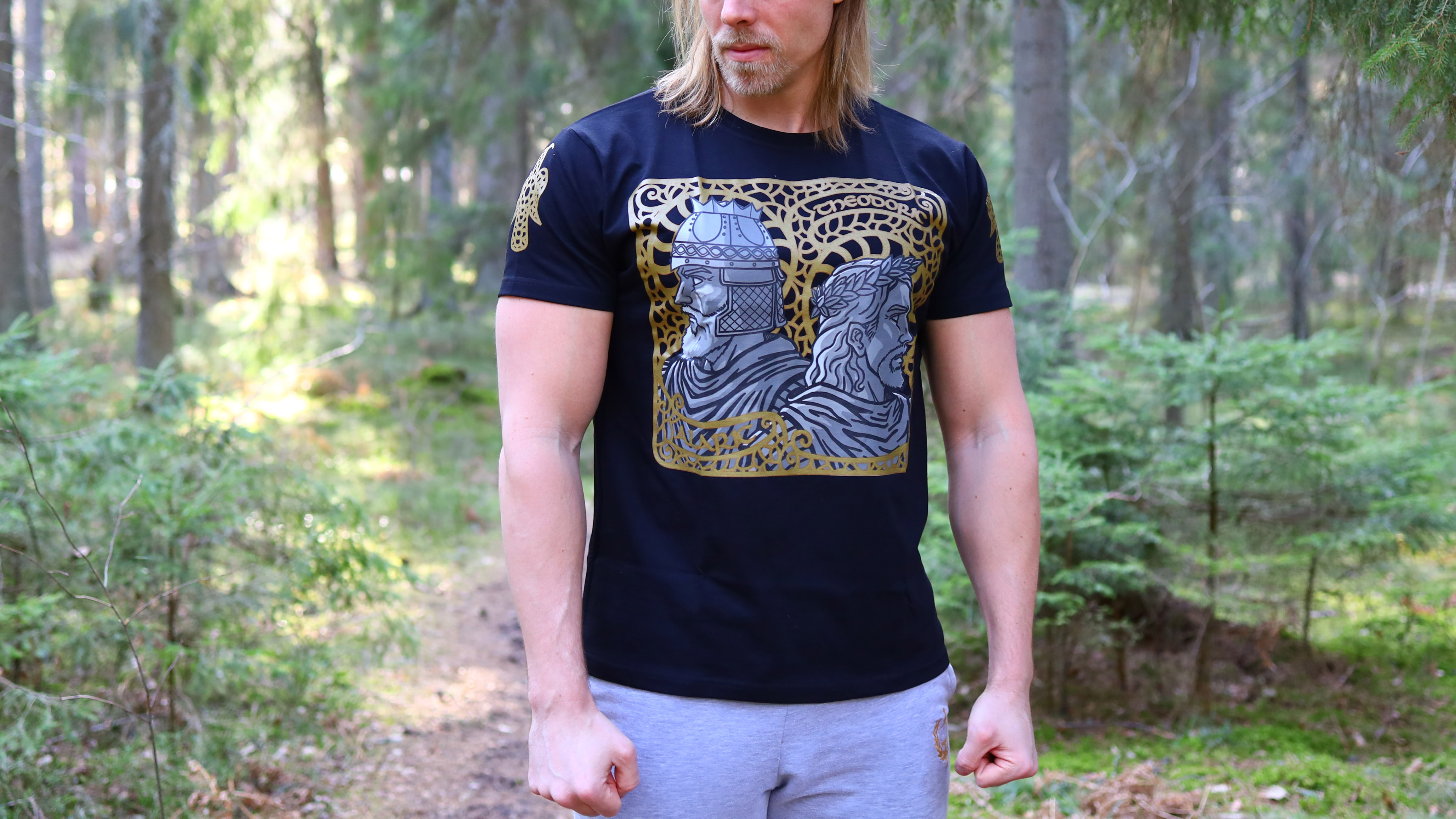
The new t-shirt design is also close to my own heart. I told my trusted artist, Paszkál of Hungary, about what I wanted, and he delivered an inspiring artwork as always.
Alaric (370–410) and Theodoric (454–526) are among the greatest Gothic kings. Alaric stepped up to the challenge in the darkest hours of his people – leading the Goths from ruin to glory. The Rome that Alaric sacked in 410 was a far cry from the glorious city it had once been, and the spirit that led the Romans to glory had been long gone by this stage. I will elaborate more on this in a Podcast episode dedicated to the Goths and the Western Roman Empire.
Some scholars view Theodoric the Great as a Western Roman emperor in all but name (his title being king). One could thus also argue that he was a true heir of the Roman Empire (hence the laurel in the artwork on the garment).
Another famous Gothic king was also named Theodoric: Theodoric I, who, alongside the Roman general Flavius Aetius, defeated the Scourge of God – Attila the Hun – in the Battle of the Catalaunian Plains (June 20, 451). Much more about all of these kings can (and, again, will) be said!

The t-shirts are, just as the underwear, made in Poland with 100% organic cotton. The artwork on them is, as always, meant as a source of inspiration for you to become the best that you can be. And, in this case, to step up when the world seems full of darkness.
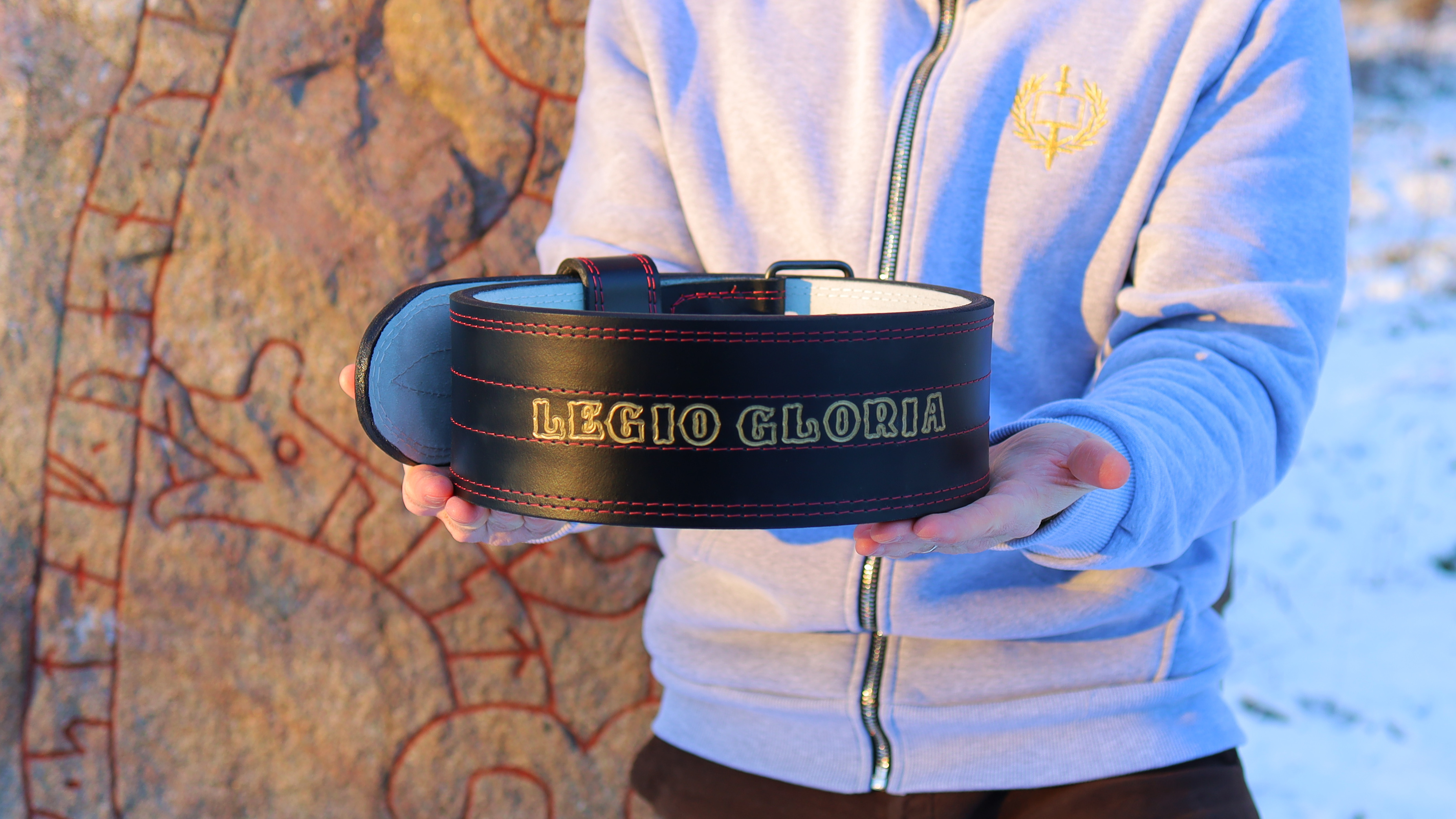
Since I did not mention this fine belt on this page upon its release, I thought to mention it now. The greatest powerlifting belt in the world. This is the same model as the one you may have seen in my training videos. My belt is from 2014 and is as good as new. It is a bit of an investment, but if you intend to do powerlifting for a long time, it is a great investment to make.

On a last note, I have received a few questions regarding the linen garments. I am happy to announce that a great release of numerous linen garments will be upon us in early May! The new releases are available here:
Two Models of Government by Dr Michael Arnheim
Posted on March 22, 2022
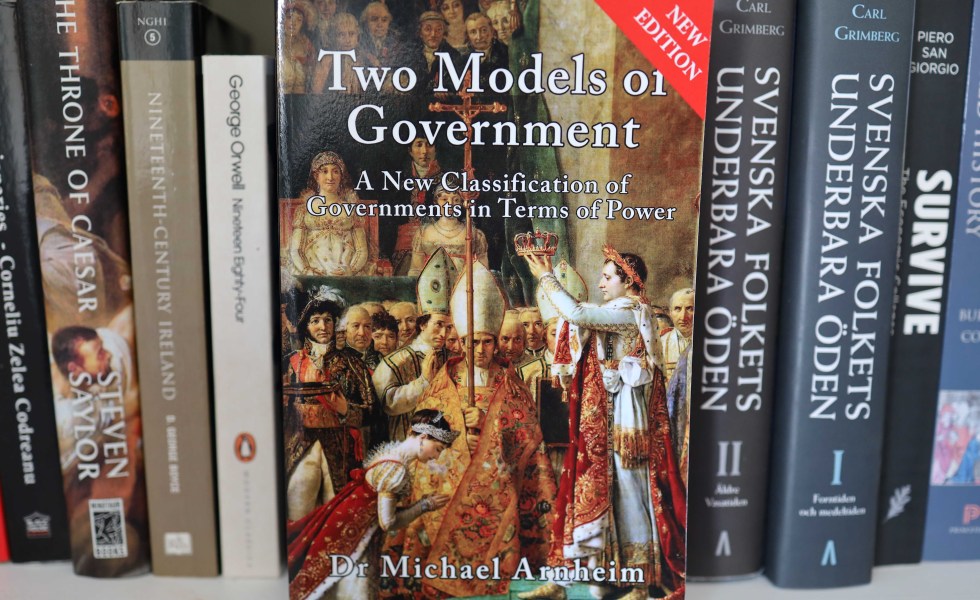
I few years back, I read Two Models of Government: A New Classification of Governments in Terms of Power by Dr Michael Arnheim. The central teaching presented in the book stuck with me as I found it profound and insightful. I mentioned the book in my Podcast episode on Vlad Dracula (available here: Podcast). Thus, I thought it reasonable to introduce the book here as well.
Historical Examples
The central thesis of the book is that a government of a nation is either a monarchy or an oligarchy or a mix of the two. The author presents a few historical examples.
- Monarchy taking up the whole pie. For example: The Roman Empire Principate and Napoleonic France.
- Oligarchy taking up the whole pie. For example: Classical Sparta, the Roman Republic, medieval France (the feudal system).
- A shared pie, with a larger sliced going to the monarchy and a smaller piece going to the oligarchy. For example: Ancient Greek tyrants, Louis XIV’s France. Louis XIV is also known as the Sun King – an exceptionally glorious title.
- A shared pie, with the larger slice going to the oligarchy and a smaller piece going to the monarchy. For example: Medieval France (listed here as well as above), England between 1066 and 1689, Japan for most of the time between 1185 and 1868.
Dracula and the Boyars
As I noted in the Podcast episode, Dracula, upon assuming power (his second reign), knew that he had to bring the boyars to heel. He did so in a brutal fashion, thus (roughly speaking) changing the Wallachian power-structure from being dominated by an oligarchy to being dominated by a monarch – in this case Vlad as voivode.

Conclusion
Much more can be said about the book, this shorter review can be seen as a complement to the Podcast episode. In conclusion, I can definitely recommend Two Models of Government for any student of history.
The Hermetic Tradition by Julius Evola
Posted on March 12, 2022
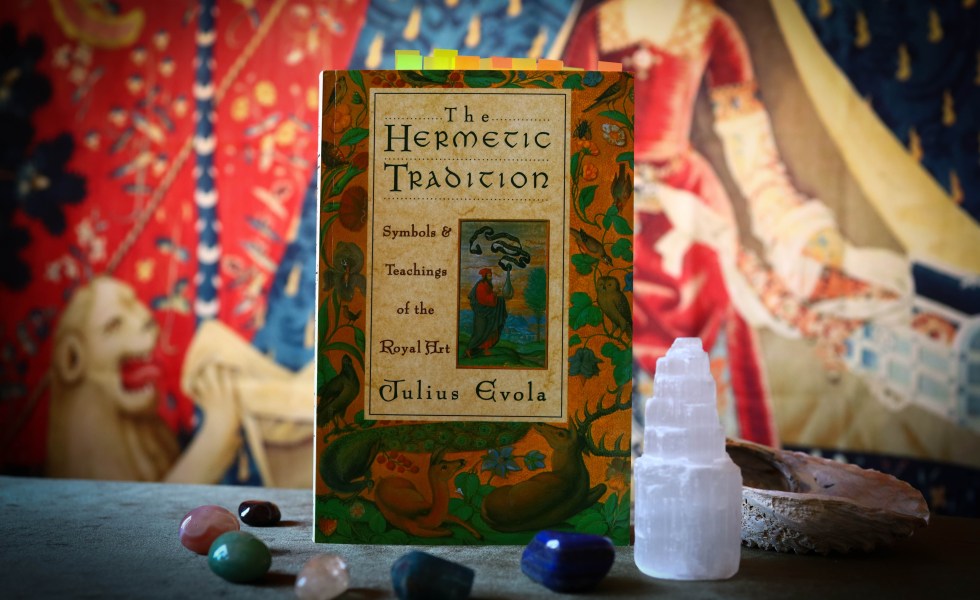
After reading the three volumes of Introduction to Magic (reviews here and here) by Evola and the UR Group, I decided to continue on the same esoteric path by reading The Hermetic Tradition. Whereas Introduction to Magic contains more of Evola’s (and his companions’) thoughts on matters of magic and metaphysics, The Hermetic Tradition draws more heavily upon the teachings of older mystics and alchemists (who will be presented further down). The book is still Evolian in its nature, so the style will be familiar if you have read Evola before.
Evola’s View of Hermeticism and Alchemy
Evola approaches hermeticism and alchemy (he sees them as one) in a spiritual fashion – which means that he is not interested in the material aspects of alchemy (i.e. the classic ‘turn lead into gold’ type of alchemy that may be familiar to some). Evola, as a seeker of Tradition and spiritual ascent, seeks to present the teachings of hermetic mystics throughout the centuries from this perspective.
Alchemy, in this view, is placed together with other hermetic disciplines – magic and astrology, for example. Magic, as we have discussed elsewhere, can be seen as mental techniques. Astrology is a topic we will return to – suffice to say that the planets feature quite prominently in the book. It can also be noted that astrology is one of the lost sciences (like physiognomy) that the modern world has cast aside.
Evola, in this book, shows that alchemy was not just the humble beginnings of the science of chemistry but a profound mystery-science in its own right. As illustrated by the quote below, he identified the true spiritual teachings as being hidden from the unworthy (and the Inquisition). This led mystics and esoteric masters to approach the Great Work, the Royal Art, in a spiritual fashion – whereas the materialistically oriented early scientists approached it in a profane fashion (i.e. in the sense that they were out for physical transformations as opposed to spiritual ones).
‘Much better then to speak of Mercury and Sulfur, of metals and puzzling things and impossible operations, better to attract the greedy attention and curiosity of of the “puffers” and “charcoal burners”, of those who then gave birth to modern chemistry; and best of all, in order to keep others from suspecting that the rare and enigmatic allusions were actually metallurgical symbolism referring to things of the spirit.’
Julius Evola – The Hermetic Tradition. Page 97.
The author of the foreword notes that Evola was influenced by an Indian alchemist – C.S. Narayana Swami Aiyar of Chingleput – who emphasised the importance of breath-work to achieve alchemical results. This is highly interesting. In my own meditations, I have found that entering a meditation by first doing a breathing exercise is greatly helpful. Wim Hof, the Dutch Iceman, has a good guided breathing-exercise. Interestingly, in a chapter titled The Path of the Breath and the Path of the Blood it is noted that focusing on the breath (the first key) and focusing on the blood (the second key) is an alchemical technique. Wim Hof encourages the practitioner to focus both on the breath and the blood in the breathing-exercise mentioned above.

Alchemical Work – the Great Work – the Royal Art
When reading the book and approaching the Royal Art from Evola’s perspective, which, in my humble opinion, is the correct way to approach it, it becomes clear that the whole art is one of ascending and transforming oneself in metaphysical matter. One could even say it is about finding God – God in this case is the One, the animating force of all life. We can also refer to this animating force by other names. This force can be described using a quote which may be familiar if you read our book review of Introduction to Magic: Volume 1:
‘The Wise spoke of it as a wonder and as a terror. They called it: Universal and Living Fire, ύλη (matter), Green Dragon, Quintessence, First Substance, Great Magical Agent. The principle of their “GREAT WORK”, since the Magistery of Creation and the Magistery with which man realizes himself according to the Royal Arts are one and the same. This Matter of ours is neither an abstraction of profane philosophy nor a myth or a fairy tale, but a living and powerful reality, the spirit and the vitality of the Earth and of Life.
Abraxas – Introduction to Magic: Knowledge of the Waters
When the alchemists (in this context) talk about substances and how to transform, separate, and combine them, they are referring to the inner forces in man (body, soul, spirit). Another insightful quote regarding this great force is the following:
‘We can also say that in the One the All, the “One” and the “All” now crystalize as two distinct principles. The “One” takes on the meaning of a center that manifests in the heart of chaos (the “All”) and affirms itself there as a principle of incorruptible fixity, stability, and transcendence. From the signature, of O—“the first matter” we move on to ☉, which is the ancient hieroglyph of the Sun.’
Julius Evola – The Hermetic Tradition. Page 33.

Soul, Spirit, and Body
In a chapter titled thus, Evola discusses these three concepts from an alchemical perspective. He notes that ‘man carries hermetically in his soul, the presence of a solar and golden force ☉; in his spirit he carries that of a lunar and mercurial force ☿; and finally, in the body, the force of Salt 🜔 is expressed.‘
Jakob Böhme writes the following:
‘Everything that grows, lives, and moved in this world is in Sulfur, and Mercury is its life. And Salt is the corporeal essence of Mercury’s hunger.’
Jakob Böhme – De Signatura Rerum
When reading passages like this, it becomes clear that they are talking about the animating life-force. Many alchemical teachings are unclear at a first glance; this is to hide the teachings from the unworthy. The quest to find or create gold within oneself, to master the Quintessence and make the most out of the divine energy, is what we can take with us from alchemical studies. As we noted in Dauntless and in previous book-reviews, it is about taming the inner dragon and using its energy to fuel your own ascent.
Mithras and the Bull
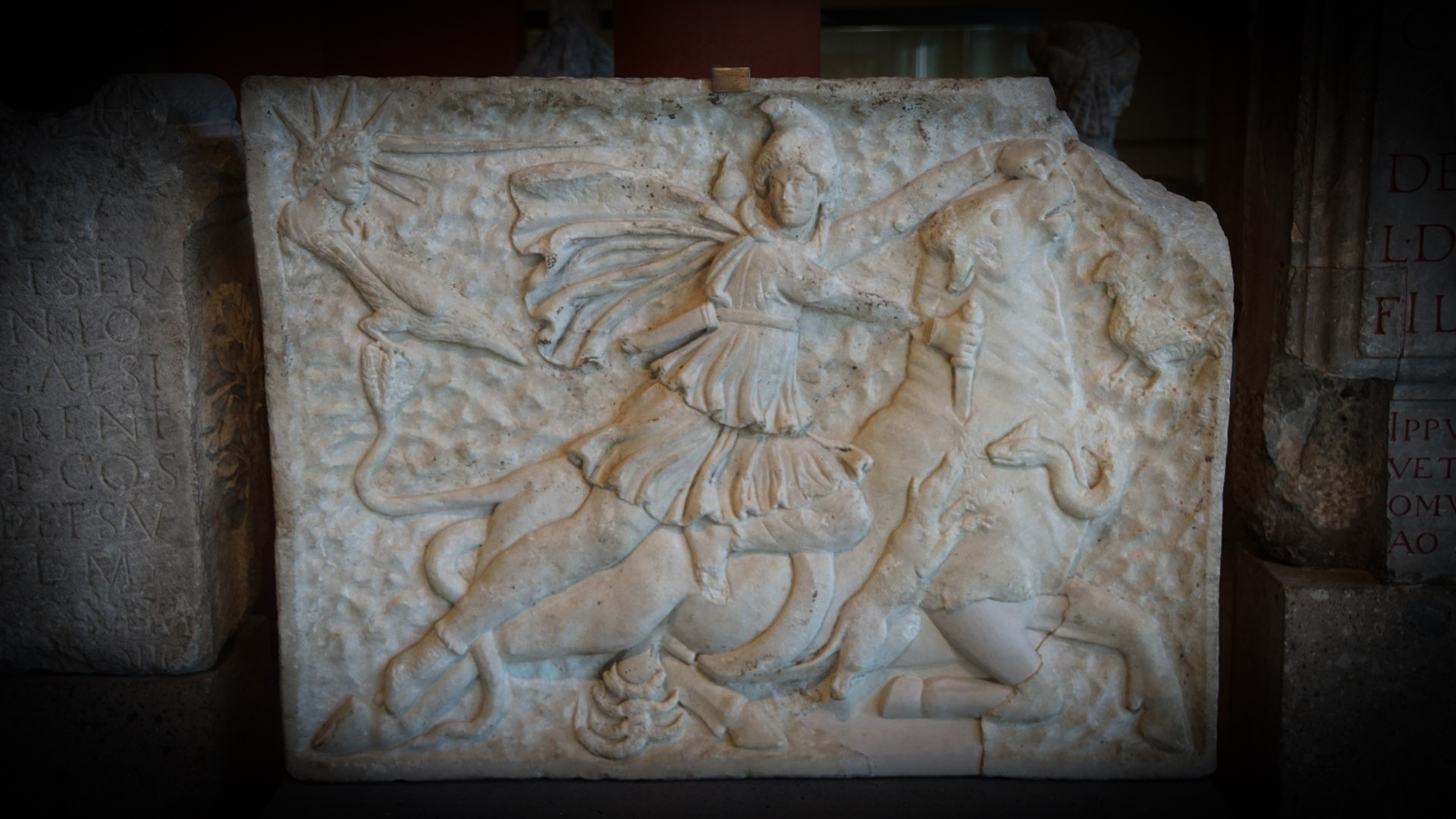
As you, my dear reader, are probably aware of by now, I always enjoy the appearance of the Cult of Mithras in esoteric literature. Thus, I thought to share the following quote – which follows up nicely with what is mentioned above. Subdue and harness the primordial power within you:
‘We must awaken the force but not let it unseat us. The characteristic depiction of this ability is dramatized by the myth of Mithras who seizes the bull by the horns and does not let go despite the animal’s mad stampede until the bull, exhausted, gives up and allows himself to be led back to the “cavern” (the alchemical texts speak specifically and frequently of Mercury’s cavern), where Mithras gives it death. After its death there follows the symbolic emerging of vegetation from the earth, sprouting from the blood of the sacrificed animal.’
Julius Evola – The Hermetic Tradition. Page 113.
Immortality
Evola notes that the true alchemical immortality does not entail an immortality of the body. He also notes the following in regard to the immortality of the soul:
‘It was the vulgarization and abusive generalization of a truth valid exclusively for initiates — a vulgarization that began in some degenerate forms of Orphism and was soon fully developed by Christianity — that was to give birth to the strange idea of an “immortality of the soul,” and then extended unconditionally to the same for all souls.’
Julius Evola – The Hermetic Tradition. Page 96.
I am not yet wise enough to comment upon the immortality of the soul, but something that always struck me as unreasonable was the immortality of everyone’s soul. Thus, I thought to share this insightful quote. We will return to this discussion in coming works.

Guénon’s View of Alchemy – White Work and Red Work
The disagreement between Julius Evola and Réne Guénon (that we mentioned in the review of Introduction to Magic: Volume II & III) appears in this context as well. Guénon rejected the idea of alchemy as a complete metaphysical doctrine. Moreover, according to him, a true tradition could not have come from an Egypto-Hellenic origin. This is stated in the foreword of the book and no further explanation is given. Thus, I consulted Thomas Rowsell, who notes that Guénon was quite anti-Greek in the sense that he considered their polytheism to be a divergence from the primordial and monotheistic Tradition he imagined.
As we have already noted, Evola and Guénon disagreed upon who the highest spiritual authority was: the Warrior or Priest. Note, Evola and Guénon respected each other, and this is a minor disagreement that does not take up any space in this book itself. I just thought to mention it since we have encountered the disagreement before, and because it is interesting.
In alchemy, the Red Work is above the White Work. The Red (or Purple) embodies an active state (of the Kshatriya – Warrior), whereas the White embodies a contemplative state (of the Brahmin – Priest). The White Work (White Elixir) is not the final stage, because it lacks the Fire – the Fires of Saturn, the Gods of the Golden Age. Evola notes that to the Red stage is attributed the purple, the sceptre, the crown, and other symbolic elements of royalty and empire. An interesting comparison is the Catholic Church, where the Pope (the highest) wears White and the members of the lower levels of the church hierarchy wear Red.
‘There is a measure of legitimacy in connecting the White Work and the Red Work, respectively, to initiation into the Lesser and Greater classical Mysteries. The promise of both was immortality, which is, let us reiterate, something positive and very different from the vague “spiritualist” conception of simple survival. But the first immortality was only such in terms of “life,” even Cosmic Life, and therefore, ultimately, a conditional immortality linked to manifestation. The second, that of the Greater Mysteries, was a “supercosmic” immortality in the sense just indicated, and it was in the Greater Mysteries that use of the royal symbolism predominated.’
Julius Evola – The Hermetic Tradition. Page 186.
Thus, Evola connects the White Work to the Lesser Mysteries and the Red Work to the Greater Mysteries. We will return to these insights in coming works – when discussing the Mithraic and Eleusinian Mysteries.
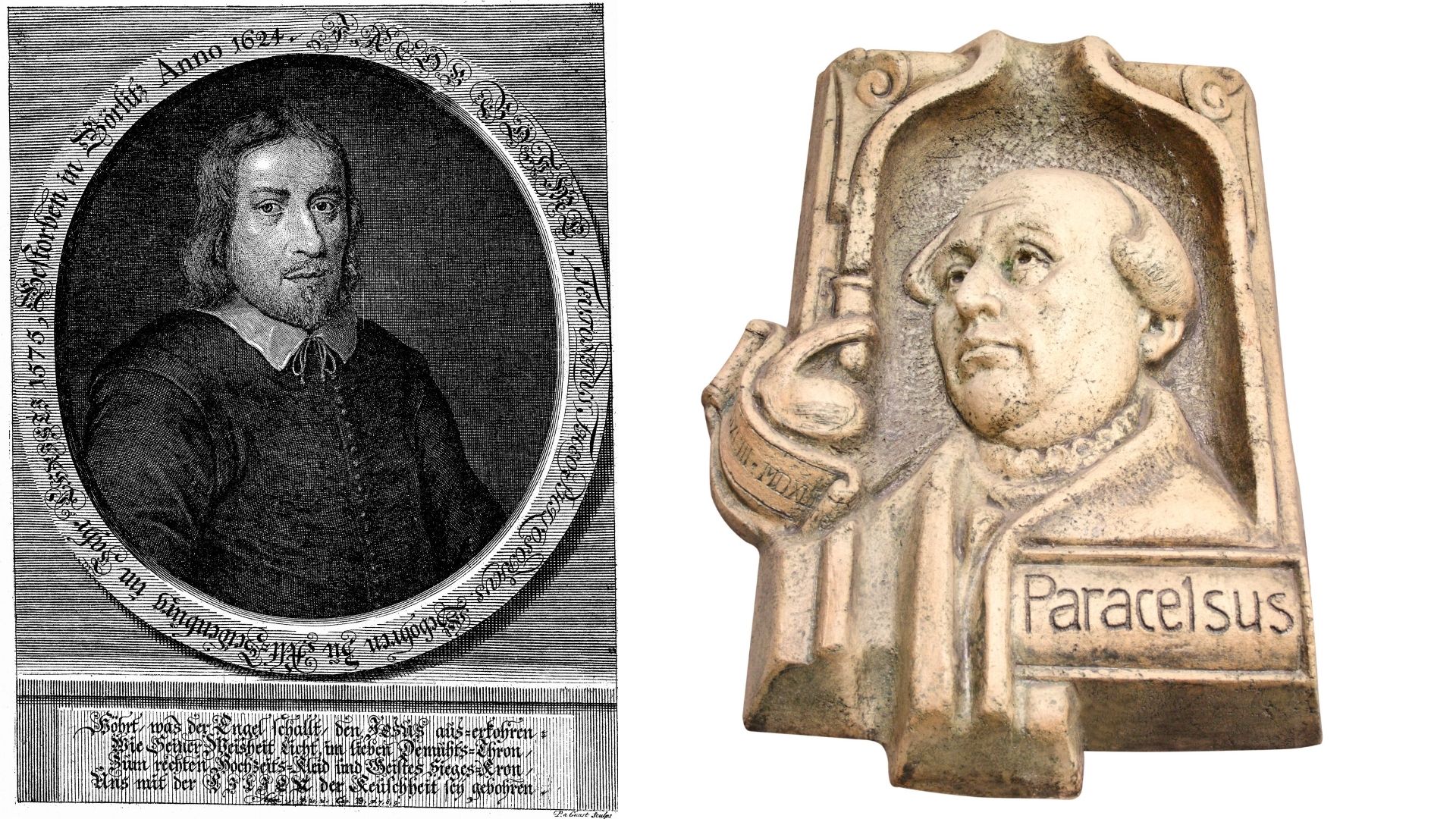
Cast of Characters
When talking about alchemy as it is presented in the book, it can be good to be familiar with a few historical individuals that appear frequently in it. As mentioned above, Evola presents the teachings of various spiritual masters. Below are some of them – you may recognise some, and you will probably encounter them again if you are interested in esoteric matters. I present these men in brief to emphasise the fact that alchemy was not merely a historical curiosity without merit but a study that interested high-capacity men.
Heinrich Cornelius Agrippa (1486–1535) was a German polymath, physician, legal scholar, soldier, theologian, and occultist. Evola refers to his De occulta philosophia.
Theophrastus von Hohenheim, also known as Paracelsus, (1493–1541) was a Swiss physician, theologian and philosopher; he has been given the honourific “the Father of Toxicology”. His contributions to science in particular highlight the fact that alchemy was not an art for charlatans, but often went hand in hand with science and metaphysis.
Jakob Böhme (1575–1624). In the book his name appears as Jacob Boehme (which is often the case in English literature). Böhme was a German philosopher, Christian mystic, and Protestant theologian. Many unenlightened Christians react negatively to terms such as magic and mysticism. They fail to recognise that many esoteric mystics have been Christians.
Cesare della Riviera, author of The Magical World of the Heroes (in Italian: Il mondo magico delgi heroi) (1605), which, according to the foreword of The Hermetic Tradition, was a decisive influence on Evola’s views on alchemy. Not much more is known about the author, but I mention him here since his work feature prominently in The Hermetic Tradition.
Hermes Trismegistus is a legendary Hellenistic (Hellenistic = the cultures that sprung up in the areas conquered by Alexander the Great, in this case Egypto-Hellenic) figure that originated as a combination of the Greek god Hermes and the Egyptian god of wisdom Thoth. In The Hermetic Tradition, Evola refers to the Corpus Hermeticum on numerous occasions. The term hermetic stems from Hermes Trismegistus. Both this mythological character and the Corpus Hermeticum are important to alchemy and the hermetic art on the whole. Evola notes that Hermes (Trismegistus) ‘should not be considered an actual historical personage, but the special spiritual influence that defined the initiatic chain and the organisation‘ (the organisation he refers to is the Sons of Hermes). Hermes Trismegistus also appears in Islamic teachings (which was pointed out to me by a Muslim follower of mine on Instagram).

The Centres of Life – Chakras
In one chapter, a hermetic teaching named the Seven is presented. Evola refers to Plotinus (a Hellenistic Neoplatonist), who said that there are forces within us that are analogous to the powers of the different planets. Interestingly, Evola notes that the teaching of the Seven is seen in explicit terms in Hindu tradition in the form of chakras. We will return to the chakras in coming works – as they are an important component of meditation and yoga. Evola’s The Yoga of Power will be the subject of a coming book-review.
Related to the teaching of the Seven is a mystical Syrian text which talks about the Mirror. I found this passage powerful and useful:
‘The Mirror represents the Divine Spirit. When the soul sees itself in it, it observes the shameful things in itself and rejects them.’
The Hermetic Tradition. Page 62.
In alchemical terms, one could say this would be a purifying process – purifying one’s inner being (soul and spirit) from impurities (shameful aspects).

Conclusion
The Hermetic Tradition is a rather dense read, although not particularly thick (the book is 216 pages), it requires a certain level of concentration to digest. I re-read it upon finishing it to ensure I got the most out of it (I will most likely re-read certain chapters later on as well). Many of the alchemical teachings were purposefully hard to access (to keep the esoteric wisdom available only for the worthy) and since many of the teachings are from the Middle Ages, it is possible that some nuances were lost in translation.
I can recommend this book to true Evola-appreciators and aspiring mystics. If you are interested in magic and spirituality but are not used to reading Evola, I would recommend starting with Introduction to Magic instead.
Lastly, if you have not already done so, I recommend listening to Podcast Episode 18. The Divine Blessing for further discussions on the divine.



 The Golden One
You must be logged in to post a comment.